
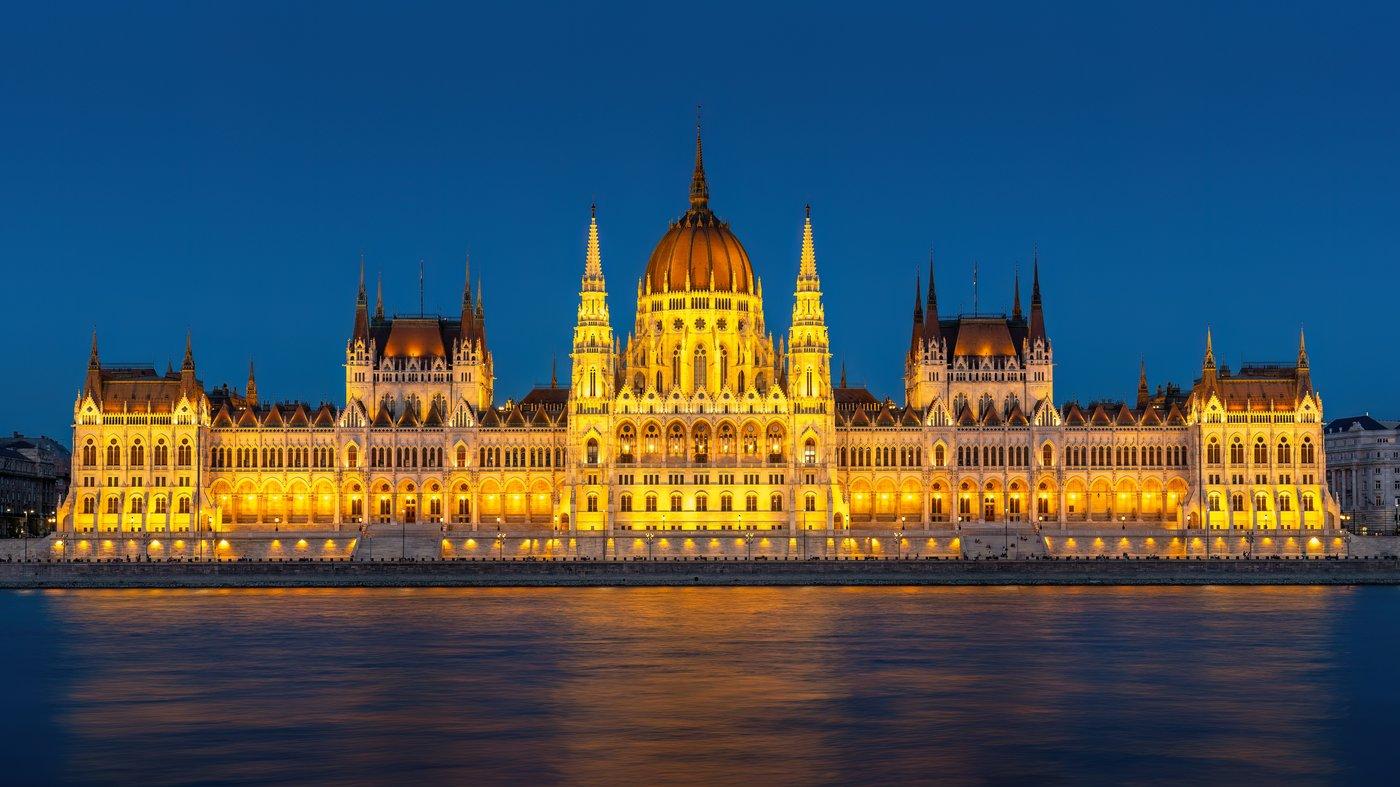
Budapest is divided by the Danube into Buda, on the hills to the west, and Pest, on the flat land to the east. With 2 nights and 3 days, walk the Pest riverside on the evening of Day 1; on Day 2, start with the Hungarian Parliament Building tour, cross the Széchenyi Chain Bridge and spend the day covering the Buda Castle District and Gellért Hill; and on the morning of Day 3, stop at Széchenyi Thermal Bath before you leave. Stay near Deák Ferenc tér, the terminus of the 100E Airport Express, so that you get around mostly on foot and take the metro and buses only where you need them.
Budapest 2 nights 3 days itinerary
Pest, east of the river, is for the evening of Day 1 and for Day 3, and Buda, west of the river, is for Day 2. The Buda Castle District and Gellért Hill are on hilly streets, so they are grouped into one day, and in winter, when the sun sets early, Gellért Hill is timed for sunset. The table below is for landing at Budapest Airport on the afternoon of Day 1 and leaving on the evening of Day 3, and the example schedule assumes a Wednesday arrival and a Friday departure.
| Day | Morning | Afternoon | Evening | Conditions and alternatives |
|---|---|---|---|---|
| Day 1 (Wed) | Travel to Budapest (arriving in the afternoon) | 100E bus from the airport to Deák Ferenc tér, then your hotel. St Stephen's Basilica (lookout until 19:00, tickets until 18:30) | Along the Danube Promenade: the Shoes on the Danube Bank, the Parliament from outside and the Chain Bridge at night | If you arrive late and it is past 18:30, move the basilica lookout (tickets until 18:30) to Day 3, before the Hungarian State Opera tour (about 5 min on foot from the Opera House, map data), and on the night of Day 1 just walk the riverside |
| Day 2 (Thu) | Guided tour of the Hungarian Parliament Building (booked) | Across the Chain Bridge to Matthias Church, Fisherman's Bastion and Buda Castle. Around sunset, Gellért Hill and the Citadella | Across Liberty Bridge to the Central Market Hall (Mon-Fri until 18:00) | The Parliament tour is sometimes cancelled even just before it starts because of parliamentary business or state events (you get a refund then); if you cannot get tickets, see just the outside and cross to the Buda side early. If Day 2 is a Saturday, Matthias Church closes at 12:15, so book a tour time before 10:00; if it is a Sunday, the church opens at 13:15, so see Fisherman's Bastion first, have lunch and then go in, and see Buda Castle only briefly from the terrace in front so that you leave before 15:00. The Central Market Hall closes at 18:00 on weekdays and 16:00 on Saturdays and Sundays, and does not open on public holidays. You need to leave the Citadella before 17:00 to have about 40 minutes at the market, so if Day 2 falls on a weekend or a public holiday, or from February, when the sun sets later than 16:45, move the market to Day 3: come back from Heroes' Square on metro line M1 to Deák Ferenc tér (about 20 min on foot from there to the market) and stop at the market at lunchtime, before the Opera House tour; if Day 3 is a public holiday, drop the market (about 29 min on foot from the market to the Opera House, map data). If Day 3 is a Saturday or Sunday, the bath opens at 8:00, so spend less time at the bath or in the park |
| Day 3 (Fri) | Széchenyi Thermal Bath (from 7:00 on weekdays, except public holidays and the year-end period) | Heroes' Square and City Park, then metro line M1 to the Opera House | Pick up your bags at your hotel and take the 100E bus to the airport | On Saturdays, Sundays and public holidays and over the year-end and New Year period (December 21, 2026 to January 3, 2027), Széchenyi Thermal Bath opens at 8:00 and there is no 'Good Morning Budapest' ticket; it closes at 13:00 on December 24 and at 18:00 on December 31, and on December 25 and 26 and January 1 it opens at 10:00, so on those days, if the 13:30 Opera House tour runs, spend only 1 hour 30 minutes at the bath to make it. Ask your hotel in advance whether it will keep your bags after check-out. If you are with children under 14, go to the zoo as in the 'Itinerary changes by companion and situation' table below. The Opera House has no tours while a performance is on, and some tours sell out, so check that day's tours on the ticket sales page; if there are no tickets, try to join a group with space at the meeting point in the entrance hall, or see just the outside. If your flight is earlier than 19:00, drop the Opera House tour and go back to your hotel from Heroes' Square |
Walking times are calculated from public map data (OpenStreetMap), so they may take longer, depending on waiting at lights and how your pace changes on hills and steps. On Day 1, the walks are Deák Ferenc tér → St Stephen's Basilica about 6 min, the basilica → the Shoes on the Danube Bank about 15 min, the shoes → the Parliament Visitor Centre about 8 min, the Visitor Centre → the Chain Bridge about 19 min and the bridge → Deák Ferenc tér about 13 min, about 4.5 km in all. On Day 2, they are Deák Ferenc tér → the Parliament Visitor Centre about 21 min, the Visitor Centre → Clark Ádám tér (across the Chain Bridge) about 23 min, Clark Ádám tér → Matthias Church about 10 min (uphill), Matthias Church → Fisherman's Bastion under 1 min, Fisherman's Bastion → Buda Castle about 12 min, Buda Castle → the Citadella about 24 min (uphill), the Citadella → the Central Market Hall about 18 min and the Central Market Hall → Deák Ferenc tér about 20 min, about 9.6 km in all. On Day 3, they are Széchenyi Thermal Bath → Heroes' Square about 9 min and the Opera House → Deák Ferenc tér about 10 min.
This itinerary puts your hotel near Deák Ferenc tér. That is because the 100E Airport Express ends at this square, three metro lines meet there, and St Stephen's Basilica is about 6 minutes away on foot (map data). On Day 2, you reach the Buda side by walking down from the Parliament to the Chain Bridge and crossing it, and on Day 3 you take metro line M1 to Széchenyi Thermal Bath and Heroes' Square.
Before you go: entry, payments, bookings
| What | To do | When | Notes |
|---|---|---|---|
| Visa-free stay | Enter without a visa if you are visiting as a tourist on a South Korean passport | Check before you leave | This is based on a South Korean passport. You can stay in the Schengen Area, which includes Hungary, for up to 90 days in any 180-day period. Your passport must be valid for at least 3 months after the day you leave the Schengen Area and must have been issued within the 10 years before the day you enter. If you hold another passport, check the entry rules for that passport separately |
| Entry/Exit System (EES) | Have your facial image taken and register 4 fingerprints at passport control at the airport (no fingerprints for children under 12) | On your first entry into the Schengen Area. After that, each entry and exit is recorded | Since April 10, 2026, the EU has recorded entries and exits in the EES instead of stamping passports. The EU app for registering in advance (Travel to Europe) is not yet used in Hungary |
| ETIAS (European Travel Information and Authorisation System) | Do not apply for now | Until it starts | It is not in operation yet and does not accept applications. The EU will announce the start date several months in advance |
| Payment | A card that can pay in Hungarian forints (HUF) | Throughout the trip | Visa and Mastercard are widely accepted; bring a little forint cash for markets and small shops. The self-service ticket machines at Széchenyi Thermal Bath take cards only, and euros are not accepted |
| Bookings | The Parliament tour, Széchenyi Thermal Bath tickets | Before you leave | See the paragraph below |
| Tourist tax | Check whether it is included in the room rate | When you book your hotel | In Budapest, each district sets the tourist tax (idegenforgalmi adó), and hotels collect it together with the room rate. It is either a flat amount per person per night or a percentage of the room rate (legal maximum 4%), so it differs from hotel to hotel; check whether it is included in the rate on the booking screen. Under-18s do not pay it |
There are two things to book in advance. For the Parliament tour, buy a ticket for a set entry time online with a bank card; it cannot be refunded, and you can change the time, for a fee, only up to 3 hours before the start. Book a morning time on Day 2, and if Day 2 is a Saturday, Matthias Church closes at 12:15, so book a time before 10:00. For Széchenyi Thermal Bath, if Day 3 is a weekday outside public holidays and the year-end and New Year period and you go in before 9:00, the 'Good Morning Budapest' ticket sold only on site (10,500 HUF Mon-Thu, 11,800 HUF Fri) is cheaper, so you do not buy in advance; if it is a weekend, a public holiday or in the year-end period, or you go in after 9:00, buy a daily ticket online. Online tickets can be bought 180 days ahead and cannot be changed to another date or refunded, and when the bath is full, online ticket holders are let in first.
Airport ↔ city: the 100E Airport Express and taxis
| Direction | Service | Time | Adult fare | Where to board |
|---|---|---|---|---|
| Airport → city | 100E Airport Express | About 40 min | 2,500 HUF (validated at once if you buy it on the bus with a bank card) | Board at the stop on the arrivals level, between Terminals 2A and 2B, and get off at Kálvin tér, Astoria or Deák Ferenc tér |
| City → airport | 100E Airport Express | About 40 min | Same fare | Deák Ferenc tér or Kálvin tér (it stops at Astoria only after midnight, in the small hours) |
| Airport ↔ city | Taxi | About 28 min by car (map data, without traffic) | Base fare 2,100 HUF (1,300 HUF for city taxis not going to or from the airport) plus 520 HUF per km (130 HUF per minute instead of the distance charge when moving below 15 km/h or standing) | At the airport: book at the Főtaxi desk at the Terminal 2A and 2B entrances and board at the taxi rank in front |
You buy a 100E ticket by tapping a bank card on the terminal on the bus. Board by the front door and tap a contactless card or phone on the Pay&GO terminal next to the driver or by the door; this buys the ticket and validates it at once. No paper ticket is issued, and the price is the same as for a ticket bought elsewhere. You can buy up to five at a time, and when tickets are checked, tap the card or phone you bought them with again. You can also buy them at BKK ticket offices and machines and in the BudapestGO app. City single tickets and 24-hour tickets are not valid on it, so travellers without a pass that allows the 1,000 HUF add-on ticket (a Budapest pass other than the 15-day pass, a Pest County Pass or a Hungary Pass) buy this 2,500 HUF airport bus ticket. From their 65th birthday, people of any nationality ride free, and pupils under 14 ride free only with a Hungarian student ID. For a taxi, book at the Főtaxi desk at the Terminal 2A and 2B entrances; every car takes card payment.
On the day you fly home, plan to reach the airport 3 hours before departure. Check-in usually opens 2 hours before departure on the upper (departures) level of Terminals 2A and 2B; the time the counters close differs by airline, so check your airline's information. This itinerary leaves one more hour before check-in opens. The 100E bus, which you board at Deák Ferenc tér or Kálvin tér, takes about 40 minutes to the airport, so for a flight leaving at 19:00, board at Deák Ferenc tér around 15:00. The bus runs 24 hours a day.
Areas, routes and how long to stay
| Area | Main stops | Getting there | Time to spend |
|---|---|---|---|
| Central Pest (District V) | St Stephen's Basilica, Deák Ferenc tér | About 6 min on foot from Deák Ferenc tér to the basilica | Evening of Day 1 |
| Pest riverside | The Shoes on the Danube Bank, the Parliament, the Chain Bridge | About 15 min on foot from the basilica to the riverside, about 8 min from the shoe memorial to the Parliament Visitor Centre | Night of Day 1, morning of Day 2 |
| Buda Castle District | Matthias Church, Fisherman's Bastion, Buda Castle | About 10 min uphill on foot from the Buda end of the Chain Bridge (Clark Ádám tér), or bus 16 from Deák Ferenc tér or Clark Ádám tér | Daytime on Day 2 |
| Gellért Hill | The Citadella and the Liberty Statue | About 24 min on foot from Buda Castle, or bus 27 from Móricz Zsigmond körtér to the Búsuló Juhász (Citadella) stop, then about 500 m on foot | Sunset on Day 2 |
| Southern Pest | Central Market Hall | About 18 min on foot from the Citadella across Liberty Bridge | Evening of Day 2 |
| City Park | Széchenyi Thermal Bath, Heroes' Square, Vajdahunyad Castle | Metro line M1. About 9 min on foot from the bath to Heroes' Square | Morning of Day 3 |
In the city, use a single ticket (500 HUF) for each ride. A single ticket is for one bus or tram ride, so if you change or come back, you use a new ticket; you can transfer only between metro lines, and only in one direction. Tap a bank card or phone on the Pay&GO terminal at a metro station entrance to buy one single ticket and validate it in one go; this ticket is for metro lines M1-M4. Each tap buys one ticket, so two people each tap their own card or phone. For buses and trams, buy tickets in advance from a ticket machine or in the BudapestGO app, and validate paper tickets as soon as you board. In this itinerary you ride only metro line M1, twice on Day 3 (from Deák Ferenc tér station to Széchenyi fürdő station, and from Hősök tere station to Opera station), so you do not buy the 24-hour ticket (2,750 HUF), which only works out cheaper when you use six or more single tickets in a day. Metro line M1 has no step-free stations, so if someone in your group cannot manage stairs, take a taxi for these two legs on Day 3 as well. Children under 6 ride free without proof when travelling with an adult. Older children ride free only with proof: before they start school, a kindergarten certificate; as pupils, until the end of the school year in which they turn 14, a Hungarian student ID (or, without one, a certificate with a QR code issued by their school), so visiting children without such proof need tickets. From their 65th birthday, people of any nationality ride free by showing their passport.
Day 1: St Stephen's Basilica and the Danube Promenade at night
St Stephen's Basilica
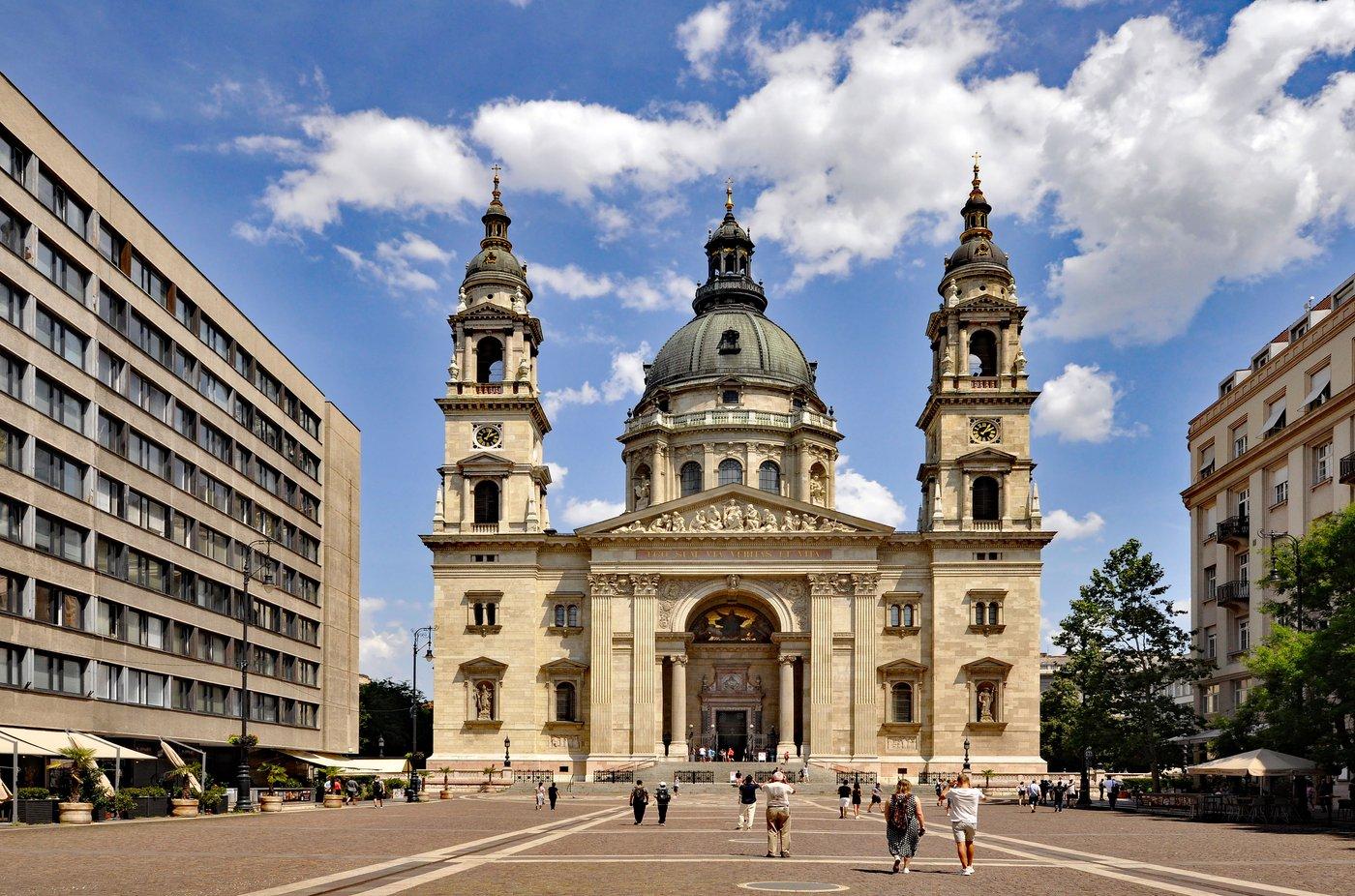
St Stephen's Basilica, in central Pest, is a landmark church of Hungary. The church interior (templomtér) is open Monday-Saturday 9:00-17:45 (tickets until 17:15) and Sunday 13:00-17:45 (tickets 12:30-17:15). The lookout around the great dome is 65 m up, and it is open daily with the treasury 9:00-19:00 (tickets until 18:30). Lifts were put in during the 2003 restoration, so you do not have to climb the roughly 304 steps. Every visitor's ticket is checked at the entrance, and at weekends visits to the church interior may be restricted because of weddings. Student and pensioner discounts are given only at the ticket office next to the basilica, on showing a card that proves eligibility. From December 1, 2025, adult tickets are 2,600 HUF for the church interior, 5,000 HUF for the lookout and treasury and 6,800 HUF for a combined ticket covering both; under-18s, students and pensioners over 65 pay 2,000, 4,000 and 5,500 HUF, and children under 6 go free. It is about 6 minutes on foot from Deák Ferenc tér.
The Danube Promenade and the Shoes on the Danube Bank
On the riverbank south of the Parliament stands the Shoes on the Danube Bank, a memorial of 60 pairs of iron shoes. It is a Holocaust memorial to the Jews whom the Arrow Cross Party, which took power in the last months of the Second World War, lined up on the riverbank, made to take off their shoes and then shot so that they fell into the icy river; film director Can Togay and sculptor Gyula Pauer made it together. Men's, women's and children's shoes are mixed together, cast-iron plaques at three points explain it in Hungarian, English and Hebrew, and passers-by leave candles and stones among the shoes. It is about 15 minutes on foot from the basilica to the riverside, and about 8 minutes from the shoe memorial to the Visitor Centre on the north side of the Parliament (map data).
Széchenyi Chain Bridge and the Parliament at night
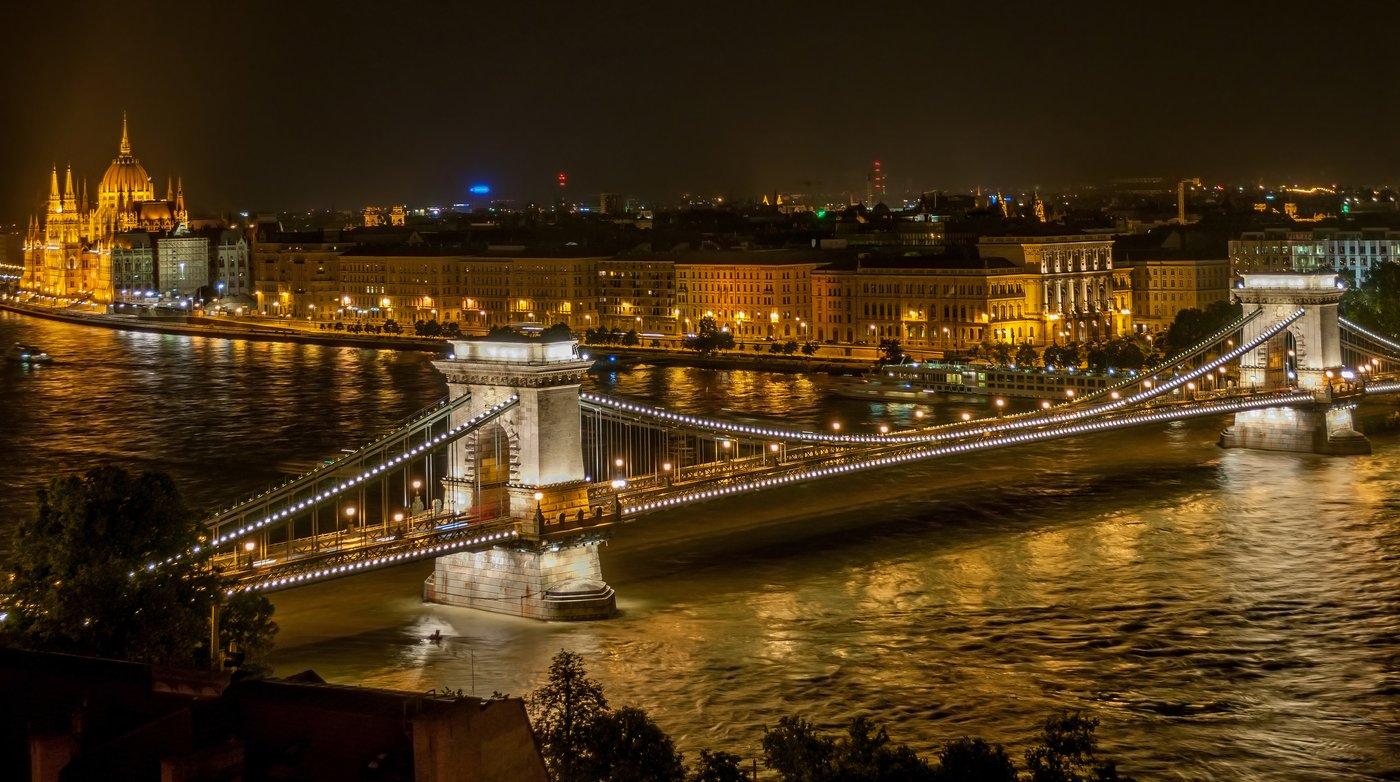
The Széchenyi Chain Bridge was the first permanent bridge across the Danube to link Buda and Pest, and it opened in 1849. It was designed by William Tierney Clark of Britain and built by the Scottish-born Adam Clark, and after retreating German troops blew it up at the end of the Second World War, it was rebuilt and reopened on November 20, 1949. Its structural and heritage restoration was completed in August 2023, and it is now closed to private cars, so only pedestrians, city buses, taxis, motorcycles and bicycles cross it. The stone lions at both ends of the bridge were made by the sculptor János Marschalkó when it was first built. North of the bridge on the Pest bank, the Parliament is a neo-Gothic building designed by Imre Steindl, and its dome is 96 m high. On the night of Day 1, go from the shoe memorial to Kossuth tér in front of the Parliament, then come back down along the riverside to the Chain Bridge (about 19 minutes on foot from the Parliament Visitor Centre to the bridge, map data), looking at the lights of Buda Castle across the river and of the bridge. From the bridge to Deák Ferenc tér is about 13 minutes on foot (map data).
Day 2: The Hungarian Parliament Building, the Buda Castle District and Gellért Hill
Hungarian Parliament guided tour
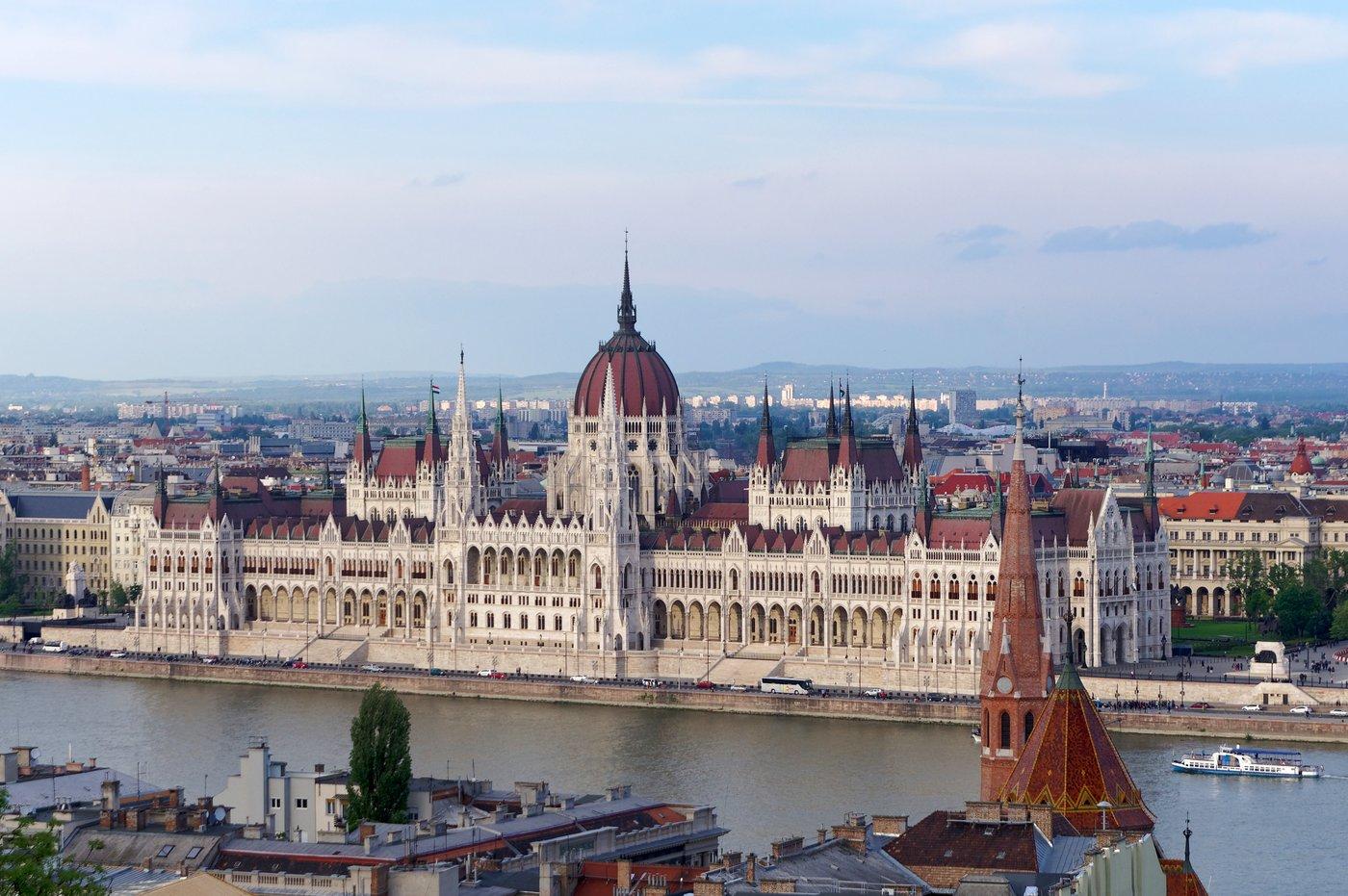
The Parliament tour is a 45-minute guided tour, and you buy a ticket for a set entry time in advance. You see the Main Staircase, the Dome Hall, where the Holy Crown is kept, and the former Upper House chamber and its lounge, while hearing about the building's history, architecture and artworks. Guides and audio guides are in Hungarian, English, French, German, Italian and Spanish, and Korean, Chinese and Japanese are available by audio guide. It is open daily 8:00-16:00 in January-March and November-December, and daily 8:00-18:00 in April-October. Prices depend on nationality: South Korean passport holders, as nationals of a country outside the European Economic Area (EEA) and Switzerland, pay 14,000 HUF for adults and 7,000 HUF for students aged 6-24, and children under 6 go free. A family of 1-2 adults visiting with at least one child aged 14 or under pays 11,200 HUF per adult and 5,600 HUF per child aged 6-14 on the family ticket, with up to 3 children's tickets.
Nationality and discount eligibility are checked when you go in, so bring your passport, and children under 14 go in with an adult. You cannot take large bags through security, and the only drinks allowed are colourless, non-alcoholic drinks in unbreakable plastic bottles of 0.5 L or less. To protect the Holy Crown, you cannot take photos in the Dome Hall or at the security check. Online tickets can be bought only with a bank card; you can change the time, for a fee, up to 3 hours before the start, but you cannot get a refund, and if you are late, you may be refused entry, in which case the ticket cannot be changed or refunded, so allow time for the security check and arrive early. Tours are sometimes cancelled even just before they start because of parliamentary business or state events, and in that case you get a refund. The ticket office in the Visitor Centre also sells a small number of tickets for the same day and accepts forint cash and cards.
Matthias Church
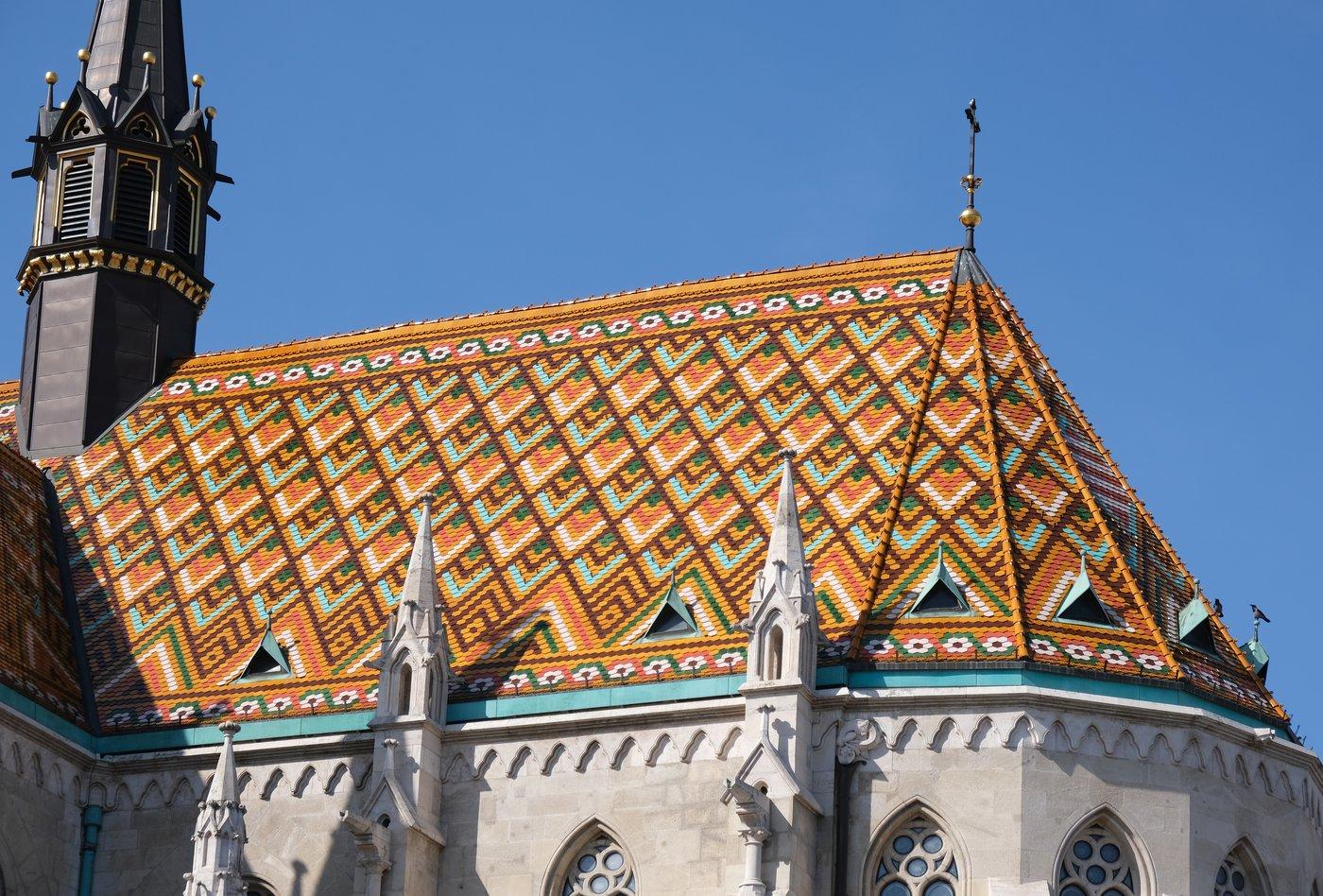
Matthias Church stands on Holy Trinity Square in the middle of the Buda Castle District, and its official name is the Church of Our Lady of Buda Castle (Budavári Nagyboldogasszony-templom). It was founded in the 13th century and used as a mosque in the Ottoman period, and at the end of the 19th century the architect Frigyes Schulek stripped out everything that was not medieval and rebuilt it as the neo-Gothic church you see today. Its roof, covered in glazed tiles from the Zsolnay factory, and its two towers of different heights are the defining features of its exterior, and the 15 m Holy Trinity Column in the middle of the square was put up after the plague ended at the end of the 17th century. It is open Monday-Friday 9:00-17:00, Saturday 9:00-12:15 and Sunday 13:15-17:00, and the hours may change because liturgies and state visits take priority, so check that day's hours on the church website. Church tickets are 3,400 HUF for adults, 5,000 HUF with an audio guide and 2,700 HUF for students and pensioners, and children under 6 go free; you can use them on any day in the year you buy them, not only on the day you chose. You listen to the audio guide on your own smartphone (free Wi-Fi in the church). Tickets are not refundable. The taller tower, the Matthias Tower, costs a separate 4,000 HUF; it is a 10-minute guided tour for the date and time you chose, and you climb 197 steps with no lift. You reach the church by walking about 10 minutes uphill from Clark Ádám tér at the Buda end of the Chain Bridge (map data).
Fisherman's Bastion
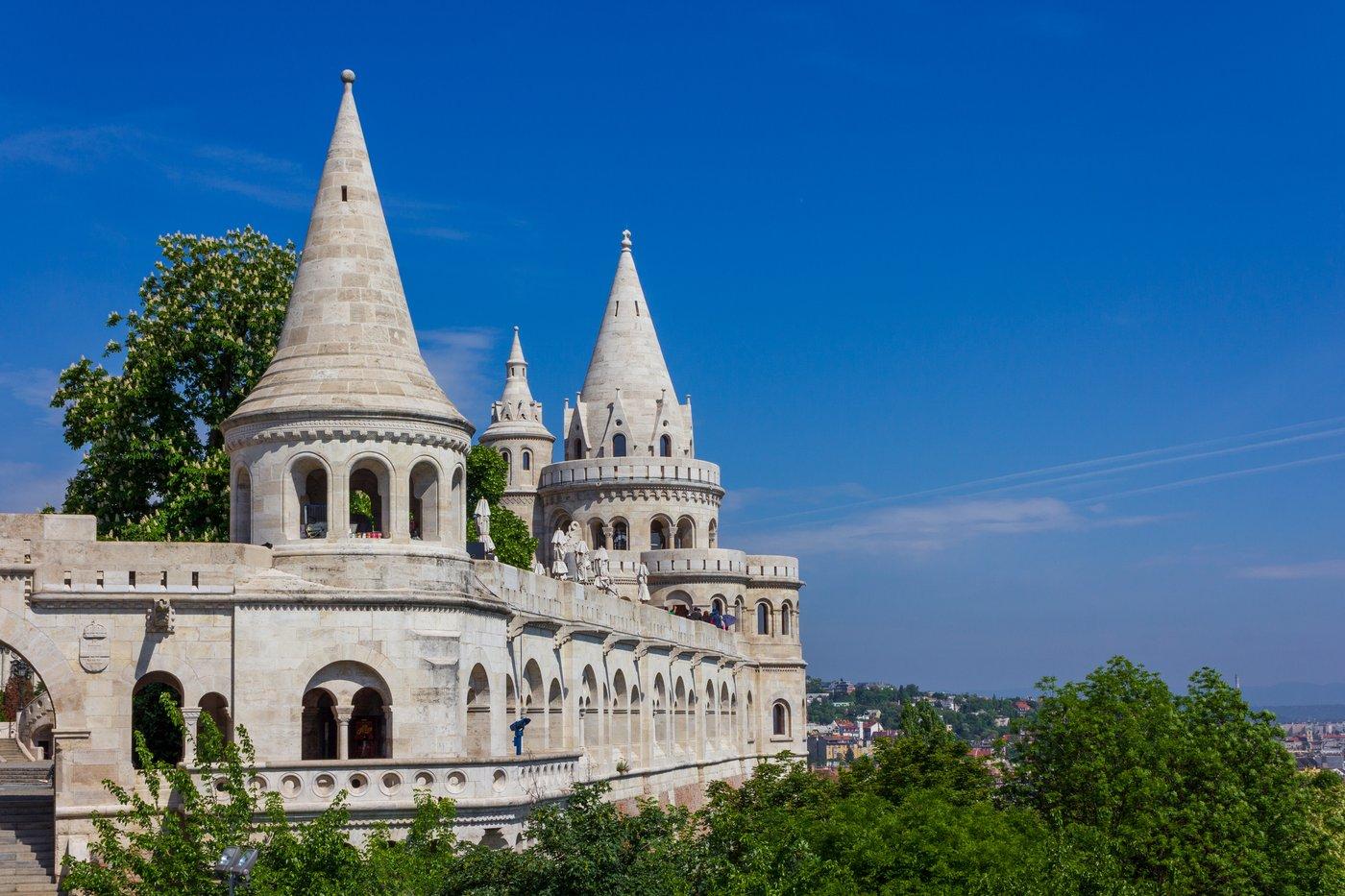
Fisherman's Bastion is a white-stone viewing terrace east of Matthias Church, built in 1895-1902 to designs by Frigyes Schulek. Its seven towers with conical roofs stand for the seven chieftains of the Magyar tribes who settled here at the end of the 9th century. It was badly damaged in the Second World War and soon repaired, and from the 140 m terrace you look down on the Danube, the Parliament and the streets of Pest. For the upper viewing terrace with the towers, you need a ticket 9:00-19:00 (until 21:00 in June-September) during the paid period (January 2 to December 23 in 2026): 1,700 HUF for adults and free for children under 6, and under-14s and students can buy half-price tickets only at the ticket office. Before 9:00 and after the paid hours end, you can go up the towers for free, and no charge is made on March 15, August 20 and October 23 or outside the paid period, on January 1 and December 24-31. It is less than a minute on foot from Matthias Church.
Buda Castle
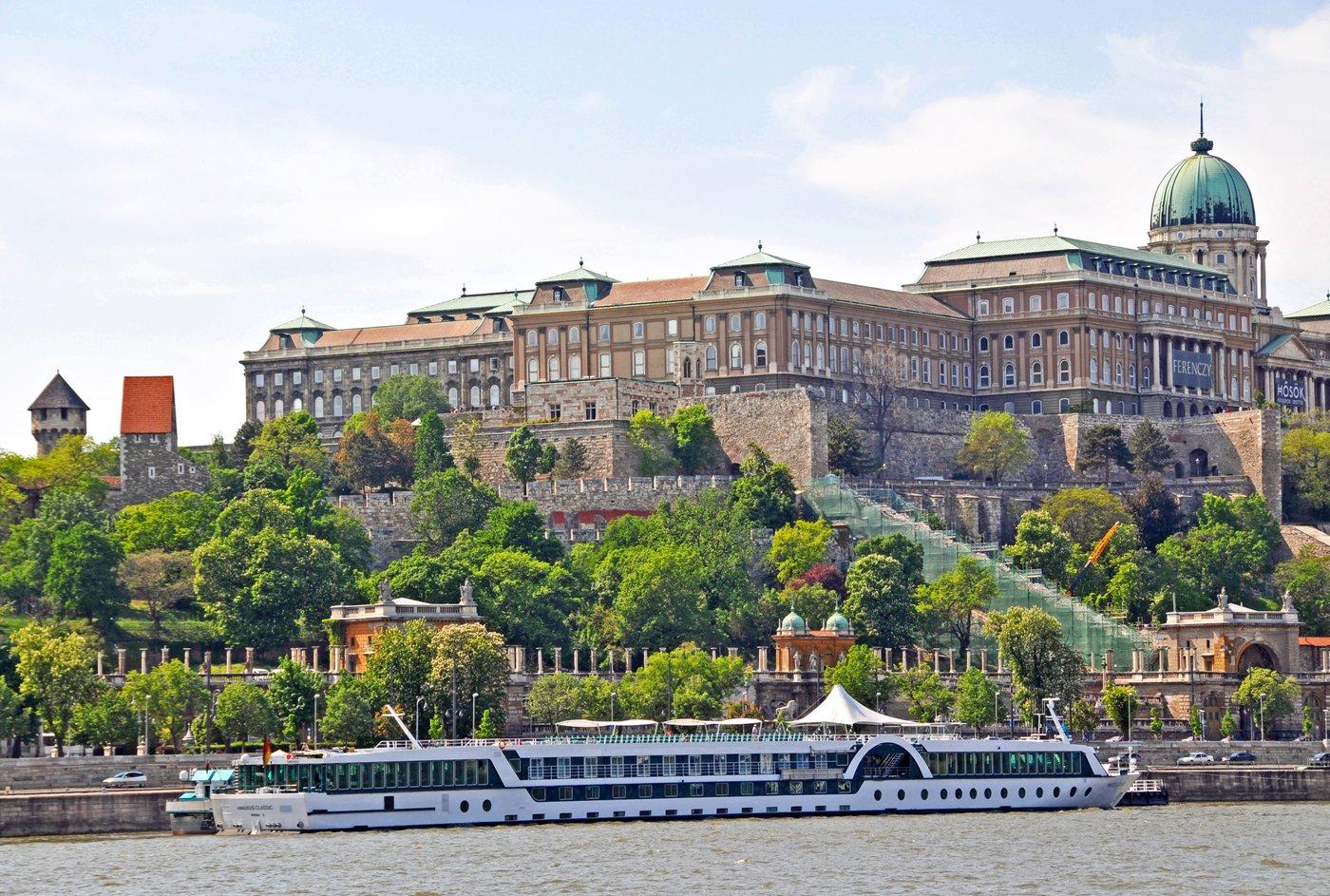
Buda Castle (Budavári Palota) is the former royal palace on the south side of Castle Hill, about 70 m above the Danube. Hungarian kings lived here from the 13th century, and Castle Hill passed in turn through Ottoman, Habsburg, German and Soviet hands. Today the palace buildings house the Hungarian National Gallery, the National Széchényi Library and the Budapest History Museum, and the Buda Castle District has been a UNESCO World Heritage site since 1987. From the viewing terrace in front of the palace you look down on the Danube and the streets of Pest. In this itinerary you walk the terrace in front of the palace and go into the exhibitions inside on a day with rain or snow or on an extra day. The National Gallery is usually open Tuesday-Sunday 10:00-18:00 (last entry 17:00) and closed on Mondays, but over Christmas and the New Year it opens on set days and hours (gallery holiday hours), and St Stephen's Hall (Szent István-terem), in the south wing of the palace, is a room that was lost in the Second World War and rebuilt to the original plans in 2021; it is usually open daily 10:00-18:00 (last tour 17:15), and on Saturdays 10:00-11:00 there are only guided tours in Hungarian, so tablet visits start at 11:00. For St Stephen's Hall, a ticket for going round with a tablet guide is 4,900 HUF for adults (discounts are for citizens of the European Economic Area and some others; under-6s go free), and the same ticket gets you into designated exhibitions of the Budapest History Museum's Castle Museum, usually open daily. Over Christmas and the New Year, also check in advance the hall's tours for the day (ticket information) and whether the Castle Museum is open (holiday hours). It is about 12 minutes on foot from Fisherman's Bastion to the palace (map data).
Gellért Hill and the Citadella
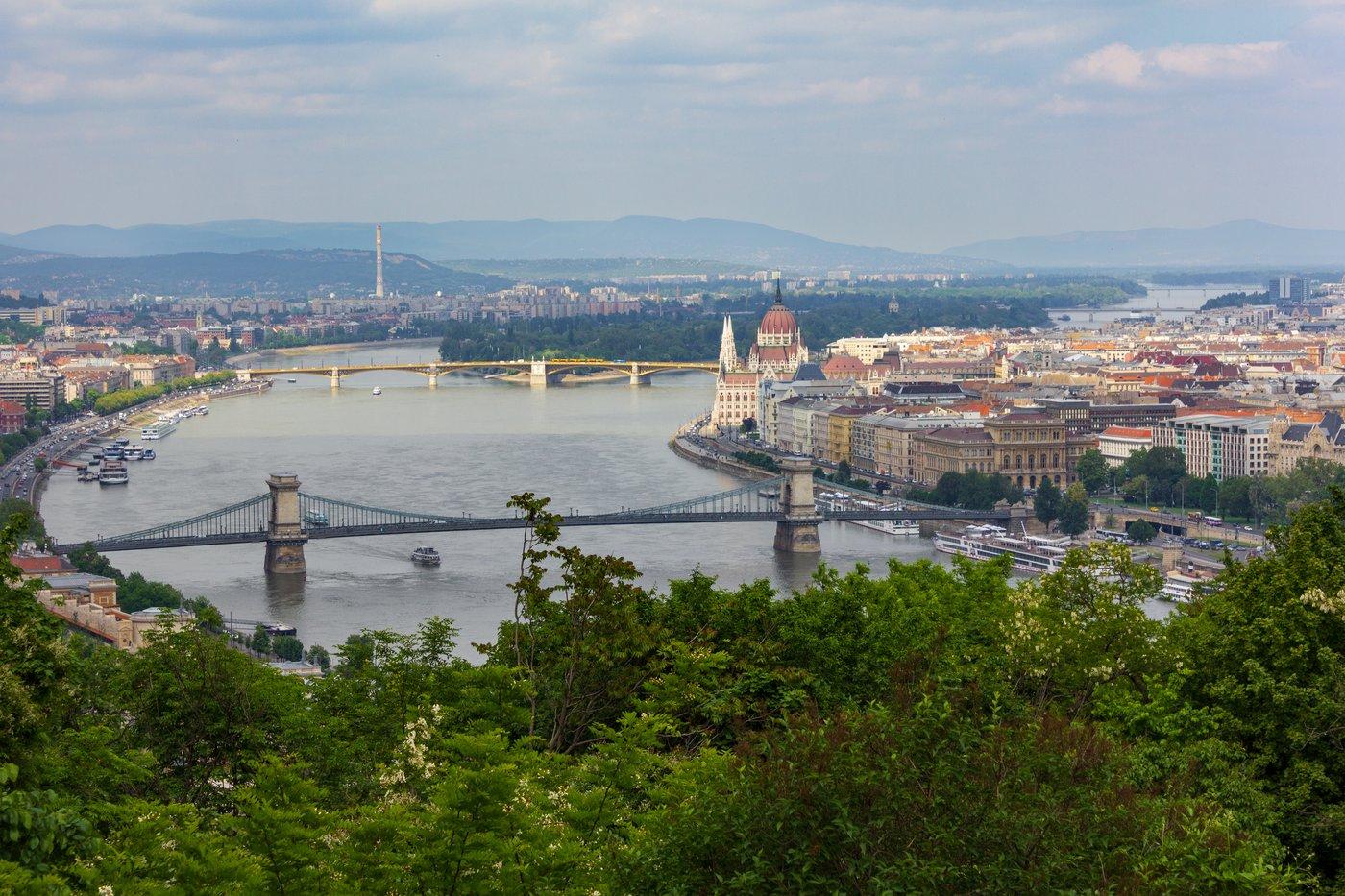
The Citadella is a former fortress on the top of Gellért Hill, and a full renovation created a new park of more than 6,000 m² inside its walls. Anyone can enter the park inside the fortress, the new viewpoints along the walls and the Liberty Statue free of charge during opening hours. It is open 8:00-22:00 in November-March and 6:00-24:00 in April-October. Only 'The Bastion of Liberty', an exhibition on Hungary's struggle for freedom and independence from the Hungarian conquest to the change of regime, and the roof garden and round bastion terrace that you reach through it need a ticket; the exhibition is open 12:00-20:00 on Fridays and 10:00-18:00 on other days, with last entry at 18:40 on Fridays and 16:40 on other days. Tickets are 4,900 HUF for adults; the half-price discounts are only for citizens of the European Economic Area (EEA), holders of EEA student cards and some others, and children under 6 with an adult go free regardless of nationality. Entry is by set time slot, up to 40 people at a time; you must go in within 20 minutes of the time on your ticket, and tickets for a wrongly chosen slot or left unused because you were late cannot be changed or refunded. The park and the exhibition are fully accessible by wheelchair.
From Buda Castle to the Citadella is about 24 minutes on foot (map data), on hilly streets. Bus 27 leaves from Móricz Zsigmond körtér and stops at Búsuló Juhász (Citadella), from where it is about 500 m (about 6 minutes) on foot to the north entrance. It does not connect directly from Buda Castle, so if walking is hard, take a taxi up. In December the sun sets around 15:53 (editorial calculation), so if you leave Buda Castle before 15:00, you look down on the Danube and its bridges at sunset.
Central Market Hall
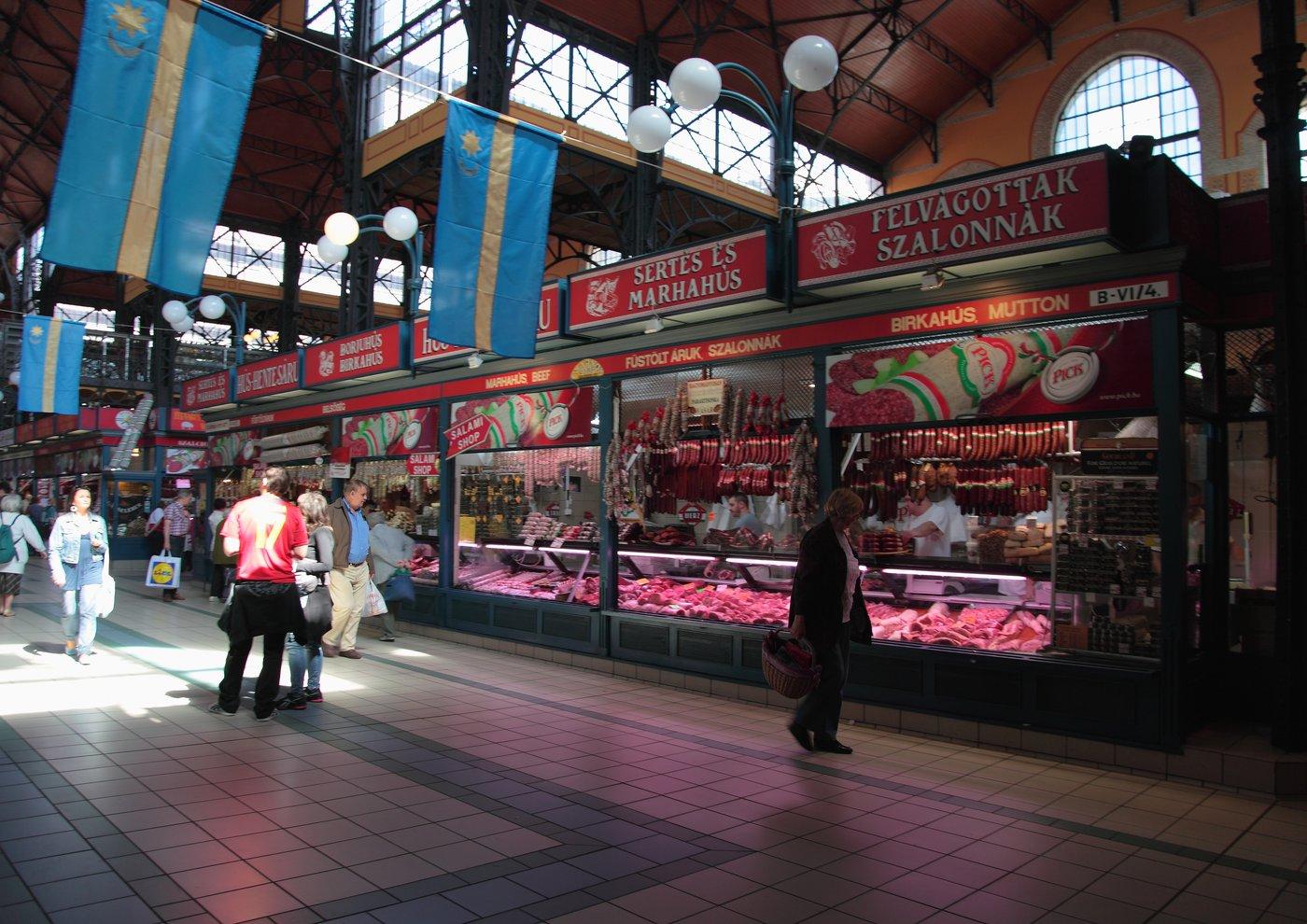
The Central Market Hall (Központi Vásárcsarnok) is the market building at the Pest end of Liberty Bridge. It is open Monday-Friday 6:00-18:00, Saturday 6:00-16:00 and Sunday 10:00-16:00, closed on public holidays and statutory non-working days, and free to enter. It is about 18 minutes on foot from the Citadella across Liberty Bridge, and about 20 minutes on foot from the market to Deák Ferenc tér (map data). On weekdays it is open until 18:00, so in November-January, when the sun sets early, you watch the sunset from Gellért Hill and come down before 17:00 to go in. From February, when the sun sets later than 16:45, or if Day 2 falls on a weekend or a public holiday, move it to lunchtime on Day 3 as in the Day 2 conditions of the itinerary table.
Day 3: Széchenyi Thermal Bath and Heroes' Square
Széchenyi Thermal Bath
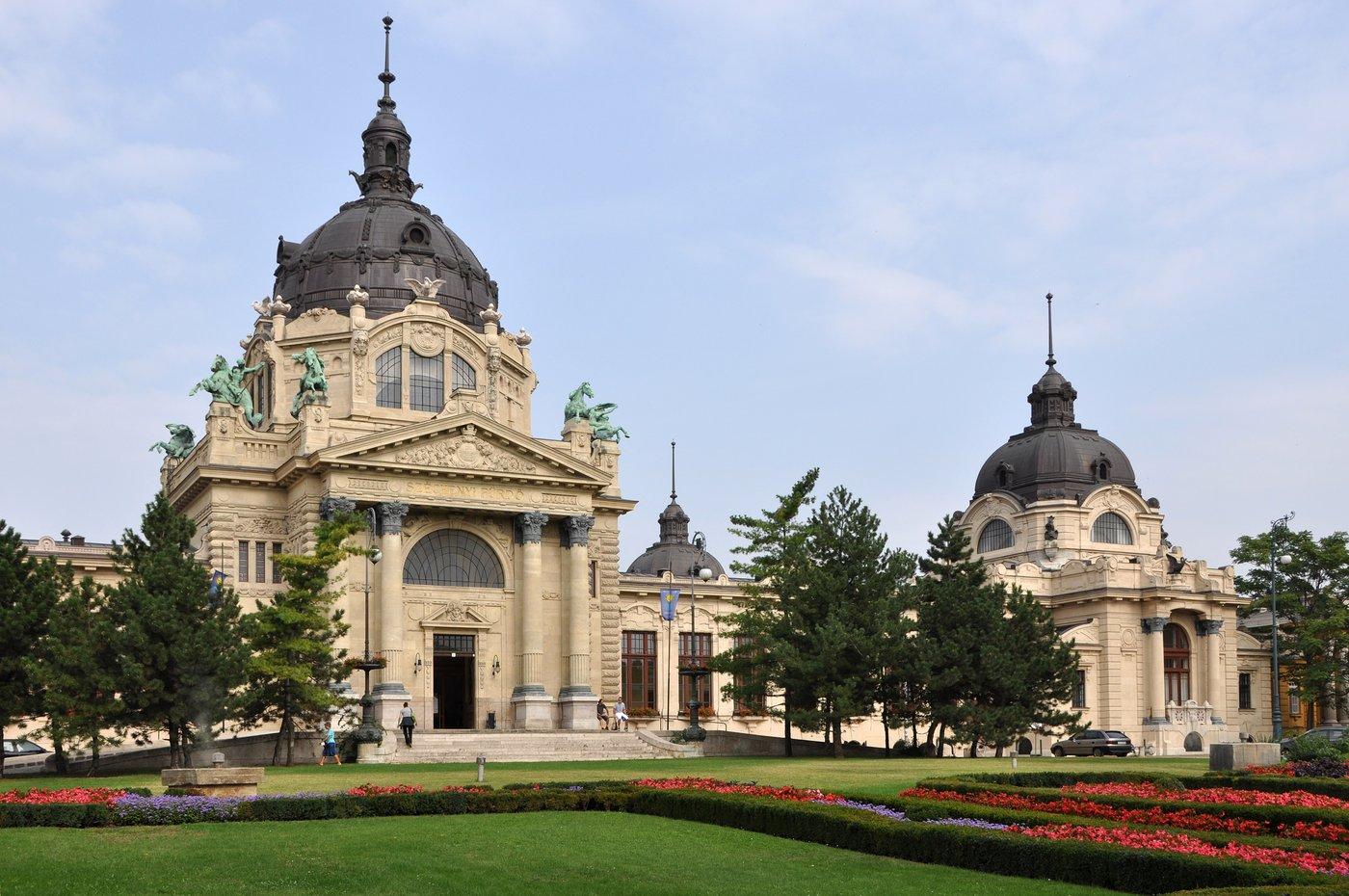
Széchenyi Thermal Bath is a thermal bath in City Park, and since August 1, 2025 it has not admitted children under 14. They cannot use the outdoor pools either (the only exception is a medical visit approved in advance by sending a specialist's certificate 24 hours before), and age may be checked, so teenagers aged 14 and over should bring their original passport. It is open Monday-Thursday 7:00-20:00, Friday 7:00-22:00 and Saturday and Sunday 8:00-20:00; on public holidays and over the year-end and New Year period (December 21, 2026 to January 3, 2027) it is open 8:00-20:00, as at weekends, except 8:00-13:00 on December 24, 8:00-18:00 on December 31 and 10:00-20:00 on December 25 and 26 and January 1 (holiday opening hours). Last entry is 1 hour before closing, and you must leave the pools 20 minutes before closing. A daily ticket with locker use is 13,200 HUF Monday-Thursday, 14,800 HUF Friday-Sunday and 15,800 HUF on public holidays and over the year-end and New Year period, and there are no age discounts or family fares. The 'Good Morning Budapest' ticket, sold only on site 7:00-9:00 on weekdays outside public holidays and the year-end and New Year period, requires you to go in before 9:00 and is 10,500 HUF Monday-Thursday and 11,800 HUF on Friday. The daily ticket with locker costs the same online and on site (Fast Track tickets are sold online only), and when the bath is full, online ticket holders are let in first. Online tickets can be bought 180 days ahead and cannot be changed to another date or refunded.
Slippers (flip-flops or pool sandals) are mandatory, so bring your own. Take them off in the pools; walking around without them is at your own risk if you get hurt. Towels and slippers are not rented out, so if you do not bring them, you buy them in the shop (slippers 4,200 HUF, towel 6,900 HUF). Wear a swimming cap in pools where signs say so. The self-service ticket machines at the entrance opposite the circus take cards only; pay cash at the ticket office at the entrance on the metro line M1 side (the steam entrance). Euros are not accepted. The lockers are about big enough for a backpack, so if you have large luggage, pay 1,000 HUF more and use a changing room (cabin). Two people can share a cabin with only one of them buying a cabin ticket.
Heroes' Square and City Park
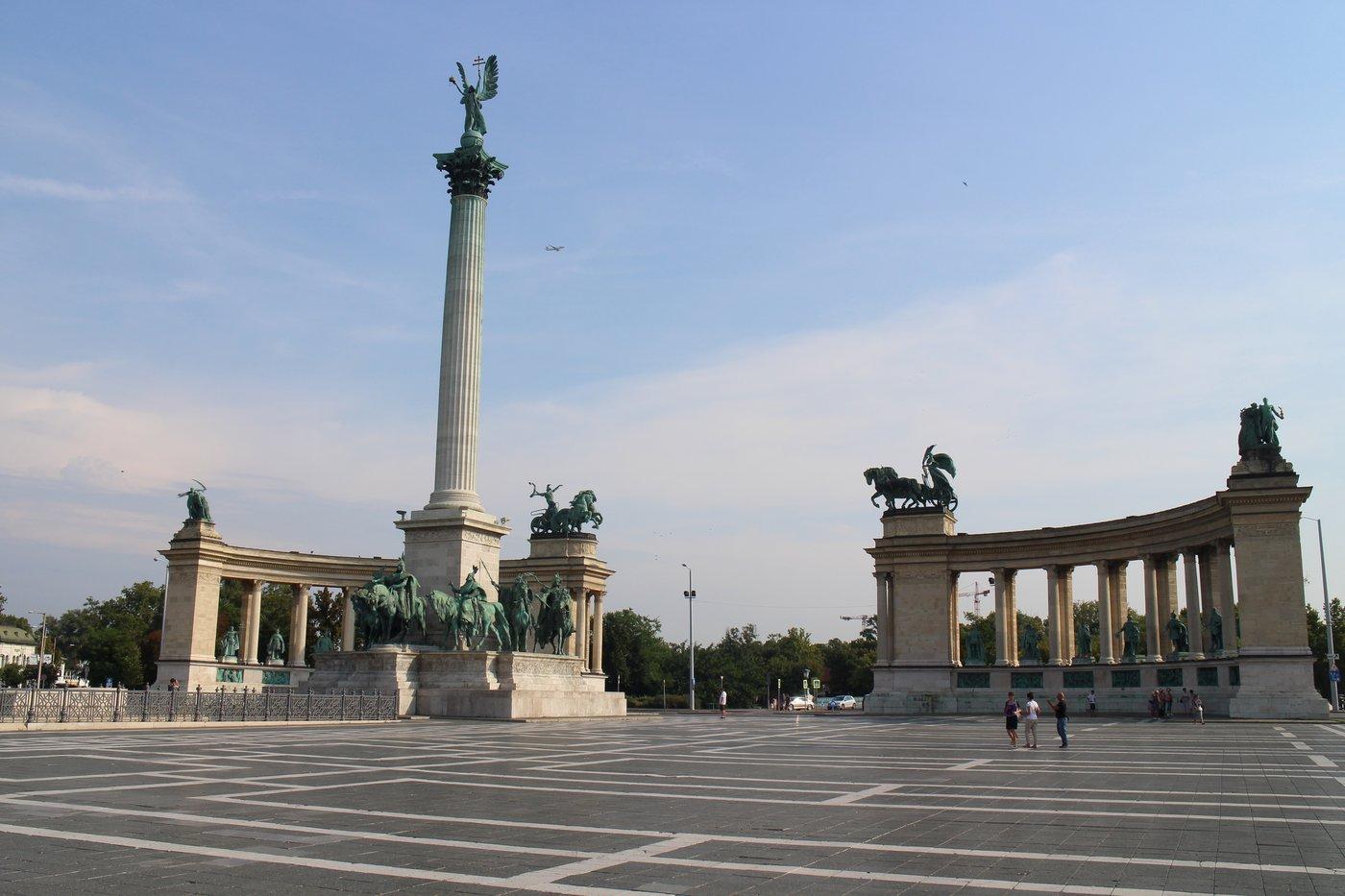
Heroes' Square is the square at the entrance to City Park (Városliget), where Andrássy út ends. It began to take its present form in 1896, a thousand years after the Hungarians settled here, and was completed in 1929. The statue of the Archangel Gabriel on top of the 36 m column was taken down for restoration at the end of 2024, and when it goes back up will be decided after the column has been inspected. At the base of the column are equestrian statues of the seven chieftains and, in front of them, a symbolic tomb honouring the heroes who fell in war, and two semicircular colonnades are lined with statues of the main rulers across a thousand years. Facing the monument, the art exhibition hall (Műcsarnok) is on the right and the Museum of Fine Arts (Szépművészeti Múzeum) opposite it, and Heroes' Square and Andrássy út are a UNESCO World Heritage site. It is about 9 minutes on foot from Széchenyi Thermal Bath, and Vajdahunyad Castle (the Hungarian Museum of Agriculture) by the lake in the park is about 10 minutes further on foot (map data). On the way back, take metro line M1 from Hősök tere station under the square and get off at Opera station.
Hungarian State Opera and Andrássy út
The Hungarian State Opera runs 60-minute English tours daily at 13:30, 15:00 and 16:30. At the end of the tour, young opera singers give a short performance on the landing of the grand staircase, and you can also join a group that has space at the meeting point in the Opera House entrance hall without booking. The tour is 12,000 HUF per person (6,400 HUF for the Hungarian tour), free for children under 3, and groups are limited to 30 people. Tickets appear on the ticket sales page only as your date gets close, and some tours sell out. There are no tours during performances, and during rehearsals you see other areas instead of the auditorium. If you leave on the evening of Day 3, the 13:30 tour fits, and after it ends it is about 10 minutes on foot from the Opera House to Deák Ferenc tér (map data).
Opening hours and prices
| Place | Hours | Closed | Adult price | Time to spend |
|---|---|---|---|---|
| St Stephen's Basilica | Church interior Mon-Sat 9:00-17:45, Sun 13:00-17:45 (tickets until 17:15). Lookout and treasury daily 9:00-19:00 (tickets until 18:30) | None (church interior restricted during weekend weddings) | Church interior 2,600 HUF, lookout and treasury 5,000 HUF, combined ticket 6,800 HUF (under 6 free) | 1 hr |
| Danube Promenade and Chain Bridge | Always open | None | Free | 1 hr 30 min |
| Hungarian Parliament Building | Jan-Mar and Nov-Dec daily 8:00-16:00, Apr-Oct daily 8:00-18:00 | None (cancelled for parliamentary business or state events) | Nationals of countries outside the EEA and Switzerland 14,000 HUF (students aged 6-24 7,000 HUF, under 6 free) | 45 min |
| Matthias Church | Mon-Fri 9:00-17:00, Sat 9:00-12:15, Sun 13:15-17:00 | None (hours change for liturgies and state visits) | 3,400 HUF (5,000 HUF with audio guide, under 6 free). Tower separately 4,000 HUF | 45 min |
| Fisherman's Bastion | Upper viewing terrace paid hours 9:00-19:00 (Jun-Sep 9:00-21:00; paid period January 2 to December 23 in 2026), free at other times and on other days | None | Viewing terrace 1,700 HUF (under 6 free; under 14 and students half price on site) | 30 min |
| Buda Castle | National Gallery usually Tue-Sun 10:00-18:00 (last entry 17:00), St Stephen's Hall usually daily 10:00-18:00 (tablet visits from 11:00 on Saturdays) | National Gallery usually on Mondays (set separately over Christmas and the New Year) | St Stephen's Hall 4,900 HUF (including tablet guide). Separate ticket for the National Gallery | 1 hr |
| Citadella | Park Nov-Mar 8:00-22:00, Apr-Oct 6:00-24:00. Exhibition Fri 12:00-20:00, other days 10:00-18:00 | None | Park free. Exhibition 4,900 HUF (discounts for EEA citizens and some others, under 6 free) | 1 hr |
| Central Market Hall | Mon-Fri 6:00-18:00, Sat 6:00-16:00, Sun 10:00-16:00 | Public holidays and statutory non-working days | Free | 45 min |
| Széchenyi Thermal Bath | Mon-Thu 7:00-20:00, Fri 7:00-22:00, Sat and Sun 8:00-20:00 (from 8:00 on public holidays and over the year-end and New Year period, until 13:00 on Dec 24 and 18:00 on Dec 31, from 10:00 on Dec 25 and 26 and Jan 1) | None | Daily ticket Mon-Thu 13,200 HUF, Fri-Sun 14,800 HUF, public holidays and the year-end and New Year period 15,800 HUF. No entry for under-14s except medical visits | 2 hr 30 min |
| Heroes' Square and City Park | Always open | None | Free | 45 min |
| Hungarian State Opera tour | Daily 13:30, 15:00, 16:30 (English, 60 min) | No tours while a performance is on | 12,000 HUF (under 3 free) | 1 hr |
Prices are for one adult, as shown on each operator's website on November 24, 2026, and the time to spend is the time allowed in this itinerary. Some places change their hours on public holidays and for events, so check each website again the day before you go.
Itinerary changes by companion and situation
| Companion or situation | Days to change | Drop | Add | Why |
|---|---|---|---|---|
| With children (under 14) | Morning of Day 3 | Széchenyi Thermal Bath | Budapest Zoo next to Széchenyi Thermal Bath (Nov-Feb 9:00-16:00, entry until 15:00; Dec 24 and 31 9:00-13:00, entry until 12:00) | Széchenyi Thermal Bath does not admit under-14s, even to the outdoor pools. The zoo is about 5 min on foot from the bath and about 7 min from Heroes' Square, so the order of Day 3 stays the same (map data), and the same ticket also gets you into the indoor houses (the Palm House, the aquarium, the Biodome and others). Adults 5,900 HUF, ages 2-18 4,200 HUF, and under-2s also need a 400 HUF ticket |
| Rain or snow, or a bitterly cold day | Afternoon of Day 2 | The walk up Gellért Hill | The Hungarian National Gallery inside Buda Castle (usually Tue-Sun 10:00-18:00, last entry 17:00) | Gellért Hill is an outdoor uphill walk and a place you go for the view, so when it rains or snows, spend the afternoon inside the buildings of Buda Castle, the stop just before it. The gallery is usually closed on Mondays and also on some days over Christmas and the New Year, so if it is closed that day, switch to St Stephen's Hall in the same palace (usually daily 10:00-18:00) or the Castle Museum. Check in advance the hall's tours for the day and whether the Castle Museum is open, and see whichever is available; if neither is, see only the terrace in front of the palace and go back to your hotel |
| Companions who find walking hard | Days 2 and 3 | The uphill walk from the Chain Bridge to the Buda Castle District, the walk from Buda Castle to Gellért Hill, and metro line M1 on Day 3 | Taxis from the Parliament to the Buda Castle District and from Buda Castle to the Citadella, and on Day 3 from your hotel to Széchenyi Thermal Bath and from Heroes' Square to the Opera House | The walking on Day 2 comes to about 9.6 km in all, and Clark Ádám tér to Matthias Church (about 10 min) and Buda Castle to the Citadella (about 24 min) are uphill (map data). Taxis can drive up into the Buda Castle District, so it is about 10 min by car from the Parliament to Matthias Church, and there is also a road up to the Citadella, about 8 min by car from Buda Castle (map data, without traffic). To go by bus, cross the Chain Bridge and take bus 16 from Clark Ádám tér up to the Castle District; bus 27 to the Citadella leaves from Móricz Zsigmond körtér and does not connect directly from the palace, so take a taxi. The Buda Castle Funicular (Sikló) at Clark Ádám tér costs a separate 4,500 HUF one way, drops you in front of the palace and closes for maintenance on Mondays of odd-numbered weeks (on the next working day if that Monday is a public holiday); over Christmas and the New Year it is closed or opens late on some days (BKV service information), and then you go up by bus 16 or taxi. Metro line M1 has no step-free stations, so on Day 3 replace its two legs with taxis |
| Extending to 3 nights and 4 days | Day 4 | Collecting your bags and going to the airport on Day 3 (moved to Day 4) | St Stephen's Hall inside Buda Castle (usually daily 10:00-18:00, tablet guide; from 11:00 on Saturdays), the Budapest History Museum's Castle Museum and the Hungarian National Gallery (usually Tue-Sun 10:00-18:00) | On Day 2 you see Buda Castle only from the viewing terrace in front of the palace and move on. The St Stephen's Hall ticket (4,900 HUF for adults) also gets you into designated exhibitions of the Budapest History Museum's Castle Museum, and you go up to the Castle District by bus 16 from Deák Ferenc tér. Check in advance the hall's tours for the day and whether the Castle Museum and the National Gallery are open, and see whichever is available (the National Gallery is usually closed on Mondays and also on some days over Christmas and the New Year); if none is, see only the terrace in front of the palace |
If your dates fall on public holidays or over the year-end and New Year period, some places change. The Central Market Hall closes on public holidays, and Széchenyi Thermal Bath opens at 8:00 on public holidays and over the year-end and New Year period, with no 'Good Morning Budapest' ticket, opens at 10:00 on December 25 and 26 and January 1, and closes early on December 24 and 31. The upper viewing terrace of Fisherman's Bastion charges nothing on March 15, August 20 and October 23 or outside the paid period, on January 1 and December 24-31 (2026 rules). The National Gallery and the Buda Castle Funicular also close or change their hours on some days over Christmas and the New Year. The Parliament tour is sometimes cancelled even just before it starts because of parliamentary business and state events, so check the booking screen again the day before you go. Other places may also change their hours on public holidays, so check that day's hours on each website.
Where to eat: the Central Market Hall and the meal-cost benchmark
This guide does not pick restaurants, and it sets food at KRW 21,000-48,000 per person per day. Tripop shows costs in South Korean won (KRW). The low end is 5,308 HUF a day (about KRW 21,000), the sum of national average prices for October 2026 published by the Hungarian Central Statistical Office (a two-course set meal for one 2,500 HUF, a hamburger 2,160 HUF, a double espresso 648 HUF); because these are national averages, they are used only as the low end. The high end is the €32 a day (about KRW 47,000) that the German Federal Ministry of Finance set as the 2026 meal allowance for business trips to Hungary, rounded up to the nearest KRW 1,000. The Central Market Hall, where you stop on the evening of Day 2 or at lunchtime on Day 3, sells Hungarian foods such as salami, paprika, Tokaji wine, honey and cheese on the ground floor, and goulash soup, pörkölt, lángos and rétes in the food court upstairs. Won amounts were converted at the European Central Bank reference rate of November 23, 2026 (1,000 HUF ≈ KRW 3,963).
Budapest 2 nights 3 days budget (per person)
The cost for one person for 2 nights and 3 days is about KRW 460,000-700,000, excluding flights. This is one person's share when two adults share one room. Tripop shows costs in South Korean won (KRW), so forints are converted at the European Central Bank reference rate of November 23, 2026 (1,000 HUF ≈ KRW 3,963).
| Item | Per person | Calculation |
|---|---|---|
| Lodging (2 nights) | About KRW 190,000-320,000 | KRW 190,000-320,000 per room per night (2 adults) × 2 nights ÷ 2 people |
| Transport | About KRW 23,000-26,000 | 100E bus return 5,000 HUF + 2-3 single tickets (1,000-1,500 HUF) = 6,000-6,500 HUF |
| Admissions and activities | About KRW 184,000-206,000 | Basilica lookout 5,000 + Parliament 14,000 + Matthias Church 3,400 + Fisherman's Bastion 1,700 + Széchenyi Thermal Bath 10,500-15,800 + Opera House tour 12,000 = 46,600-51,900 HUF |
| Food (3 days) | About KRW 63,000-144,000 | About KRW 21,000-48,000 a day × 3 days (low end: Hungarian Central Statistical Office average prices; high end: German Federal Ministry of Finance 2026 meal allowance for business trips to Hungary, €32) |
| Total | About KRW 460,000-696,000 | Sum of the four rows above (excluding flights) |
Lodging is set at KRW 190,000-320,000 a night: 80-130% of KRW 243,660, the rate seen on November 24, 2026 for one night in a Standard Double Room on Wednesday, December 9, 2026 at Hotel Zenit Budapest Palace (about 7 minutes on foot from Deák Ferenc tér, map data), which the booking site Booking.com labels 4 stars (2 adults, taxes and other charges included, breakfast KRW 26,406 extra, free cancellation before December 8), rounded down and up to the nearest KRW 10,000. This hotel is not a recommendation but a benchmark for measuring the price, and the star count is the booking site's label. Széchenyi Thermal Bath is counted at 10,500 HUF if Day 3 is Monday-Thursday and you go in before 9:00, and at 15,800 HUF for a daily ticket on a public holiday or over the year-end and New Year period; this guide's example (a Friday, before 9:00) is 11,800 HUF. The Parliament ticket is counted at the price the operator publishes; if a fee is added when you pay online, it costs that much more. The single tickets are two M1 rides on Day 3 at the low end, plus one ride on bus 16 on Day 2 for a companion who finds walking hard at the high end. The Citadella exhibition (4,900 HUF), the Matthias Tower (4,000 HUF), taxis for a companion who finds walking hard, travel insurance and souvenirs are not included, and if you pay by card, your card issuer's exchange rate and fees apply. The city cost screen in the Tripop app and website divides the three-day totals for transport and admissions into daily amounts, rounding the low end down and the high end up to the nearest KRW 1,000, and adds souvenirs (KRW 0-20,000 a day), so it shows about KRW 457,000-758,000 per person, slightly different from this table.
Weather and sunset, November-March
| Month | Mean maximum temperature | Mean minimum temperature | Mean precipitation |
|---|---|---|---|
| November | 9.4°C | 3.1°C | 48 mm |
| December | 3.5°C | -1.4°C | 40 mm |
| January | 3.0°C | -2.5°C | 31 mm |
| February | 5.8°C | -1.3°C | 33 mm |
| March | 11.3°C | 2.3°C | 32 mm |
These are the 1991-2020 averages of HungaroMet (the Hungarian Meteorological Service) for Budapest (the Pestszentlőrinc station). Sunset times, calculated by Tripop's editors with the NOAA solar calculation for the coordinates of the Chain Bridge, are 16:08 on November 15, 2026, 15:55 on December 1, 15:53 on December 15, 16:03 on January 1, 2027, 16:19 on January 15, 16:45 on February 1, 17:07 on February 15 and 17:28 on March 1 (not an official table). In December, even daytime temperatures stay at 3-4°C above freezing, so bring a thick outer layer and gloves for the riverside walk on the night of Day 1 and for Gellért Hill on Day 2.
Things not to forget
- Passport and EES: a South Korean passport must be valid for at least 3 months after the day you leave the Schengen Area and must have been issued within the 10 years before the day you enter. On your first entry into the Schengen Area, you register a facial image and 4 fingerprints at passport control (no fingerprints for children under 12).
- Bookings: buy the Parliament tour (set time, refunded only if the tour is cancelled) before you leave, and for Széchenyi Thermal Bath, buy an online ticket if Day 3 is a weekend day, a public holiday or in the year-end period, or you go in after 9:00.
- Check the day of the week: Matthias Church closes at 12:15 on Saturdays and opens at 13:15 on Sundays, the Central Market Hall closes at 16:00 on Saturdays and Sundays, and the National Gallery is usually closed on Mondays (set separately over Christmas and the New Year).
- A contactless bank card and a few forints: you buy tickets by tapping your card on the 100E bus and at metro entrances, and the self-service ticket machines at Széchenyi Thermal Bath also take cards only. Bring a little forint cash for markets and small shops.
- Travelling with under-14s: Széchenyi Thermal Bath does not admit under-14s, and at the Parliament under-14s go in with an adult.
- For the bath: bring a swimsuit and slippers (mandatory). Slippers and towels are not rented out, so if you do not bring them, you have to buy them in the shop, and wear a swimming cap in pools where signs say so.
- A thick outer layer and gloves: in December the mean maximum temperature is 3.5°C, and the sun sets around 15:53.
Wrapping up
This 2-night, 3-day Budapest itinerary has you staying near Deák Ferenc tér and getting around mostly on foot. On the evening of Day 1 you go up to the St Stephen's Basilica lookout and walk the Danube Promenade and the Chain Bridge at night; on Day 2, after the Parliament tour, you cross the bridge to see Matthias Church, Fisherman's Bastion and Buda Castle, then climb Gellért Hill at sunset and, on a weekday in November-January, come down to the Central Market Hall; and on Day 3 you see Széchenyi Thermal Bath, Heroes' Square and the Opera House tour before you leave. There are three things to settle in advance: the time of the Parliament tour (before 10:00 if it is a Saturday), the time you go into the bath on Day 3 (the 'Good Morning Budapest' ticket on site if it is before 9:00 on a weekday outside public holidays and the year-end period, an online ticket otherwise), and the time of your flight home (drop the Opera House tour if it is earlier than 19:00). City information and places for Budapest are collected on the Budapest travel guide.
The booking card below this article links to a partner booking site's collection of Budapest products. This guide does not pick any specific product from it, and products bought there may have entry and cancellation conditions that differ from this guide (which assumes booking directly with each operator), so follow the conditions on the product page.
Carry this itinerary in Tripop
Add this itinerary to the Tripop app and open it once on the device you will travel with to see the places and notes saved on it offline, and put the Parliament tour time and the type of Széchenyi Thermal Bath ticket in a note. Keep screenshots of your tour and bath bookings as vouchers, and when rain or the day of the week makes you change the order, long-press an item and drag it to a new spot. A shared expense log for you and your companions is included too. Get the app from Tripop and build your trip from this itinerary.
What we verified
Tripop checked the hours, prices and transport information in this guide on November 24, 2026 against the official information of Budapest Airport, the Centre for Budapest Transport (BKK) and the Budapest Transport Company (BKV), Budapestinfo, the Office of the National Assembly, St Stephen's Basilica, Matthias Church, Budavár Municipality (District I) and its city operations company (for Fisherman's Bastion), the Hungarian National Gallery, St Stephen's Hall, the Citadella, the Budapest market management company (for the Central Market Hall), Széchenyi Thermal Bath, the Hungarian State Opera, Budapest Zoo, the City Park operator (Városliget Zrt.), the European Commission, the Embassy of the Republic of Korea in Hungary, the Hungarian national legislation database, HungaroMet, the Hungarian Central Statistical Office, the German Federal Ministry of Finance and the European Central Bank. BKK's fares and ticket rules, the metro line M1 timetable and the City of Budapest's taxi tariff decree published by BKK were read from copies saved in the Internet Archive (saved between November 2025 and November 2026). Lodging prices are the rates Booking.com showed on November 24, 2026, and walking times, driving times and sunset times were calculated by Tripop's editors from map data (OpenStreetMap) and the NOAA solar calculation. None of the photos were taken by us; they are all reference photos from Wikimedia Commons. If you find anything that differs from reality, please let us know and we will fix it.
The Wikimedia Commons photos are listed in article order with year and author. They are resized only (not cropped or edited).
- Hungarian Parliament Building (2023) · Pierre Blaché / CC0
- St Stephen's Basilica (2018) · P. Hughes / CC BY 4.0
- The Széchenyi Chain Bridge at night (2013) · Wilfredor / CC0
- The Parliament from Fisherman's Bastion (2019) · Jakub Hałun / CC BY-SA 4.0
- The roof of Matthias Church (2023) · kallerna / CC BY-SA 4.0
- Fisherman's Bastion (2014) · Perituss / CC0
- Buda Castle (2012) · Dennis G. Jarvis / CC BY-SA 2.0
- Budapest from Gellért Hill (2014) · Perituss / CC0
- Central Market Hall (2012) · Christine Zenino / CC BY 2.0
- The main building of Széchenyi Thermal Bath (2009) · Marc Ryckaert / CC BY 3.0
- Heroes' Square (2018) · Suicasmo / CC BY-SA 4.0


Images: Wikimedia Commons. Authors and licences are listed above.