
Beijing gathers a 600-year imperial city (Forbidden City, Temple of Heaven), the World Heritage Great Wall, the alley life of the hutongs, and a modern art district into one capital. Five days never feel wasted. This plan splits it by district (the imperial core, a Great Wall day trip, the northwest gardens, and the art/hutong scene), one per day with no backtracking. Tripop's AI drafted the skeleton; we added on-the-ground routing, budget, food, and the practical know-how that Beijing specifically demands.
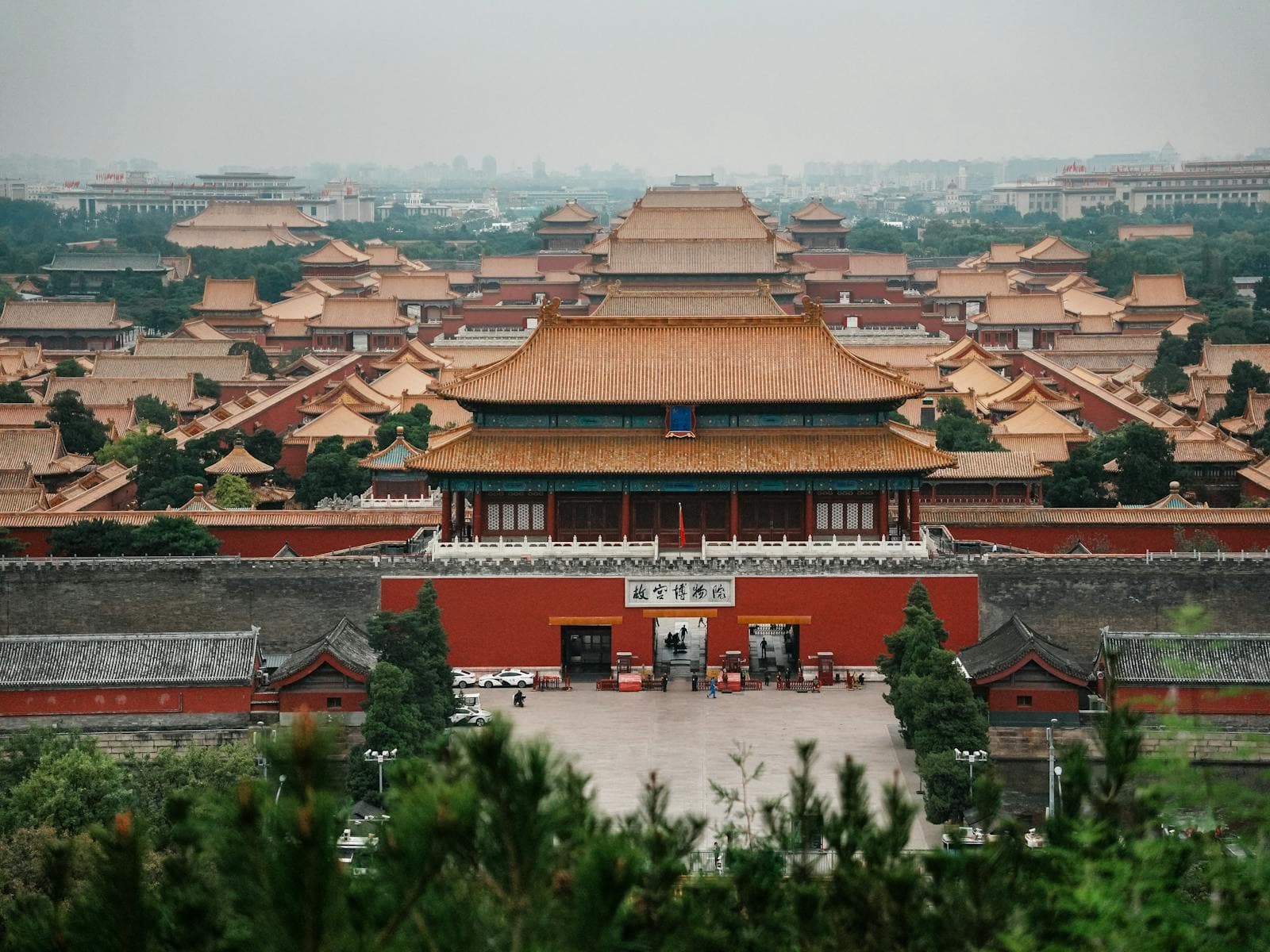
Crimson walls and golden roofs line up to the horizon. The imperial palace of two dynasties across five centuries (and the world's largest wooden palace complex), it shows you exactly what kind of city Beijing is from the very first scene.
Why 4 nights, 5 days: imperial core + Great Wall + gardens + hutongs
Beijing keeps its imperial core (Forbidden City, Temple of Heaven) far from its outskirts (Great Wall, Summer Palace), so 2–3 days barely scratch the essentials. Five days lets you split by district, one per day:
- Day 1 (arrival): Wangfujing + the Shichahai & Nanluoguxiang hutongs
- Day 2: Tiananmen Square + the Forbidden City (Palace Museum) + Jingshan Park
- Day 3: the Mutianyu Great Wall (day trip)
- Day 4: the Temple of Heaven + the Summer Palace + the 798 Art District
- Day 5 (departure): the Nanluoguxiang hutong + fly out
That balances imperial grandeur (Forbidden City), a World Heritage hike (Great Wall), a royal garden (Summer Palace), and alley character with modern art (hutongs, 798).
Before you go: visa, internet (the Great Firewall), payments
Beijing needs more prep than most overseas cities. Handle these three things in advance.
- Visa / visa-free transit: Tourism generally needs a Chinese tourist visa. But citizens of 55 countries with an onward ticket to a third country can use Beijing's 240-hour (10-day) visa-free transit (limited to the Beijing–Tianjin–Hebei region; apply at the visa-free counter on arrival and get a passport stamp). It doesn't apply if China is your final destination, so confirm the current rules for your nationality and route before you fly.
- Internet (the Great Firewall): On the Chinese mainland, Google, Maps, Instagram, YouTube, and some messengers are blocked. To use them normally you'll essentially need a VPN installed before arrival, or carrier roaming / a foreign eSIM (roaming via servers outside China bypasses the block). Downloading a VPN on the ground is hard, so set it up at home.
- Payments (Alipay/WeChat Pay): Beijing runs on mobile payments; cash has nearly vanished. Set up Alipay and WeChat Pay with passport verification and a foreign credit/debit card before you leave. Install both (when one fails at a merchant, the other often works). Transactions under CNY 200 are usually fee-free. Carry a little emergency cash too.
From the airport to the city: Capital (PEK) / Daxing (PKX)
| Airport | Into the city |
|---|---|
| Capital (PEK) | Airport Express → Dongzhimen (transfer to Lines 2 and 13), ~25 min, CNY 25. Runs early to late |
| Daxing (PKX) | Daxing Airport Express → Caoqiao (transfer to Line 19), ~22 min, CNY 35. Or the Jing-Xiong high-speed train to Beijing West |
Both airports connect straight into the city by metro or rail. On arrival, buy a Yikatong card or turn on the Alipay/WeChat Pay transit QR to make transfers easy. With heavy bags or late at night, you can also hail a DiDi taxi by app (it's bookable inside Alipay/WeChat too).
The Beijing subway: your routes at a glance
| Destination | How to get there |
|---|---|
| Tiananmen / Forbidden City | Line 1 Tiananmen East / West (enter the Forbidden City via the Meridian Gate) |
| Jingshan Park | Walk from the Forbidden City's Shenwu Gate, or Line 8 nearby |
| Temple of Heaven | Line 5 Tiantan Dongmen |
| Summer Palace | Line 4 Beigongmen (north gate) or Xiyuan |
| 798 Art District | Walk/bus from around Line 14 Wangjing South / Jiangtai |
| Shichahai / Nanluoguxiang | Line 8 Shichahai, Line 6 Nanluoguxiang |
| Wangfujing | Line 1 Wangfujing |
| Mutianyu Great Wall | Bus 916 + an H-bus from Line 2 Dongzhimen (or a direct shuttle / private car) |
The Beijing subway is cheap (distance-based, CNY 3–9) and dense. There's a security check at every station, so allow extra time at rush hour. Lines and stations are clearly bilingual, so it's not hard for visitors, but street-level English signage and menus can be limited, so save offline maps and translation.
The whole trip at a glance
Tell Tripop "make me a 4-night, 5-day Beijing plan with the Forbidden City, the Mutianyu Great Wall, the Temple of Heaven, the Summer Palace, and the hutongs," and the skeleton appears in 1-3 minutes.
Day 1 (arrival): Wangfujing + the Shichahai & Nanluoguxiang hutongs
| Time | Plan / Notes |
|---|---|
| 13:00 | Arrive Capital (PEK) / Daxing (PKX)Airport Express |
| 14:30 | Check in + set up transit QR / YikatongStore luggage |
| 16:00 | Wangfujing streetShopping, snacks |
| 18:00 | Shichahai & Nanluoguxiang hutongsLakes, alley dusk |
| 19:30 | Hutong dinnerZhajiangmian, jingjiang rousi |
Day 1 tips. Don't overdo your arrival day; warm up in the city. Wangfujing is Beijing's biggest shopping street, dense with malls, bookstores, and snacks (its once-famous street-food lanes have been scaled back, so for serious old-school eats, nearby Ghost Street / Gui Jie is better). At dusk, walking Shichahai (the Qianhai and Houhai lakes) and the Nanluoguxiang hutong gives you Beijing's signature alley-and-lake evening on day one. If you take a rickshaw hutong tour, agree on the route and price up front.
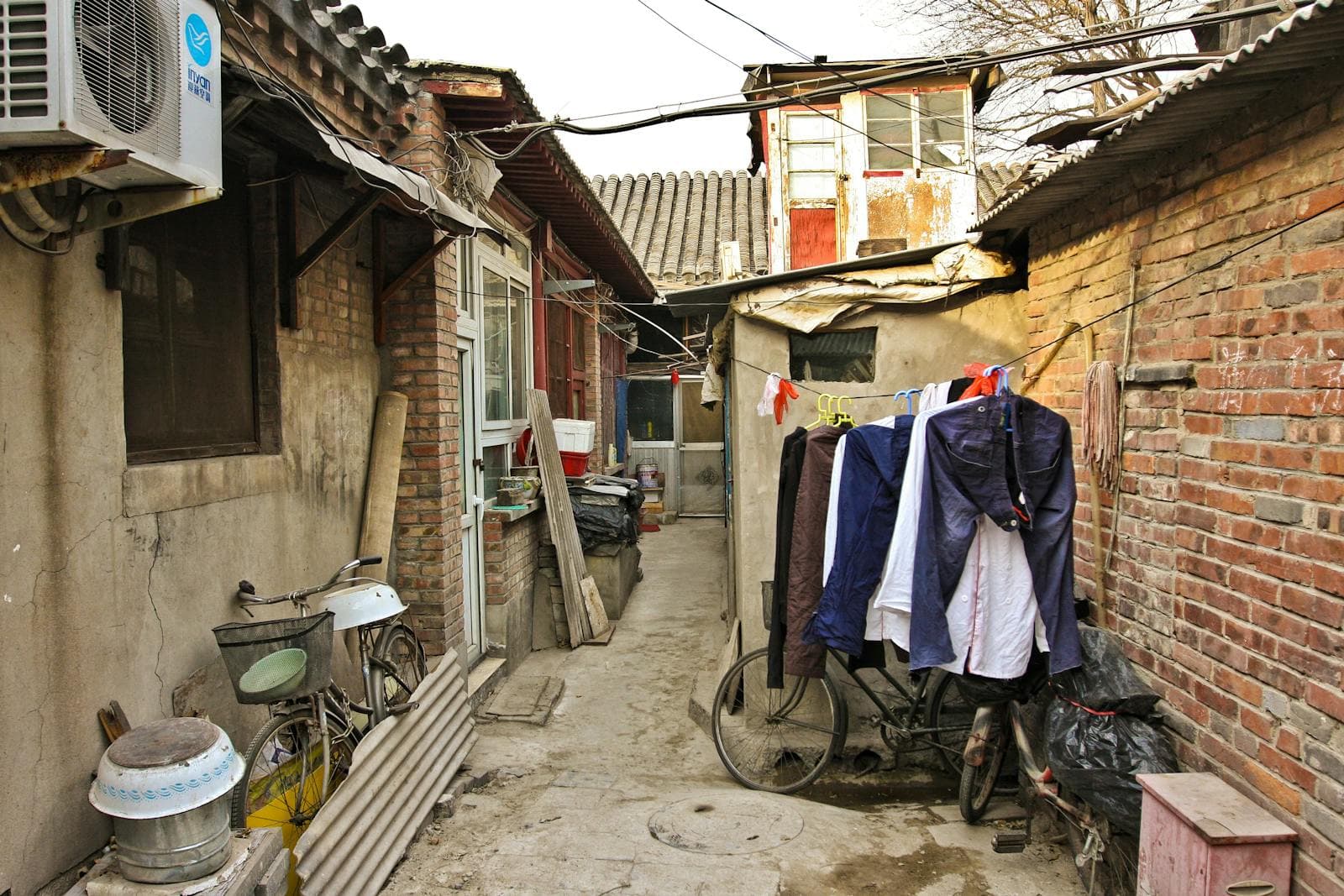
Gray-brick walls, bicycles, and red gateways line the narrow lanes. Tucked between the grand monuments, the hutongs are where the everyday life of real Beijingers still flows.
The Shichahai lake district (Qianhai, Houhai) and Nanluoguxiang, Beijing's most famous old alley. A walk past gray walls, courtyard homes (siheyuan), and red gates: quiet by day, lively with bars and cafes by night. For a rickshaw tour, settle the route and price before you board.
A pedestrian shopping street in Dongcheng, dense with department stores, bookshops, and snacks, modern and old Beijing side by side. For serious old-school eats, nearby Ghost Street (Gui Jie) is richer. Line 1 Wangfujing.
Day 2: Tiananmen Square + the Forbidden City (Palace Museum) + Jingshan Park
| Time | Plan / Notes |
|---|---|
| 08:30 | Tiananmen SquareBook ahead, passport, security check |
| 09:30 | Enter the Forbidden City (Meridian Gate)Real-name passport booking required |
| 13:00 | Lunch (Qianmen / Wangfujing) |
| 14:30 | Jingshan Park, Wanchun PavilionFull palace view |
| 18:00 | Peking duck dinnerAround Qianmen / Wangfujing |
Day 2 tips. The Forbidden City (Palace Museum) has no on-site sales; real-name passport tickets open 7 days ahead at 20:00 Beijing time on the official site or WeChat (popular days sell out fast, so book several days out). It's closed Mondays (except holidays) and is one-way: enter by the Meridian Gate (south), exit by the Shenwu Gate (north), so you naturally finish at the north end. Cross to Jingshan Park and climb the Wanchun Pavilion for a sweeping view of the palace's golden roofs, the classic photo spot. Tiananmen Square also needs an advance passport booking plus a security check for foreigners, so leave time.
The world's largest wooden palace, home to emperors for 500 years; a UNESCO World Heritage Site. Real-name passport booking opens 7 days ahead at 20:00 Beijing time; closed Mondays; enter Meridian Gate (south) → exit Shenwu Gate (north). Follow the central axis (Halls of Supreme, Central, and Preserving Harmony) slowly. Arrive early in peak season for comfort.
Read moreDay 3: the Mutianyu Great Wall (day trip)
| Time | Plan / Notes |
|---|---|
| 08:00 | Leave the cityBus 916+H from Dongzhimen / shuttle / private car |
| 10:30 | Arrive Mutianyu + cable car upNear Watchtower 14 |
| 11:00 | Walk the Watchtower 14–20 ridgeWatchtower 20 has the best view |
| 13:00 | Toboggan down + lunchOptional |
| 17:00 | Back to the city |
| 19:00 | Hotpot dinnerLamb hotpot |
Day 3 tips. Of the Great Wall sections near Beijing, Mutianyu is the top pick for foreign visitors: well-restored, lush, and balanced for scenery, access, and crowds (a top-ranked China sight on TripAdvisor). Ride the cable car up (round-trip or one-way), and take the toboggan slide down for fun. The popular western stretch runs from Watchtower 14 up to Watchtower 20, with the best panoramas. The textbook route is bus 916 → transfer to an H-bus at Huairou from Dongzhimen, but the transfer is fiddly, so for a first visit, a direct shuttle, private car, or half-/full-day tour is easier. Bring water, snacks, sun protection, and good shoes.
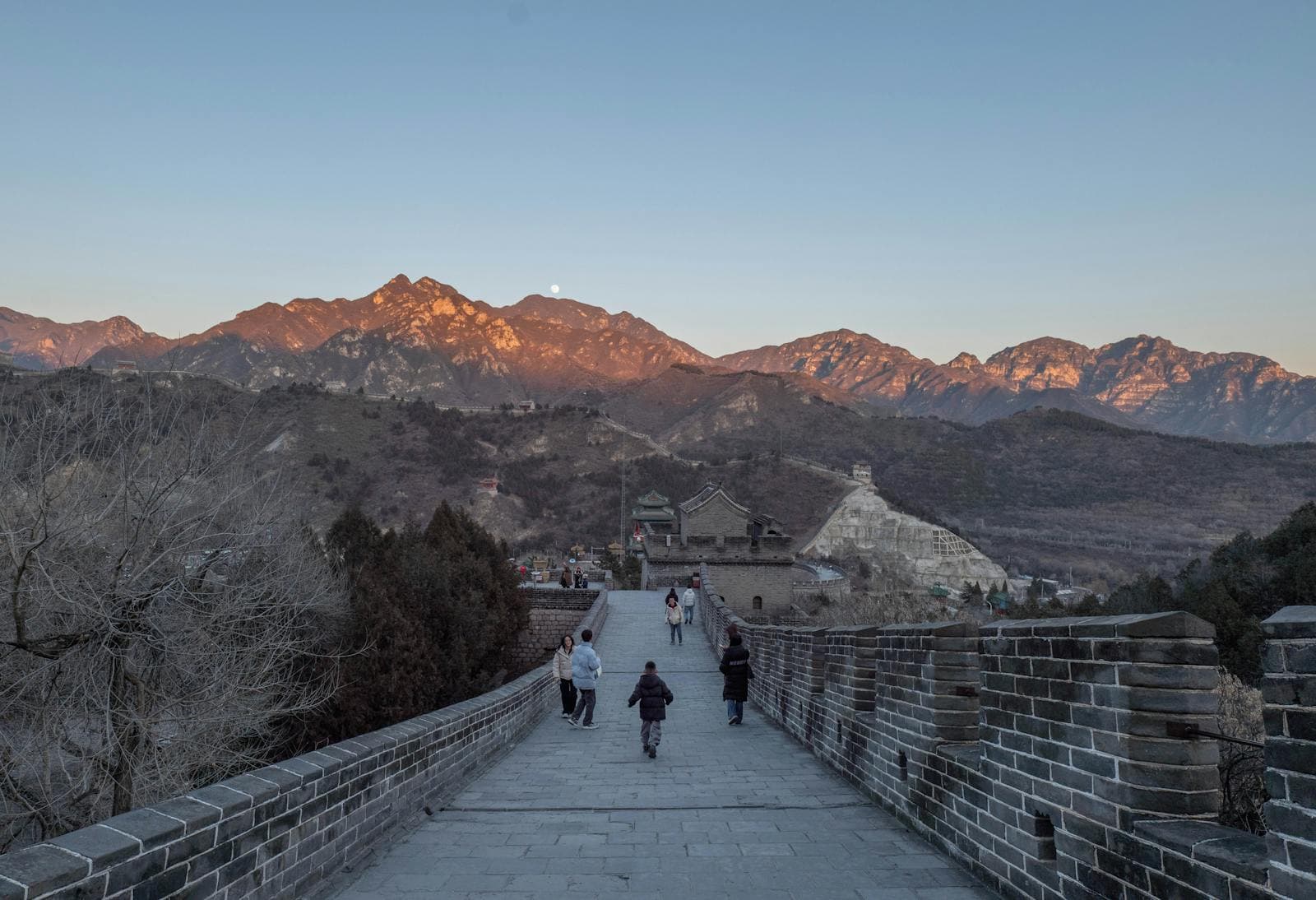
The wall snakes endlessly along the mountain ridge. With its forests and watchtowers in harmony, Mutianyu is the easiest place to meet the Great Wall you've seen in photographs.
The most recommended Great Wall section near Beijing for its restoration, forest, and access. Cable car up, walk the Watchtower 14–20 ridge, toboggan down. Bus 916+H from Dongzhimen, or a direct shuttle / private car. Bring water, sun protection, and good shoes; start early on weekends and in peak season.
Read moreDay 4: the Temple of Heaven + the Summer Palace + the 798 Art District
| Time | Plan / Notes |
|---|---|
| 08:00 | Temple of Heaven, Hall of PrayerMorning tai chi scenes, passport booking |
| 10:30 | To the Summer PalaceSubway Line 4 |
| 11:00 | Kunming Lake, Long Corridor, Longevity HillImperial garden |
| 14:00 | Lunch |
| 15:30 | 798 Art District (Dashanzi)Galleries, cafes |
| 19:00 | Dinner at Ghost Street |
Day 4 tips. The Temple of Heaven is best early (the park opens at 6:00, and dawn brings locals doing tai chi and choral singing; the core halls open at 8:00). Foreigners book by passport via WeChat, and the park entry (CNY 15) and the through-ticket including the halls (CNY 34) are separate. The round, three-tiered wooden Hall of Prayer for Good Harvests is the signature. Then head northwest to the Summer Palace: Kunming Lake, Longevity Hill, and the 700 m Long Corridor (painted gallery) are the heart, and the scale of this imperial summer retreat is staggering. In the afternoon, take in the 798 Art District (a contemporary art zone in converted factories, free to enter with some paid galleries). For dinner, the 24-hour food strip Ghost Street buzzes.
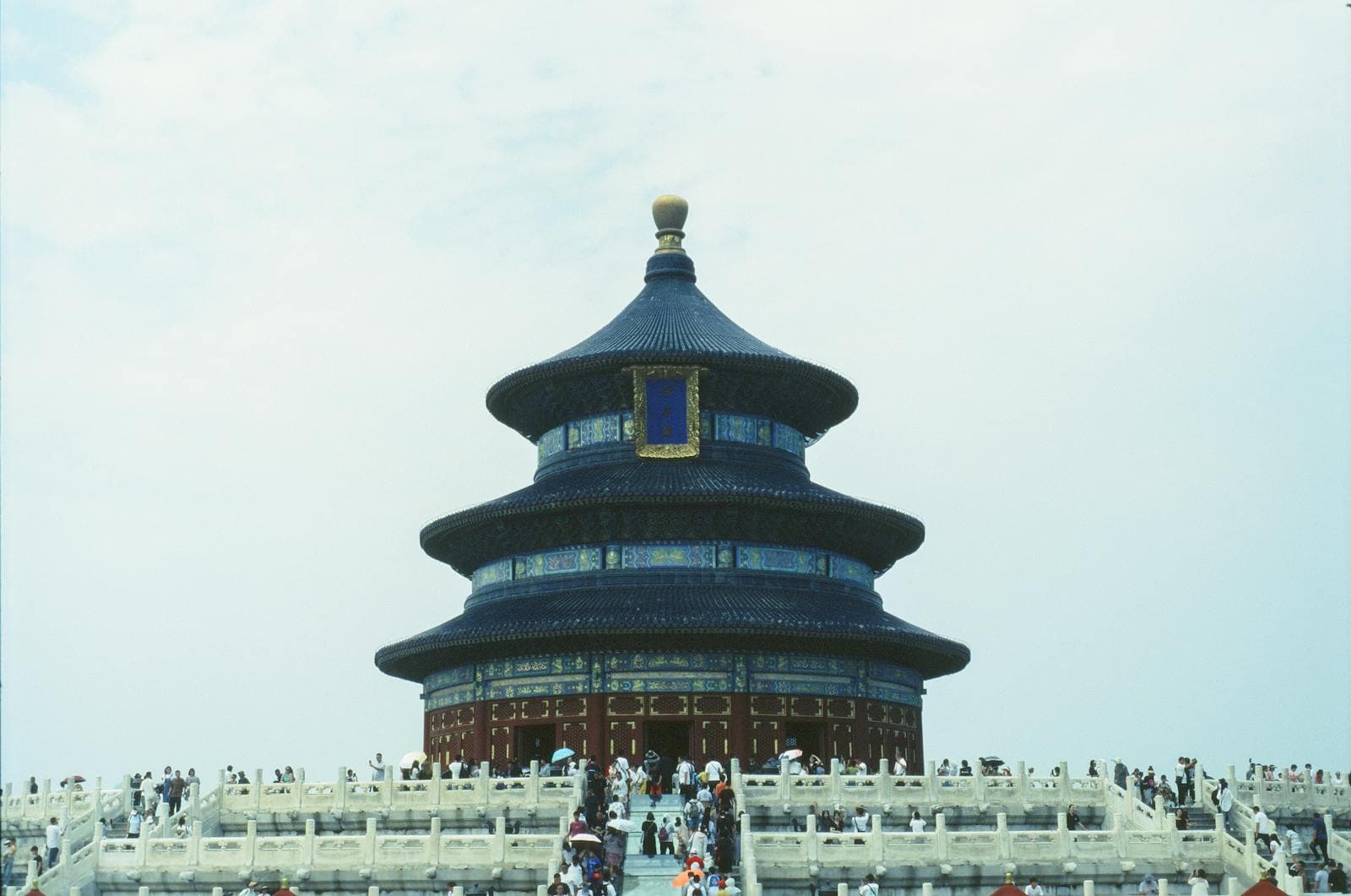
Three layers of blue roof rise into the sky atop a round wooden hall. The altar where emperors prayed for good harvests, Beijing's most elegant building and one of its great symbols.
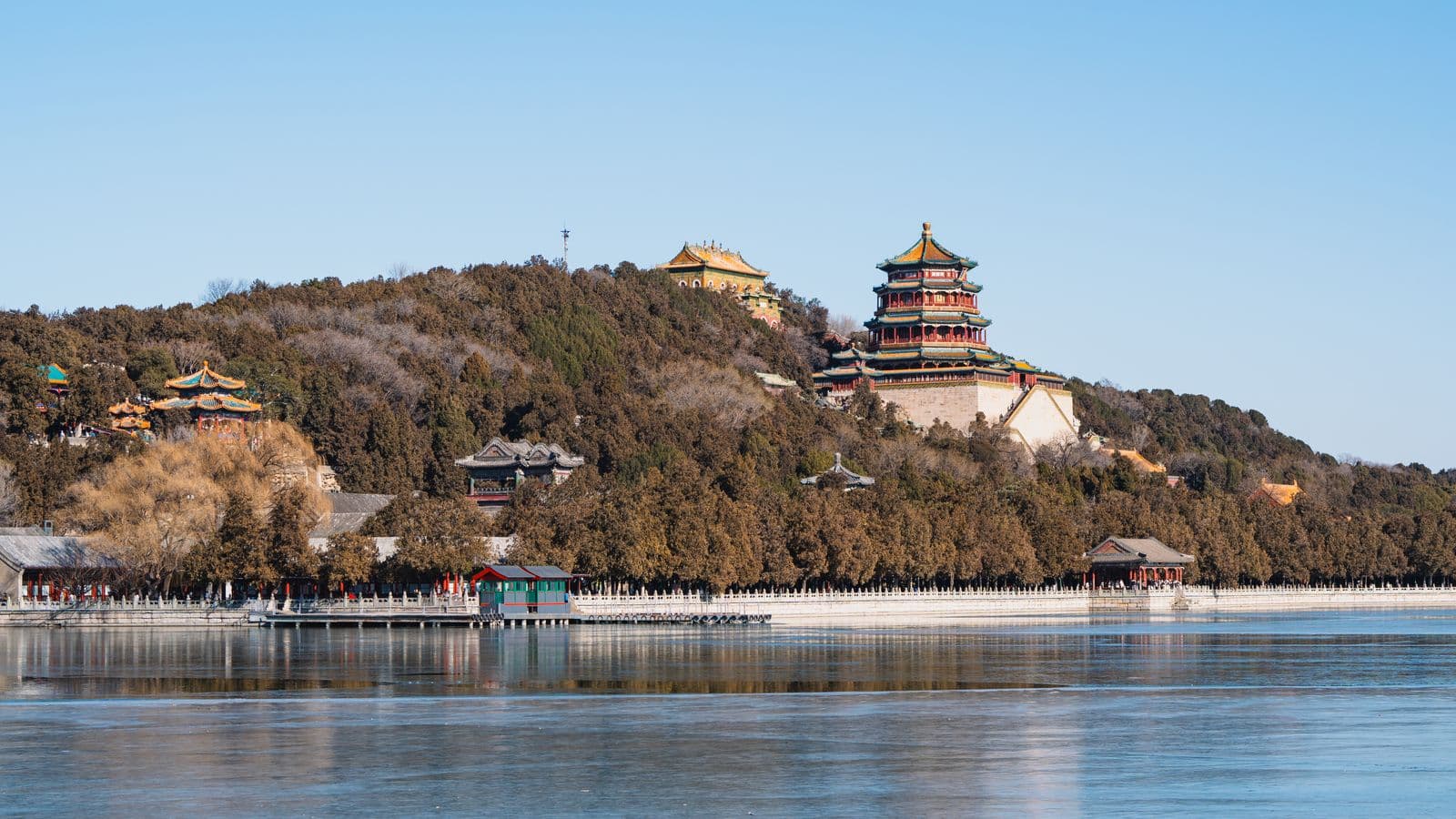
Beyond Kunming Lake, Longevity Hill and its pavilions unfold. The Qing court's summer retreat and a pinnacle of Chinese garden art: just strolling the 700 m lakeside Long Corridor can fill half a day.
A UNESCO World Heritage Site. The round, triple-tiered wooden Hall of Prayer is the signature, and the park's dawn tai chi and choral scenes are a delight. Foreigners book by passport via WeChat; park (CNY 15) and the through-ticket for the halls (CNY 34) are separate. Line 5 Tiantan Dongmen. Go early.
China's largest imperial garden, a UNESCO World Heritage Site, weaving together Kunming Lake, Longevity Hill, and a 700 m painted Long Corridor. Lakeside strolls and the Tower of Buddhist Incense view are the heart. Allow half a day or more. Line 4 Beigongmen (north gate). It's vast, so plan a route.
Beijing's flagship contemporary-art zone, set in a converted munitions-factory complex: 400-plus galleries, design shops, cafes, and bookstores, free to enter (some exhibitions ticketed). A photo favorite where industrial architecture meets modern art. Near Line 14 Jiangtai.
Day 5 (departure): the Nanluoguxiang hutong + fly out
| Time | Plan / Notes |
|---|---|
| 09:30 | Stroll Nanluoguxiang & nearby hutongsSouvenirs, snacks |
| 11:00 | Lunch + grab luggage |
| 12:30 | To the Airport Express |
| 14:00 | Back to Capital (PEK) / Daxing (PKX) |
Day 5 tips. Keep the last day light and finish in the hutongs. Nanluoguxiang and its side lanes pack courtyard homes, little shops, and snacks, great for souvenirs and street food. It's a popular lane, though, so mornings are quieter than crowded weekend afternoons. Airports take time for security and emigration, so arrive 3 hours ahead for international flights, and check the Airport Express hours (usually until about 22:00–23:00) in advance.
One of Beijing's most famous old alleys, lined with courtyard homes, little shops, teahouses, and snacks, great for souvenirs and street food. It's popular, so mornings are quieter. Line 6 Nanluoguxiang.
Peking duck: a must in Beijing
Peking duck (Beijing kaoya) is the one meal you can't skip here. The crisp skin of an oven-roasted duck is wrapped in a thin pancake with scallion, cucumber, and sweet bean sauce. Quanjude (全聚德), founded in 1864, is the historic heavyweight (branches at Qianmen, Wangfujing, Hepingmen); Da Dong (大董) does a modern, ultra-crisp style; and well-loved spots like Siji Minfu (四季民福) also review strongly. Reserve on weekends and at dinner.
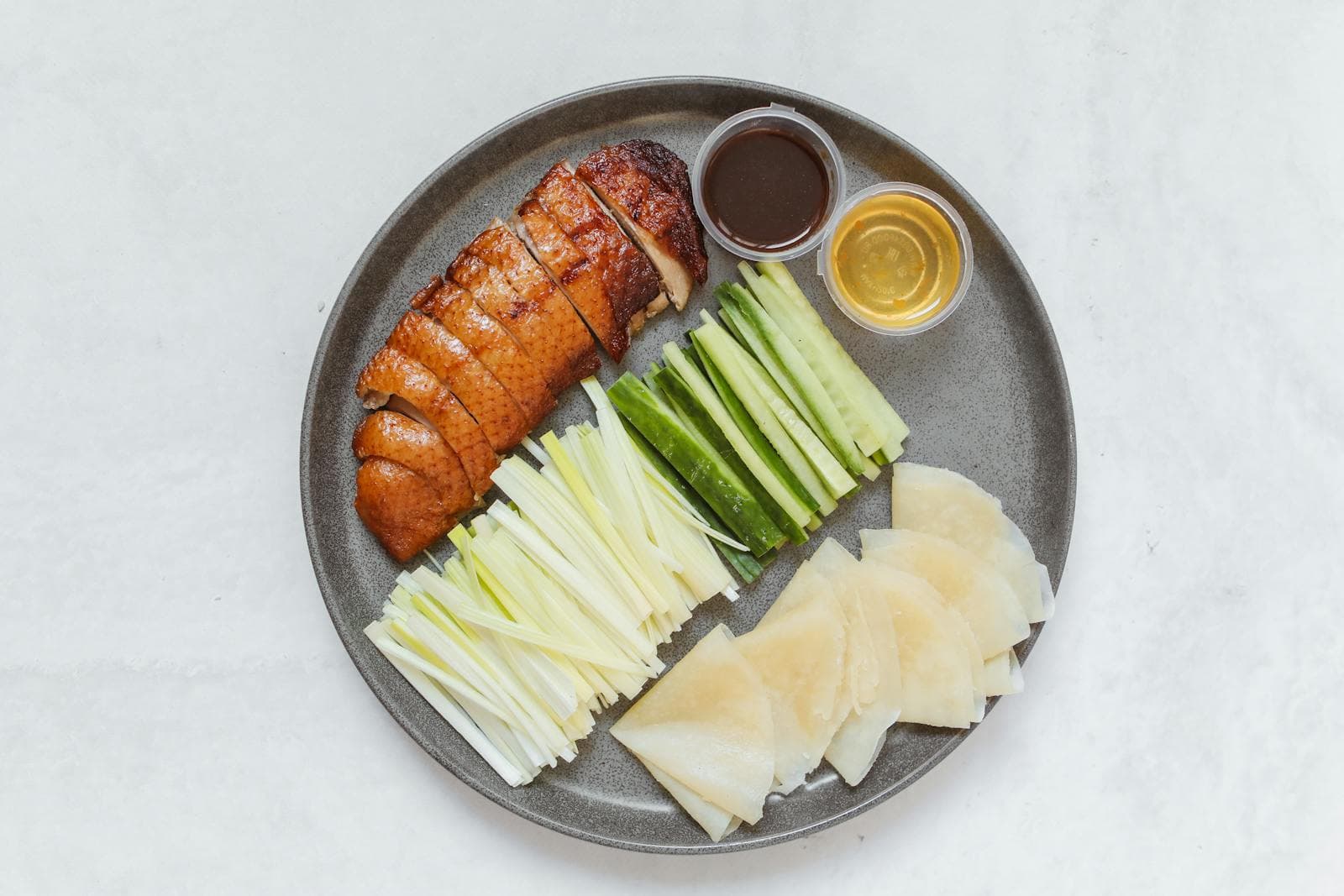
Lay the thin, crisp slices of duck on a pancake, add scallion, cucumber, and sweet sauce, and roll it up. It's the peak of Beijing dining, and the signature meal of any trip to this city.
Beijing's hallmark dish: crisp oven-roasted duck skin wrapped in a pancake with scallion, cucumber, and sweet bean sauce. Historic Quanjude (1864), modern Da Dong, and well-loved Siji Minfu. One duck feeds several; reserve on weekends and at dinner.
Read moreIn a city of long winters, hotpot (especially the clear-broth lamb shuan yang rou) is the comfort staple. Also try zhajiangmian (noodles in fermented bean sauce), jiaozi (dumplings), and jingjiang rousi (shredded pork rolled in pancakes), all easygoing local picks at hutong eateries.
Expense tracking: auto-convert and split in yuan
Beijing runs on mobile payments, so spending scatters fast. Just log each payment in Tripop's expense tracker and it auto-calculates who spent what and each person's share, and even when you enter yuan, it auto-converts to your display currency. You can record by receipt photo too, so cash spending in hutongs and markets is never missed.
Below is the estimated cost for 2 people, 4 nights, broken down by category at current prices.
2 adults · 1 room
Companion sharing: friends, family, couples
Share the itinerary, budget, and checklist with your travel companions and you won't have to answer "where to next?" every five minutes. Especially handy in Beijing, where you move between districts and out to the suburbs, with timed reservations to juggle.
AI assistant: on-the-spot Beijing questions
Ask things like "a good lunch near the Forbidden City" or "indoor Beijing options for a rainy day," and Tripop's AI answers in the context of your plan, then you can drop it straight into your itinerary. Even where the internet is blocked, the plan and vouchers you saved open offline.
Checklist: what to prep for 5 days in Beijing
Easy to forget but vital: a VPN (install before departure), roaming/eSIM, your passport (required to book and enter the Forbidden City, Temple of Heaven, and Great Wall), Alipay/WeChat Pay set up, comfortable sneakers (Forbidden City, Great Wall), a power bank, sun protection, and a little emergency cash. Run through it all before you leave with a Tripop checklist template.
Beijing: don't miss these
Walk the Ming–Qing palace from the Meridian Gate to the Shenwu Gate, then cross to Jingshan Park's Wanchun Pavilion to look down on the golden roofs, the two core scenes of a Beijing trip. The Forbidden City needs a real-name passport booking and is closed Mondays.
Read moreA World Heritage hike at well-restored, forested, accessible Mutianyu: cable car up, ridge walk, toboggan down. Give a full day to this suburban day trip.
Read moreThe elegant Hall of Prayer at the Temple of Heaven at dawn, and the Summer Palace with its Kunming Lake and Long Corridor. The pairing captures both imperial grandeur and garden calm in one day.
Pancake-wrapped Peking duck, clear-broth lamb hotpot, and hutong zhajiangmian and dumplings, Beijing's food trio. Reserve Peking duck on weekends and at dinner.
Read moreIn short
A 5-day Beijing trip fits the essentials with no backtracking if you split it by district: the imperial core (Forbidden City, Temple of Heaven) → the Great Wall (Mutianyu) → the northwest gardens (Summer Palace) → art and hutongs (798, Shichahai), one per day. Imperial grandeur, a World Heritage hike, a royal garden, and alley character all in one trip. That's Beijing's appeal. The subway plus one Yikatong card (or Alipay QR) reaches most of the city; only the Great Wall needs suburban transport. Just be sure to prep your visa, VPN, and payment apps before you go.
This Beijing plan, built in 1-3 minutes with Tripop
Tell Tripop "make me a 4-night, 5-day Beijing plan with the Forbidden City, the Mutianyu Great Wall, the Temple of Heaven, the Summer Palace, and the hutongs," and the skeleton above appears automatically. Add routing, food, budget, and a checklist to finish it. Even where the internet is blocked, on the plane or underground, your itinerary and vouchers open offline.
Images: Pexels (Da Na: Forbidden City; Rain Lü: Mutianyu Great Wall; Tito Zzzz: Temple of Heaven; Nguyen Khuong: Summer Palace; TonyNojmanSK: Beijing hutong; Polina Tankilevitch: Peking duck), Pexels License.