
The steady seller among Korean package tours to Eastern Europe is the 9-day, four-country loop through Germany, Czechia, Austria and Hungary. This article reworks the axis those packages travel into an independent 7-night, 9-day line. The skeleton is simple: 3 nights in Prague, 2 in Vienna, 2 in Budapest, heading north to south in one direction with no backtracking. Germany is covered by Dresden, about two hours from Prague by train, as a day trip. The big city-to-city moves are two train rides, and that is all. In exchange, this route changes currency almost every time it changes country. Juggling the koruna, the euro and the forint is homework Western European itineraries never assign, so the pre-departure section sorts that out before anything else.
The itinerary at a glance
| Day | City | Plan | Transfer |
|---|---|---|---|
| Day 1 | Incheon → Prague | Afternoon arrival, dinner near the hotel | Nonstop, about 13 hours |
| Day 2 | Prague | Old Town Square and the astronomical clock, Charles Bridge, Malá Strana, Prague Castle in the afternoon | Walking and trams |
| Day 3 | Prague ↔ Dresden | Brühl's Terrace, the Frauenkirche, the Zwinger, the Procession of Princes | Train, about 4h 30m round trip |
| Day 4 | Prague → Vienna | Charles Bridge at dawn, midday train, evening around Stephansplatz and Kärntner Strasse | Train, about 4 hours |
| Day 5 | Vienna | Schönbrunn in the morning, Belvedere and the cathedral's south tower in the afternoon, café and concert in the evening | Metro and trams |
| Day 6 | Vienna → Budapest | Naschmarkt in the morning, midday train, Fisherman's Bastion and Matthias Church in the afternoon, night cruise | Train, about 2h 30m |
| Day 7 | Budapest | Parliament tour in the morning, Széchenyi Baths at midday, Great Market Hall in the afternoon, Gellért Hill at night | Metro and walking |
| Day 8 | Depart Budapest | On a nonstop (evening departure) the city until mid-afternoon; on a connection (morning departure) a riverside walk, then the airport | Nonstop or connection |
| Day 9 | Arrive Incheon |
The logic of the route. Prague gets the longest stay at three days and the stops shorten as you go south, because the Dresden day trip comes out of Prague's share. The arrival day does not count as a sightseeing day: even landing in the afternoon, the EES biometric line and jet lag mean dinner near the hotel is realistically the whole day. The two transfer days, Day 4 and Day 6, share one rhythm, "one sight in the morning, the train at midday": put a single reservation-free stop in the morning block, leave your bags at the hotel and collect them on the way to the station. Five weekday traps decide the layout. In Dresden the Old Masters Gallery closes on Mondays and the Historic Green Vault in the Residenzschloss on Tuesdays, so if Day 3 lands on either, adjust the indoor plans. The Budapest Parliament tour closes not by weekday but by parliamentary schedule, so check the booking calendar for open days first and fit Day 7's morning to a slot. Vienna's Naschmarkt stalls do not open on Sundays, so if Day 6 is a Sunday swap the morning block for a city walk. Budapest's Great Market Hall closes at 3 pm on Saturdays and all day Sunday. And the Széchenyi Baths charge more Friday through Sunday than on weekdays (Monday to Thursday), so if you can pick your departure date, landing the two Budapest days midweek saves a little.
Before departure: entry (EES, ETIAS), three currencies, time zone
- Visa and entry: A Korean passport is visa-free in Schengen (90 days in any 180, all Schengen countries combined). Your passport must be valid at least 3 months past your planned Schengen departure and issued within 10 years. The EES, started October 12, 2025, has been fully in force since April 10, 2026: you register fingerprints and a facial image at your first Schengen entry point. On a nonstop from Incheon that is Prague airport; routing through Europe, you register at the connecting airport, so allow generous transfer time. All four countries are in Schengen, so passport control happens once on entry, but Germany and Austria are running temporary internal border checks (as of September 2026), so your passport may be inspected on the trains to Dresden and Vienna. Keep it on you, not in your suitcase. ETIAS is not yet in operation as of September 2026: a late-2026 start was signalled but no firm date has been announced, so check the EU's official guidance (travel-europe.europa.eu) once before you leave.
- Three currencies: Czechia uses the koruna (CZK, about 65 KRW), Austria and Germany the euro (about 1,570 KRW), Hungary the forint (1,000 HUF is about 4,300 KRW) (September 2026 rates). Cards are the norm in all three cities, so contactless is the default and a small amount of cash per city is plenty. When you need cash, an ATM attached to a bank is the default. Prague's private exchange offices were long a source of rate disputes; the law now guarantees a 3-hour cancellation right (up to €1,000), so if something looks wrong, undo it on the spot. If a terminal or ATM offers dynamic currency conversion in KRW, always choose the local currency.
- Time zone: 7 hours behind Korea during daylight saving time, 8 in winter.
- Flights: The default is an open-jaw multi-city ticket, into Prague and out of Budapest. On both routes Korean Air and Asiana split the week, so a nonstop runs virtually every day (Budapest became daily when Asiana joined in April 2026). Pick the carrier that matches your departure day. Booking a Prague round trip and backtracking from Budapest at the end burns 7 hours by train, so avoid it even if multi-city ticketing feels unfamiliar.
- Connectivity: One Europe-wide eSIM covers all four countries. A single multi-country plan is easier to manage than three country plans.
- Lodging tax: Charged at check-in on top of the room rate. Prague charges 50 korunas per person per night, Vienna 5% of the room charge (excluding VAT and breakfast, raised in July 2026), Budapest typically 4% though it is set by district ordinance and varies with your hotel's district. Check your booking confirmation to see whether it is already included.
What to see, city by city
The four cities have distinctly different characters. Prague is a medieval old town preserved whole, Dresden a baroque city rebuilt from the bombing, Vienna the capital of the Habsburg empire, and Budapest two cities facing each other across a river.
Prague, two and a half days in a medieval city
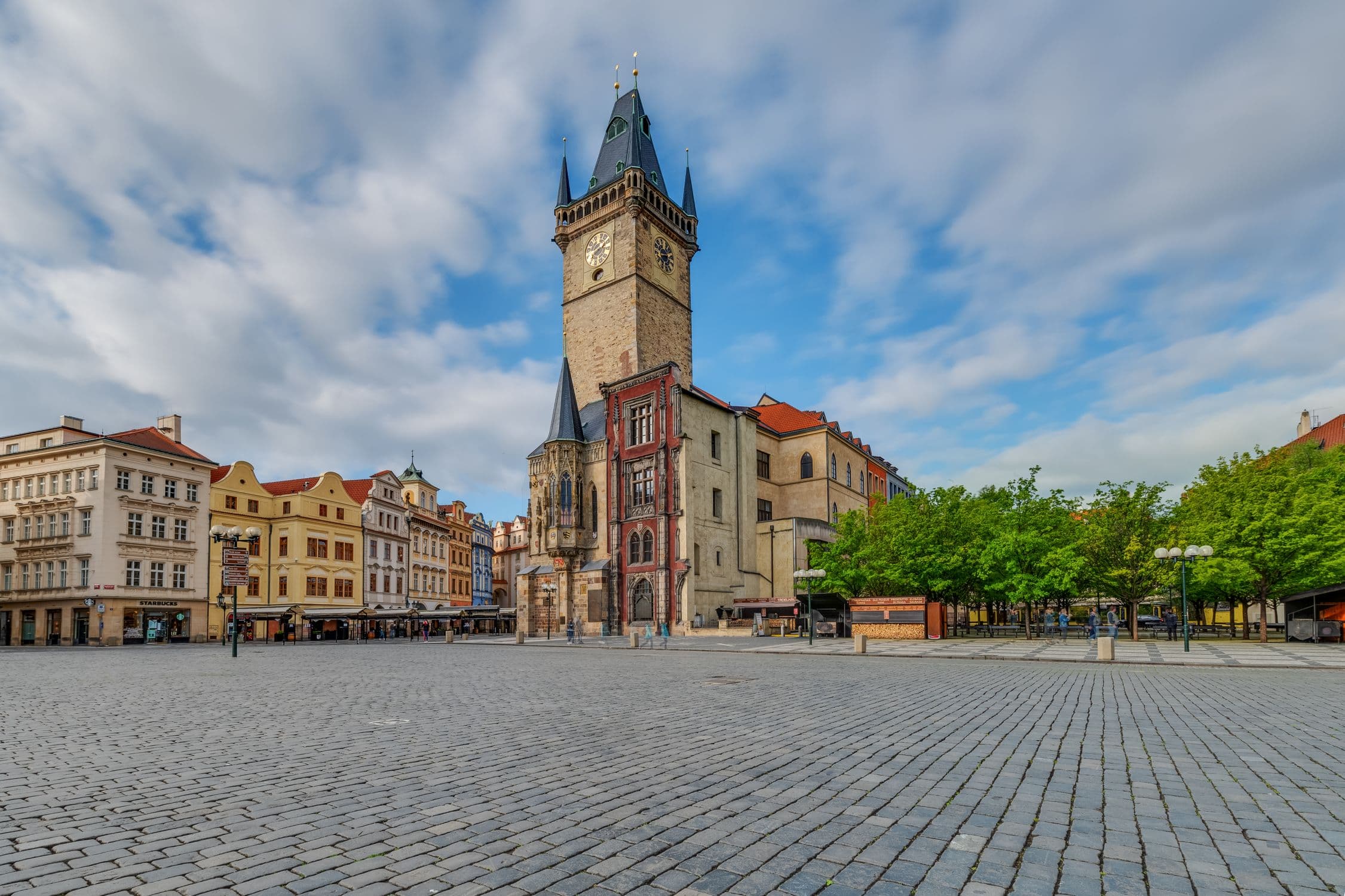
Old Town Square and the astronomical clock The heart of Prague, where the twin spires of the Týn Church face the Old Town Hall. The clock has run since 1410 and puts on a short show of the Twelve Apostles passing the windows on the hour (until 11 pm), but the real event is the panorama of the square and the red roofs from the Old Town Hall tower (350 korunas). Tickets are half price in the first hour after opening, which favours early risers.
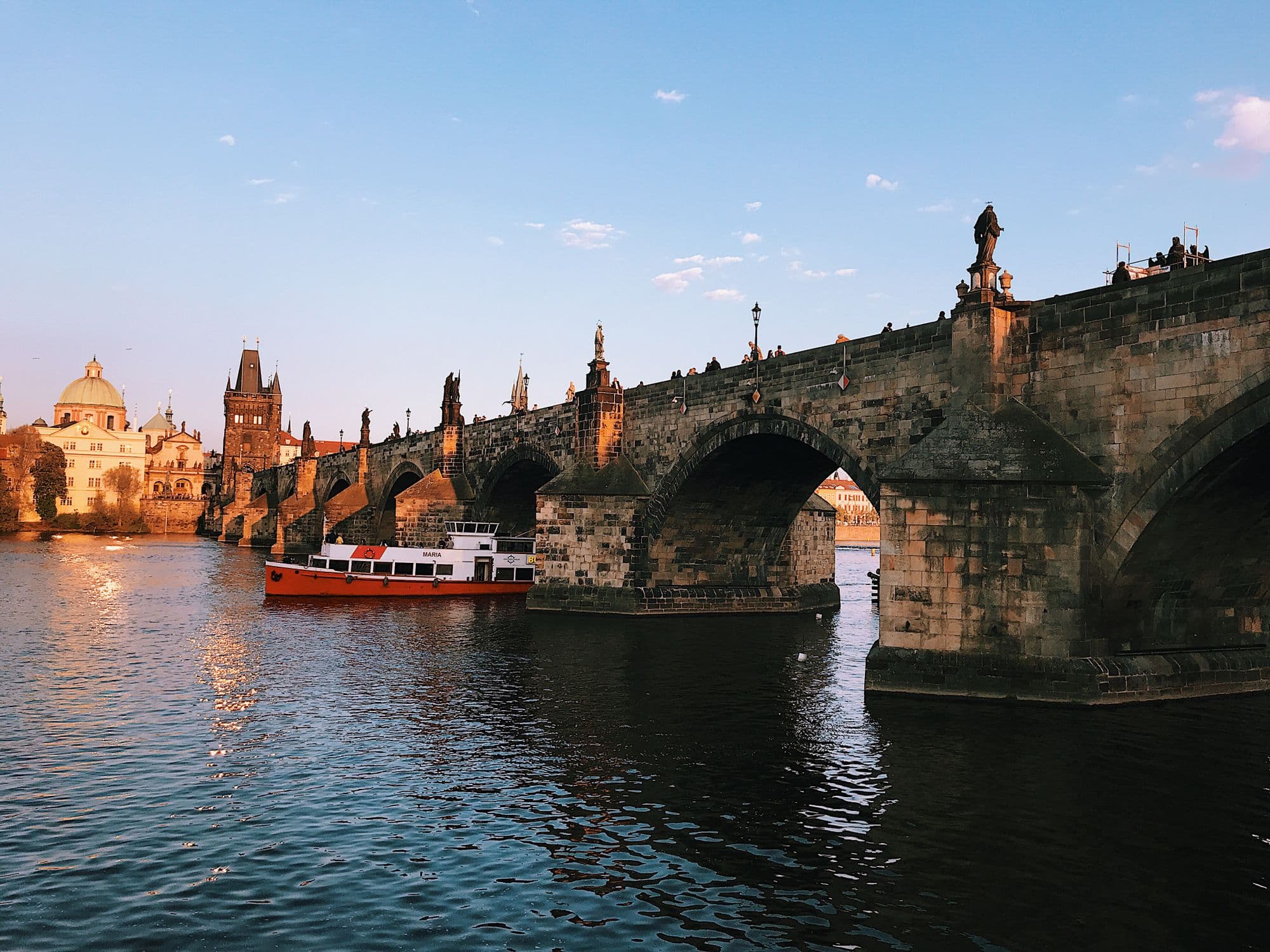
Charles Bridge The stone bridge Charles IV laid across the Vltava in 1357, lined with thirty statues of saints along its parapets. Crossing is free and the bridge is crowded all day, so this itinerary schedules it twice: once at midday on Day 2 and once before 7 am on Day 4, when the bridge is empty. Dawn and midday on Charles Bridge differ so much in density they hardly feel like the same bridge.
Prague Castle and St. Vitus Cathedral The whole walled town on the hill is one castle. The grounds and gardens are free to walk, but the key interiors, St. Vitus Cathedral, the Old Royal Palace and Golden Lane, need the circuit ticket (450 korunas, valid 2 consecutive days). The morning ticket line is long in high season, so buy online, and give the visit half a day. Note that the Old Royal Palace suspends regular visits from September 4 to October 1, 2026 for the Czech crown jewels exhibition; in mid-to-late September the jewels themselves go on display in Vladislav Hall, a rare sight if your dates line up. Walk down via the lanes of Nerudova street, and after dark the lit castle looks best from the riverbank by Charles Bridge.
Malá Strana and the Lennon Wall The baroque quarter across Charles Bridge, landmarked by the green dome of St. Nicholas Church. The Lennon Wall, layered with graffiti of freedom since the 1980s, and the Kampa Island riverside all sit within a 10-minute walk, so they bundle into one block with the bridge.
Wenceslas Square and the New Town The broad boulevard-square where Prague's modern history marched. The National Museum closes the top of the square, and department stores and restaurants line the way, making it a good evening stretch. It is 10 minutes on foot from the Old Town, so it slots into a dinner route rather than claiming half a day.
Dresden, one day in a rebuilt baroque city
About 2 hours 15 minutes from Prague main station by direct train, running along the Elbe valley, so the window seat earns its keep. The key to the day trip is an early start: out on a train in the 8 o'clock hour, arriving in the 10s. Directs run every two hours, so the return leaves in the 17s or 19s, keeping you on the ground for about six or eight hours.
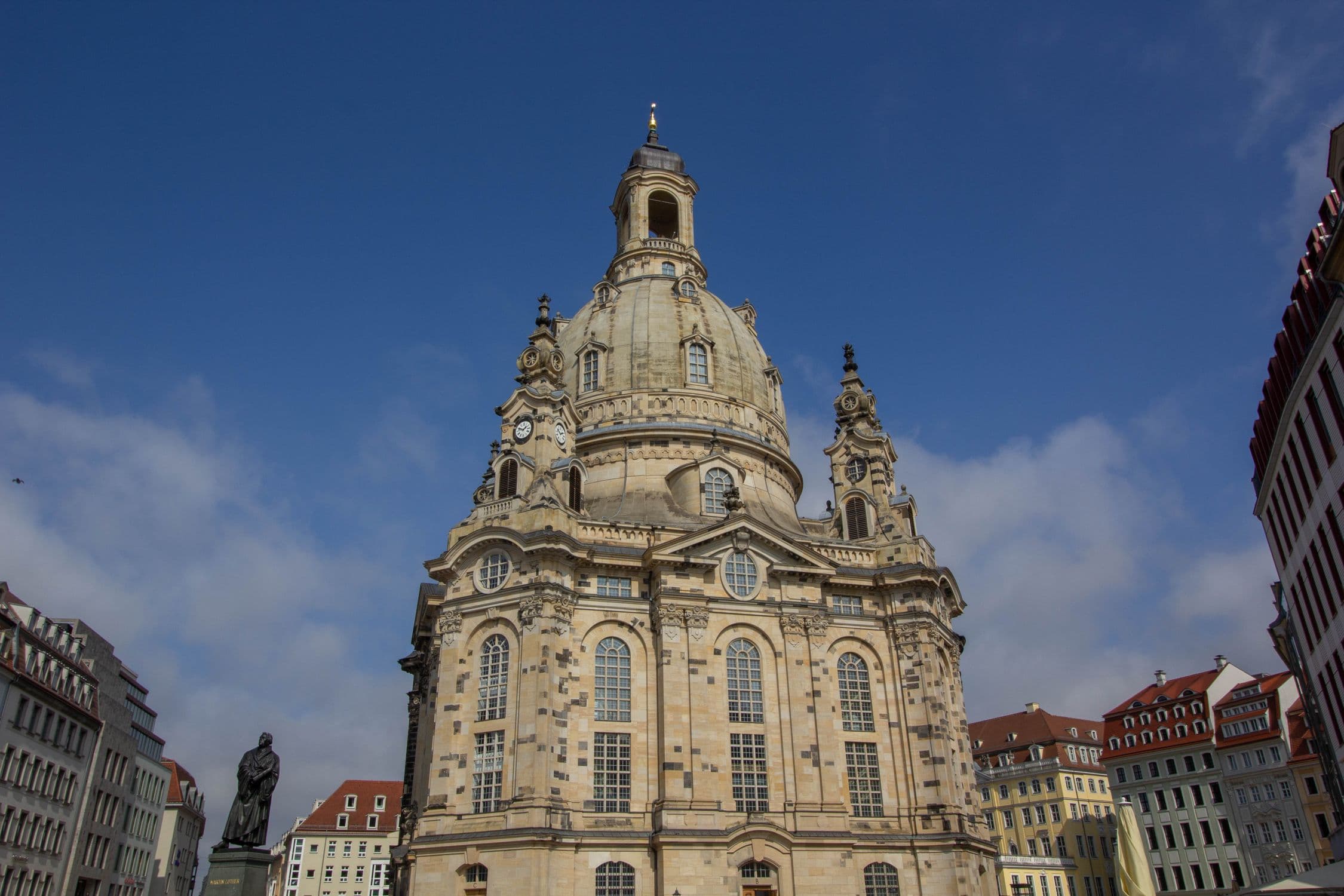
The Frauenkirche Dresden's symbol, left in ruins for half a century after the wartime bombing and rebuilt by 2005 with the original stones mixed back in. Entry to the main church is free (donation suggested); the dome platform is paid (adults €12) and frames the Elbe and the old town in one view. The mottled facade itself, scorched original stone against new sandstone, is the city's history textbook.
The Zwinger The baroque garden palace of the Saxon electors; the courtyard and gardens are free to walk. Inside, the Old Masters Gallery (Raphael's Sistine Madonna) is a paid exhibition closed on Mondays, and the Porcelain Collection closes entirely for works from September 7 to October 30, 2026. If you plan to go inside, check Day 3's weekday first.
The Procession of Princes and Brühl's Terrace A 102-metre mural of 35 Saxon rulers in 23,000 Meissen porcelain tiles, and the riverside promenade long called "the balcony of Europe". Both are free and outdoors, which suits the closing block of a day trip run against train times. The treasury of the Residenzschloss (the Historic Green Vault) is timed-entry and closed on Tuesdays, so if you want it, book that slot even before the Dresden train.
Vienna, a day and a half with the Habsburgs
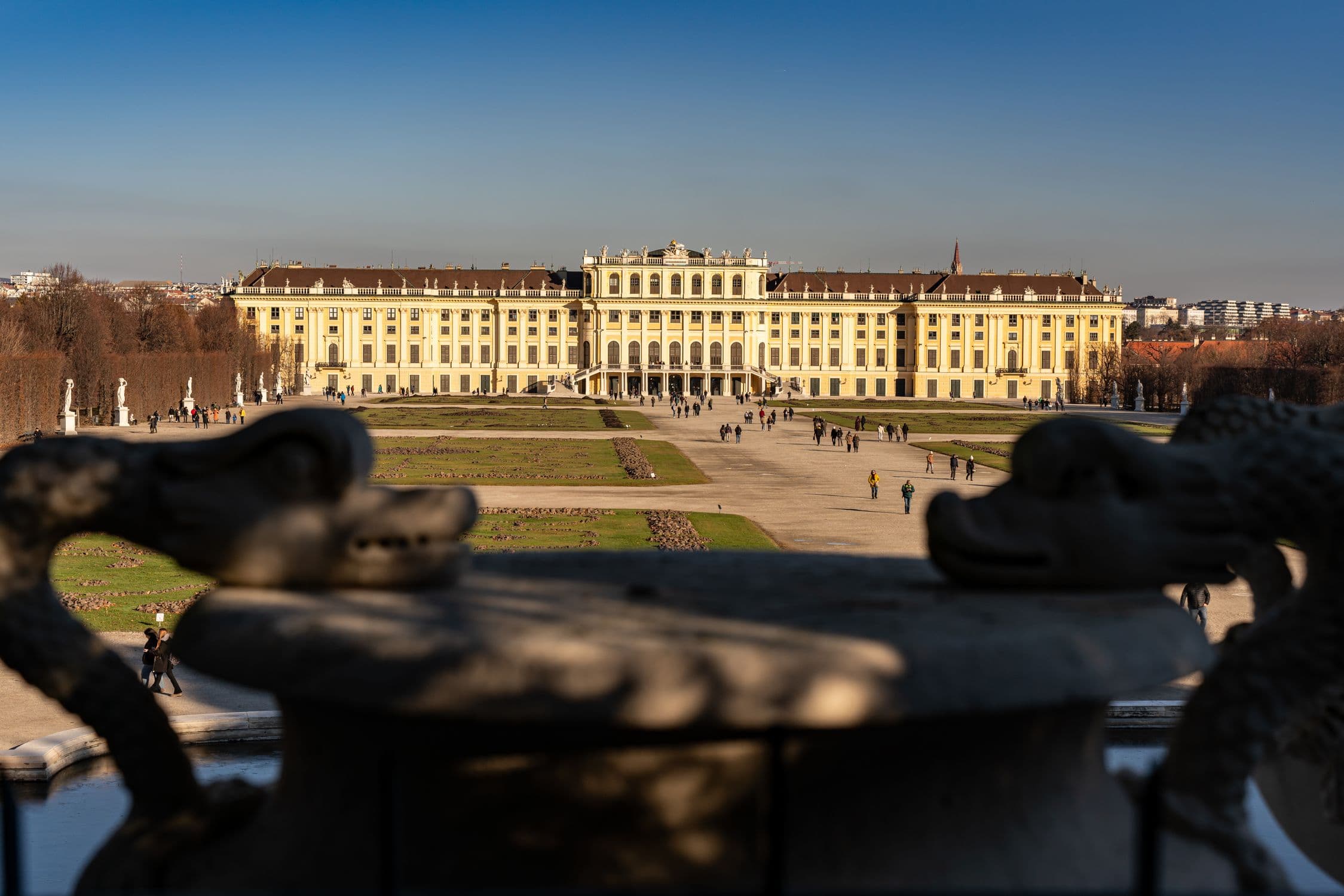
Schönbrunn Palace The Habsburgs' summer residence and the ticket that sells out first in Vienna. The interior runs on timed entry: the State Apartments ticket covering the showpiece rooms is €30 (about 40 minutes), the Palace Ticket covering the entire piano nobile €42 (about 75 minutes). The gardens and the Gloriette hill are free, so the classic half day is an early interior slot followed by a walk down through the gardens. Walk-ups get pushed to afternoon slots or sold out, so book this right after your flights.
Upper Belvedere The baroque palace museum that holds Klimt's Kiss. Entry is €23, timed online purchase is the default, and two hours is enough. The view over Vienna from the upper garden is in the free zone. Pair it with Schönbrunn on the same day and Vienna gets its full day.
St. Stephen's Cathedral The Gothic cathedral at the dead centre of Vienna. Part of the nave is free; the visitor circuit and the towers are paid. The south tower is a 343-step climb (€8) with no elevator, and the ticket desk takes cash only. Tourist entry to the interior ends around 4:30 pm and south tower sales in the 6 pm hour, so do the paid parts in daylight; evening is for the floodlit exterior from the square. In this itinerary the south tower slots in after the Belvedere on Day 5 afternoon. Sunday mornings are restricted for Mass. Kärntner Strasse and the Graben in front of the cathedral form Vienna's main shopping spine, so an evening stroll follows naturally.
Café culture A city where hundred-year-old cafés, Café Sacher of Sachertorte fame, the marble-columned Café Central, get museum-level respect. The famous ones queue into the evening, so the awkward window between 3 and 5 pm is actually the easiest time to get a table. A melange and a slice of cake run about €10~15 per person.
The Ringstrasse Along the boulevard laid on the old city walls stand the State Opera, the Hofburg, the Parliament and City Hall in sequence. Trams 1 and 2 each cover part of the Ring, so change once at the Opera or Schwedenplatz and a lap of the Ring becomes a seated architecture tour on an ordinary transit ticket (no single tram loops the whole Ring). Going inside the Hofburg (the Sisi Museum) adds another half day, so on this itinerary the exterior circuit is the default and the interiors belong to the concept variations.
Budapest, two days on both banks
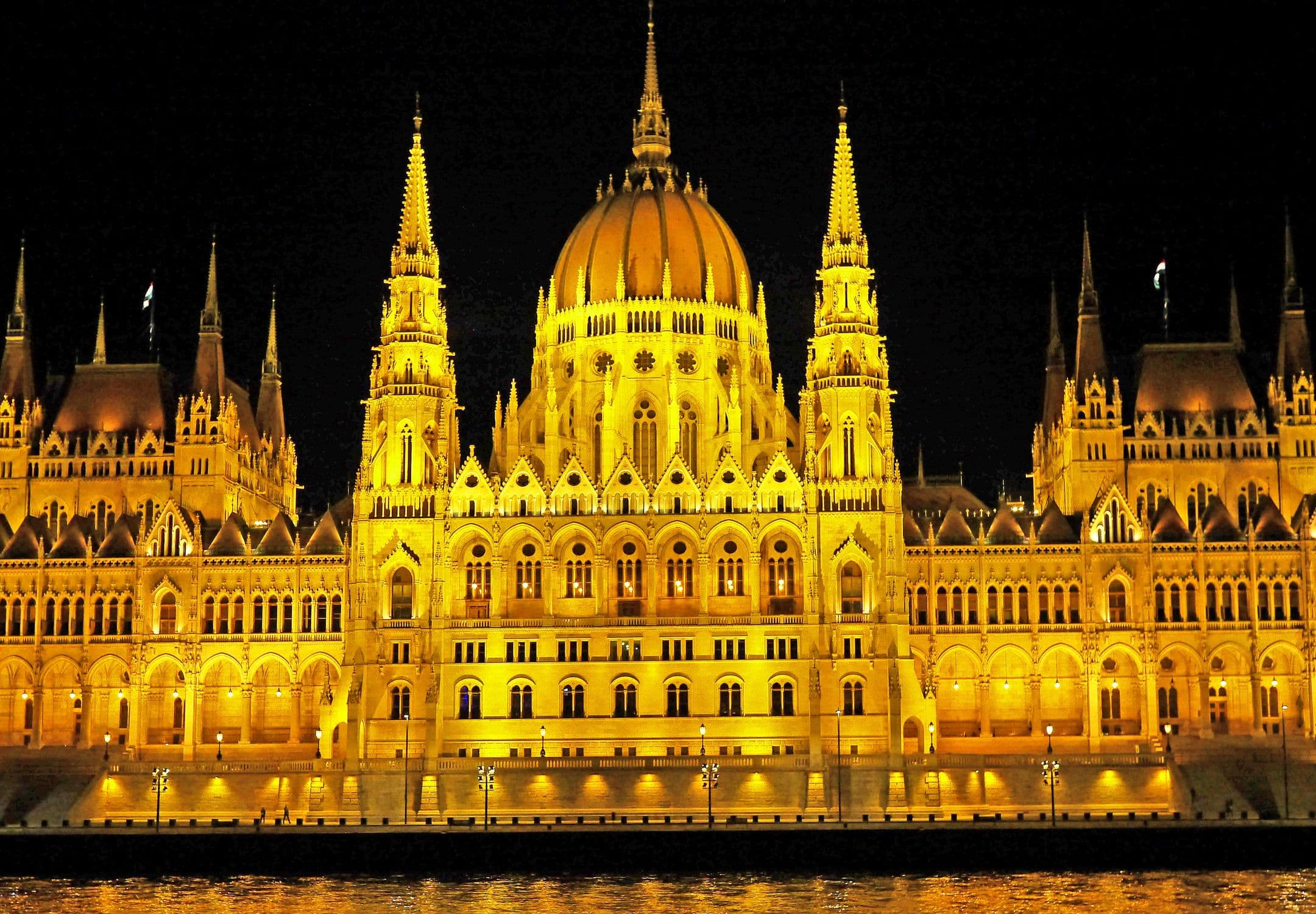
The Parliament The neo-Gothic parliament on the Danube bank, the largest building in Hungary. The interior is guided-tour only, 14,000 forints for non-EU adults; the centrepiece of the 45-minute route is the Holy Crown of St. Stephen, and the dome hall that holds it is a no-photography zone. Groups are small, popular times fill first, and days with parliamentary business close entirely, so check open dates on the official booking site and fit Day 7's morning to one. After dark, the lighting seen from across the river or from a cruise boat is the centre of this city's night view.
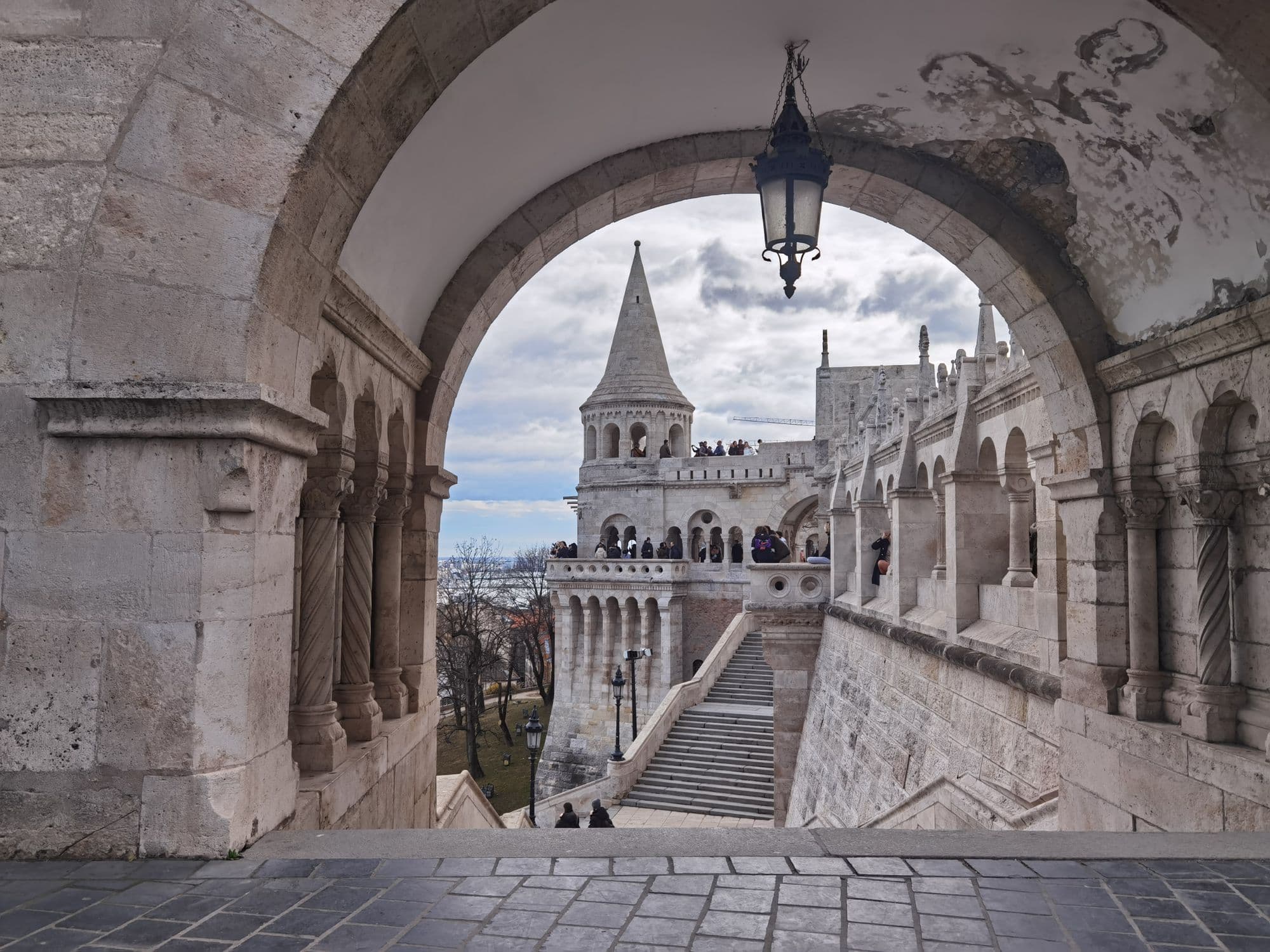
Fisherman's Bastion and Matthias Church On the Castle District hill, white limestone terraces and seven conical towers look straight down on the Danube and the Parliament. Most of the terraces are free, only the upper tower section is ticketed (1,700 forints), and next door Matthias Church wears its trademark Zsolnay-tiled roof (entry 3,400 forints). The church interior closes at 5 pm on weekdays and as early as 1 pm on Saturdays. On a weekday Day 6, the 11 o'clock train from Vienna gets you inside; on a Saturday, or off a later train, skip the interior, as the terraces plus the night view are plenty. The hill is served by the castle bus and the funicular, but a 15-minute uphill walk does it.
Széchenyi Baths The flagship of Europe's grand bathhouses, open since 1913, with thermal pools running indoors and out of the yellow baroque building. Entry runs 13,200 forints on weekdays (Monday to Thursday) and 14,800 Friday to Sunday (locker included; holidays and peak season 15,800). Bring your own swimsuit and towel: standard tickets come with no rental, and on site you can only buy (a towel is 6,900 forints), so arriving empty-handed gets expensive. Steam rising off the outdoor pools in the evening is the scene at its best, but so are the crowds, which is why a weekday midday slot, as in this itinerary, is the balance point.
The Great Market Hall and Váci Street A three-storey covered market open since 1897: groceries like paprika and salami on the ground floor, a lángos (Hungarian fried bread) food row upstairs. It closes at 3 pm on Saturdays and rests on Sundays. Souvenir prices run gentler than the city-centre shops, so it works as the gift stop. From the market, the pedestrian Váci Street walks you back to the centre.
The Danube night view The Parliament, the Chain Bridge and Buda Castle lighting up in one line is Budapest's defining picture. The cheapest way is the walk up to the Gellért Hill lookout (free); from the water, one-hour cruises start around €15 with a drink included. Split it, cruise on Day 6 evening and hill on Day 7 evening, and you see the same night view from two angles.
Moving between cities, booking is half the work
| Leg | Mode | Time | Fare per person (promo~full) |
|---|---|---|---|
| Prague → Vienna | Train (Railjet, RegioJet) | About 4 hours | €15~90 |
| Vienna → Budapest | Train (Railjet) | About 2h 30m | €13~53 |
| Prague ↔ Dresden | Train (EC) round trip | About 2h 15m each way | €11~30 each way |
Prague → Vienna Railjet, run by the Austrian and Czech railways, competes with the private RegioJet on the same line. Fares are dynamic: buy when sales open a couple of months out and pay around €15; buy close to the date and it climbs to €60~90 depending on the seller. Promo fares are usually non-refundable and non-changeable, so buy after your dates are fixed. You leave from Praha hl.n. and arrive at Wien Hbf. Skip the seat reservation and you may stand on a sold-out high-season train, so do not save on that fee.
Vienna → Budapest A direct Railjet run of about 2 hours 30 minutes. Hungarian Railways' Start Europa promo starts at €13 and ÖBB's Sparschiene at €19.90, so the same train prices differently depending on whose site you buy from. You arrive at Budapest Keleti, with metro lines 2 and 4 connecting directly.
The Dresden day trip EC trains run the Prague–Dresden line every two hours. Book the round trip as an early-out, late-back pair and each way lands around €11~18; last-minute purchases run to about €30, and dynamic pricing can push past it. The right-hand window seats (leaving Prague) get the Elbe scenery.
Airport transfers From Prague airport into town there are two ways. The AE express bus reaches the main station in about 40 minutes for 200 korunas (raised in January 2026); or take city trolleybus 59 to the metro A line at Nádraží Veleslavín and transfer on a 90-minute integrated ticket (50 korunas paper). Note that a checked-bag-size suitcase (over 25×45×70 cm) needs its own 25-koruna luggage ticket, while a 24-hour pass includes one bag. Heavy bags favour the AE; a hotel on the A line favours the 59. On the way out in Budapest, the 100E airport express runs from Deák Square in about 40 minutes and needs its dedicated 2,500-forint ticket. Ordinary tickets and 24/72-hour travelcards are not valid on it, and the 1,000-forint add-on ticket is only for holders of season passes like the Budapest-pass, so travellers simply buy the dedicated ticket. Working back from reaching the airport 3 hours before an international departure: nonstop flights home mostly leave in the evening, which leaves the whole of Day 8's daytime, while European connections mostly leave in the morning, which leaves a riverside walk at best. For an 11 am flight, that is the 7 am bus.
City transit runs on a different grammar in each city Prague uses time-based integrated tickets (90 minutes 50 korunas paper, 24 hours 150) across metro, trams and buses. Vienna's 2026 fare reform put the single at €3.20 (€3 in the app) and the 24-hour pass at €10.20, and abolished the old 48- and 72-hour passes, so price two days as two 24-hour passes or a Vienna City Card. Budapest charges 500 forints for a single, 2,750 for 24 hours and 5,750 for 72 hours. For a two-day stay, two 24-hour cards are 250 forints cheaper, but we recommend one 72-hour card you never have to renew. All three cities really do run plainclothes inspections, so validate paper tickets and activate app tickets before boarding.
Where to stay In Prague, between Old Town Square and Wenceslas Square (the walking city's centre, within reach of the main station). In Vienna, inside the Ring or around the Hauptbahnhof (the Schönbrunn and airport axis). In Budapest, District V on the Pest side (around Váci Street) is the reference point. Hotels up on the Buda Castle side earn their view but note that restaurants and transit fade early at night.
How to adapt it by concept
The same 7 nights change differently depending on who is travelling and why.
| Concept | Day to change | Take out | Put in | Why |
|---|---|---|---|---|
| Classical music and art | Day 3 | The Dresden day trip | Shift a night to Vienna (Prague 2, Vienna 3), evening performances at the State Opera or Musikverein | Performances happen only in the evening, and one of the base plan's two Vienna nights is a transfer-day evening. Moving a day buys two concerts and half a day inside the Hofburg |
| With parents | Days 5 and 7 | The 343 steps of the south tower, the Gellért Hill walk | A Ring tour by tram (one change between lines 1 and 2), the Buda Castle funicular (5,500 forints return), seats on a night cruise | This itinerary's viewpoints are mostly stairs and slopes. Trams, funiculars and cruise boats show the same pictures from a seat |
| Medieval small-town taste | Day 3 | Dresden | A Český Krumlov day trip (direct bus, about 3 hours each way) | Dresden is a rebuilt baroque city; the medieval-lane atmosphere is stronger in Krumlov. Accept the trade-off that Germany drops out and four countries become three |
| Christmas market season (late Nov~Dec) | Every evening | The night cruise | Market evenings at Old Town Square (Prague), City Hall (Vienna) and the Basilica (Budapest) | Winter daylight ends in the 4 pm hour, shortening sightseeing, but the season's main event is the market lights. Trim one daytime stop per day so the evenings can live |
The budget for 7 nights and 9 days, per person
Based on two sharing a room, departing Incheon. The euro, koruna and forint rates and the season move it. The 2.5-million-won flexible flight tier is a high-season nonstop multi-city example; Chuseok departures can run past it, so do not read it as a cap.
| Item | Budget | Standard | Flexible |
|---|---|---|---|
| Flights (multi-city) | 1.1M | 1.6M | 2.5M |
| Hotels, 7 nights, per person | 450K | 800K | 1.4M |
| Intercity trains and city transit | 150K | 220K | 300K |
| Admissions, tours, baths | 150K | 350K | 500K |
| Food, 9 days | 350K | 550K | 800K |
| Total | ~2.2M | ~3.52M | ~5.5M |
Intercity covers the two train legs, the Dresden round trip, city transit in three cities and the airport links (AE bus, 100E bus). The standard 350K for admissions assumes doing all the paid sights in this article (Prague Castle 450 CZK, Old Town Hall tower 350 CZK, the Dresden dome €12, Schönbrunn €30~42, the Belvedere €23, the south tower €8, the Parliament 14,000 HUF, Széchenyi 13,200~14,800 HUF, the Bastion towers 1,700 HUF, Matthias Church 3,400 HUF), which sums to about €210 (about 330,000 KRW), plus a night cruise. Adding Dresden's Historic Green Vault stacks another €16 on top. The budget tier assumes swapping several of those for exteriors and free zones, and lodging taxes (50 CZK × 3 nights in Prague plus percentage rates in Vienna and Budapest) sit outside this table. Food needs city-specific math: a local meal runs 10,000~15,000 KRW in Prague and Budapest, but Vienna is Western European pricing at €15~25 a meal. Goulash, schnitzel and lángos all sit in easy price ranges, so eating well here flexes more than it would in the west.
Do not skip these
- The booking order is flights, the Parliament, Schönbrunn, then trains. The Parliament tour with its fixed group sizes sells out first, Schönbrunn runs timed slots, and trains price dynamically in favour of early buyers. Prague Castle and the baths leave more slack.
- Keep your passport on you on the trains. Germany and Austria are running temporary border checks, so expect possible inspections on the Dresden and Vienna legs. On days with checks the border stop runs longer, so leave slack in the plan.
- Do not mix up the three currencies. Some Prague shops take euros, but at a bad rate. Clearing out leftover local cash on the mornings you change countries (Days 4 and 6) keeps it tidy.
- Always refuse DCC. When a terminal or ATM shows an amount in KRW and asks you to confirm, choose the local currency. Tourist-area ATMs are often high-fee private machines, so use ones attached to bank branches.
- Dresden interiors start with the weekday. The Old Masters Gallery closes Mondays, the Historic Green Vault Tuesdays, and the Porcelain Collection is closed for works in September and October 2026. If you only want the outdoors (the Frauenkirche square, the Procession of Princes, Brühl's Terrace), any day works.
- The Parliament tour starts from the open dates. Days with parliamentary business close the tour, so check the booking calendar for open slots before laying out your two Budapest mornings.
- Bath kit: swimsuit, towel, flip-flops. Standard tickets come with no rental and the site only sells (a towel is 6,900 forints), so packing one set in the suitcase is the answer. The outdoor pools have their own charm in cold seasons, so do not cut them from an autumn or winter plan.
- Watch for pickpockets. The astronomical clock crowd, Charles Bridge, Kärntner Strasse and Budapest's trams 4 and 6 are where reports cluster. Wear the bag in front; the moment everyone looks up at the clock show is the most vulnerable.
- Ticket inspectors are real. All three cities put plainclothes inspectors on gate-free trams and buses. Validate paper tickets, activate app tickets before boarding, respect the validity window, and there is no problem; fines run tens of euros on the spot.
- Sunday and weekend variables. St. Stephen's restricts visits on Sunday mornings for Mass, and the Naschmarkt stalls rest on Sundays. The Great Market Hall closes at 3 pm Saturday and all Sunday, so if your Budapest days fall on a weekend, let the market go. If your flight home leaves in the evening, catching it on Day 8's morning is an option, but confirm when booking that a direct actually flies that day of the week.
In short
Eastern Europe's four countries in 7 nights and 9 days work best as a one-way southward line, Prague (3 nights) → Vienna (2) → Budapest (2), with a Dresden day trip on top.
- Entry: Schengen visa-free (90 days in 180), passport valid 3+ months, EES registration at the first Schengen entry (Prague on a nonstop), ETIAS not yet in force (check before departure), and temporary German and Austrian border checks mean possible passport inspections on trains
- Money: koruna, euro and forint, contactless card as the default, always refuse DCC
- Two big train legs (4 hours, then 2h 30m), cheaper the earlier you buy
- The Parliament (check open dates) and Schönbrunn (timed entry) top the booking list; the Prague Castle circuit spans two days (Old Royal Palace visits suspended in September 2026)
- Vienna's 2026 fare reform abolished the 48- and 72-hour passes, so count in 24-hour passes
- Tripop keeps the city-by-city plans, trains and admission vouchers in one place
Put this Eastern Europe itinerary into Tripop
Over one trip the country changes three times, the ticket stack grows to three train legs and half a dozen admissions, and the wallet cycles through three currencies. Type "Eastern Europe 4 countries 7 nights Prague Vienna Budapest" into the Tripop app and the day-by-day skeleton appears; upload the flight, train and admission PDFs and the vouchers sort themselves by city. The expense book converts the mixed korunas, euros and forints into one currency line.
- Get it on the App Store
- Get it on Google Play
- Start on the web, no install, from a PC
Verification
The day-by-day route in this article is a planning example, and the admission and transport prices are what the Tripop travel desk matched against each venue's official sites and booking pages on September 5, 2026. Europe's entry systems (EES in force, ETIAS start date unannounced, temporary internal border checks), venue reservation rules and closures, train and air fares, and the three exchange rates all shift with time, so recheck the official pages before departure. If a number here differs from what you find, tell us; we will verify and fix it.
Images: Pexels (Dmitry Zvolskiy: Charles Bridge, Miloš Steklý: Old Town Square, David Floyd: Dresden Frauenkirche, Vladimir Srajber: Schönbrunn, Pixabay: Budapest Parliament at night, Zhenning SHI: Fisherman's Bastion), Pexels License.