
This is the English edition of a guide planned around family departures from Incheon, Korea, with costs shown in KRW. In Tokyo, Disney is not a day trip but the destination. This plan spends one day each at Tokyo Disneyland and Tokyo DisneySea with a recovery day in between, built for families. The numbers moved in 2026: the ticket cap rose to 12,400 yen from October 10 entries, ticket booths are suspended, Fantasy Springs dropped its entry restriction, and DisneySea's early-entry perk shrank to two hotels. Everything here was re-checked against official sources. If central Tokyo is your main event, the Tokyo 5-day itinerary is the better fit.
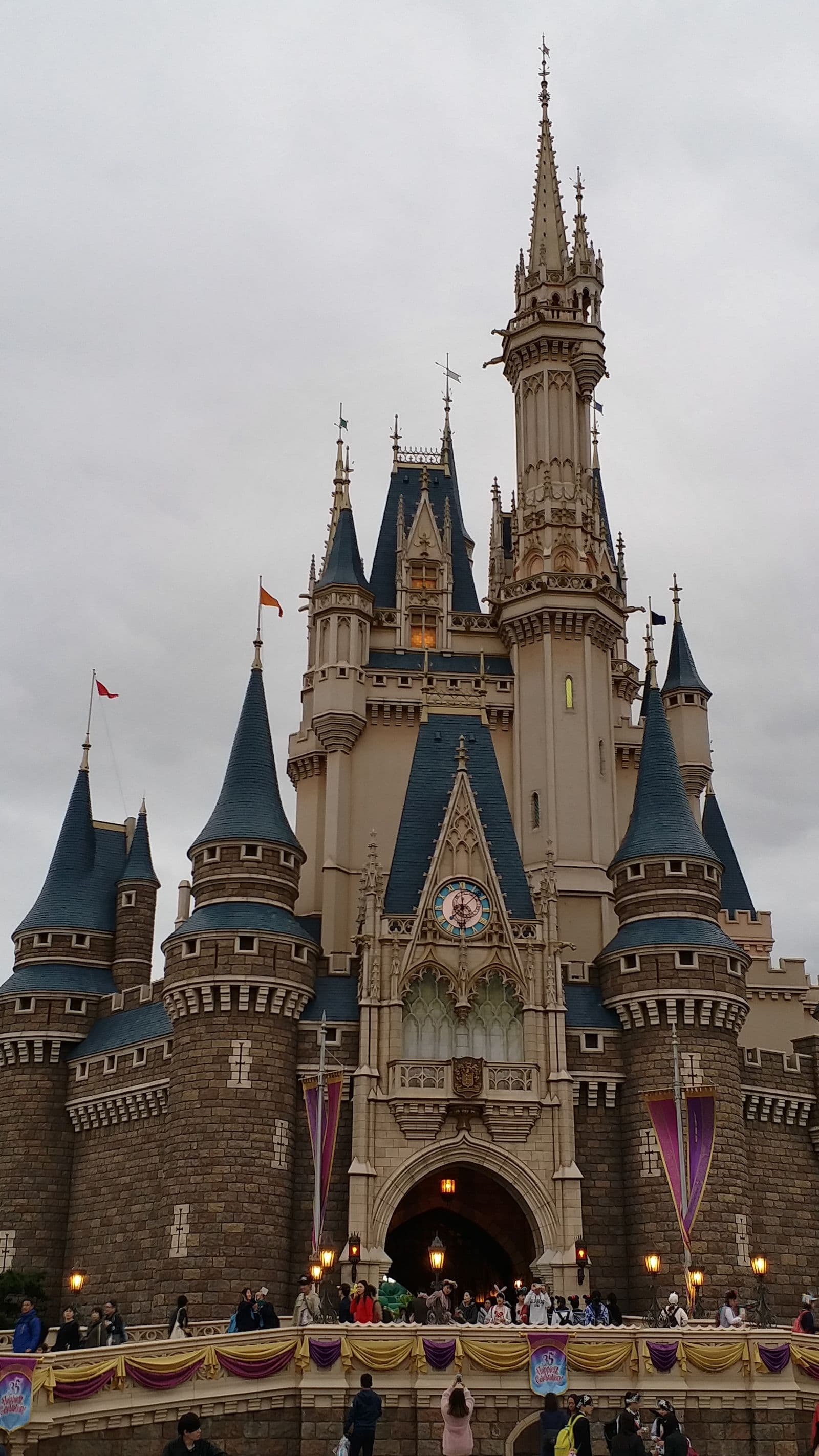
Where the six days go
The allocation first: two park days, two Tokyo recovery days, two travel days. The parks go on Days 2 and 4 with Day 3 kept empty in between, for a simple reason: a full open-to-close Disney day is an all-day march of walking and standing even for adults, and stacking two parks back to back breaks both kids and adults in the second park. The base is one Maihama-area hotel for all five nights; no luggage moves.
| Day | Plan | Transport and notes |
|---|---|---|
| Day 1 | Incheon to Haneda (or Narita), check in at Maihama, stroll Ikspiari | Limousine bus from Haneda 1,300 yen, 55 to 60 min. End early; the next day starts before opening |
| Day 2 | Tokyo Disneyland, full day | Aim to arrive 1 hour before opening (9:00 in October). Decide on DPA right after entry |
| Day 3 | Recovery day: Senso-ji in Asakusa, Ueno Park and Zoo, early return | Asakusa to Ueno is direct on the Ginza Line. Zoo: adults 600 yen, elementary and under free, closed Mondays |
| Day 4 | Tokyo DisneySea, full day | Head straight to Fantasy Springs after entry. Evening for the harbor show and night views |
| Day 5 | teamLab Planets in Toyosu, Tokyo Character Street, Pokemon Center in Nihombashi | Pack and shop for souvenirs today |
| Day 6 | Check out, limousine bus to Haneda (or Narita), fly home | Work backwards from arriving 3 hours before departure |
Check the days of the week first. One, tickets are date-priced: on the official October 2026 calendar adults pay 10,900 yen on weekdays versus 11,900 to 12,400 yen on Saturdays and Sundays (October observation), so putting both park days on weekdays saves up to 1,500 yen per adult per day. Two, crowds move the same way; weekends and the middle days of long weekends are the busiest. Three, Ueno Zoo on the recovery day closes on Mondays (or the following day when Monday is a holiday). A Tuesday-departure, Sunday-return shape that keeps both park days and the recovery day on weekdays is this itinerary's default. If your dates put Day 3 on a Monday, simply swap Days 3 and 5 (reschedule the teamLab web ticket first if already booked).
Before departure: one QR for entry, one IC card for transit
| Item | Details |
|---|---|
| Visa | Korean passports visa-free for 90 days (tourism, per Japan's Ministry of Foreign Affairs) |
| Entry procedure | Register on Visit Japan Web before departure: immigration plus customs in one QR. Without it, paper forms on arrival |
| Flight | Incheon to Haneda or Narita about 2.5 hours (planning assumption). With kids and bags, the limousine bus connection favors either airport |
| Transit card | A transport IC card (Suica family) is the default. The visitor Welcome Suica is valid 28 days from purchase |
| Child fares | JR child fare (ages 6 to 11) is half the adult fare; preschoolers ride free with conditions (up to two infants per paying adult or child). Disney: 3 and under free, 4 to 11 child price |
| Money | 100 yen is about 850 KRW (derived from ECB reference rates, 2026-10-07, planning assumption). Cards are standard in parks and city; carry little cash |
| Connectivity | One eSIM. The park app (wait times, DPA, mobile order) runs all day, so size the data plan up |
| Time difference | None (same zone as Korea) |
Visit Japan Web is the Digital Agency's official web service: you pre-register immigration and customs information and show a QR code at entry, and the immigration and customs QR codes were unified into one in January 2024, and foreign visitors use the same service for tax-free shopping during the stay. Finish the registration the day you buy park tickets rather than the night before the flight. Inside the parks the official app handles maps, wait times, DPA purchases and food orders, so install it and complete the MyDisney login before you land; it removes one queue on the ground.
Airport to Maihama: the family default is the bus
This trip has four big transfers: airport in, the hotel, airport out, and the daily park run. The whole design is removing segments where you haul luggage through transfers.
| Leg | Going | Returning |
|---|---|---|
| Haneda to Disney Resort | Limousine bus about 55 to 60 min, adults 1,300 yen, children 650 yen; stops at both parks and hotels | Same route reversed; reserved seats, book on the web |
| Narita to Disney Resort | Limousine bus about 65 to 90 min, adults 2,900 yen, children 1,450 yen | Same route reversed |
| Train alternative | Narita about 80 min with 1 transfer; Haneda about 50 min with 2 (official access guide, transfer waits excluded) | Via Tokyo Station, Keiyo Line about 20 min |
| Tokyo Station to Maihama | JR Keiyo/Musashino Line about 20 min, no transfer; revised fare 253 yen IC (260 yen ticket) | Same; post-closing crowds matter more than last trains |
| Inside the resort | Disney Resort Line monorail, flat 300 yen adult, 150 yen child, one loop about 13 min | Runs 6:03 to 23:30; tickets at machines in every station |
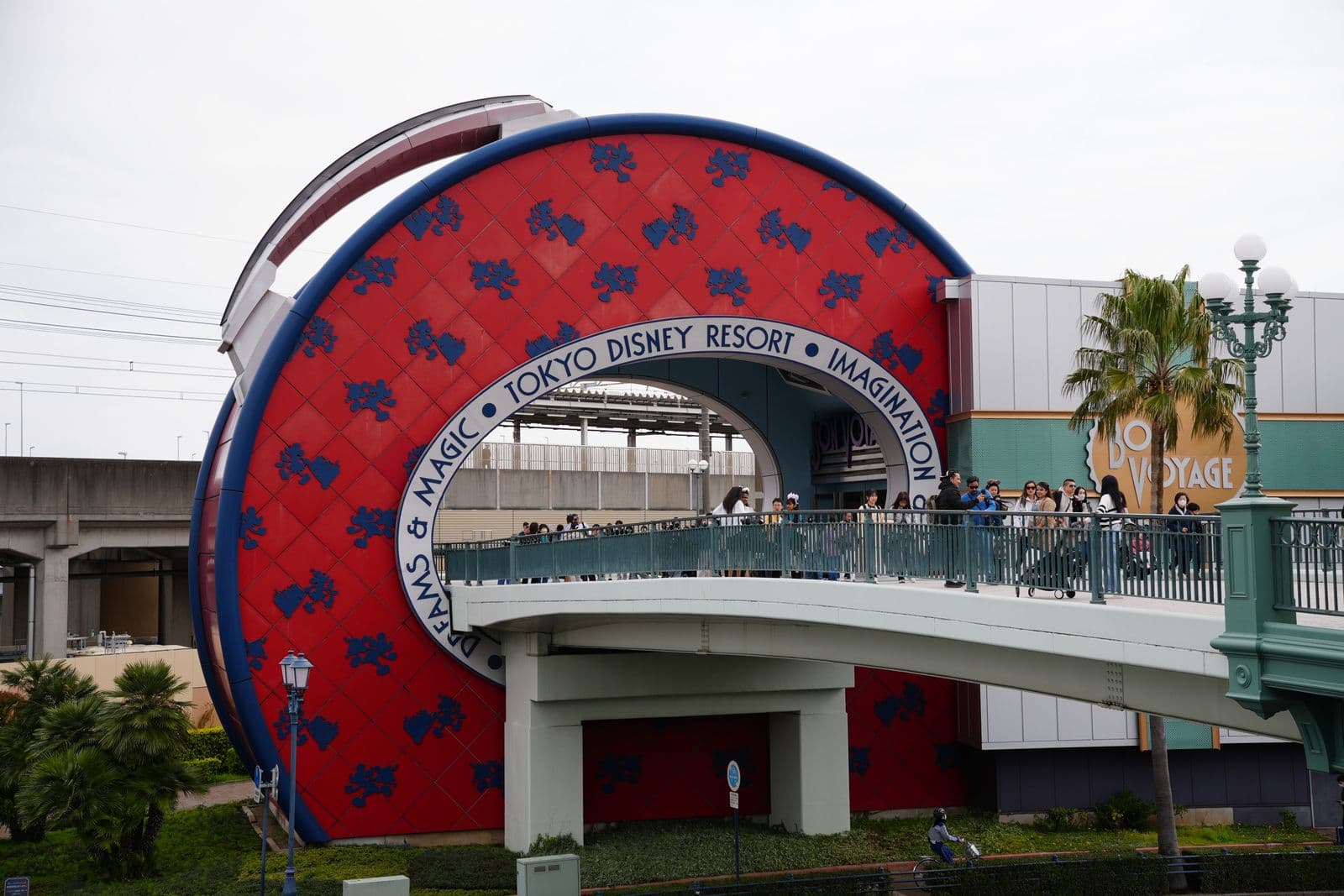
How to ride. Reserve limousine bus seats on the operator's site, then follow signs to the bus counters and bays in the arrivals lobby. Buses stop in turn at Tokyo Disneyland, DisneySea, and the Disney and official hotels, so get off at the stop named after your hotel. Coming by JR, from Maihama Station's south exit Disneyland is about a 5-minute walk; for DisneySea, exit the gates and turn left to Resort Gateway Station for the monorail (about 2 minutes on foot, 9 minutes riding, 1 minute to the entrance). JR fares rose in March 2026 when the discounted metropolitan fare zones were merged into trunk-line fares; Tokyo to Maihama sits in the 11 to 15 km band of the revised table at 253 yen by IC.
Working backwards on departure day. On the arrive-3-hours-early rule, leave the hotel at least 4 hours before a Haneda departure and 4.5 hours before Narita. A final-morning park visit collides with that math, so this itinerary does not include one. Book the return bus seats in advance too; if the bus is full or the expressway jams, switch straight to the train alternative in the table above.
Zones and time budget
| Zone | Anchors | Getting there | Time to spend |
|---|---|---|---|
| Maihama (Disney Resort) | Disneyland, DisneySea, Ikspiari | Home base; monorail loop 13 min | 2 park days plus every evening |
| Asakusa and Ueno | Senso-ji, Ueno Park and Zoo | About 40 to 50 min via Keiyo Line plus a subway transfer; Asakusa to Ueno itself is direct on the Ginza Line | 1 recovery day |
| Toyosu, Tokyo Station, Nihombashi | teamLab Planets, Character Street, Pokemon Center | 10 to 25 min along the Keiyo axis | Half a day plus shopping |
| Airports (Haneda/Narita) | Direct limousine bus | 55 to 60 / 65 to 90 min | Arrival and departure days |
With Maihama as base, every city outing rides the Keiyo Line axis: Toyosu (change at Shin-Kiba) and Tokyo Station are close, the Asakusa-Ueno axis is one or two transfers away, and Asakusa and Ueno themselves sit on the same Ginza Line. Morning starts are slower than from a central-Tokyo hotel, but when the parks are the point, getting back to your room without a long transfer after park closing wins by a wide margin for families. The city travel times in the table are editorial estimates built on official figures (about 20 minutes Tokyo Station to Maihama) plus transfer allowances.
Tickets: the date is the price, and there is no ticket window
If you take one section from this guide, take this one. From entries on October 10, 2026, the 1-Day Passport added 11,900 and 12,400 yen tiers, raising the adult cap from 10,900 to 12,400 yen. The official sales calendar shows the adult price under each date: in October 2026, weekdays are 10,900 yen and Saturdays and Sundays 11,900 to 12,400 yen (observed 2026-10-08). Holidays are not automatically expensive either: the Monday holiday of October 12 showed 10,900 yen. Which day peaks varies by month; on one three-day weekend the middle Sunday was 12,400 yen while the Saturday was 11,900. Do not memorize rules; read the numbers on the purchase screen.
- Age bands: adults (18+) from 8,900 yen, juniors (12 to 17) from 7,400 yen, children (4 to 11) from 5,300 yen, ages 3 and under free. The "from" prices are period minimums; actual dates follow the calendar.
- How sales work: date- and park-specified tickets, sold on the official web and app from about two months out, up to 10 per purchase, no buyer-convenience cancellations or refunds, MyDisney account required. The park ticket booths are suspended, so "we'll buy at the gate" does not work. Disney hotel guests can buy at their hotel, partner hotels sell stay plans with ticket purchase rights, and some travel agencies and convenience stores also sell. The official site notes that sold-out dates can go back on sale without notice, so re-check if your date shows sold out.
- Short-visit passes: After 3 from 3 p.m. on holidays (adults from 7,900 yen) and After 5 from 5 p.m. on weekdays (adults from 6,000 yen). Useful for a second-park evening with toddlers, or a night-parade-only visit.
Operating hours in October 2026 are 9:00 to 21:00 at both parks. Entry sometimes starts earlier than posted, so re-check the official operating calendar the night before.
Day 2, Tokyo Disneyland: the first 30 minutes decide the day
Target arriving one hour before opening. Security and entry lines build before the gates open, and what you do in the first 30 minutes sets the day's total queue time. On entering, decide two things at once: do we run to the one ride the kids care about most and queue, or buy that ride's DPA and start elsewhere?
Strollers rent for 1,000 yen a day at the counters near both park entrances (hooded type-B stroller, for children 7 months and older who can sit unassisted, up to 100 cm and 15 kg, per the official notice as of 2026-10-08). To combine the opening sprint with the rental, have one parent take the kids straight to the first line while the other rents and catches up. Children over 100 cm cannot rent, so bring your own stroller if you need one.
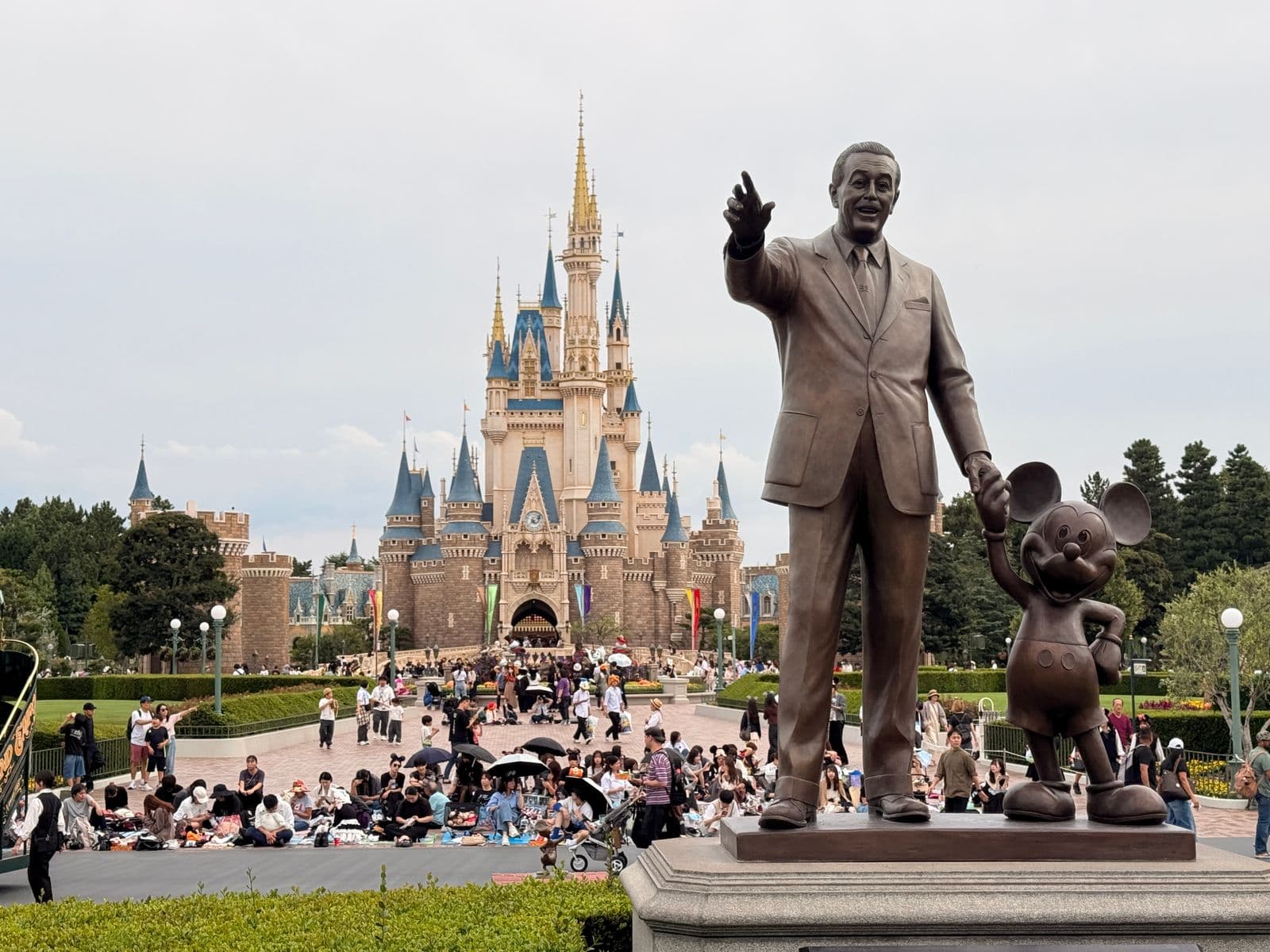
Disney Premier Access, and when to buy it
DPA is a paid pass with an assigned time slot. Three rules cover it: purchase only after park entry in the app, one per park ticket per person, and limited quantities that sell out. Even after a sold-out notice, availability shifts through the day, so refresh the app before giving up and joining the standby line. Current Disneyland prices (October 2026): Enchanted Tale of Beauty and the Beast 2,500 yen; Baymax's Happy Ride, Splash Mountain, Big Thunder Mountain and Pooh's Hunny Hunt 1,500 yen each; Monsters, Inc. and Haunted Mansion 1,000 yen each (the Mansion as a limited-period entry); parade and show seating 2,500 to 3,500 yen (the limited-period Halloween and Christmas shows sit at 3,500). Several passes for a whole family rivals the ticket price, so keep one rule: spend on the single "must ride today" attraction and cover the rest with early-morning and parade-time lulls. No changes, cancellations or refunds.
Enchanted Tale of Beauty and the Beast
The castle-sized trackless ride is the park's flagship and, among attraction DPAs here, the most expensive at 2,500 yen. Either queue for it at opening or buy its DPA; pick one and commit, or the backtracking eats the morning. The official FAQ publishes height minimums per attraction: at Tokyo Disneyland, the Happy Ride with Baymax takes 81 cm, Splash Mountain 90 cm and Big Thunder Mountain 102 cm and up (as of 2026-10-08), while Enchanted Tale of Beauty and the Beast is not on the height-limit list, so toddlers who can sit unassisted can ride too. For facilities not named here (the 90 cm family coasters and others), check the same official FAQ list. If your child is near a cutoff, the on-site measurement decides it, so spend DPA only on rides they clearly clear.
Parades and the evening wind-down
The daytime parade and the Electrical Parade at night are free to watch; consider seating DPA (2,500 yen) only when a guaranteed spot matters. With toddlers, watching the night parade and slipping out a beat before closing (21:00) protects the next day. If your hotel sits on the monorail loop, you ride home apart from the main exit crush.
Day 3, the recovery day: Asakusa and Ueno on foot
The day between parks is not "walk less" but "queue less." Morning in Asakusa, early afternoon in Ueno, back in Maihama before dark.
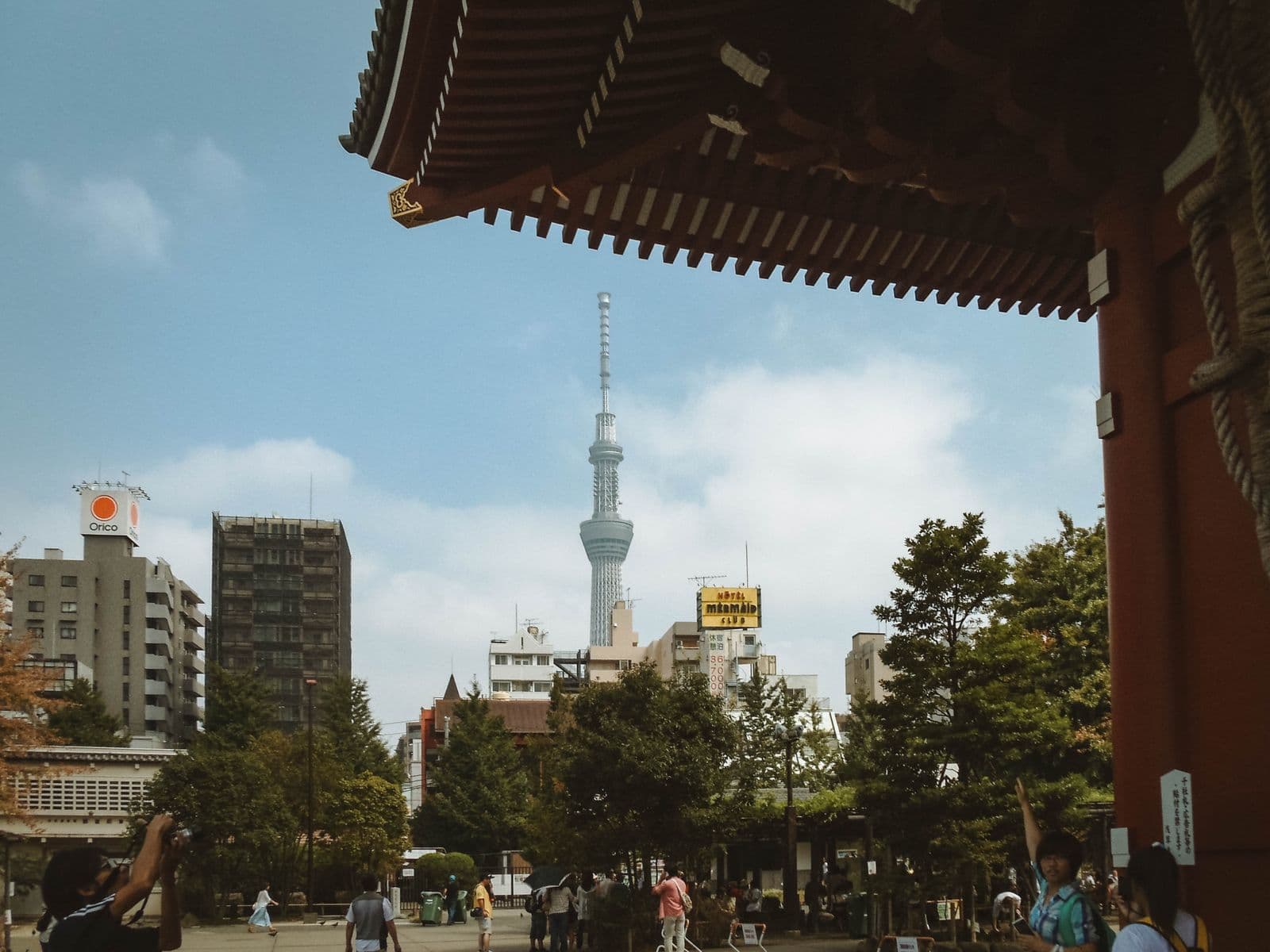
Senso-ji and Nakamise
The main hall opens 6:00 (6:30 from October to March) to 17:00. The earlier you go, the thinner the Nakamise shopping-street crowd, and Skytree rises over the temple eaves from inside the grounds. At a child's pace, 90 minutes covers it including the stalls.
Ueno Zoo, now without pandas
Japan's oldest zoo, kindly priced: adults 600 yen, 65 and over 300, junior-high students 200, elementary age and under free, open 9:30 to 17:00 (entry until an hour before closing), closed Mondays (next day if a holiday). Set one expectation before going: the giant pandas are gone. Twins Xiao Xiao and Lei Lei had their final viewing on January 25, 2026 and were returned to China, leaving zero pandas in Japan. Many family guides still recommend "see the pandas at Ueno," so beware. The zoo itself still works as a two-hour stop that is free for kids.
Day 4, Tokyo DisneySea: Fantasy Springs first, the harbor at night
DisneySea is in its 25th-anniversary event period from April 15, 2026 to March 31, 2027. The day's skeleton is simple: Fantasy Springs right after entry, the harbor show in the afternoon, the port after dark.
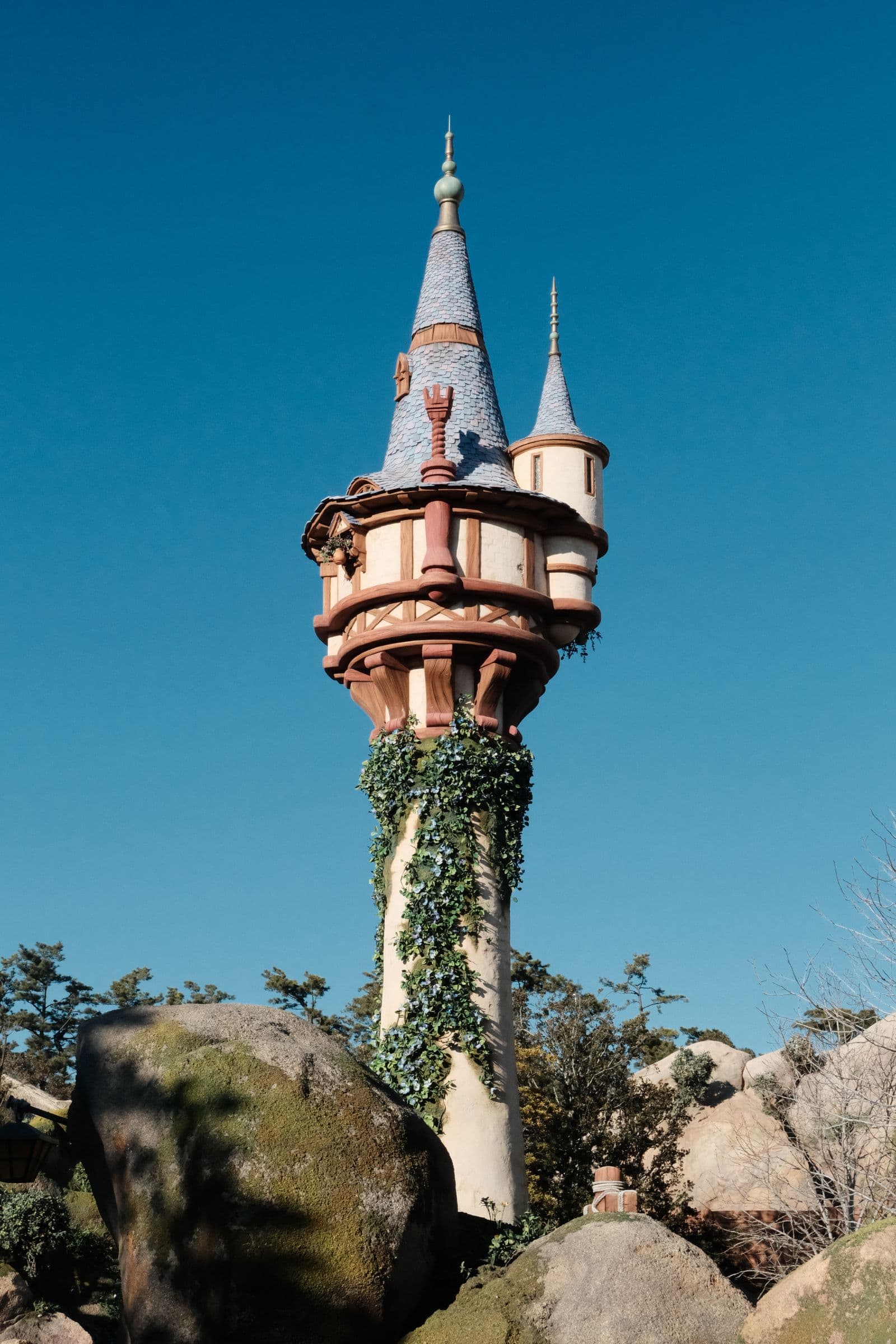
Fantasy Springs: the entry cap is gone, the lines are not
The Frozen, Rapunzel and Peter Pan area opened in 2024. Per the official FAQ as of October 2026, anyone who has entered DisneySea can enter the area, and the attractions can be experienced by joining the regular queue. Many guides still assume the launch-era mandatory Standby Pass; that is no longer the case. No restriction does not mean no waiting, though; it means anyone may join the line, and the waits themselves are long, and shortest right at opening, so this day goes straight to Fantasy Springs and your child's first-choice ride. To pay the wait down, DPA runs 2,500 yen for Anna and Elsa's Frozen Journey and 2,000 yen each for Rapunzel's Lantern Festival and Peter Pan's Never Land Adventure (Peter Pan has a 102 cm height minimum; Frozen Journey and Rapunzel are not on the height-limit list). The area's three restaurants (Arendelle Royal Banquet and others) require Disney Mobile Order, so lock in a lunch order right after entry while you stand in your first line.
The harbor show and ride planning
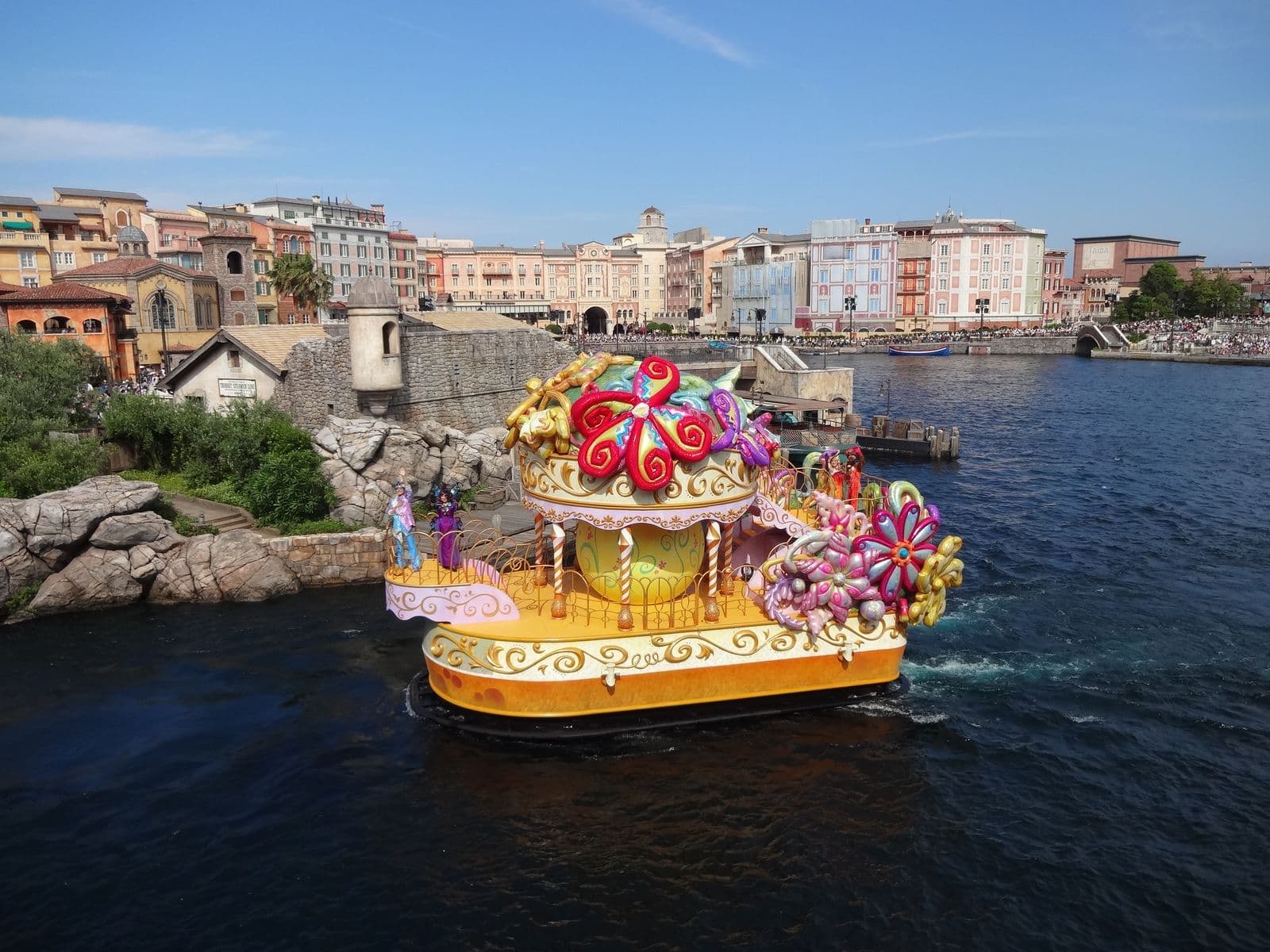
In the afternoon, show barges circle Mediterranean Harbor; the water is the stage, so the back rows still see, and reserved viewing uses show DPA (Believe! and others, 2,500 yen). The thrill lineup by DPA price: Soaring 2,500 yen, Toy Story Mania and Journey to the Center of the Earth 2,000 yen each, Tower of Terror and Raging Spirits 1,500 yen each (Tower of Terror is closed for renewal from 2026-09-28 to 11-05). Height minimums are 102 cm for Soaring, Tower of Terror and Peter Pan, and 117 cm for Journey to the Center of the Earth and Raging Spirits; Toy Story Mania is not on the height-limit list, which makes it the family common denominator on many days.
Evening: the SS Columbia and the port lights
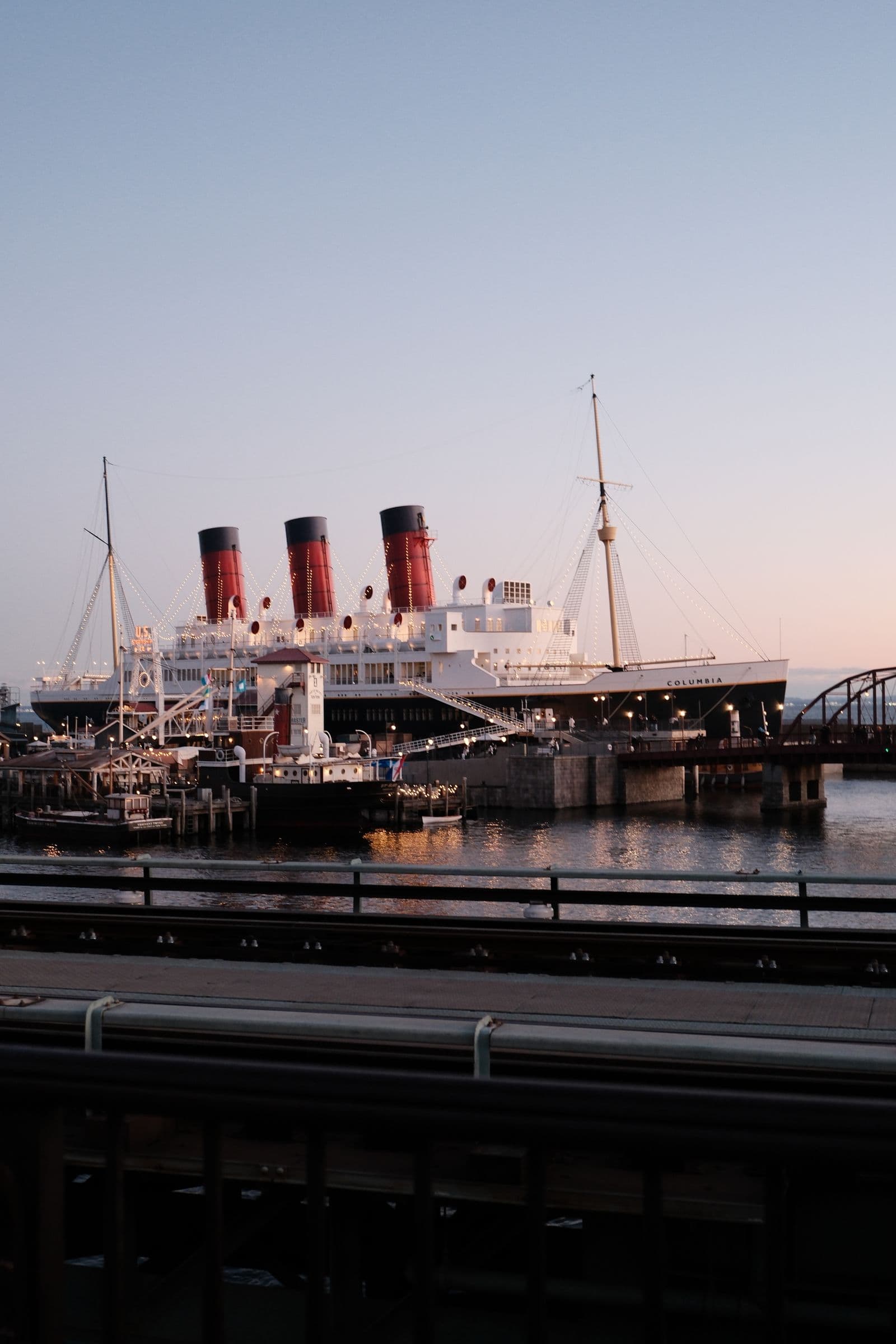
After sunset the lights come up around the SS Columbia, the grand steamer at American Waterfront. DisneySea's evening rewards a slow lap of the harbor more than one more ride. Against the 21:00 close, families with toddlers do well leaving around 20:00 and riding the monorail home.
Day 5, Toyosu and Tokyo Station: an indoor day and the souvenirs
The last full day stays indoors by design; it runs unchanged in the rain.
teamLab Planets (Toyosu)
The immersive museum known for its wade-through-water galleries is announced to run through the end of 2027. Tickets are date- and time-specified with variable pricing; listed base prices are adults (18+) 3,800 yen, teens 2,800, children 4 to 12 1,500, ages 3 and under free. There are no on-site sales, so buy on the official site ahead; weekend and holiday slots often sell out as the date nears, so book the day you buy park tickets. Official web tickets can be rescheduled up to 3 times until 2 hours before entry. From Maihama it is close: Keiyo Line to Shin-Kiba, then the Yurakucho Line to Toyosu; heading on to Tokyo Station, stay on the Yurakucho Line to Yurakucho and ride JR one stop. Knees down may get wet in the water galleries, so dress kids in easy-to-roll clothing and pack a change of clothes and a towel.
Tokyo Character Street and the Nihombashi Pokemon Center
The underground mall outside Tokyo Station's Yaesu Underground Central gate (First Avenue Tokyo Station) gathers the character shops; it sits outside the gates, so no rail ticket is needed. For the full Pokemon stop, the flagship Pokemon Center Tokyo DX is a 5-minute walk from Tokyo Station's Yaesu North Exit, on the 5th floor of Nihombashi Takashimaya S.C. East Building (directly connected to Nihombashi Station exit B2; daily 10:30 to 21:00). Pushing all souvenir shopping to this day keeps park days bag-free.
Practical details
| Facility | Price (adult) | Children | Operations and booking |
|---|---|---|---|
| Disneyland/DisneySea 1-Day | from 8,900 yen (Oct 2026: weekdays 10,900, Sat-Sun 11,900 to 12,400) | child (4-11) from 5,300 yen; 3 and under free | Date-specified; official online pre-purchase (booths suspended), on sale ~2 months out, no refunds |
| After 3 / After 5 | from 7,900 / from 6,000 yen | juniors from 6,600 / 5,200 yen; children from 4,400 / 3,800 yen | Holidays from 15:00 / weekdays from 17:00 |
| DPA | 1,000 to 2,500 yen per facility (shows up to 3,500) | check facility rules for infants who occupy a seat | Buy in app after entry; limited quantity |
| Disney Resort Line | flat 300 yen | child (elementary) 150 yen | 6:03 to 23:30, loop ~13 min |
| teamLab Planets | 3,800 yen (variable) | 4-12: 1,500 yen; 3 and under free | Timed entry, no on-site sales, through end of 2027 |
| Ueno Zoo | 600 yen | elementary and under free; junior high 200 yen | 9:30 to 17:00, closed Mondays |
| Senso-ji | grounds walk | - | Main hall 6:00 (winter 6:30) to 17:00 |
| Pokemon Center Tokyo DX | shopping | - | 10:30 to 21:00, Takashimaya East Bldg 5F |
Adjust by your crew
| Party | Day to change | Drop | Add | Why |
|---|---|---|---|---|
| Preschoolers (incl. under 3) | Day 4 | Full DisneySea day | A second Disneyland day (default); Sea as an After 3 half day if the entry date is a holiday | Sea skews thrill-heavy and height limits bite; under-3s enter free, so a half-day return costs little (After 3 is holidays-only) |
| Early elementary | keep | Multiple DPA buys | One opening sprint plus one DPA if needed | This age cannot stand two-hour waits; cut lines with routing, not money |
| Upper elementary and teens | Days 3 and 5 | Ueno Zoo | Move teamLab up to Day 3, make Day 5 the Tokyo Station-Nihombashi shopping run, and raise the Day 4 weight of DisneySea's thrill lineup (Soaring at 102 cm, Raging Spirits at 117 cm) | From age 12 the junior price band costs more (10 to 11-year-olds still pay child price), but the rideable lineup widens at once |
| Adults only | compress Day 3 | The whole recovery day | An extra park day if Disney is the point of the trip, a city night if Tokyo is new to you; if both apply, the extra park day comes first | Without the stamina constraint, the recovery day is optional; if Disney is the goal, spending that day on park evenings is denser |
Eating: order by app inside, keep it light outside
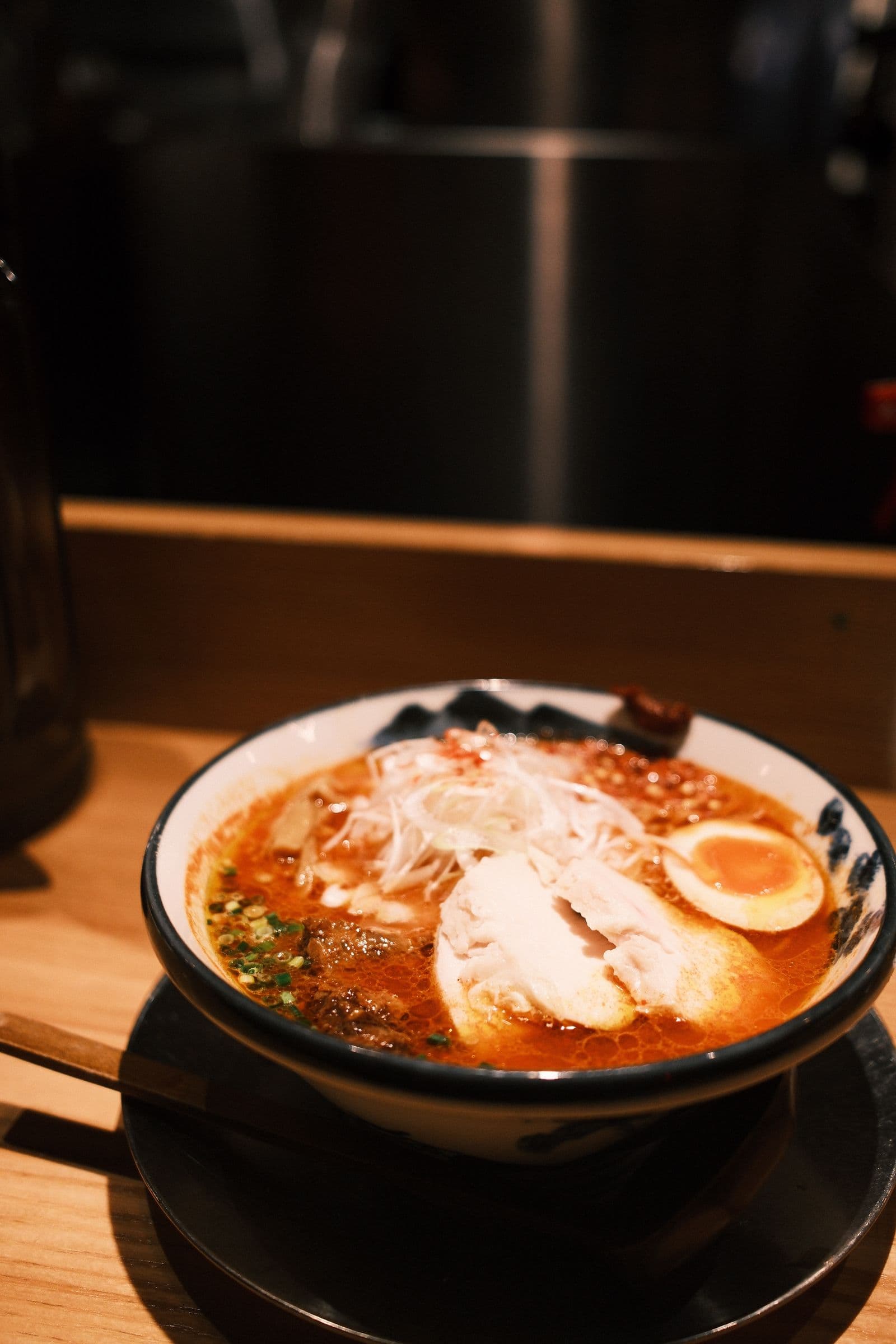
The variable in park dining is the line, not the menu. Many restaurants run Disney Mobile Order (order ahead) and Priority Seating (advance reception) in the official app, so lunch gets ordered while you stand in an attraction queue. The three Fantasy Springs restaurants require Mobile Order. Shifting 30 minutes off the 12:00 and 18:00 peaks changes the day. Outside the parks, Ikspiari, the Tokyo Station underground and Asakusa's ramen, udon and gyudon chains are the family defaults: kids' portions come as half sizes or sets, and fast table turns keep evenings light before the ride home.
Costs for 6 days, per person
Three tiers per adult including flights (double occupancy). Conversions use 100 yen at about 850 KRW, an editorial planning rate rounded up from 846 KRW derived from the ECB reference rates of 2026-10-07 (1 EUR = 176.85 JPY = 1,496.25 KRW).
| Item | Budget | Standard | Comfortable |
|---|---|---|---|
| Flights (Incheon round trip) | 300,000 KRW | 450,000 | 600,000 |
| Hotel, 5 nights (per person) | 400,000 (partner hotel) | 650,000 (official hotel) | 1,100,000 (Disney hotel) |
| Park tickets, 2 days | 185,300 (weekdays, 21,800 yen) | 185,300 | 210,800 (price-cap basis, 12,400 yen x 2 = 24,800) |
| DPA | 0 | 38,250 (4,500 yen: one per park) | 72,250 (8,500 yen) |
| City admissions | 5,100 (zoo 600 yen) | 37,400 (zoo + teamLab 4,400 yen) | 37,400 |
| Airport transfers round trip | 22,100 (Haneda bus 2,600 yen) | 22,100 | 49,300 (Narita 5,800 yen) |
| City and resort transit | 25,500 (about 3,000 yen) | 25,500 | 25,500 |
| Food, 5.5 days | 212,500 (about 4,500 yen/day) | 297,500 (about 6,400 yen/day) | 425,000 (about 9,100 yen/day) |
| Total | about 1.15M KRW | about 1.71M KRW | about 2.52M KRW |
Flights, hotels and food are planning assumptions; tickets, DPA, admissions and transit are sums of posted fares. Totals equal the row sums (1,150,500 / 1,706,050 / 2,520,250 KRW). The two biggest levers are the hotel tier and the park weekdays. For kids: child park tickets from 5,300 yen, JR at half fare, teamLab 1,500 yen and the zoo free mean one elementary-age child's "tickets plus transit plus admissions" bundle lands near half an adult's. Decide the room setup before multiplying by headcount. The budget tier's flight, hotel and food rows are floor assumptions built on deals and off-peak dates. The budget tier's city admissions also assume skipping teamLab (zoo only); if teamLab stays in, use the standard tier's admissions figure.
Seasons and weather
October and November bring Tokyo's clearest stretch: comfortable walking weather by day with jackets needed mornings and evenings. The parks dress up for Halloween (September 16 to October 31, 2026), then Christmas from mid-November (the Christmas show runs November 11 to December 25); the changeover weeks between events run comparatively calm. July and August are hot and humid, the hardest season with toddlers, while winter's early sunsets put the night parade at kid-friendly hours. In every season the test is the same: pick weekdays on the sales calendar, and fix a leave-before-closing time that fits your child's stamina.
Rain planning splits in two. For a city day, swapping Days 3 and 5 is the default: the indoor axis is already in the plan, so before booking teamLab the swap costs nothing, and after booking you use the official web ticket's reschedule option (up to 3 times until 2 hours before entry) while re-checking the zoo's Monday closure. For a park day, keep the date: pack rain gear and rebuild the loop around indoor attractions and Mobile Order. When a show or parade is cancelled, its seating DPA is refunded per the official terms.
Last checks
- Open the ticket calendar now. Date-based pricing (October observation: weekdays 10,900, Sat-Sun 11,900 to 12,400 yen) and the booths are suspended. Sales open ~2 months out; no cancellations or refunds
- DPA only after entry. In the app, one per ticket, limited stock. The family rule: one must-ride only
- Fantasy Springs has no entry restriction (as of 2026-10). Ignore the Standby-Pass-era posts; waits are long, and right after opening is merely the shortest
- DisneySea Happy Entry is two hotels only. Fantasy Springs Hotel and MiraCosta (changed September 2025). DisneySea entry starts 5 to 15 minutes early; for Disneyland, all Disney hotels, 15 minutes early (check-in day excluded, a few exclusion dates apply)
- No pandas at Ueno. Returned to China in January 2026. The zoo still works, free through elementary age
- Register Visit Japan Web. Immigration plus customs in one QR (unified January 2024); register the day you buy tickets
- Book bus seats both ways. Haneda 1,300 yen, Narita 2,900 yen, hotel-front stops
Wrap-up
Tokyo Disney in 6 days means two park days (Land on Day 2, Sea on Day 4), a recovery day, and an indoor finish.
- Tickets: date-priced, official online pre-purchase (booths suspended), cap 12,400 yen from 2026-10-10; weekdays are the family-scale saving
- On the ground: arrive an hour early, one sprint plus one DPA if needed at entry, Fantasy Springs first thing
- Hotel: one Maihama-area base; FSH or MiraCosta for Sea early entry, Shin-Urayasu partners for value
- Transport: limousine bus (Haneda 1,300, Narita 2,900 yen), the Keiyo Line axis, the 300-yen monorail
- Budget: 1.15 to 2.52 million KRW per adult (planning assumption); hotel tier and weekdays decide it
Put this plan in Tripop
Two park days of bookings (tickets, DPA, restaurants) tangled with two city days. Type "Tokyo Disney 6 days with kids" into the Tripop app and the day-by-day skeleton appears; upload ticket and hotel PDFs and the vouchers sort themselves by date. The yen-by-yen budget and companion sharing live in the same app.
- Get it on the App Store
- Get it on Google Play
- Start on the web, no install needed
What we verified
The fares and rules here were checked one by one by the Tripop travel desk on October 8, 2026 against Tokyo Disney Resort's official ticket, sales-calendar, operating-calendar, Premier Access, Fantasy Springs FAQ, Happy Entry, Resort Line and access pages, Japan's Ministry of Foreign Affairs visa-exemption list, the Digital Agency's Visit Japan Web, JR East's fare-revision guide pamphlet (fare table), the airport limousine operator's timetables, Ueno Zoo and Tokyo Metropolitan Government releases, and the official teamLab Planets and Pokemon Center pages. Park ticket prices are date-variable, so the October figures are the official calendar as observed on the check date, and the day plans and budget bands are editorial planning examples. Before departure, re-check the official ticket calendar, the operating calendar and Visit Japan Web. If a number here differs from what you see, tell us and we will fix it.
Images: Pexels (Daniel Kristanto: Cinderella Castle, Onai Leonardo: Partners statue, Dmitry Romanoff: resort gateway, Tatsuo Nakamura: harbor show, yu chen: Rapunzel's tower and SS Columbia, Sabine Meier: Senso-ji and Skytree, zhen ciang huang: ramen), Pexels License.