
Gyeongju and Andong share a province and look like one trip on the map, yet direct intercity buses barely exist, which is why older guides teach a three-hour transfer through Dong-daegu. The answer changed. When the Jungang Line was connected in the winter of 2024, a 45-minute direct KTX-Eum appeared between Gyeongju and Andong stations. This guide lays two nights in Gyeongju and one in Andong on top of that train.
What these cities actually take days for
Two nights in Gyeongju, one in Andong. Gyeongju's big picture fits in a day and a half downtown plus half a day at Bulguksa, because Daereungwon, Cheomseongdae, Hwangnidan-gil and Wolji Pond are one walkable neighbourhood. Andong resolves into half a day at Hahoe Village plus an evening at Woryeonggyo.
The gap between them is 45 minutes on the fast train. Catch a morning departure on Day 3 and you are in Andong before lunch, with the whole afternoon for Hahoe. No more sacrificing half a day to the Dong-daegu transfer.
Spending all three nights in Gyeongju and dropping Andong is a legitimate fork; it lives in the variation table below.
The whole trip at a glance
| Day | Area | Route | Notes |
|---|---|---|---|
| Day 1 | Central Gyeongju | Arrive by KTX, Daereungwon, Cheomseongdae, Woljeonggyo, Wolji at night | The night view completes the day |
| Day 2 | Bulguksa area | Bulguksa and Seokguram morning, National Museum afternoon | Temple, grotto and museum all free |
| Day 3 | Transfer + Hahoe | ~45 min train, Hahoe Village afternoon, Woryeonggyo evening | ~10 direct trains a day, book ahead |
| Day 4 | Andong town | Early jjimdak lunch, KTX-Eum to Cheongnyangni | Book the return leg in advance |
Decide the transport first: train or rental car
This answer changed in the winter of 2024.
| Mode | Gyeongju → Andong | Take it if (as of 2026-08) |
|---|---|---|
| Direct train | KTX-Eum ~45 min (15,200 KRW), ITX-Maum ~1.5 h (10,400 KRW), ~10 departures/day combined | The car-free default. No transfers |
| Rental car | ~1 h 20~30 min | Two or more people, or you want the bus-starved spots like Byeongsan Seowon and Buyongdae |
| Intercity bus | Direct service barely exists (one daily run in some sources). Via Dong-daegu ~3 h, fares total 20,200 KRW | Fallback when train times don't fit |
Two things to hold onto.
Treat Gyeongju's bus terminal as having no Andong service. That is why every older guide teaches the Dong-daegu transfer, and that information predates the railway. The two stations now sit on one Jungang Line, with around ten trains a day, so missing the morning departure is not fatal. Travelling light and saving 5,000 KRW? The slower ITX-Maum is a fine answer too.
A rental car's value is expansion, not speed. Now that the train crosses in 45 minutes, the car wins not on the transfer but on what it unlocks: Buyongdae cliff across the river from Hahoe, Byeongsan Seowon, Yangdong Village, the places buses barely serve.
In and out of Seoul: the all-rail triangle
| Leg | Line | Time | Notes (as of 2026-08) |
|---|---|---|---|
| Seoul → Gyeongju | Gyeongbu Line KTX | ~2 h | Standard class 49,300 KRW, 20+ daily |
| Gyeongju → Andong | Jungang Line direct | KTX-Eum ~45 min | 15,200 KRW; ~10/day incl. ITX-Maum |
| Andong → Cheongnyangni | Jungang Line KTX-Eum | ~2 h | 27,700 KRW, 9~10/day by date |
Gyeongbu Line in, Jungang Line between the cities, Jungang Line out. All three sides of the triangle are rail, so the last day never backtracks to Gyeongju. All three legs on fast trains cost around 92,000 KRW; swap the middle leg to the ITX-Maum and the total dips into the high-80,000s. If you are visiting Korea from abroad, check whether a Korea Rail Pass covers your dates before buying single tickets.
The watch-out is frequency. Seoul~Gyeongju runs constantly, but the other two legs run about ten times a day, so book Gyeongju~Andong and Andong~Cheongnyangni first and shape the rest around them.
From Gyeongju Station into the centre (the Hwangnidan-gil area) allow about 30 minutes by bus; the station sits outside town. Taxis are quicker depending on traffic. Andong is the opposite arrangement: the train station and bus terminal share one site, which makes transfers easy, but the old market and Woryeonggyo are a bus or taxi ride away.
Areas and travel times
| Area | Anchors | Getting there | Time it takes |
|---|---|---|---|
| Central Gyeongju | Daereungwon, Cheomseongdae, Hwangnidan-gil, Wolji, Woljeonggyo | All on foot | A day + night view |
| Bulguksa area | Bulguksa, Seokguram | Bus or car 30~40 min from centre | Half a day |
| Museum | Gyeongju National Museum | Near the centre | A couple of hours |
| Hahoe Village | The village | Bus from Andong station/terminal, then free shuttle | Half a day |
| Andong town | Woryeonggyo, old market jjimdak alley | Local transit | Evening + half a day |
Central Gyeongju all connects on foot, while Andong's station, Hahoe and Woryeonggyo sit far apart. In Gyeongju your feet set the route; in Andong the bus timetable does.
Fees and hours, in one place
This table is the canonical copy of prices and hours (as of 2026-08).
| Sight | Fee (adult) | Hours·last entry | Know this |
|---|---|---|---|
| Daereungwon | Free (fee scrapped 2023) | 09:00~22:00 | Only Cheonmachong, the walk-in tomb, sells a 3,000 KRW ticket |
| Cheomseongdae | Free | Open ground | Stands on a lawn with no fence |
| Donggung & Wolji | 3,000 KRW | The night visit is the real one | Weekend queues; buy before dinner |
| Bulguksa | Free (since 2023-05) | Go in the morning | Ignore old posts quoting fees |
| Seokguram | Free (since 2023-05) | Pair with Bulguksa | The Buddha is viewed through glass |
| National Museum | Free (permanent halls) | Afternoon slot | Divine Bell and the gold crowns |
| Hahoe Village | 5,000 KRW | 09:00~18:00, last entry 17:30 (winter 09:00~17:00, entry 16:30) | Free shuttle from ticket office |
| Yangdong Village | 4,000 KRW | History-deep concept only | Northern Gyeongju, easiest by car |
Where to stay
| Condition | Area | Why |
|---|---|---|
| Gyeongju 2 nights (base) | Around Hwangnidan-gil~Daereungwon | The walking base: dinner and night views end on foot |
| A quieter Gyeongju night | Bomun Lake resort district | Lakeside resorts, but the night sights need a car ride |
| Andong 1 night | Town centre (old market·Woryeonggyo reach) | Walk home from the bridge lights; the station is a short bus or taxi hop next morning |
Two straight nights in one Gyeongju base; you only pack up for the move to Andong.
Your train times set the first and last day
The base plan assumes a morning KTX landing you in Gyeongju around lunch. Arrive at 3~4 pm and trim Day 1: skip Woljeonggyo, walk Daereungwon and Cheomseongdae, go straight to Wolji after dark. Arrive in the evening and the first day keeps only Hwangnidan-gil and the Wolji night view. The night view is Day 1's minimum unit.
The last day obeys the return train the same way: an early-afternoon departure fits the jjimdak lunch, a morning one means a quick bite near the station instead.
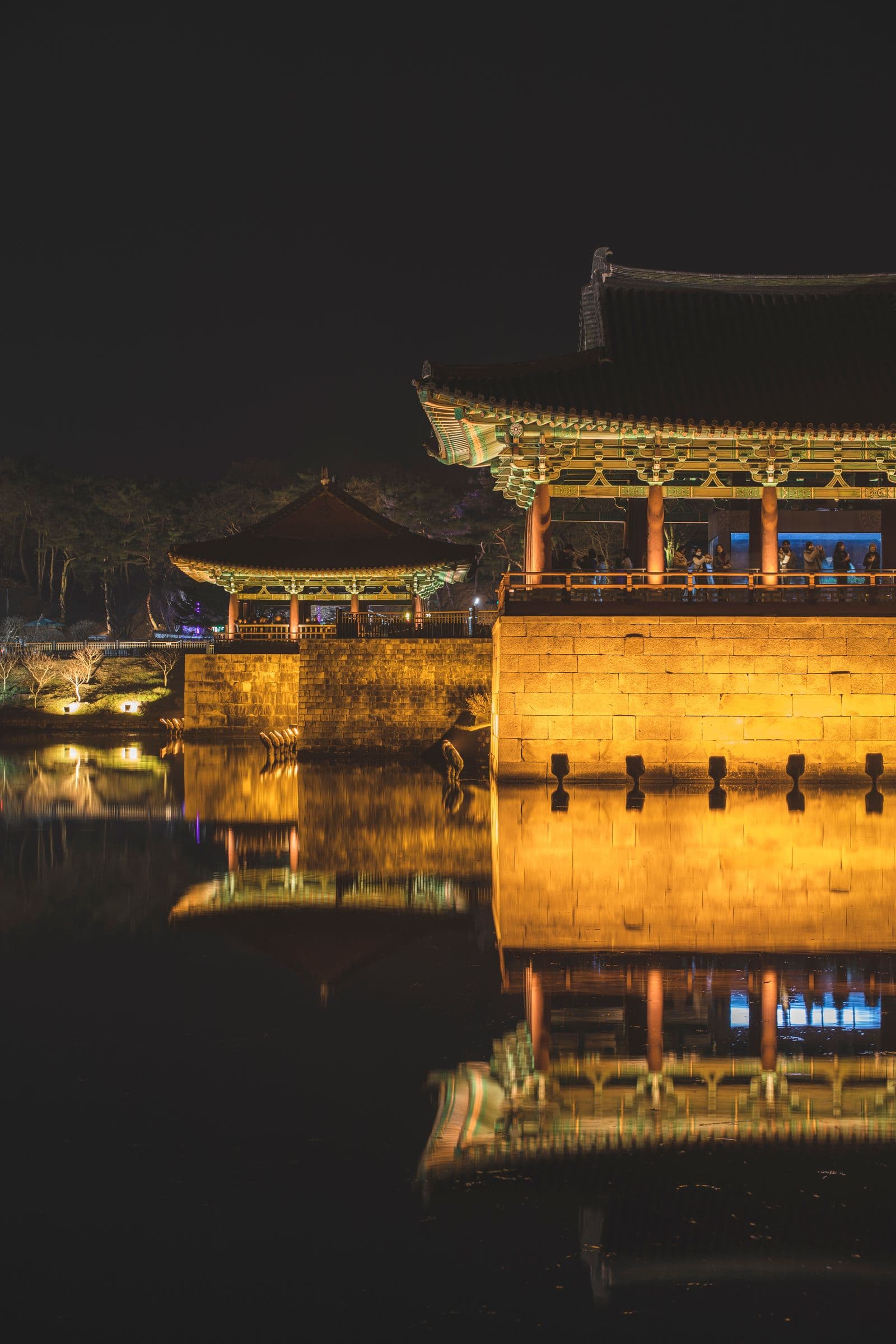
Day 1: central Gyeongju and Wolji at night
Drop your bags and start walking. The order carries the logic: mounds and the observatory in daylight, Woljeonggyo at dusk, an early dinner in between, then Wolji once it is dark. Daylight to darkness, in that order, is the route.
Daereungwon
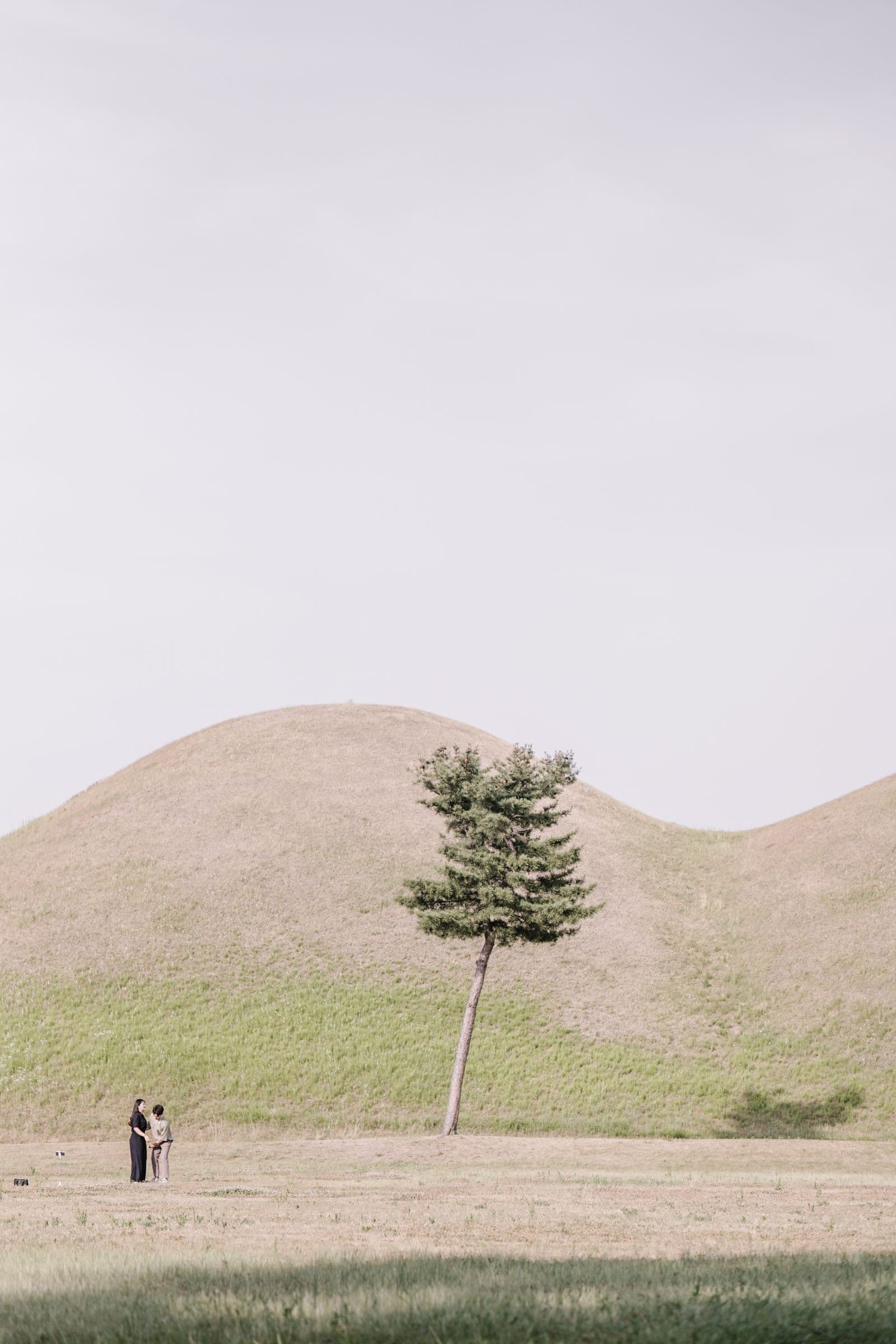
Dozens of Silla royal tombs rise like grass hills through a park. Entry has been free since the fee was scrapped in 2023. The pine-tree photo spot between the mounds draws a queue, so come right after opening or near sunset if the photo matters. Only Cheonmachong, the one tomb opened for walking inside, sells its own ticket.
Cheomseongdae and Woljeonggyo
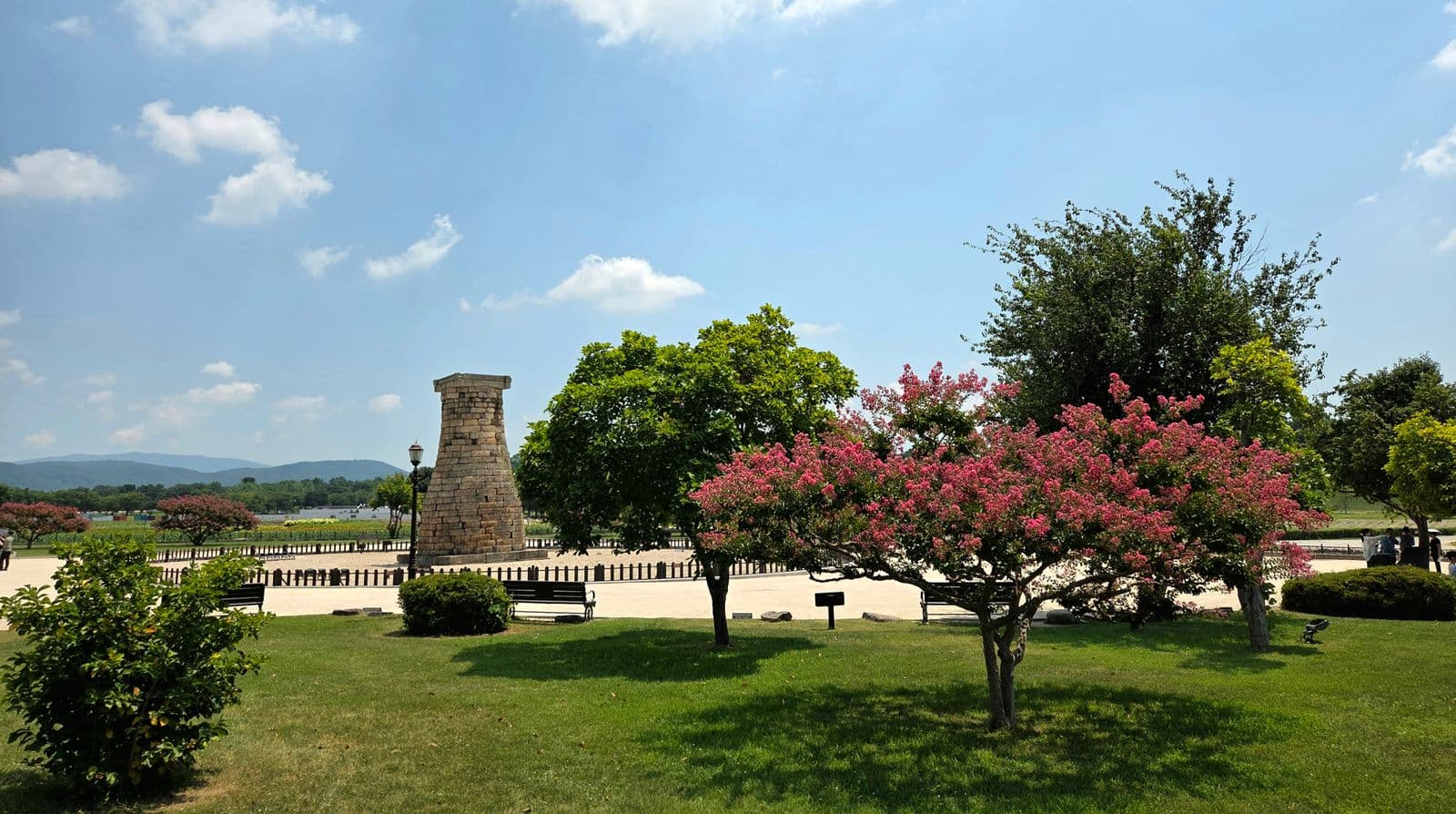
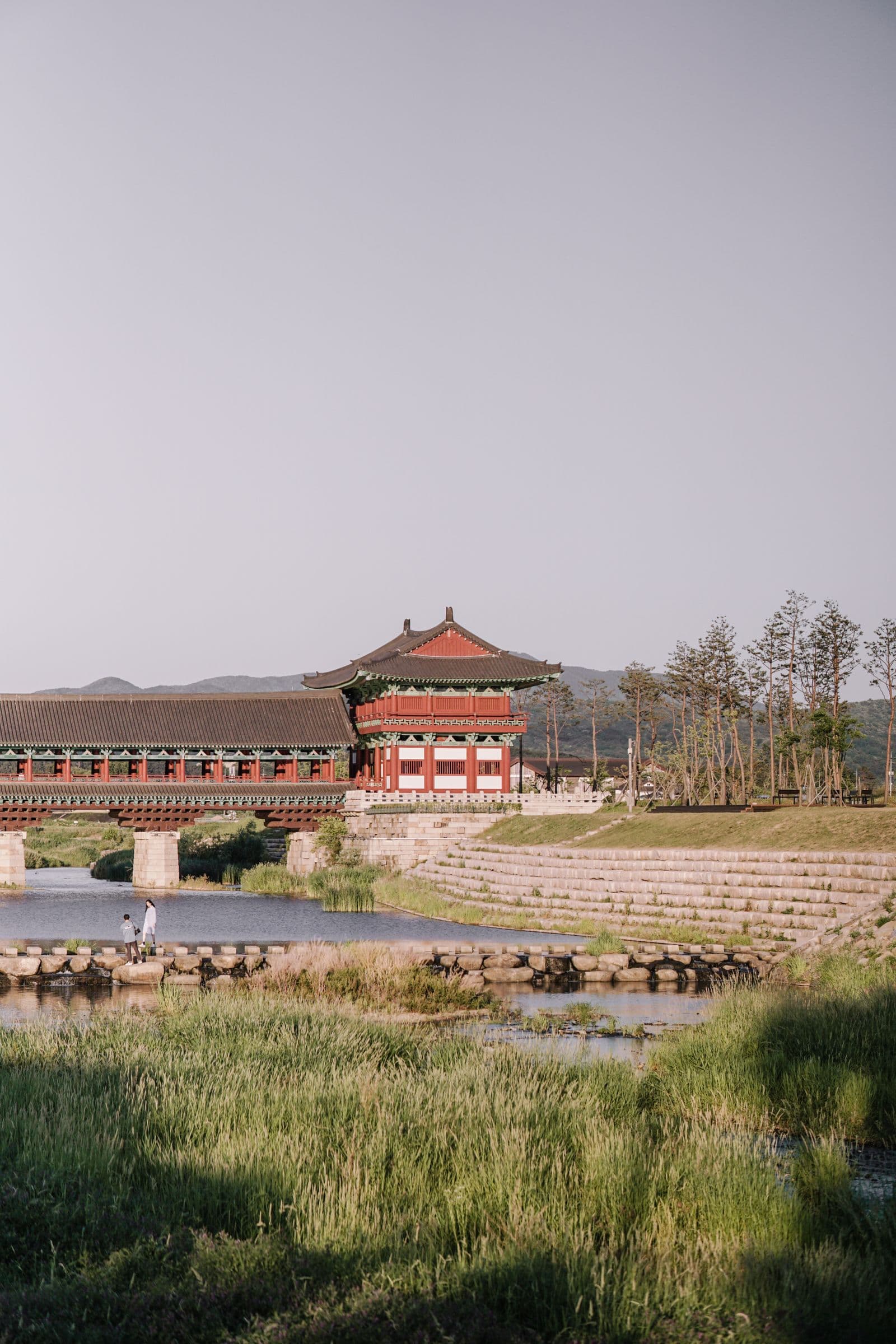
The observatory is minutes on foot from Daereungwon's rear gate, standing on open lawn with no fence and no ticket. Head south from there and the rebuilt covered bridge Woljeonggyo appears over the Namcheon stream.
Donggung Palace and Wolji Pond
Woljeonggyo to Wolji is about a 20-minute walk, so slotting an early dinner between them makes the route natural; the ssambap (wrap-table) street near Hwangnam-dong fits.
Wolji is the pond garden of a Silla palace annex, and the pavilions reflected in the water are Gyeongju's signature night scene. Adult entry 3,000 KRW, nearly the only paid gate downtown. By day it is ordinary; after dark it earns its keep. On weekends the ticket line forms early, so buying before dinner is a legitimate move.
If the night is still young afterwards, Hwangnidan-gil absorbs it: a hanok street of cafes, restaurants and small shops.
Day 2: Bulguksa and the museum
Bulguksa
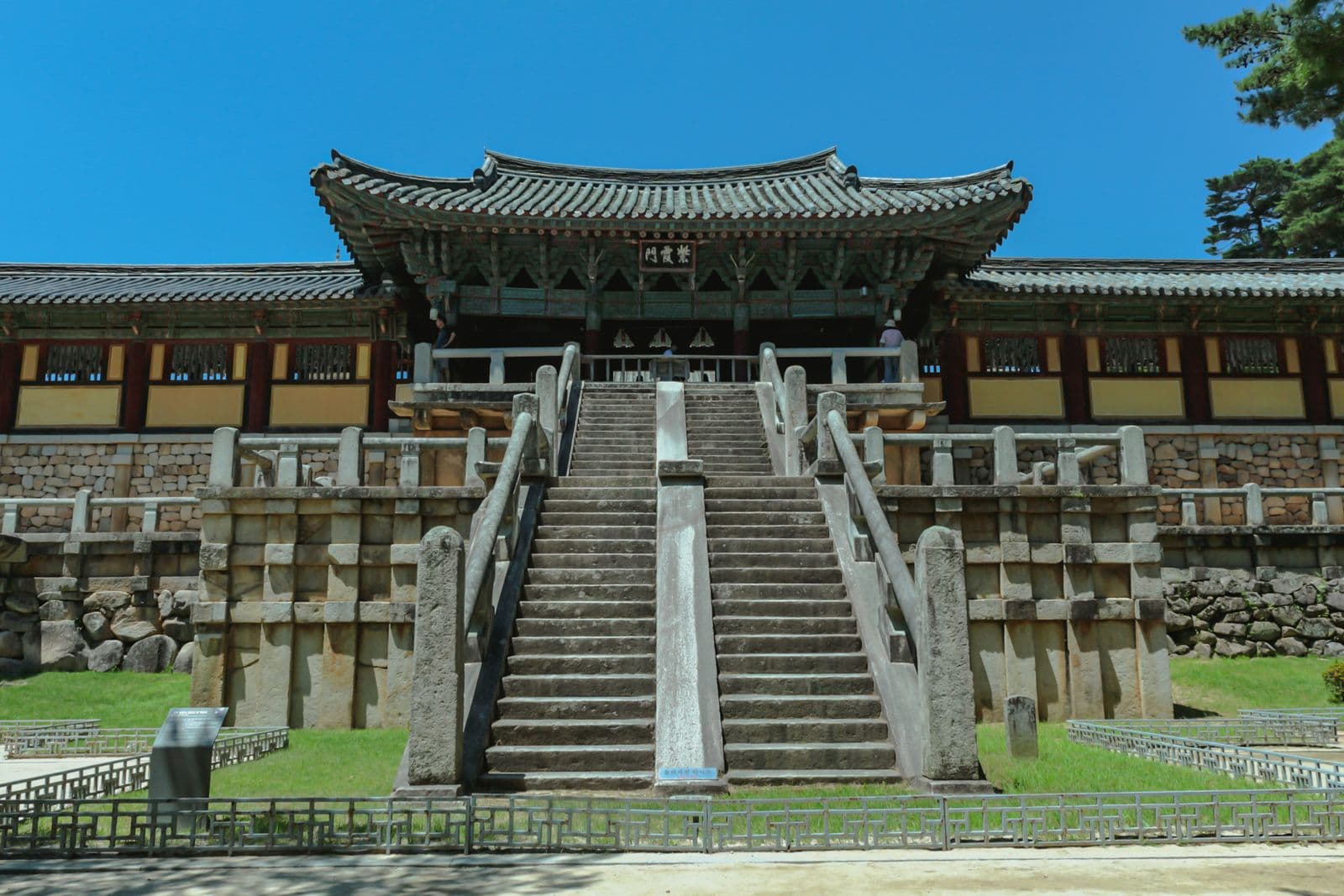
A UNESCO World Heritage temple and the summit of a Gyeongju trip. Free since May 2023. Posts quoting the old paid fees still circulate, so walk straight in without second-guessing the empty ticket window. It is 30~40 minutes by bus or car from the centre; give it the whole morning.
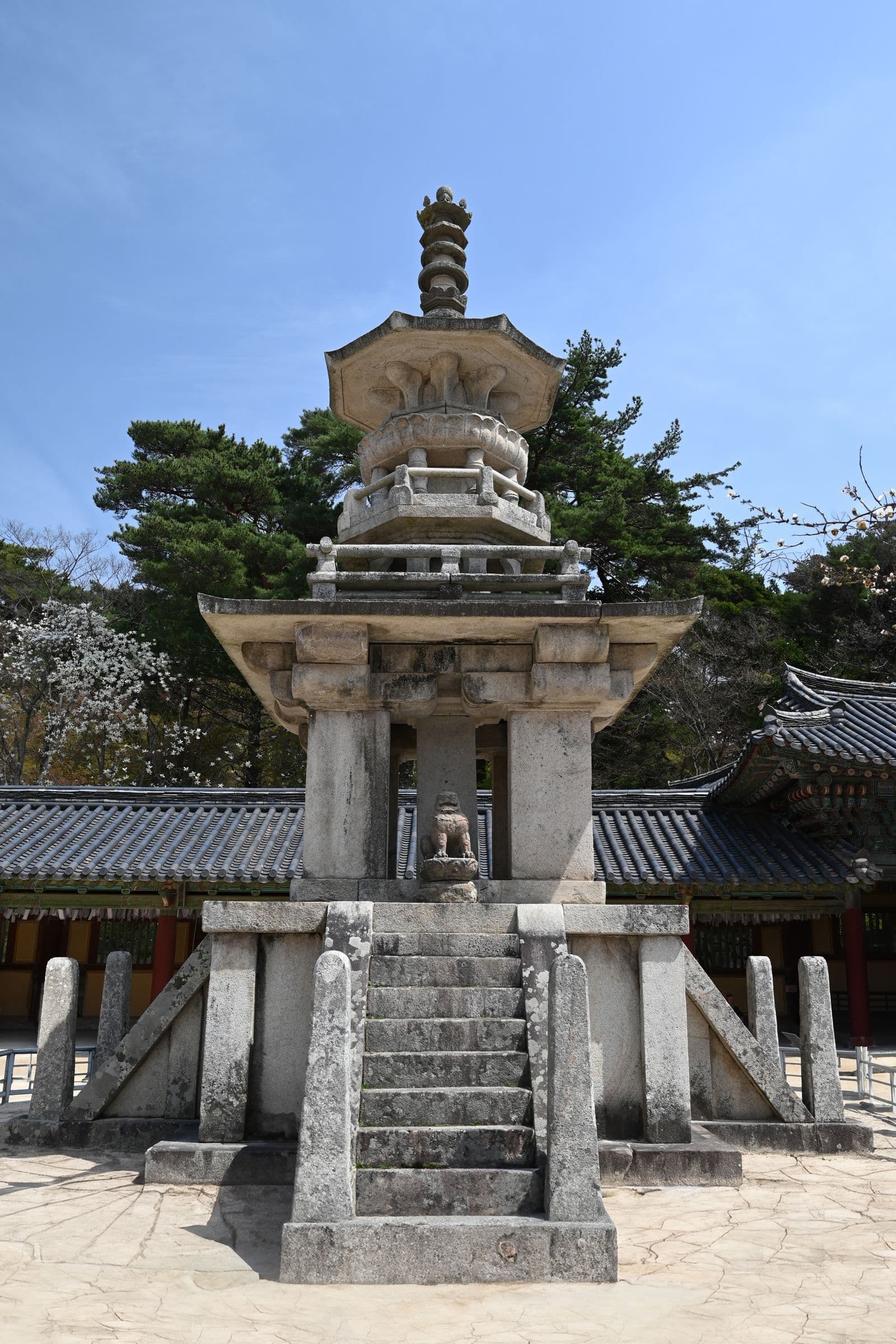
Seokguram
Further up Tohamsan mountain from Bulguksa, its stone Buddha viewed through a glass wall. Also free since the same 2023 change.
Car-free travellers need one timetable here. The bus linking Bulguksa and Seokguram runs infrequently. Check the departure times at the Bulguksa stop first and shape your visit around them; miss one and you wait at the hilltop lot for the next. With a car the hop is ten minutes.
Gyeongju National Museum
The afternoon is the museum: permanent halls free, home of the Divine Bell of King Seongdeok and the gold crowns. Having seen the tombs and the temple from the outside in the morning, the afternoon shows you what came out of them, and the day closes its own loop. In summer it doubles as the air-conditioned block of the schedule.
Day 3: the train to Andong, Hahoe Village
A morning-train day. The direct service puts you in Andong in 45 minutes on the fast train, or about an hour and a half on the ITX-Maum. Reach Andong before lunch and the whole afternoon belongs to Hahoe. Leave bags at your Andong lodging or in a station locker.
Get the geography straight on arrival: the station, Hahoe Village and Woryeonggyo all sit far apart, so the bus timetable runs your afternoon. Village-bound buses are sparse; when the times don't fit, a taxi is what protects the afternoon.
Hahoe Village
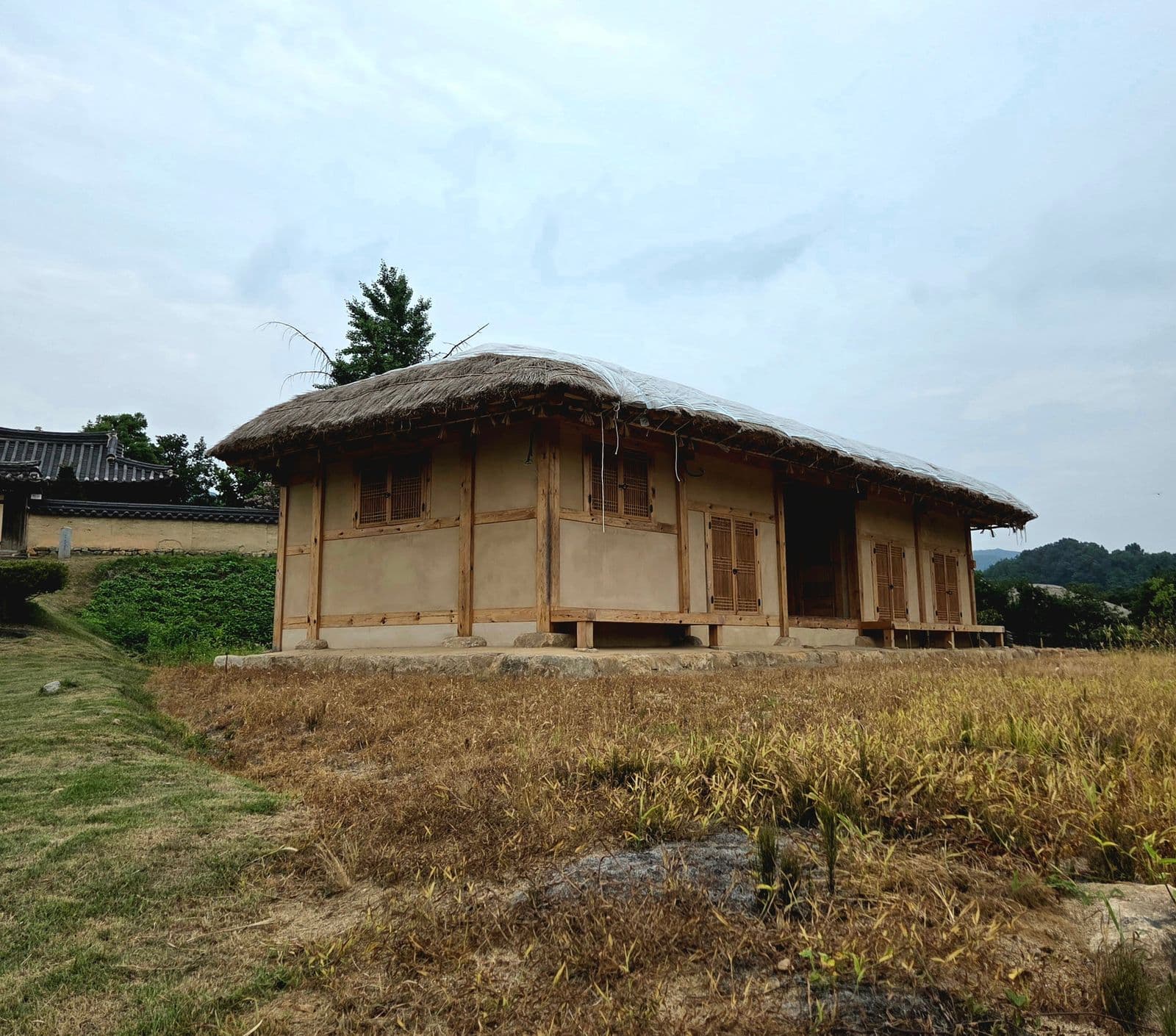
A UNESCO-listed village wrapped in a full loop of the Nakdong River. Adult entry 5,000 KRW with a free shuttle from the ticket office to the village gate. Hours are 09:00~18:00 with last entry 17:30 (winter 09:00~17:00, entry 16:30), so working backwards, be at the ticket office by around 3 pm for an unhurried walk.
This is not a built folk-village set: people still live here, and the lanes carry the traces. The village walk alone fills the half day.
The cliff across the river, Buyongdae, overlooks the whole river bend. But there is no walking route across: the ferry stopped in 2019, and the detour by road is long, which makes Buyongdae a spot that only slots naturally into a rental-car trip.
Woryeonggyo
Evening means the town side and Woryeonggyo, the wooden footbridge whose lights over the water are Andong's night scene, with cafes and a lakeside walk alongside. The bus back from Hahoe can eat close to an hour, so treat the bridge as an after-dinner stroll near your lodging rather than a race. Wolji in Gyeongju, Woryeonggyo in Andong: this itinerary walks one water-borne light show each night.
Day 4: Andong town and the ride home
No heroics on the last day. An early lunch in the old market's jjimdak alley, then a bus or taxi to Andong Station for the KTX-Eum. Two reminders only: the station is a short ride from the market, and return trains run 9~10 times a day. Work backwards from your Seoul arrival and the final morning sizes itself.
Change it like this for your situation
| Concept | Day that changes | Drop | Add | Why |
|---|---|---|---|---|
| Base (first visit) | Nothing | Nothing | Gyeongju 2 nights + Andong 1 | Silla-era Gyeongju against Joseon-era Andong makes the contrast of eras the spine of the trip |
| With kids | Day 2 afternoon | Seokguram, the slow museum read | Gyeongju World for school-age kids, Bomun lakeside for toddlers | The glass-wall grotto holds nothing for children. Cut the museum to one hour around the gold crowns; ride-height kids get the amusement park, smaller ones the lake |
| History deep | Day 3 morning, Day 4 | The late start, the jjimdak alley | Yangdong Village (4,000 KRW), Byeongsan Seowon, Buyongdae | Layering heritage of the same family as Hahoe. All three are transit-starved, so this row assumes a rental car; Yangdong sits on the way out of Gyeongju |
| Night-view run | Day 2 afternoon | The museum | Rest, then the Wolji·Woljeonggyo·Woryeonggyo triple | Every night scene here is lamplight on water. If photos are the point, trade midday indoors for rest and carry a tripod from dusk |
| Gyeongju only, 3 nights | Days 3~4 | All of Andong | The east coast (Gameunsa site, the Underwater Tomb) and Bomun | For going deep on one city with a sea day. The cost: you exit through Gyeongju again, and the rail triangle's advantage disappears |
Pick one row. The conditions are your companions and your transport. Kids: the kids row. Hate being tied to timetables: rent a car and go history-deep. Otherwise, first visit takes the base.
What to eat
Both towns have foods that exist properly only there.
| Dish | Where | Know this |
|---|---|---|
| Hwangnam-ppang | Old bakeries, central Gyeongju | Thin-skinned red-bean buns; the original shop's queue has a separate takeaway line |
| Barley bread (chalborri-ppang) | Central Gyeongju, Hwangnidan-gil | Gyeongju's other bun; boxed sets are the standard souvenir |
| Ssambap | The wall-side street by Daereungwon | A table of wraps and sides; fast turnover fits the pre-Wolji early dinner |
| Andong jjimdak | The old market's jjimdak alley | A whole alley of braised-chicken houses; portions start at two servings, solo diners should find a half-portion shop |
| Salted mackerel (gan-godeungeo) | Set-meal houses in town | Heavily salted grilled mackerel, exactly how inland Andong ate fish |
| Heotjesabap | Near Woryeonggyo | The ritual-table bibimbap, timed well before the bridge lights |
Budget
Car-free, per person on twin-share (as of 2026-08). Rail uses regular fares; lodging moves with the booking calendar.
| Item | Lean build | Standard build |
|---|---|---|
| Rail, 3 legs (Seoul→Gyeongju→Andong→Cheongnyangni) | ~87,000 KRW (ITX-Maum between cities) | ~92,000 KRW (fast trains throughout) |
| Lodging, 3 nights (per person) | 120,000 KRW (guesthouse·motel) | 180,000 KRW (mid-range hotel·hanok) |
| Food, 4 days | 140,000 KRW | 200,000 KRW (cafes and jjimdak included) |
| Local transit (bus·taxi buffer) | 20,000 KRW | 30,000 KRW |
| Entry fees | 8,000 KRW (Wolji + Hahoe) | 15,000 KRW (adding Cheonmachong·Yangdong) |
| Total | about 380,000 KRW | about 520,000 KRW |
The oddly short entry-fee line is the signature of this trip. Bulguksa, Seokguram, Daereungwon, Cheomseongdae and the National Museum are all free, leaving Wolji at 3,000 KRW, Hahoe at 5,000, and Cheonmachong if you step inside.
A rental car replaces the train fares with rental, fuel and per-sight parking. The spread is too wide for the table; if you are two or more and want Byeongsan Seowon and Buyongdae opened up, price it as the cost of expansion.
When to go
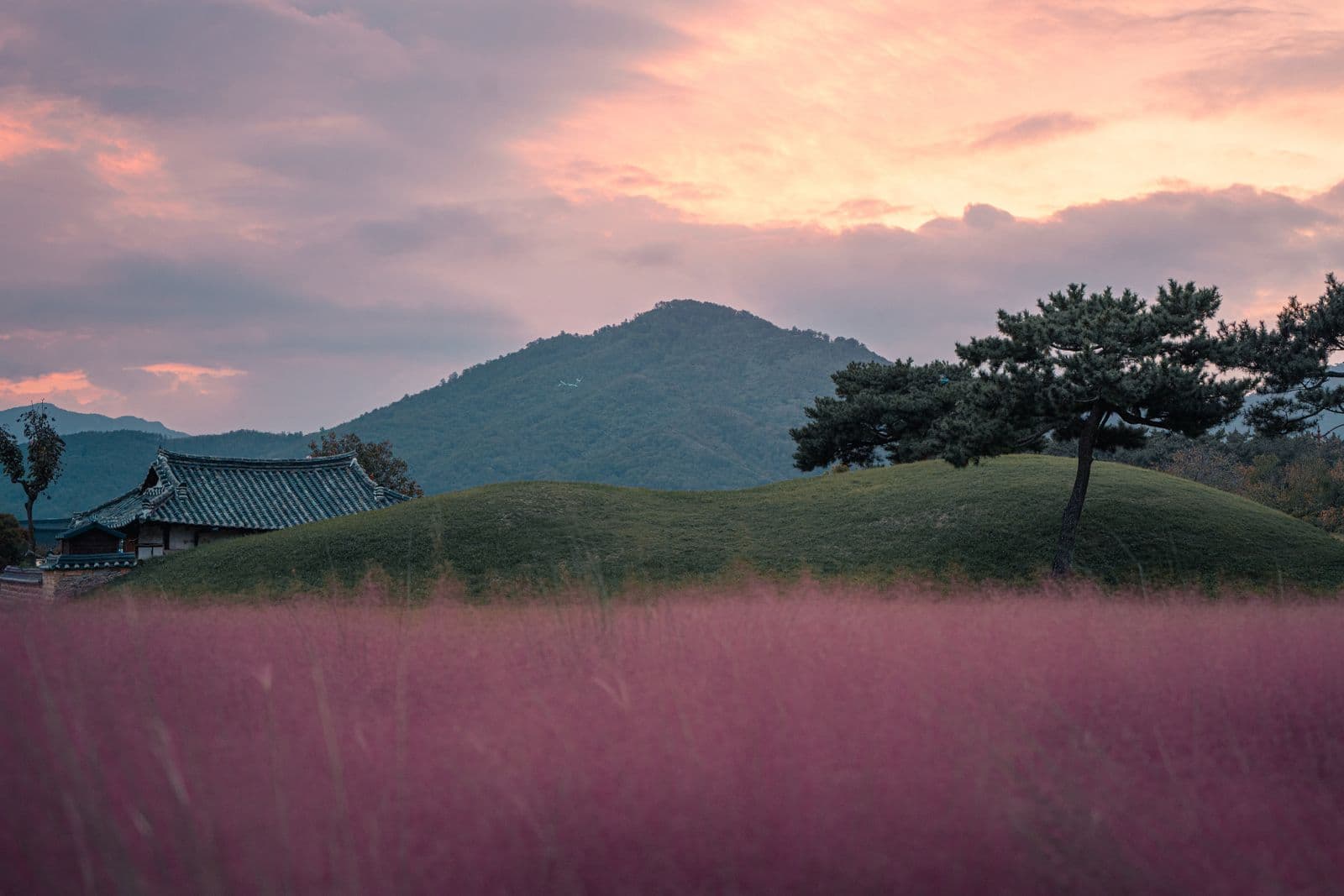
In Gyeongju the season is the scenery: cherry blossoms around Daereungwon and Bomun Lake in spring, pink muhly around Cheomseongdae in September~October. Andong fills up for the International Mask Dance Festival in early October.
Summer is inland-Korea hot in both towns. In August put midday indoors, museum and cafes, and shift the mound and village walks to mornings and evenings. The itinerary leans on night views anyway, so the evenings survive the heat.
Gyeongju and Andong, do not miss these
It is not a place that differs by day and night; it is one that only completes at night. Spend the first evening here.
Gyeongju~Andong and Andong~Cheongnyangni both run about ten times a day. Lock these two, then shape the days.
The direct Gyeongju~Andong train appeared in December 2024. Posts written earlier teach a three-hour bus transfer as the standard.
Free since 2023, as are Daereungwon and Seokguram. Skip any post quoting the old fees.
The old market alley is the origin point. Solo travellers, find a shop serving half portions first.
In short
Gyeongju plus Andong became an easy build in the winter of 2024: the leg that used to detour through Dong-daegu is now a 45-minute direct train, and Seoul in on the Gyeongbu Line, out on the Jungang Line closes an all-rail triangle. Two Gyeongju nights buy the walkable centre and Bulguksa; the Andong night buys Hahoe and the bridge lights. With entry fees mostly abolished, the car-free budget settles around 380,000~520,000 KRW.
For Korea's summer-sea side instead, see Gangneung and Sokcho in 3 days.
Build this trip in Tripop
Type "Gyeongju and Andong, 4 days by train" and this skeleton lands on your dates. Keep the three train times and the Hahoe bus schedule inside the plan and the transfer morning stops being a scramble; snap your receipts and the spending files itself into the trip ledger.
What we verified
The fees and hours here were checked one by one by the Tripop travel desk on August 13, 2026. Admission follows the Gyeongju city fee table and the Hahoe Village office as published, and train fares and counts come from this week's timetable, so give them one more glance on Korail the day you book.
Values that shift with the seasons, local bus route numbers, rental and parking rates, restaurant prices, are better checked on the spot than pinned here. If a number no longer matches what you find, it changed after our check; tell us and we will fix it.
Images: Pexels (정규송 Nui MALAMA: Wolji at night, Jueon Kim 김주언: Cheomseongdae·Andong cottage, Naufal Shidqi: Daereungwon·Woljeonggyo, Nezaket: Bulguksa, Younyoun Park: Dabotap, Dmitry Voronov: pink muhly), Pexels License.