
This is the English edition of a guide planned around departures from Incheon, Korea, with costs shown in KRW. In December 2026 the sun sets in Tokyo between 16:28 and 16:37, so for a couple or a group of friends on a 3-night, 4-day trip, putting each day's daytime stops near that evening's district, and after dark visiting whatever closes or lights up first, cuts the travel. Arrival evening is Marunouchi, day two runs from Shiba Park to Roppongi, and day three covers Ebisu and Shibuya. The 2026 dates and lighting hours follow each organizer's official announcement. If this is your first Tokyo trip and you also want Asakusa and the Shibuya observation decks, the standard Tokyo 5-day itinerary fits better; if Disney's Christmas is the goal, see the Tokyo Disney family itinerary.
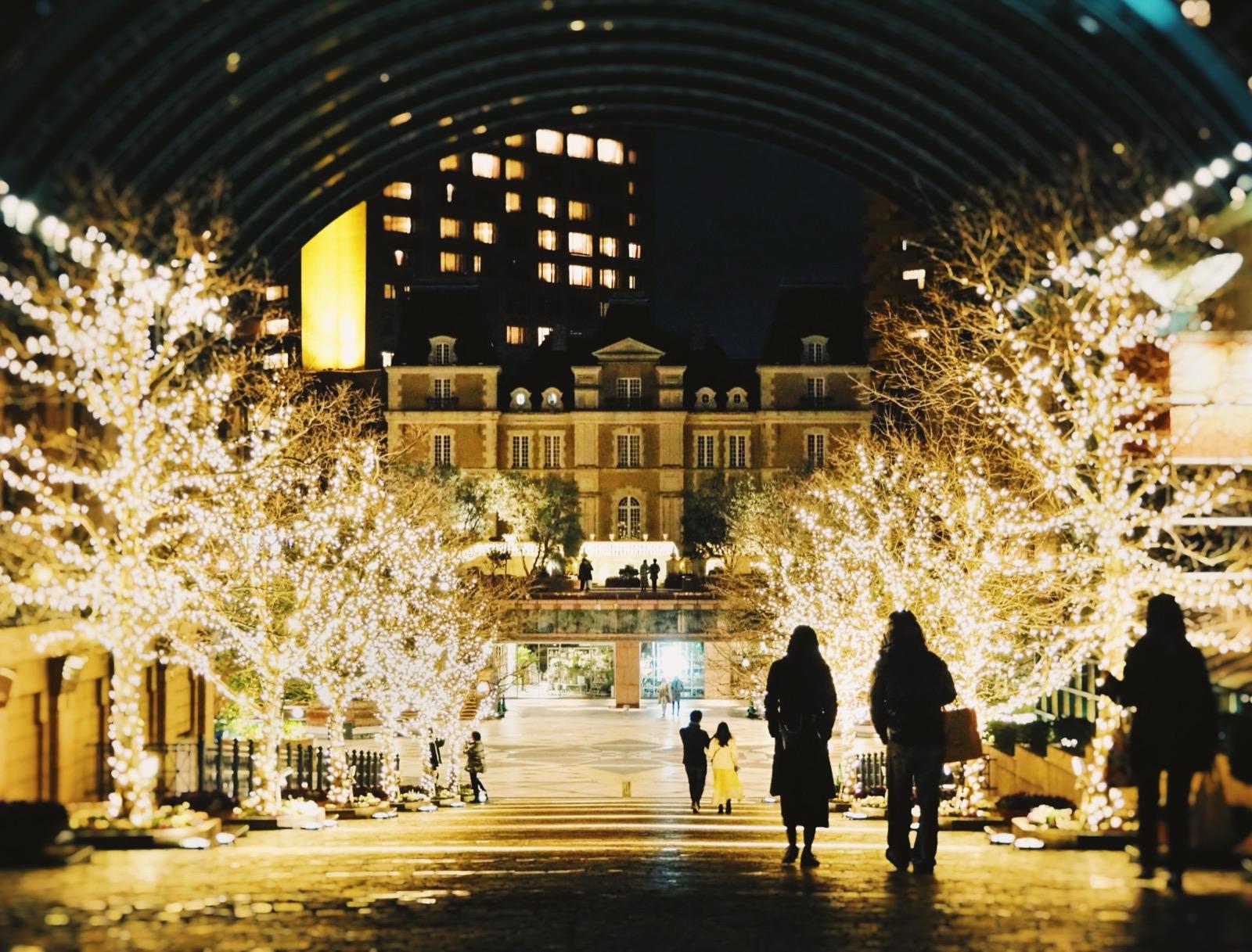
Tokyo Christmas illumination itinerary
The trip breaks into one arrival evening, two full days (Days 2 and 3) and a departure day for travel only. The illumination districts are split across three evenings (day three takes two, Ebisu and Shibuya), and the daytime sits on the way to each. The hotel is one place in Ginza/Yurakucho (around Hibiya station) for all three nights; no luggage moves mid-trip. Staying here, you head out from Hibiya station without a transfer to day two's Onarimon (3 min on the Toei Mita line) and day three's Ebisu (15 min on the Hibiya line), and at night you come back without a transfer from Roppongi (9 min on the Hibiya line) and Meiji-jingumae (12 min on the Chiyoda line) (Tokyo Metro official fare and route search, 2026-11).
| Day | Daytime | After dark (December sunset 16:28~16:37) | Transport and notes |
|---|---|---|---|
| Day 1 | Airport → hotel in Ginza/Yurakucho | Marunouchi Naka-dori → Gyoko-dori (lights and Christmas market) → Marunouchi side of Tokyo Station | On foot from the hotel and back. Reach the hotel by 20:00 and you cover it all |
| Day 2 | Morning off → Shiba Park Christmas market (lunch) → Zojoji → Tokyo Tower Main Deck (sunset) | Azabudai Hills market (~21:00) → Roppongi Hills (market ~21:00, Keyakizaka ~22:00) → Tokyo Midtown (~23:00) | In closing-time order. Home on the Hibiya line from Roppongi to Hibiya, no transfer |
| Day 3 | Morning off → Yebisu Garden Place (Baccarat chandelier from 11:00, weekend and holiday marche from 12:00, the Tokyo Photographic Art Museum on weekdays; from 16:00 when the museum is closed) | Ebisu illumination (from 16:00) → Ao no Dokutsu Shibuya (17:00~22:00) | In lighting order. Home on the Chiyoda line from Meiji-jingumae to Hibiya, no transfer |
| Day 4 | Check-out → airport | None | Leave the hotel in time to reach the airport 3 hours before an international departure |
This plan arrives on a Thursday and departs on a Sunday. Day two (Friday) is a weekday, so Shiba Park market admission is 1,000 yen (as of 2026-11), and on day three (Saturday) the Ebisu Christmas marche opens at noon, so you can have lunch there too. Both days keep you outdoors after dark until 22:00 or 23:00, so leave the mornings free. Pick the right Thursday from the table just below.
Evening plans by arrival date
The events on this plan start and end on different days, so the same 4-day trip changes its evenings depending on your arrival date. Cells marked "As planned" follow the summary table above.
| Arrival date (2026) | Day 1 evening | Day 2 | Day 3 evening |
|---|---|---|---|
| November 27~December 2 | As planned (arriving in November, the Naka-dori lights run until 23:00) | Start at Zojoji and Tokyo Tower without the Shiba Park market (opens December 4) | End in Ebisu (Ao no Dokutsu lights December 11) |
| December 3 | As planned | The 4th is the market's first day and it opens at 16:00: have lunch near the hotel and stop at the market after the Tokyo Tower sunset | End in Ebisu |
| December 4~8 | As planned | As planned | End in Ebisu |
| December 9~19 (recommended; e.g. arrive Thursday the 10th or 17th) | As planned | As planned (Midtown's soap-bubble show is on, and day two falls on or before December 20, the date Midtown recommends for avoiding crowds) | As planned |
| December 20 and 21 | As planned | As planned. Midtown's soap-bubble show (through December 20) is over and its crowd-avoidance date has passed | As planned |
| December 22 | As planned | As planned (the 23rd) | The 24th: as planned. If Ao no Dokutsu is stopped for crowds, go back to Ebisu |
| December 23 | As planned | The 24th: drop Midtown and finish at Roppongi Hills Keyakizaka (traffic control). Shiba Park market 2,000 yen for adults | The 25th: as planned (last day of the Ebisu marche) |
| December 24 | The 24th: as planned (dinner at the Gyoko-dori market without a booking, until 22:00) | The 25th: drop Midtown and finish at Roppongi Hills. Shiba Park market 2,000 yen; every market's last day | The 26th: Ebisu (marche and tree over, part of the illumination) → Ao no Dokutsu |
| December 25 | The 25th: as planned (last day for Gyoko-dori) | The 26th: Tokyo Tower at night → Midtown light walk (Christmas markets, Keyakizaka and MIDWINTER LIGHTS ended on the 25th) | The 27th: Ebisu → Ao no Dokutsu (last day) |
| December 26~January 9, 2027 | Naka-dori only (Gyoko-dori ended on the 25th) | Tokyo Tower at night → Midtown light walk. If day two is January 1, Midtown is closed that day, so finish at the Tokyo Tower night view | Ebisu (Baccarat chandelier, part of the illumination) |
| January 10~February 14, 2027 | Naka-dori only (until 23:00 in January and February) | Same (the light walk runs through February 23) | Part of the Ebisu illumination (Baccarat ends January 11) |
Arrivals on or before November 26 are left out because the Gyoko-dori lights and market (from November 27) are not on for the first evening, and arrivals from February 15 because Marunouchi Naka-dori (ends February 14) is over.
Arriving on a Saturday makes day three a Monday, so swap days two and three. Arrivals on Saturday December 19 and Saturday January 9, 2027 keep the order; for the latter, day three is January 11, a public holiday when the museum is open (see Day 3).
Sunset also slides later through the month. By the National Astronomical Observatory of Japan's tables, sunset in Tokyo in December 2026 is 16:28 on the 1st~13th, 16:30 on the 17th~19th, 16:33 on the 24th~25th and 16:37 on the 30th~31st. Most of the lights on this plan come on between 16:00 and 17:00, so on any date, be at the first district around 16:00.
Over the New Year holidays, facility hours may differ from usual. Yebisu Garden Place says its hours may change at times such as the New Year period, and the Tokyo Photographic Art Museum closes from December 28 to January 1. January 1, 2027 is a closed day at Tokyo Midtown. If you go then, check that day's hours on the official pages of each stop, Tokyo Tower included, and check each railway's announcement for extended service on the night of December 31.
Before departure: entry, data, payment
| Item | Details |
|---|---|
| Visa | Korean passports: no visa for a short tourist visit (Korea's Ministry of Foreign Affairs list of visa-free destinations for Korean nationals, as of November 2026). Other passports: check Japan's official visa rules |
| Entry procedure | Register immigration and customs information in Visit Japan Web (Digital Agency, free) and generate the 2D code. Narita and Haneda are among the seven airports with customs e-declaration gates |
| Data | eSIM or roaming. This plan finds station exits and avenue entrances by map, so data is a must |
| Transit card | Get one TOURIST PASMO at the airport. Narita: the SKYLINER & KEISEI INFORMATION CENTER in the Terminal 1 and Terminal 2 stations (sold for 2,000 yen, 7:00~21:00). Haneda: Keikyu's ticket machines for travelers or the Keikyu Tourist Information Center at Terminal 3 (1,000~10,000 yen). Reaching Narita after 21:00, buy the Skyliner ticket at the Skyliner Ticket Counter (7:00~23:30) and ride the Hibiya line by contactless card. No deposit, valid for 28 days from purchase, remaining value not refunded. Welcome Suica, sold at the airports' JR counters and machines, has the same terms |
| Contactless | From 2026-03-25, on the lines of eleven Kanto operators including Tokyo Metro, Toei Subway and Keikyu (adult fares only). JR East and Keisei (Skyliner) are outside the scheme, so ride them on an IC card, and the Skyliner also needs a seat-reserved liner ticket on top of the fare. Tap out with the card or phone you tapped in with (Tokyo Metro's guidance treats the physical card and the same card added to a phone as different), and the card must carry the contactless mark. Visa, Mastercard, JCB, American Express, Diners Club, Discover, UnionPay |
| Exchange rate (planning) | 100 yen ≈ 840 KRW (derived from ECB reference rates of 2026-11-11) |
Visit Japan Web is free to use for entry, and customs charges no fee for arrival procedures. Japan Customs announced in May 2026 that fake sites imitating the name and private sites offering to apply on your behalf exist, so go in through the Digital Agency address. Since January 25, 2024, the immigration and customs 2D codes have been unified, so enter everything before departure and generate a single code. At the customs e-declaration terminals at Narita and Haneda, you present the code and your passport, a face photo is matched against the passport's IC chip image to confirm your identity, and depending on your declaration you may be directed to a staffed counter. Japan Customs takes a baggage declaration from everyone entering Japan, so if you could not use Visit Japan Web, fill in the paper Declaration of Personal Effects and Unaccompanied Articles kept at the airport customs area (a Korean version, C-5360-C, is available). The paper form covers customs only; immigration is a separate procedure, so follow the in-flight and airport instructions for it.
Airport ↔ hotel: getting from Narita and Haneda to Ginza and Yurakucho
With the hotel around Hibiya station, days two and three start from the same station. From Narita, come in on the Skyliner or the TYO-NRT bus; from Haneda, on the Keikyu routes.
| Route (hotel: Ginza/Yurakucho/Hibiya) | Going (airport → hotel) | Returning (hotel → airport) | Tickets and payment |
|---|---|---|---|
| Narita Skyliner | Airport Terminal 2 station → Keisei-Ueno (41 min at the fastest; 36 min at the fastest to Nippori; boarding at Narita Airport station for Terminal 1 adds 3~6 min) → walk to Tokyo Metro Ueno → Hibiya line direct, 17 min (IC 178 yen) | Hibiya → Ueno (Hibiya line direct, 19 min) → Keisei-Ueno → airport. Leave the hotel about 4 hours 40 minutes (Terminal 2) to 4 hours 45 minutes (Terminals 1 and 3) before the flight | Official online purchase (Skyliner e-ticket): 2,310 yen one way, 4,500 yen round trip; counter price 2,580 yen (fare 1,280 yen + liner fee 1,300 yen; the fare is 1,267 yen when paid by IC card). It is for non-Japanese nationals who live outside Japan; you show your passport and exchange number at a Narita station counter to get the ticket, and round-trip tickets are exchanged only at Narita Airport and Airport Terminal 2 stations. All seats reserved, so you need a liner ticket; station counters sell them from one month before the travel date, and the ticketless service (credit card, fare paid separately) also books them |
| Narita bus TYO-NRT | About 81 min from Terminal 1 to the Ginza Station stop, about 86 min from Terminal 2 (official scheduled times) → walk to the hotel. By the timetable it varies by bus: 74~101 min from Terminal 1, 5 min more from Terminal 2 and 10 min more from Terminal 3. Only buses with a Ginza arrival time in the timetable stop at Ginza (the rest end at Tokyo Station), and the last airport-to-Ginza bus leaves Terminals 3, 2 and 1 at 21:10, 21:15 and 21:20 (Ginza 22:41) | Ginza Station stop (exit C4 of Ginza station, toward Sukiyabashi crossing) → Terminal 3 about 72 min, Terminal 2 about 75 min, Terminal 1 about 80 min (direct buses from Ginza about 5 min shorter). Only buses with a Ginza time in the timetable pick up at Ginza, 5:50~18:00. Leave the hotel about 5 hours before the flight | 1,500 yen one way; late-night and early-morning buses 3,000 yen. Unreserved, free seating. At the airport buy a timed ticket at the terminal counter; at Ginza pay in cash or by transit IC card when boarding |
| Haneda | Keikyu to Shinagawa, about 15 min, then change to JR and get off at Yurakucho (do not ride on to Tokyo Station). To stay contactless the whole way, continue from Keikyu onto the Toei Asakusa line and get off at Higashi-ginza (a Hibiya line interchange) | JR from Yurakucho to Shinagawa → Keikyu to Haneda. To stay contactless, take the Toei Asakusa line from Higashi-ginza and continue onto Keikyu to Haneda. Leave the hotel about 4 hours before the flight | Keikyu and Toei take contactless; use an IC card on JR. Fares on each operator's official fare tables |
Prices as of 2026-11. Skyliner times follow the weekday and Saturday/holiday timetables revised November 21, 2026; TYO-NRT times are the official scheduled times and the timetable PDF (they vary with traffic); Haneda times follow the airport's official guide.
Sort out tickets at the airport. For the Skyliner, use Keisei's official online purchase (Skyliner e-ticket). Non-Japanese nationals who live outside Japan buy it in advance at 2,310 yen one way or 4,500 yen round trip, then show their passport and the 11-digit exchange number at a Narita station counter to get the ticket. Buying at the counter, you need a liner ticket besides the fare (payable by IC card), and boarding without one adds 300 yen for adults on top of the limited express fee. The counters and liner ticket machines accept credit cards, and the ticketless service, after member registration, sells only the seat reservation by credit card, so you pay the fare separately with your IC card. The Hibiya line after Keisei takes both contactless cards and IC cards.
Going home, count backward from your airport arrival time. The plan counts on reaching the airport 3 hours before an international departure. For the Skyliner, book the liner ticket for your train first, then add to the 3 hours the train time (Keisei-Ueno to Airport Terminal 2 takes 41~53 min on weekdays and 41~46 min on Saturdays and holidays), the subway ride, walk and wait from the hotel to Keisei-Ueno (allow 40 min, of which 19 min on the Hibiya line), and the walk from the airport station to your terminal. Terminal 2 is 5 minutes from its station, so leave the hotel about 4 hours 40 minutes before the flight; for Terminal 3 (a 10-minute walk from Airport Terminal 2 station) and Terminal 1 (2~6 more minutes riding on to Narita Airport station, then a 5-minute walk), leave about 4 hours 45 minutes before. The TYO-NRT takes about 80 min from Ginza to Terminal 1 and can run long in traffic, so allow about 5 hours; the last bus from Ginza leaves at 18:00, so for a flight leaving around 23:00 or later take the Skyliner. For Haneda, adding transfers and waiting, allow about 4 hours. For an early-morning flight, check the first train or bus the day before on each operator's official timetable.
Skip the subway pass. This plan has seven subway rides on the Skyliner route, and Tokyo Metro's official fare search puts them at 1,277 yen in IC fares (Ueno↔Hibiya twice, Hibiya→Onarimon, Kamiyacho→Roppongi, Roppongi→Hibiya and Meiji-jingumae→Hibiya at 178 yen each, Hibiya→Ebisu 209 yen). The Tokyo Subway Ticket for all Tokyo Metro and Toei Subway lines costs 1,000 yen (24 hours), 1,500 yen (48 hours) and 2,000 yen (72 hours) from March 14, 2026 (as of 2026-11; the old 800, 1,200 and 1,500 yen figures are outdated), so paying per ride is cheaper. Buy the 72-hour ticket only if extra daytime rides push your three-day subway fares above 2,000 yen; the JR leg (Ebisu → Shibuya) is not covered by the pass.
Area by area: getting there and how long to stay
| Area | Main stops | Getting there (from Hibiya station) | How long to stay |
|---|---|---|---|
| Marunouchi/Tokyo Station | Marunouchi Naka-dori, Gyoko-dori, Marunouchi side of Tokyo Station | On foot from the hotel and back | Day 1 evening (from 16:00) |
| Shiba/Tokyo Tower/Azabudai | Shiba Park Christmas market, Zojoji, Tokyo Tower, Azabudai Hills | Toei Mita line to Onarimon, 3 min (1 min on foot from exit A6 to the market, 6 min from exit A1 to Tokyo Tower); 7 min on foot from Tokyo Tower to Kamiyacho exit 1 | Day 2, 13:00~19:00 |
| Roppongi | Roppongi Hills market and Keyakizaka, Tokyo Midtown | Kamiyacho to Roppongi, 3 min on the Hibiya line; home Roppongi → Hibiya, 9 min | Day 2, 19:00~23:00 |
| Ebisu | Yebisu Garden Place (Baccarat chandelier, illumination, marche, Tokyo Photographic Art Museum) | Hibiya line to Ebisu, 15 min (7 min on foot from exit 1) | Day 3, 12:00~18:00 |
| Shibuya/Harajuku | Shibuya Koen-dori to the Yoyogi Park zelkova avenue (Ao no Dokutsu) | JR one stop Ebisu → Shibuya; home Meiji-jingumae → Hibiya, 12 min on the Chiyoda line (Ao no Dokutsu is 10 min on foot from Harajuku and Meiji-jingumae) | Day 3, 18:00~22:00 |
Train times are from Tokyo Metro's official fare and route search (a December 2026 weekday, Toei included); walking times follow each venue's and organizer's official access information (as of 2026-11). How long to stay in each area is planned to fit this itinerary.
Day 1 Arrival: Marunouchi Naka-dori and Gyoko-dori
Arrival day goes from the airport to the hotel, then on foot to Marunouchi once the sun sets. In December the Marunouchi Illumination runs 16:00~24:00 (until 23:00 in November, January and February). Reach the hotel by 20:00 and you cover this whole evening. Any later, skip the Gyoko-dori Christmas market, which closes at 22:00, and just walk Naka-dori, lit until midnight.
Marunouchi Naka-dori
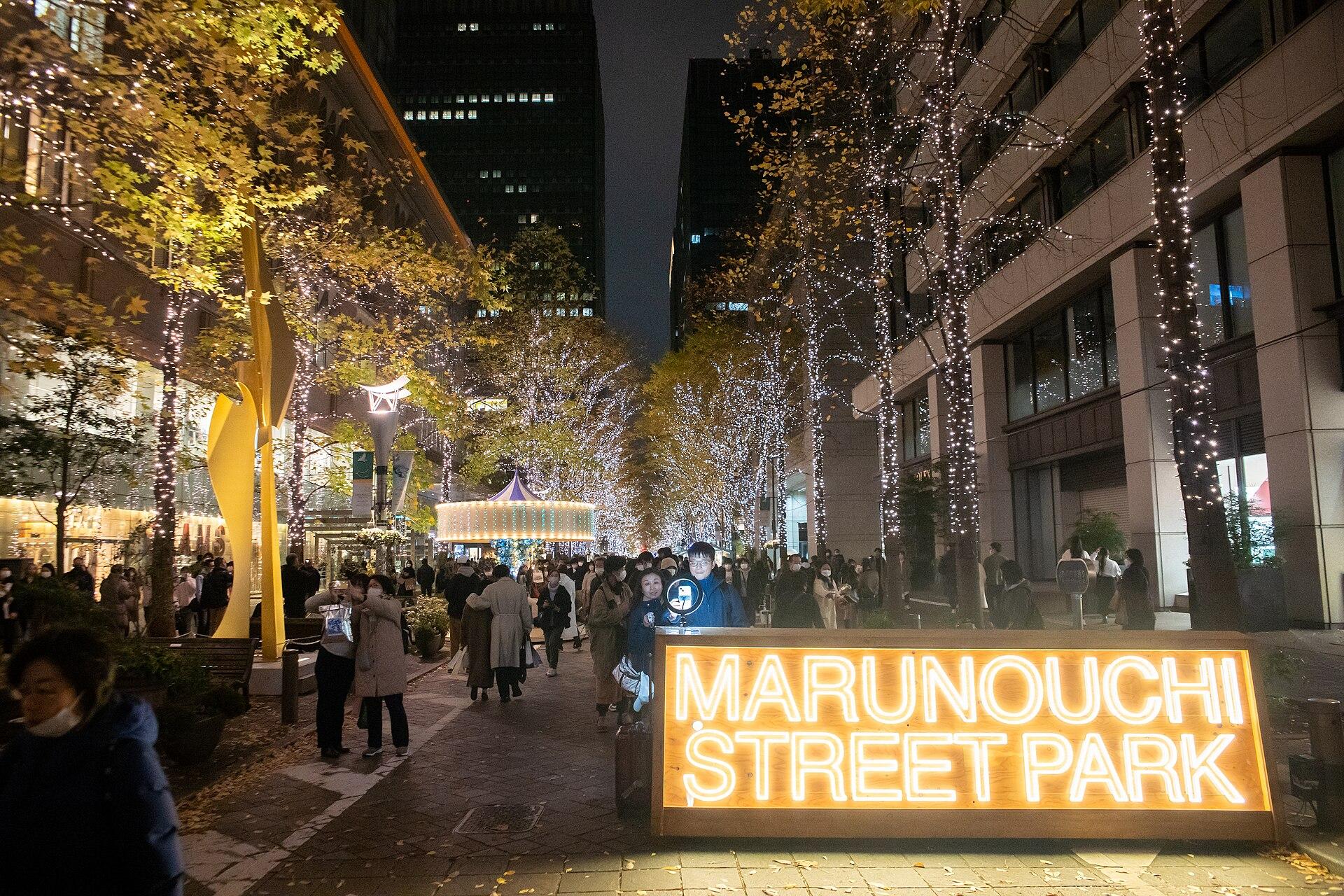
Marunouchi Naka-dori wraps about 200 street trees along roughly 1.2 km in about 572,000 champagne-gold LEDs (planned). It runs from November 12, 2026 to February 14, 2027, and the organizers note that lighting hours may differ in some areas. Walk from the hotel out to Naka-dori and head toward Tokyo Station, and you meet Gyoko-dori.
Gyoko-dori and the Marunouchi side of Tokyo Station
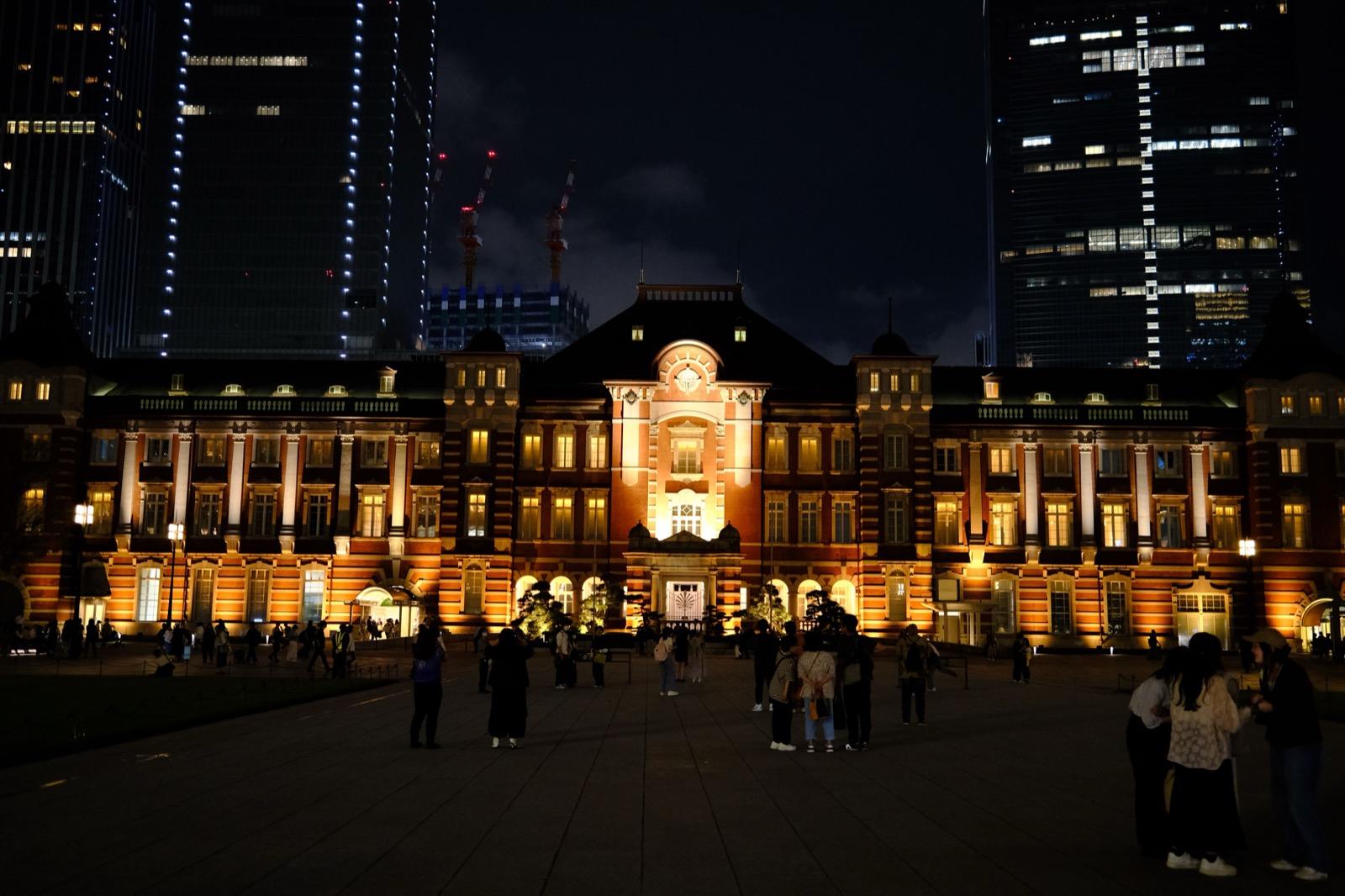
Gyoko-dori is the avenue linking Tokyo Station and Kokyo Gaien, and its Tokyo Station end is the Marunouchi building. The lights on its central row of about 20 trees (about 60,000 bulbs, planned) are on only from November 27 to December 25, 16:00~24:00. Over the same period Gyoko-dori gets a Christmas tree decorated in a Harry Potter theme and a Christmas market, with 15 mostly food stalls open 11:00~22:00 (free entry). Warm dishes such as butter chicken curry, coarse-ground sausages and cocoa are on offer, so have dinner at this market tonight, no booking needed. It opens in the rain too, though installations may be covered, and the site has no toilets or trash bins, so use the toilets in the surrounding buildings and take your trash with you. Walk back to the hotel along Naka-dori.
Day 2 Shiba Park and Tokyo Tower to Roppongi
This day keeps you outdoors after dark until 23:00 (about 6 hours), so leave the morning free and head out around lunchtime. Lunch at Shiba Park, dusk at Tokyo Tower, then after dark the markets at Azabudai Hills and Roppongi Hills that close at 21:00, Keyakizaka that switches off at 22:00, and Tokyo Midtown that switches off at 23:00. From Hibiya station, Onarimon is 3 min on the Toei Mita line, and from the last stop, Midtown, the Hibiya line takes you from Roppongi to Hibiya in 9 min without a transfer.
Tokyo Christmas Market in Shiba Park
Tokyo Christmas Market 2026 in Shiba Park runs at Shiba Park No. 4, a metropolitan park (the plaza in front of Onarimon station), from Friday December 4 to Friday December 25. Hours are 11:00~22:00 (from 16:00 on the first day; last order 21:30, last entry 21:00), and there is an admission fee: adults (junior high and older) pay 1,000 yen on weekdays and 1,500 yen on weekends from December 4 to 23, and 2,000 yen on the 24th and 25th (as of 2026-11). Despite the name, the nearest station is not Shibakoen but Onarimon on the Mita line (1 min from exit A6). Hot gluhwein comes in a mug whose design differs by venue, and advance tickets sold at FamilyMart and elsewhere include an original mug. Have lunch here around 13:00 and continue on foot to Zojoji and Tokyo Tower.
Past Zojoji to Tokyo Tower at sunset
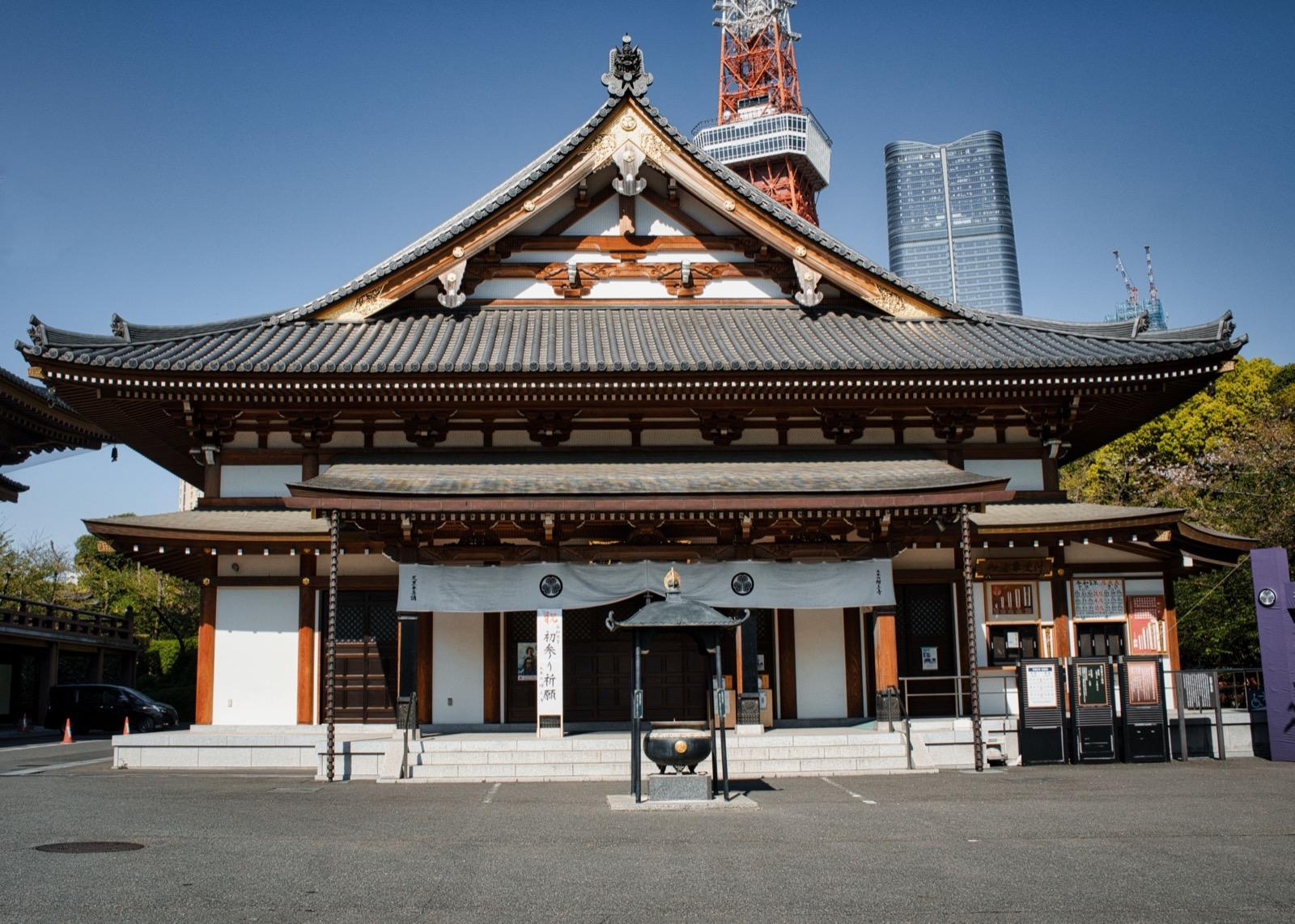
From the market, walk through the Zojoji temple grounds to Tokyo Tower (6 min from Onarimon exit A1, per Tokyo Tower's official access guide). The Main Deck is open 9:00~23:00 (last entry 22:30) at 1,500 yen for adults, and last entry may come earlier when it is crowded. Go up to the Main Deck around 16:00. With December sunsets at 16:28~16:37, that timing gives you the sky before and after sunset from the same spot.
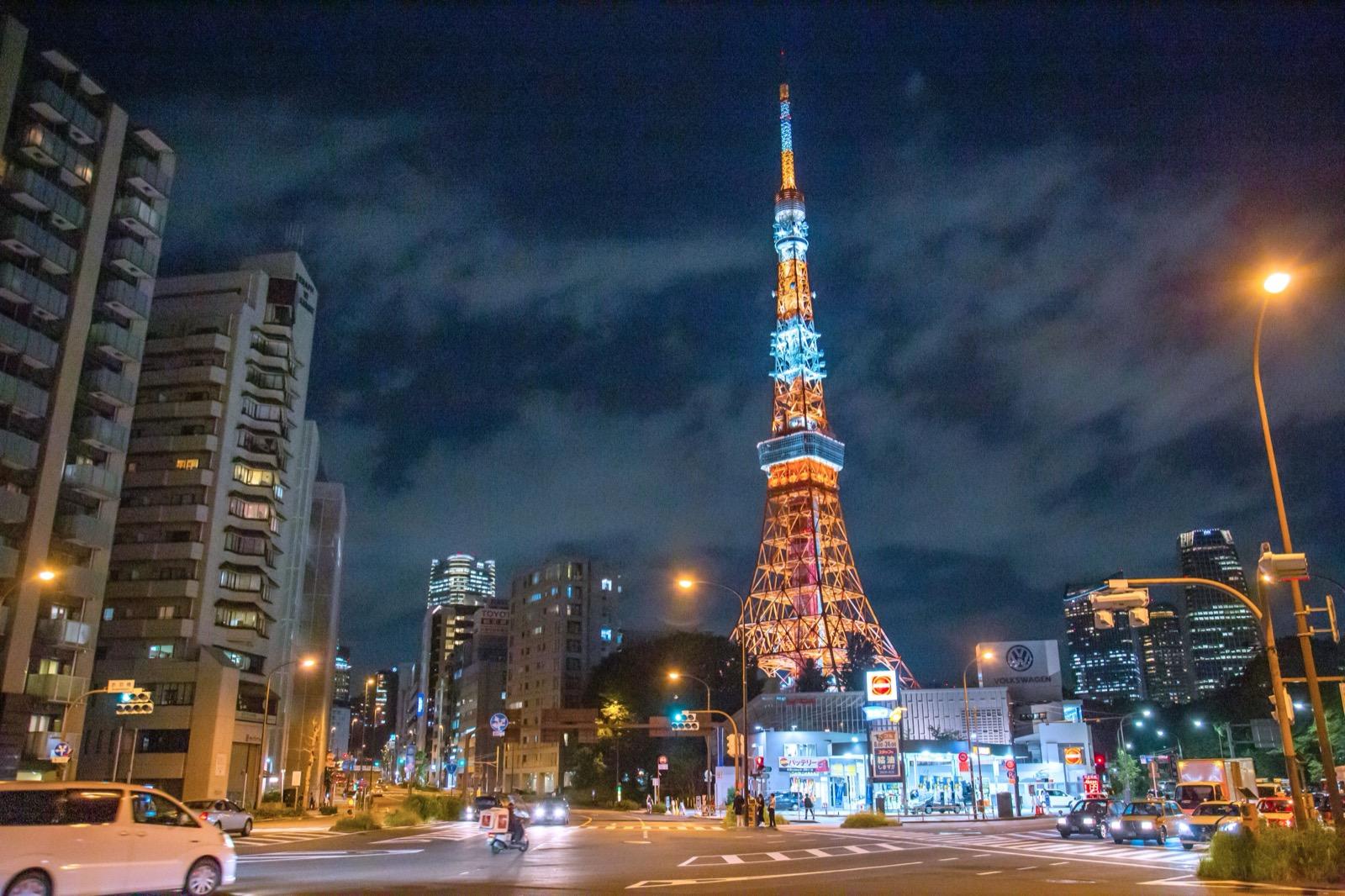
The Top Deck Tour to the top costs 3,300 yen online and 3,500 yen at the counter (Main Deck admission included, 9:00~22:45) and is booked in advance for a set date and time. Tours run every 15 minutes between 9:00 and 22:15, same-day slots can be booked if seats remain, and cash bookings and payment are taken only at the ticket counter on Tokyo Tower's first floor (all as of 2026-11). If you want a slot around sunset, book it online as soon as your dates are set. The tour may be cancelled in bad weather such as winds of 20 m/s or more or snow, or for equipment checks.
Azabudai Hills Christmas Market
Walk from Tokyo Tower toward Kamiyacho station to reach Azabudai Hills. Tokyo Tower is 7 min from Kamiyacho exit 1, and Azabudai Hills connects directly to exit 5 of the same station. The Christmas market in the Central Plaza (Azabudai Hills Arena and the lawn area) runs November 21 to December 25, 11:00~21:00, with free entry and 19 stalls in all: 4 selling goods and 15 serving food and drink. The organizers say that when it is crowded, purchases may take time and, for safety, guidance into stall queues may be paused. Make this market your dinner and you move through Roppongi without a restaurant booking.
Roppongi Hills: Keyakizaka and the Christmas market
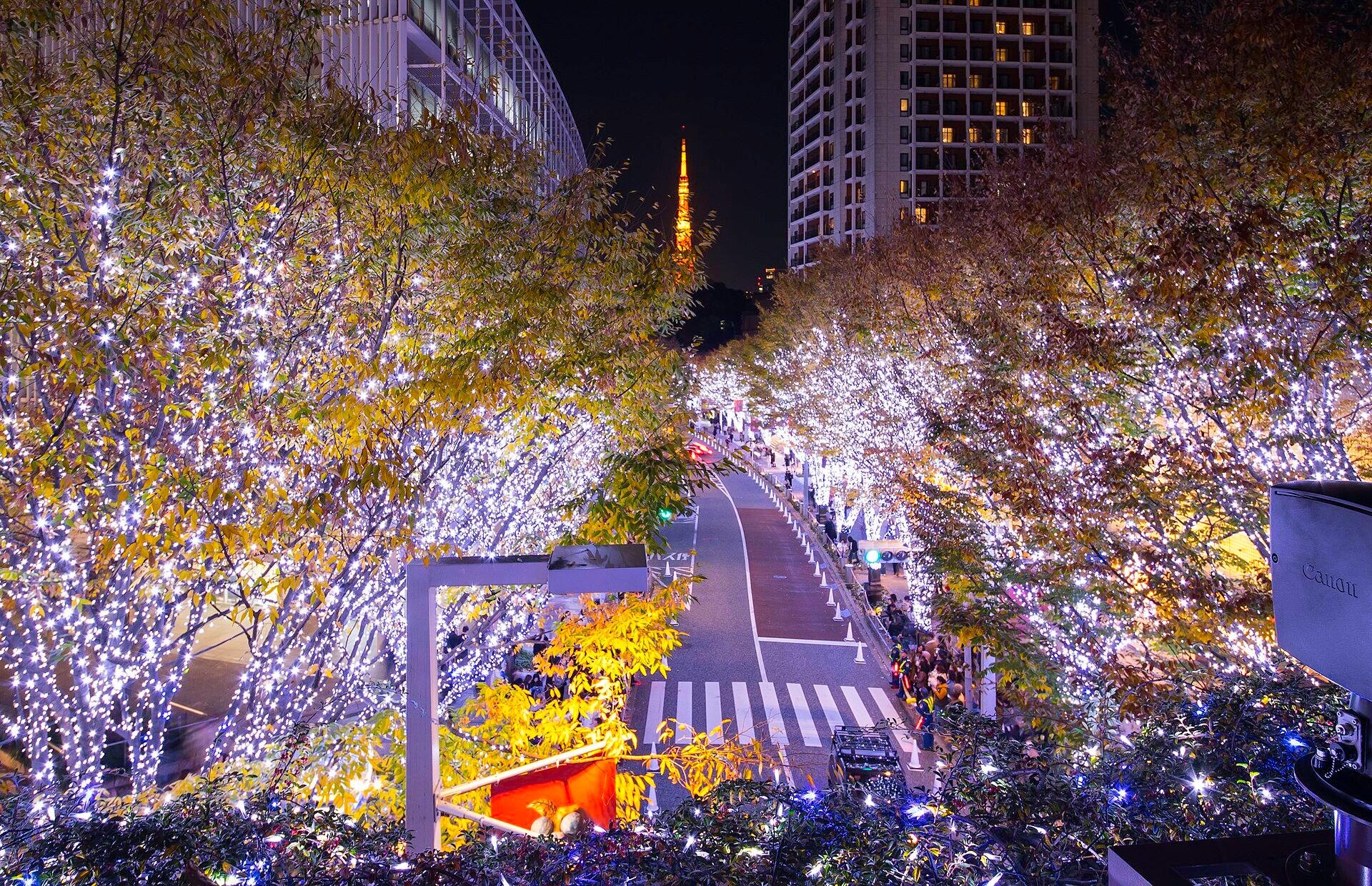
From Kamiyacho, Roppongi is 3 min on the Hibiya line. The Roppongi Hills Christmas market at O-yane Plaza runs November 21 to December 25, 11:00~21:00, and the Roppongi Keyakizaka-dori illumination November 5 to December 25, 17:00~22:00. Both markets close at the same 21:00, so leave Azabudai Hills around 19:00, see the market first and then walk Keyakizaka.
Tokyo Midtown
Last comes Tokyo Midtown, lit until 23:00. MIDWINTER LIGHTS in Midtown Garden runs November 26 to December 25, 17:00~23:00, as a show of about 4 minutes, free of charge, and the soap bubbles that come once every 4 minutes run only through Sunday December 20. Starting from the same garden entrance, the Hikari no Sanpomichi light walk is on from November 26 to February 23, 2027, 17:00~23:00 (free), with a light show at :00 and :30 every hour.
Midtown recommends visiting on or before Sunday December 20 to avoid crowds and runs traffic control on Thursday December 24 and Friday December 25. During traffic control, when it is crowded, it restricts the viewing route, for example to one-way, and asks you to use the toilet before joining the line; if you leave the line, you cannot return to your place and must rejoin at the back. An underground passage links it to Hibiya line Roppongi station, with stairs partway, and Toei Oedo line Roppongi station connects directly from exit 8. For the hotel, the Hibiya line runs to Hibiya without a transfer.
Day 3 Yebisu Garden Place and Ao no Dokutsu in Shibuya
This day also keeps you outdoors after dark until 22:00 (about 5 hours), so leave the morning free. Around lunchtime, take the Hibiya line from Hibiya to Ebisu, 15 min (no transfer), and spend the afternoon at Yebisu Garden Place; see the Ebisu illumination when it lights at 16:00, have dinner at the marche, then move around 18:00 to Ao no Dokutsu in Shibuya (lit from 17:00). From the last stop, Meiji-jingumae, the Chiyoda line takes you straight back to Hibiya in 12 min.
If you arrive on a Saturday, day three is a Monday: the Tokyo Photographic Art Museum is closed and the weekday marche opens at 17:00. So swap days two and three, with Ebisu and Shibuya on Sunday (marche from 12:00) and Shiba Park (1,000 yen on weekdays) and Roppongi on Monday. Arriving Saturday December 19, keep the order, because Midtown's soap bubbles run only through December 20. On that Monday's day three, rest during the day, head to Ebisu around 16:00, have dinner at the marche when it opens at 17:00, then move on to Shibuya. Arriving Saturday January 9, 2027, keep the order as well: day three, January 11, is a public holiday when the museum is open, and the marche has already ended.
Yebisu Garden Place
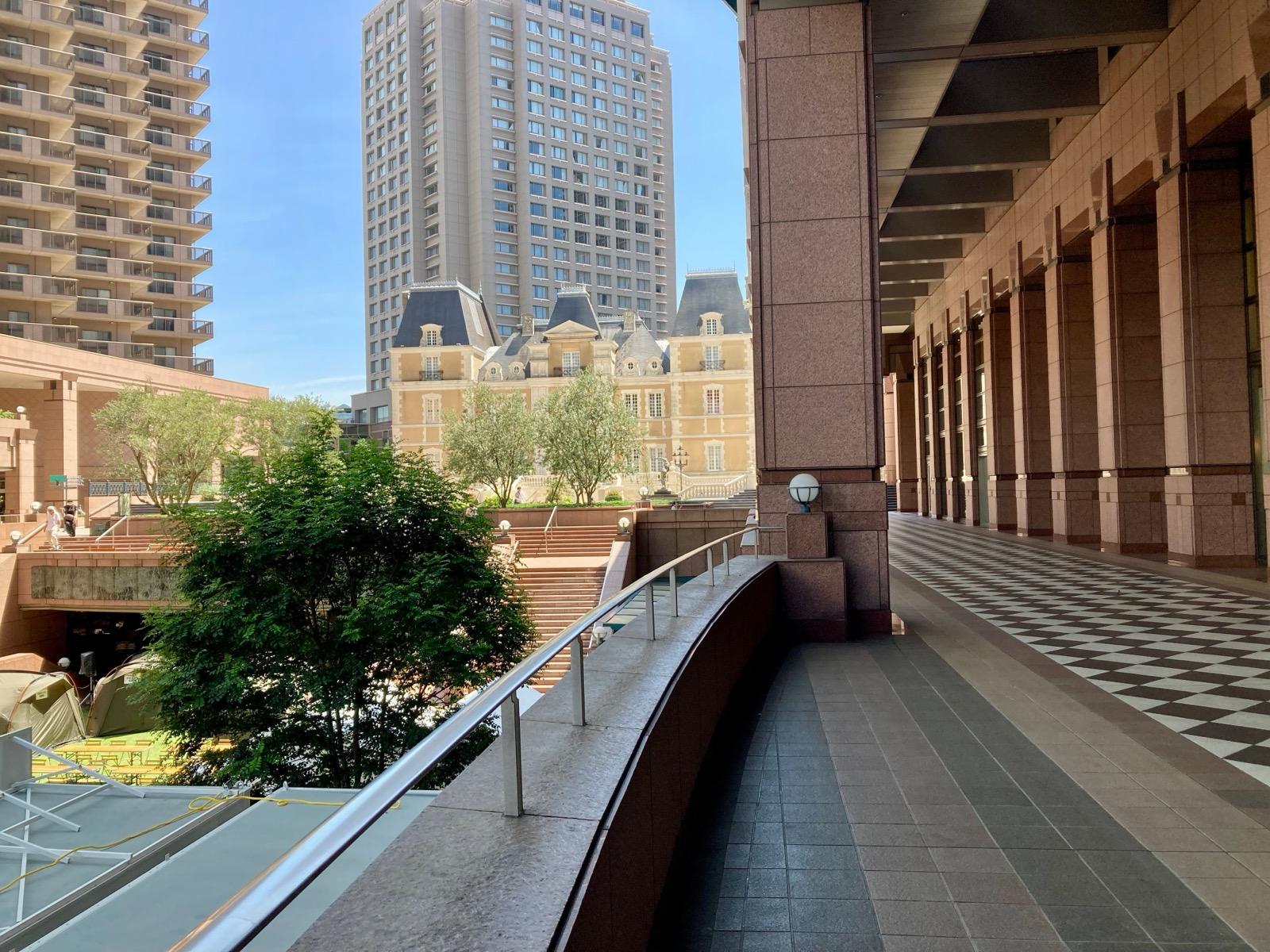
What you do in Ebisu by day depends on the day of the week. On weekends and holidays, the Christmas marche in the Clock Plaza (from November 14) and the Chateau Plaza (from November 27) opens at 12:00 (17:00 on weekdays; both close at 20:00 and run through December 25), and in the Clock Plaza the Westin Tokyo's food truck serves warm items such as hot wine and borscht. On a weekday afternoon or a rainy day, spend it at the Tokyo Photographic Art Museum in the same complex (10:00~18:00, until 20:00 on Thursdays and Fridays, last admission 30 minutes before closing). Admission varies by exhibition. The museum is closed on Mondays (the next weekday when Monday is a holiday), from December 28 to January 1, 2027 and from January 18 to February 4, 2027; if day three falls on one of those days, rest at the hotel through the daytime and head to Ebisu around 16:00.
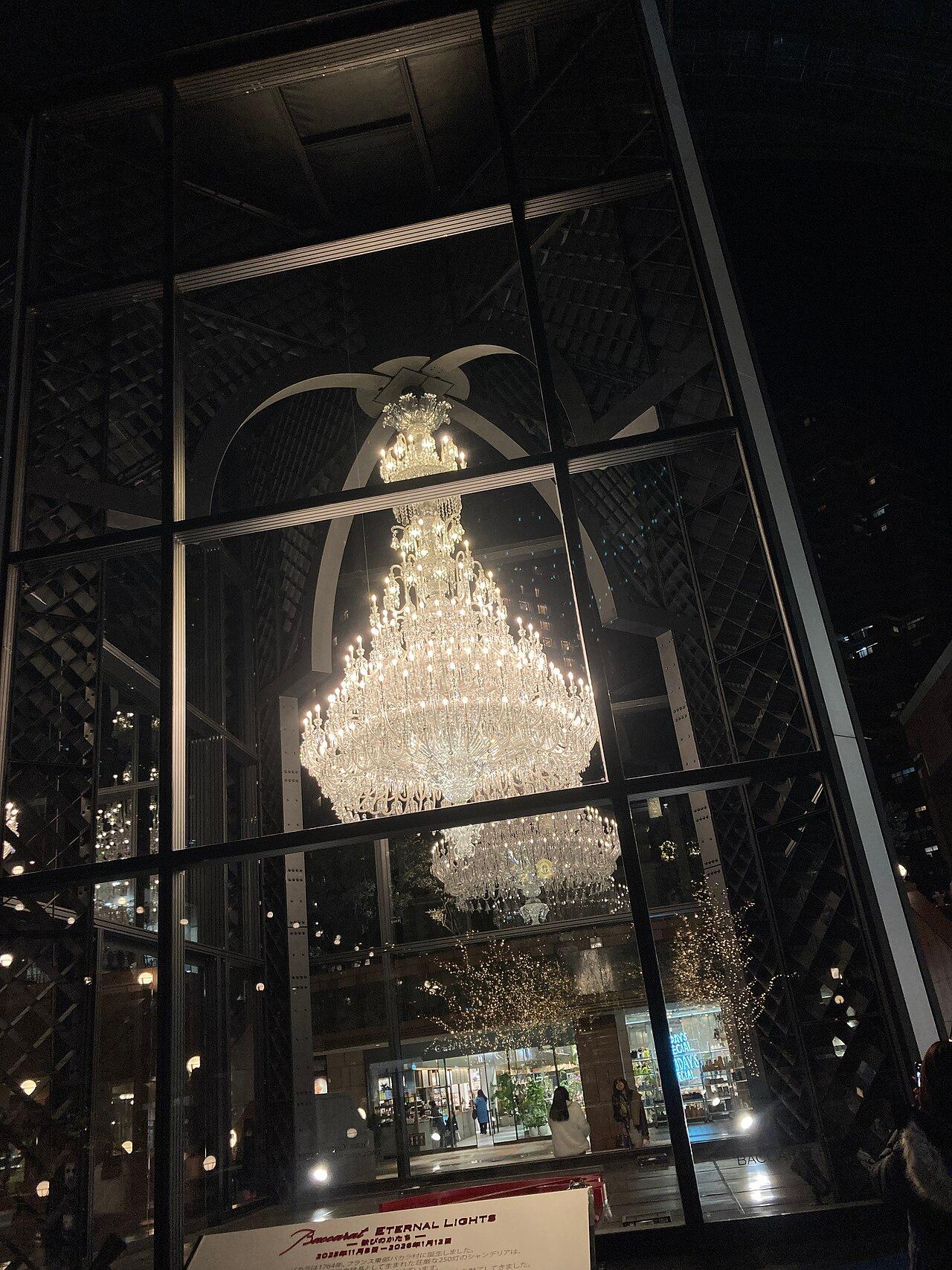
January 2026, before the showcase was replaced.
The Baccarat chandelier in the Center Plaza (Baccarat ETERNAL LIGHTS) is about 5 m tall and 3 m wide, with 8,500 crystal parts and 250 lights, and it is lit from November 14 to January 11, 2027, 11:00~23:00. Among the lights on this plan, it is the only one on from 11:00 in the morning. The roughly 10 m Christmas tree in the Clock Plaza and the champagne-gold illumination (about 100,000 bulbs) at the Entrance Pavilion, the slope promenade and the Chateau Plaza run 16:00~23:00 (the tree through December 25, part of the illumination through February 28, 2027). Through December 25, once the illumination is on, have dinner at the marche and move on to Shibuya around 18:00 (the weekday marche opens at 17:00). The marche may close in rain or strong wind. For Shibuya, it is 5 min by the Skywalk to the east exit of JR Ebisu station, and you get there without an umbrella even in rain.
Ao no Dokutsu Shibuya (the Blue Cave)
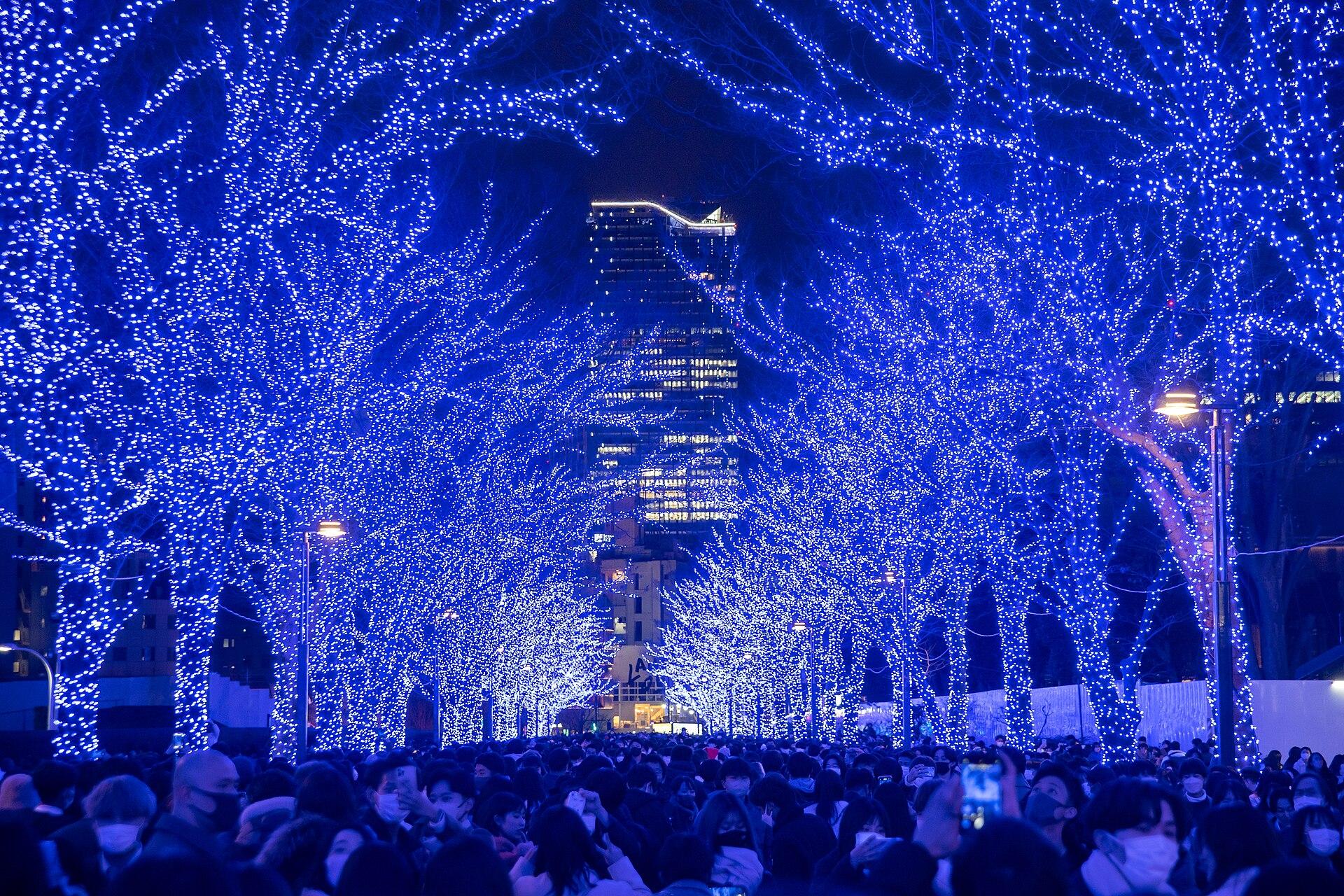
Take JR one stop from Ebisu to Shibuya and walk up Shibuya Koen-dori: about 500,000 blue LEDs continue as far as the zelkova avenue in Yoyogi Park. Ao no Dokutsu SHIBUYA runs December 11~27 in 2026, 17:00~22:00, and this year a large Christmas-tree-shaped digital display stands at the Yoyogi Park zelkova avenue venue. The organizers state that the lights may be stopped when it is crowded and that lighting hours and content may change due to rain or other circumstances. If it is stopped for crowds, ride JR one stop back to Ebisu and finish under the illumination, lit until 23:00. Per the official guide it is 10 min on foot from JR Harajuku station and Tokyo Metro Meiji-jingumae station and can also be reached from Shibuya station, and from Meiji-jingumae the Chiyoda line runs to Hibiya without a transfer.
Day 4 Departure
Departure day goes only as far as the airport. Keep the morning to a walk around the hotel, and leave the hotel about 4 hours 40 minutes (Terminal 2) to 4 hours 45 minutes (Terminals 1 and 3) before the flight via the Narita Skyliner, about 5 hours before via the TYO-NRT, or about 4 hours before via Haneda (as worked out in "Going home" above). Even with an evening flight, do not add an illumination today: seeing dusk lights with your luggage and then heading to the airport makes the departure time you worked out hard to keep.
Opening hours and fees
| Place | Hours | Fee (as of 2026-11) | Access and notes |
|---|---|---|---|
| Marunouchi Naka-dori | 16:00~23:00, December ~24:00 (2026-11-12~2027-02-14) | Street lights | About 1.2 km, about 200 trees and about 572,000 bulbs (planned). Hours may differ in some areas |
| Gyoko-dori | Lights 16:00~24:00, Christmas market 11:00~22:00 (11-27~12-25) | Street lights; market free entry | Tokyo Station~Kokyo Gaien, about 20 trees and about 60,000 bulbs (planned). 15 food stalls; no toilets or trash bins on site |
| Shiba Park Christmas market | 11:00~22:00, first day from 16:00 (12-04~12-25) | Adults: weekdays 1,000 yen, weekends 1,500 yen, 12/24·25 2,000 yen. Elementary 500 yen (1,000 yen on 12/24·25), preschool free | Mita line Onarimon exit A6, 1 min (not Shibakoen station). Last order 21:30, last entry 21:00 |
| Tokyo Tower | Main Deck 9:00~23:00 (last entry 22:30), Top Deck Tour 9:00~22:45 (booking slots 9:00~22:15) | Main Deck: adults 1,500 yen, high school 1,200 yen, elementary and junior high 900 yen, preschool children aged 4 and over 600 yen. Top Deck Tour online: adults 3,300 yen, high school 3,100 yen, elementary and junior high 2,100 yen, preschool children aged 4 and over 1,500 yen (200 yen more each at the counter; Main Deck included) | Top Deck is booked in advance for a set date and time and may be cancelled in bad weather. Onarimon exit A1, 6 min; Kamiyacho exit 1, 7 min; Akabanebashi, 5 min |
| Azabudai Hills Christmas Market | 11:00~21:00 (11-21~12-25) | Free entry (pay per stall) | Central Plaza, 19 stalls (15 food). Direct from Kamiyacho exit 5 |
| Roppongi Hills | Market 11:00~21:00 (11-21~12-25), Keyakizaka 17:00~22:00 (11-05~12-25) | No admission fee shown (pay per stall) | Market at O-yane Plaza, lights on Roppongi Keyakizaka-dori |
| Tokyo Midtown | MIDWINTER LIGHTS 17:00~23:00 (11-26~12-25, soap bubbles ~12-20), light walk 17:00~23:00 (~2027-02-23) | Both free | Visit on or before 12/20 recommended; traffic control on 12/24·25. Direct from Oedo line Roppongi exit 8 (the route recommended for wheelchairs and strollers); Chiyoda line Nogizaka exit 3, about 3 min |
| Yebisu Garden Place | Baccarat 11:00~23:00 (11-14~2027-01-11), illumination 16:00~23:00 (part ~2027-02-28), marche weekdays 17:00~20:00, weekends and holidays 12:00~20:00 (~12-25) | No admission fee shown | JR Ebisu east exit, 5 min by Skywalk; Hibiya line Ebisu exit 1, 7 min. Marche may close in rain or strong wind |
| Tokyo Photographic Art Museum | 10:00~18:00 (Thu/Fri ~20:00); closed Mondays (the next weekday when Monday is a holiday), 12-28~2027-01-01 and 2027-01-18~02-04 | Varies by exhibition | Inside Yebisu Garden Place. Last admission 30 minutes before closing |
| Ao no Dokutsu Shibuya | 17:00~22:00 (12-11~12-27) | Street lights | Koen-dori~Yoyogi Park zelkova avenue, about 500,000 bulbs. May stop when crowded. 10 min from Harajuku and Meiji-jingumae |
Itinerary changes by companion and situation
| Companion or situation | Day changed | Out | In | Reason |
|---|---|---|---|---|
| With children | Evenings of Days 2 and 3 | Azabudai Hills and Roppongi Hills markets, Ao no Dokutsu | Day two: Shiba Park → Tokyo Tower at sunset (Main Deck 900 yen for elementary and junior high students, 600 yen for preschool children aged 4 and over) → Kamiyacho to Roppongi for Midtown's MIDWINTER LIGHTS (soap bubbles every 4 minutes through December 20) and Keyakizaka in the 17:00 hour → Hibiya line from Roppongi to Hibiya, 9 min. On day three, stay in Ebisu through the evening (Baccarat from 11:00, weekend and holiday marche from 12:00, the Tokyo Photographic Art Museum on weekdays; from 16:00 when the museum is closed) | The soap bubbles come every 4 minutes, so children do not wait long, and seeing them in the 17:00 hour gets you back to the hotel in the 19:00 hour. The two markets are evening stops that run until 21:00, so they are out. Ao no Dokutsu is an avenue 10 min on foot from the station and may be stopped when crowded, so the walk there at a child's pace can come to nothing |
| With parents | Evenings of Days 2 and 3 | Roppongi Hills market and Keyakizaka, Ao no Dokutsu | On day two, after Azabudai Hills (direct from Kamiyacho exit 5), take a taxi to Midtown, and go home from Chiyoda line Nogizaka station (exit 3, about 3 min on foot) to Hibiya in 7 min. With a wheelchair or stroller, take a taxi both ways. On day three, stay in Ebisu through the evening (Skywalk from JR Ebisu east exit) | Dinner is at the market in Azabudai Hills, which connects directly to the station, and the taxi skips Roppongi Hills. Keyakizaka and Ao no Dokutsu are lights you see by walking an avenue, and Ao no Dokutsu adds 10 min on foot from the station. The underground passage toward Hibiya line Roppongi station has stairs, so Midtown recommends the Oedo line for wheelchairs and strollers, and the Oedo line is not this plan's way home (Hibiya and Chiyoda lines). Midtown warns of long outdoor waits during its traffic control on the 24th and 25th and recommends that wheelchair users visit on or before December 20, so put Midtown on or before December 20 |
| One Disney day | Day 3 | Ebisu, Shibuya | A day at Tokyo Disney Resort | Disney is a day spent in one place from opening to evening, so there is no daytime to place near an evening district. Swap the whole day, and follow the Tokyo Disney family itinerary for the Christmas program and tickets |
Where to eat: Christmas markets and dinner bookings
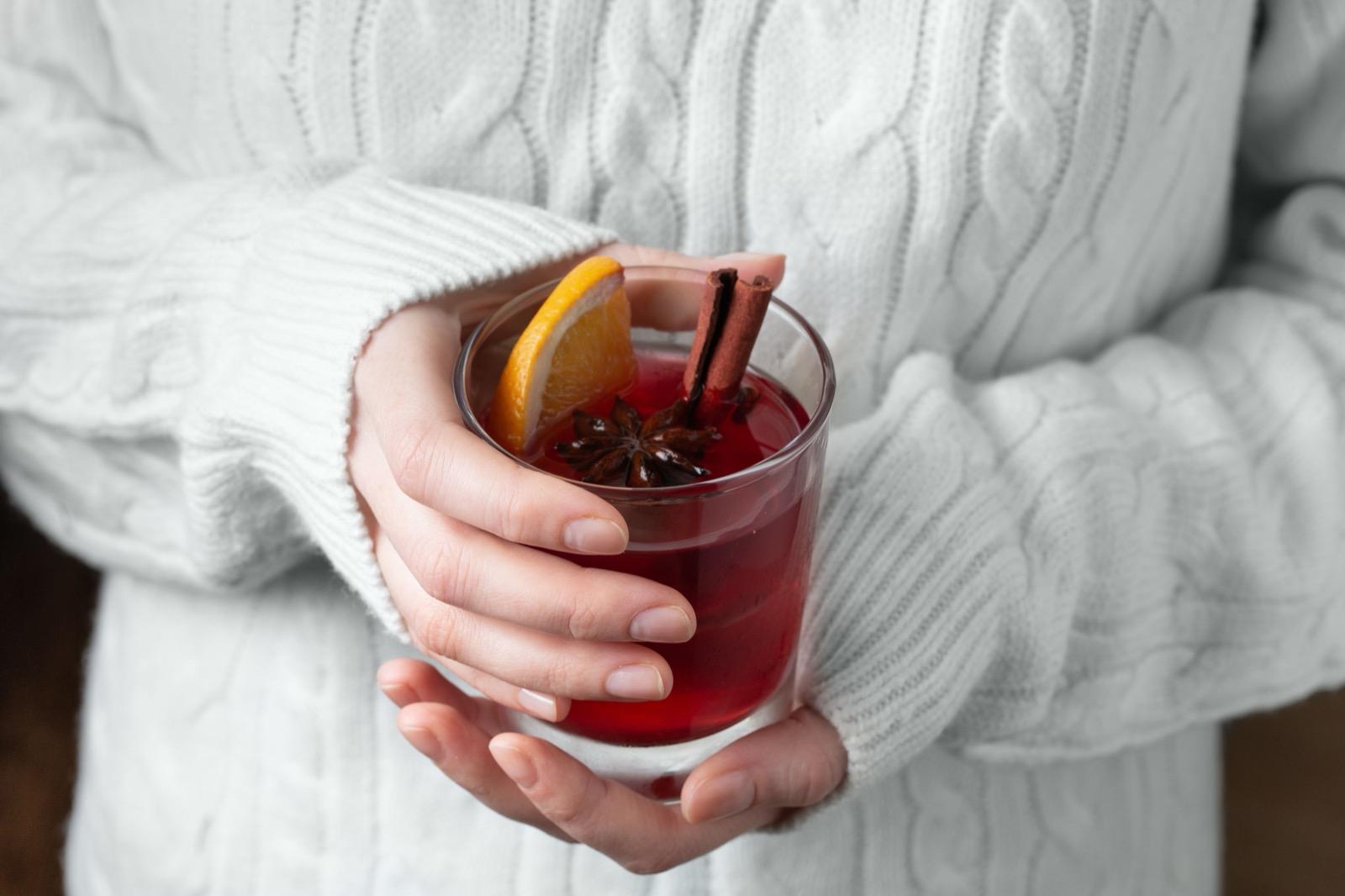
All three dinners on this plan can be eaten at markets without a booking. Day 1 is the Gyoko-dori Christmas market (15 food stalls, until 22:00), day two the Azabudai Hills market (15 food stalls, until 21:00) or the Roppongi Hills market (until 21:00), and day three the Christmas marche at Yebisu Garden Place (until 20:00). All three end on December 25, and prices vary by stall, so there is no price table. To have lunch at the Ebisu marche as well, put day three on a weekend or holiday (it opens at 12:00; 17:00 on weekdays).
If you add a Christmas dinner, start from the dates and the booking opening day. For example, Bellavista (Garden Tower, 40th floor) at Hotel New Otani Tokyo (Kioicho, Chiyoda City; 3 min on foot from exit D, the Kioicho exit, of Akasaka-mitsuke station) serves its Christmas dinner only from December 19 to 25 (from 29,000 yen per person plus service charge, minimum two guests, 17:30~22:00, last order 20:00), and opened online bookings at 15:00 on October 19, 2026. Put this dinner on the first evening when your arrival date is December 19~25 and your flight lands before 15:00. From the hotel it is 6 min on the Marunouchi line from Ginza to Akasaka-mitsuke, and after dinner the same Marunouchi line reaches Tokyo Station in 8 min, from where you walk Gyoko-dori and Naka-dori, lit until midnight.
Tokyo 4-day costs (per person)
Plan on about 780,000 to 2,440,000 KRW per person including flights (adults, double occupancy). Conversion: 100 yen ≈ 840 KRW (derived from ECB reference rates of 2026-11-11); each item is rounded to 1,000 KRW, and totals round the sum of the items to the nearest 10,000 KRW.
| Item | Budget | Standard | Comfortable |
|---|---|---|---|
| Flights (Incheon~Tokyo round trip, December estimate) | 300,000 KRW | 450,000 KRW | 700,000 KRW |
| Hotel, 3 nights (per-person share, estimate) | 300,000 KRW | 600,000 KRW | 1,200,000 KRW |
| Food, 3.5 days (estimate) | 101,000 KRW (12,000 yen) | 168,000 KRW (20,000 yen) | 412,000 KRW (49,000 yen, one Christmas dinner included, service charge extra) |
| Admissions and market (posted fees) | 21,000 KRW (2,500 yen) | 21,000 KRW (2,500 yen) | 36,000 KRW (4,300 yen) |
| Transport (airport round trip + city) | 34,000 KRW (4,076 yen) | 50,000 KRW (5,932 yen) | 53,000 KRW (6,288 yen) |
| Misc and data | 20,000 KRW | 30,000 KRW | 40,000 KRW |
| Total | about 780,000 KRW | about 1,320,000 KRW | about 2,440,000 KRW |
Admissions use posted fees (as of 2026-11). The budget and standard plans pay the Shiba Park market's weekday 1,000 yen and the Tokyo Tower Main Deck at 1,500 yen; the comfortable plan swaps the Main Deck for the Top Deck Tour (3,300 yen online, Main Deck admission included). If your Shiba Park day falls on a weekend, add 500 yen; on the 24th or 25th, add 1,000 yen. The Tokyo Photographic Art Museum is left out because its admission varies by exhibition. The budget plan's food estimate assumes one food item per market meal and convenience-store breakfasts. The comfortable plan's food is the standard plan's 20,000 yen plus a Christmas dinner from 29,000 yen per person (service charge extra). Bellavista's Christmas dinner runs only from December 19 to 25; for other arrival dates, this share is budgeted for one other dinner.
For transport, the airport round trip is the TYO-NRT bus at 3,000 yen (1,500 yen × 2; late-night and early-morning buses are 3,000 yen one way) for the budget plan and the Skyliner at Keisei's official online round-trip price of 4,500 yen (5,160 yen at the counter) for the standard and comfortable plans. Arriving at Haneda, the airport legs switch to Keikyu and JR (or Toei) fares, so check them before departure on each operator's official fare search. City rides are counted along this article's route. Subway rides use IC fares from Tokyo Metro's official fare search: 5 rides for 921 yen on the budget plan (the bus starts and ends at Ginza Station), 7 rides for 1,277 yen on the standard plan, and the comfortable plan adds two Marunouchi line rides to and from the dinner (356 yen). The one JR ride (Ebisu → Shibuya) is estimated at JR East's IC fare for the 1~3 km band, 155 yen. Flights, hotel, food and misc are estimates for the December peak season, not posted prices, and move with booking timing. The cost table follows the day-by-day itinerary above, so the parents' taxi rides and the Disney day from the itinerary changes table are not included.
Winter weather and rainy days
By the Japan Meteorological Agency's 1991~2020 normals, Tokyo averages 7.7°C in December (high 12.0°C, low 3.8°C) with 57.9 mm of precipitation, and 5.4°C in January (high 9.8°C, low 1.2°C) with 59.7 mm. It is a dry month, but this plan has two days outdoors after dark until 22:00 or 23:00, so dress for the low.
On a day with rain in the forecast, adjust around the places that publish a rain policy. Marunouchi Street Park (Naka-dori and Gyoko-dori) stays open in the rain, though installations may be covered; the Ebisu marche may close in rain or strong wind; and Ao no Dokutsu may change its lighting hours and content due to rain and similar conditions. The Tokyo Tower Top Deck Tour may be cancelled in bad weather such as strong wind or snow. If rain falls on day three, spend the daytime at the Tokyo Photographic Art Museum (on its closed days, rest at the hotel and set out around 16:00) and use the Skywalk to and from JR Ebisu station without an umbrella. On a rainy day two, take in the night view from the Tokyo Tower Main Deck (until 23:00) after dark, and outdoors walk only Roppongi Hills Keyakizaka before heading back. The Azabudai Hills market and Midtown are plaza and garden events, and the official pages checked for this guide give no rain guidance, so leave them out that day.
Essentials
- Visit Japan Web before departure: generate the code in advance, and if you could not, use the paper declaration form at airport customs.
- IC card first at the airport: JR and Keisei are outside the contactless credit-card scheme, so get a TOURIST PASMO first. Narita's sales point (SKYLINER & KEISEI INFORMATION CENTER) is open 7:00~21:00; arriving later, buy the Skyliner ticket at the Skyliner Ticket Counter (7:00~23:30) and ride the Hibiya line with a contactless card.
- Book the Top Deck Tour early: it is booked for a set date and time, so take a sunset slot as soon as your dates are set.
- Dress for the low: the December normal daily low is 3.8°C, and days two and three keep you outdoors after dark until 22:00 or 23:00.
Wrapping up
In December the sun sets in Tokyo around 4:30 pm, so spending the day near the district you will see that evening cuts travel and lengthens the evenings. Night one is Marunouchi on foot, day two runs from Shiba Park to Roppongi starting with what closes first, and day three goes from Ebisu to Shibuya starting with what lights up first. If your dates move, one row of the arrival-date table is all you need, and with the hotel around Hibiya station every ride home is transfer-free too.
Carry this itinerary in Tripop
Put this plan into the Tripop app and the day-by-day places, notes and budget stay visible offline. It keeps market advance tickets and dinner confirmations in one place and splits the travel ledger with companions, with only the features a trip actually needs. Get the app at the Tripop homepage and load this itinerary.
What we verified
The event dates, lighting hours, fees, transport and entry procedures in this article were checked by the Tripop editorial team on November 12~14, 2026 against the official information of each event organizer and facility, the transport operators, Japan Customs and the Digital Agency, and the National Astronomical Observatory of Japan and the Japan Meteorological Agency. Just before you leave, recheck dates and hours on the official pages of the Marunouchi Illumination (official PDF), the Tokyo Christmas Market in Shiba Park and Ao no Dokutsu Shibuya. Photos in the article are stock images from Pexels and Wikimedia Commons, not our own; if you find anything different on the ground, tell us and we will fix it.
The Wikimedia Commons photos are credited below in article order with the year taken and the creator; we used Wikimedia's resized copies unchanged.
- Marunouchi Naka-dori illumination (2022) · Dick Thomas Johnson / CC BY 2.0
- Roppongi Keyakizaka illumination (2024) · Kakidai / CC BY-SA 4.0
- Baccarat chandelier at Yebisu Garden Place (2026) · Wadakuramon / CC0
- Ao no Dokutsu Shibuya (2022) · Dick Thomas Johnson / CC BY 2.0


Images: Pexels (sugar jet: Yebisu Garden Place illumination, Huu Huynh: Tokyo Station at night, Travel with Lenses: Zojoji and Tokyo Tower, Harry Shum: Tokyo Tower at night, Tatsuo Nakamura: Yebisu Garden Place by day, TREEDEO.ST: mulled wine), Pexels License.