
With Kyoto's autumn leaves, timing is everything. Go in October and you come back having seen only green; by mid-December the light-ups are over. This is a 3-night, 4-day plan built around mid-to-late November, when the city-centre foliage is deepest, together with admission fees by temple and tips for the night light-ups.
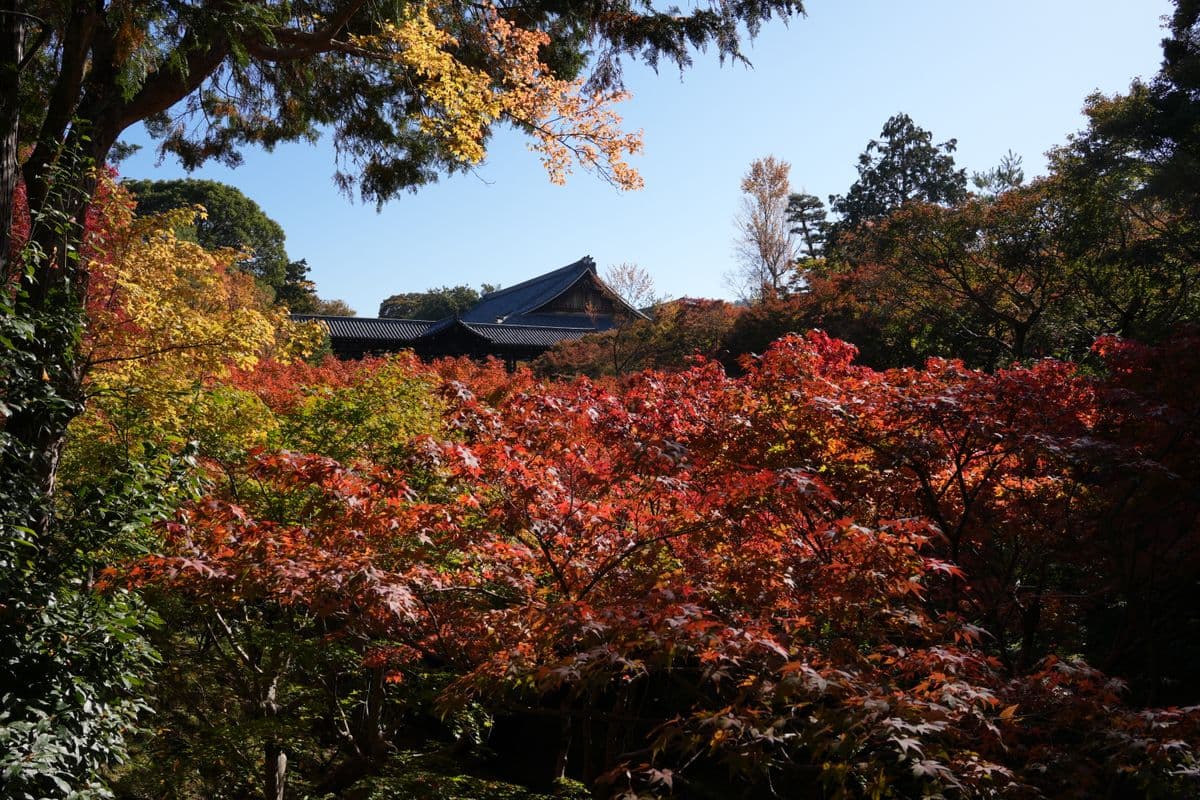
The itinerary at a glance
| Day | Area | Route | Cost / notes |
|---|---|---|---|
| Day 1 | Arrival, city centre | Haruka from Kansai Airport, check in, Nishiki Market and Gion | Haruka about 80 min |
| Day 2 | Higashiyama | Ginkakuji and Nanzenji, Eikando night viewing at dusk | Ginkakuji 1,000 yen / night 1,000 yen |
| Day 3 | Arashiyama | Bamboo grove, Togetsukyo, Tenryuji, Kiyomizu-dera night view in the evening | Tenryuji 500 yen |
| Day 4 | Tofukuji, Fushimi | Tsutenkyo, Fushimi Inari, fly home | Tsutenkyo 1,000 yen |
When to go: Kyoto's foliage timing
Kyoto's city-centre foliage peaks in mid-November, and depending on the spot, at places like Tofukuji, Eikando and Arashiyama, the colour deepens into late November and early December. Go in October and much is still green, so plan for mid-November or later, and check that year's foliage forecast before you leave. The night light-ups mostly open in late November and end in early December.
Before you go: entry and getting there
- Entry: Korean passports get 90 days visa-free. Register immigration and customs on Visit Japan Web beforehand and pass through by QR to save time.
- Getting there: Kyoto has no airport, so you come in through Kansai Airport (KIX). The Haruka limited express takes about 80 minutes; a foreigner one-way ticket is 2,200 yen (a regular reserved seat about 3,590 yen).
- Getting around: In foliage season the city buses are severely jammed, so rely on the subway, Keihan, Hankyu and JR. A subway-and-bus one-day pass is 1,100 yen.
What to see, area by area
Higashiyama (eastern hills), the heart of the night light-ups
Temples cluster along the hills on Kyoto's east side, so this is where the after-dark special viewings are most active in foliage season.
Ginkakuji and the Philosopher's Path Walk along the canal from Ginkakuji, the Silver Pavilion (1,000 yen), to Nanzenji. The Philosopher's Path itself is lined with cherry trees, so autumn colour is sparse there; the deep foliage is in the neighbouring Nanzenji and Eikando grounds.
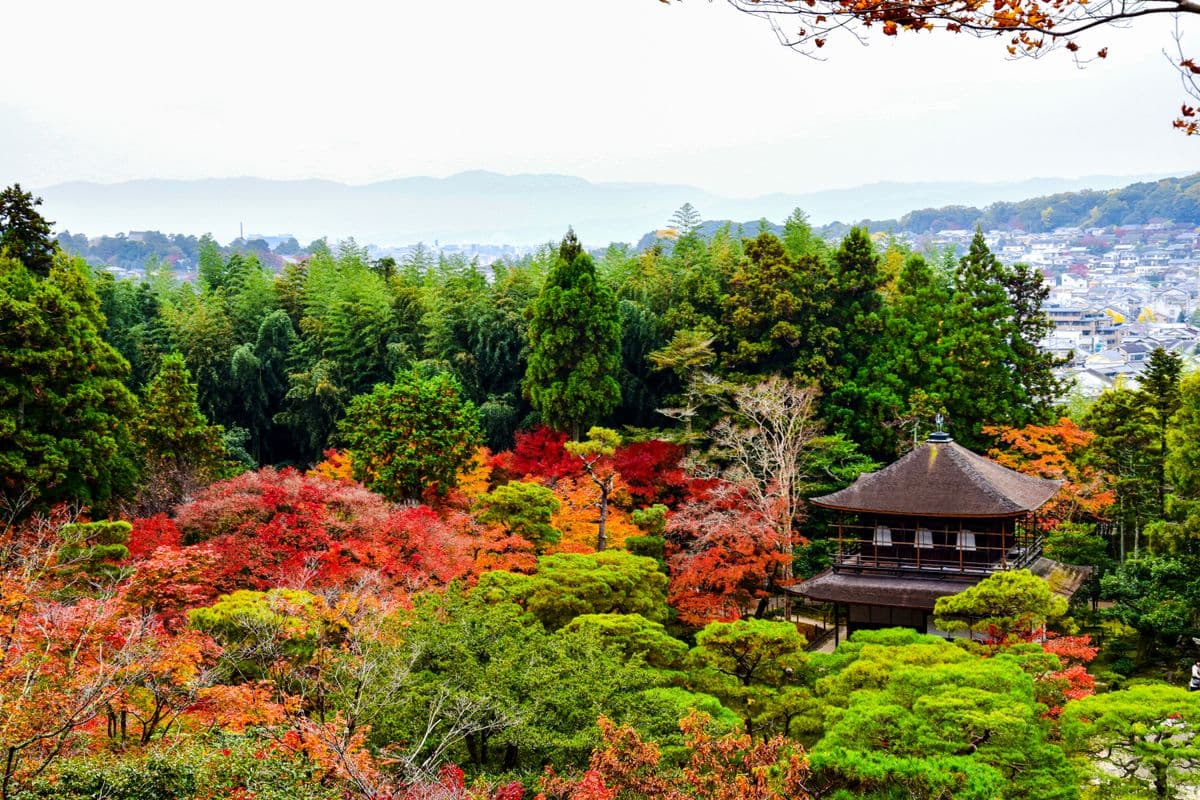
Eikando One of Kyoto's most celebrated temples for autumn leaves. In foliage season daytime viewing is 1,500 yen and the night light-up is 1,000 yen (day and night are fully separate sessions), and the illuminated foliage mirrored in the pond is the temple's signature scene.
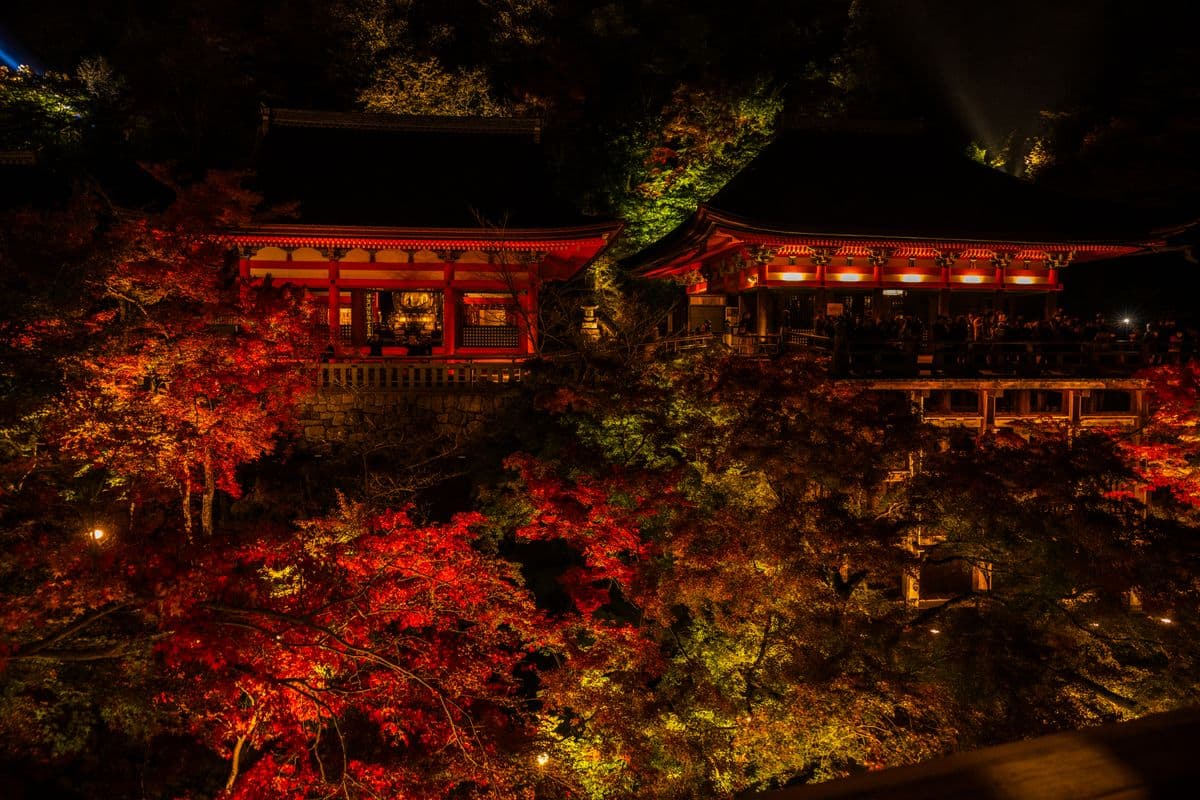
Kiyomizu-dera A temple famous for its wooden stage set out over a cliff. Daytime admission is 500 yen, and in late November a night special viewing opens, with the lit stage and red foliage together.
Arashiyama, the river and the bamboo
About 15 minutes by JR from Kyoto Station to Saga-Arashiyama Station, where the foliage and the bamboo grove sit in one area.
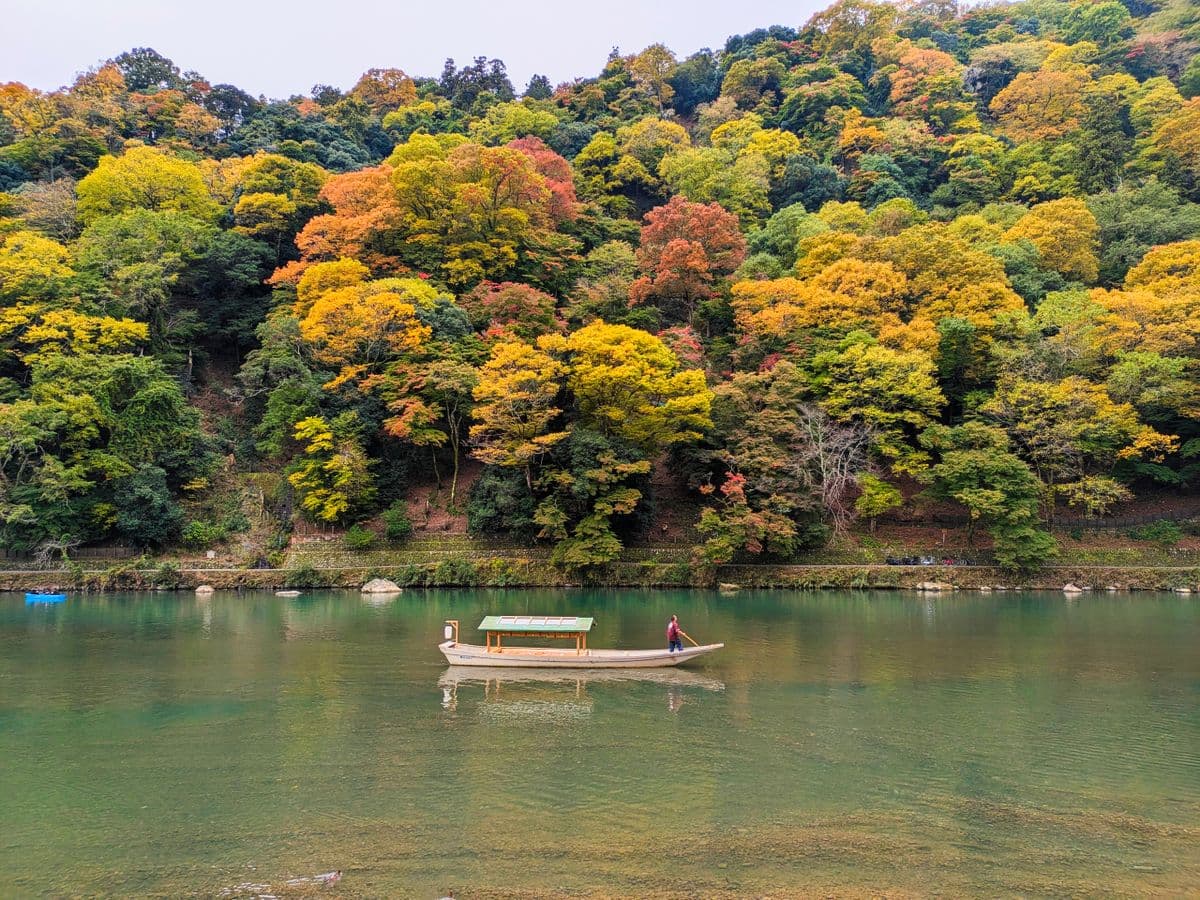
Togetsukyo and the Hozu River Beyond the bridge, the whole mountainside turns with autumn colour. The view of the foliage from the boats that ply up and down the river is especially good.
Bamboo grove (Chikurin) A walking path through a tunnel of bamboo that hides the sky, free to enter. Early morning, with fewer crowds, is best.
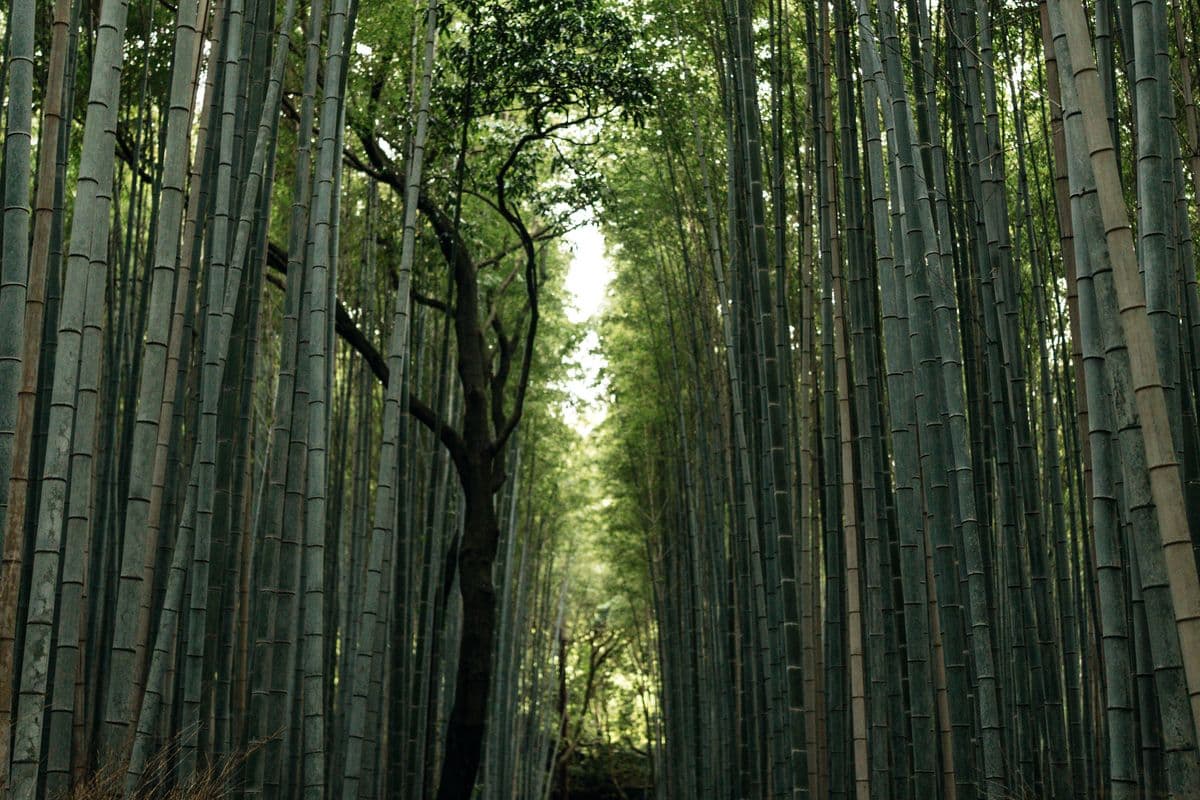
Tenryuji A World Heritage garden (500 yen), known for its foliage reflected in the pond and the borrowed scenery of the hills behind.
Tofukuji and Fushimi, valley foliage and red torii
This area is south of Kyoto Station. It is easy to reach by JR and Keihan, so it fits well onto your arrival day or your last day.
Tofukuji Red foliage fills the valley below the Tsutenkyo bridge, one of Kyoto's signature autumn views. The autumn Tsutenkyo special viewing is 1,000 yen (600 yen the rest of the year), and for crowd and safety reasons, photography is restricted on the Tsutenkyo and Gaunkyo bridges.
Fushimi Inari A shrine where thousands of red torii gates run one after another, open 24 hours and free. It is not a foliage spot, but it is too good to leave off a Kyoto trip.
Foliage season, do not skip these
- Book lodging at least three months ahead. In late November, Kyoto hotels roughly double in price and sell out quickly.
- Night light-ups mean a one-to-two-hour wait. Aim for right after opening, or mix in quieter temples.
- Watch the light-up end dates. Most temples finish between late November and early December (Eikando around December 6, for example), so avoid mid-December onward.
- No photography on Tofukuji's bridges. You cannot stop to take photos on the Tsutenkyo and Gaunkyo bridges.
The 4-day budget, per person
Based on twin-share and departure from Incheon. Conversion is taken roughly as 100 yen to 900 won, and lodging is set high because it is peak foliage season. The table is in units of 10,000 KRW (Korean 만 = 10,000 KRW), so 25 means 250,000 KRW and 71 means 710,000 KRW.
| Item | Budget | Standard | Comfort |
|---|---|---|---|
| Round-trip flight | 25 | 35 | 35 |
| Lodging, 3 nights, per person | 21 | 33 | 45 |
| Food, 4 days | 16 | 22 | 26 |
| Transport and admission | 9 | 13 | 15 |
| Total | about 71 | about 103 | about 121 |
Lodging decides the budget. Outside peak season it drops by nearly half. The transport-and-admission figure combines the Haruka round trip with temple admissions and day passes.
In short
For a 3-night, 4-day Kyoto autumn trip, timing is half the battle. Aim for mid-to-late November, and split it by day: Higashiyama (Eikando at night), then Arashiyama (Kiyomizu-dera night view), then Tofukuji and Fushimi.
- City-centre foliage peaks in mid-November; late November to early December by spot
- Haruka about 80 minutes (foreigner one-way 2,200 yen); in foliage season, move around town by rail
- Eikando 1,500 day / 1,000 night, Ginkakuji 1,000, Tofukuji Tsutenkyo 1,000, Kiyomizu-dera 500 (yen)
- Night light-ups mostly end in early December; photography restricted on Tofukuji's bridges
- Keep the itinerary, the Haruka, and night-viewing reservations in one place with Tripop
Organize this Kyoto autumn itinerary in Tripop
Admission fees and light-up dates differ by temple, so it is easy to lose track. Type one line, "Kyoto autumn leaves, 4 days," into the Tripop app and a day-by-day skeleton appears; upload your Haruka and night-viewing reservations and your flight PDF, and they organize into vouchers. Yen expense tracking and companion sharing are all in one app.
- Download on the App Store
- Get it on Google Play
- Start on the web, no install needed, right from your PC
What we verified
The day-by-day times and routes here are a planning example, not a copy of any operator's timetable. Kyoto's city-centre foliage peak (mid-November; late November to early December by spot), the Haruka at about 80 minutes (foreigner one-way 2,200 yen, regular 3,590 yen), Kiyomizu-dera 500 yen, Eikando 1,500 yen by day and 1,000 yen at night, Tenryuji 500 yen, Ginkakuji 1,000 yen (raised April 2026), and Tofukuji's autumn Tsutenkyo at 1,000 yen all follow each site's official guidance. Night light-up dates and fees are set each year and mostly end in early December, so check each temple's official site before you leave. The budget table moves with when you book, the season, and the exchange rate.
Images: Pexels (Dmitry Romanoff: Tofukuji autumn leaves, Praveen PA: Arashiyama, Faruk Tokluoğlu: Arashiyama bamboo grove, Guohua Song: Kiyomizu-dera night view, AXP Photography: Ginkakuji), Pexels License.