
Tokyo is the city you go to see. Osaka is the city you go to eat. This is a complete verified 4-day Osaka itinerary covering the Dotonbori canal, Osaka Castle, Universal Studios Japan (or Kyoto), and Kuromon Market, with 2026-confirmed prices, transport options, and real-world tips.
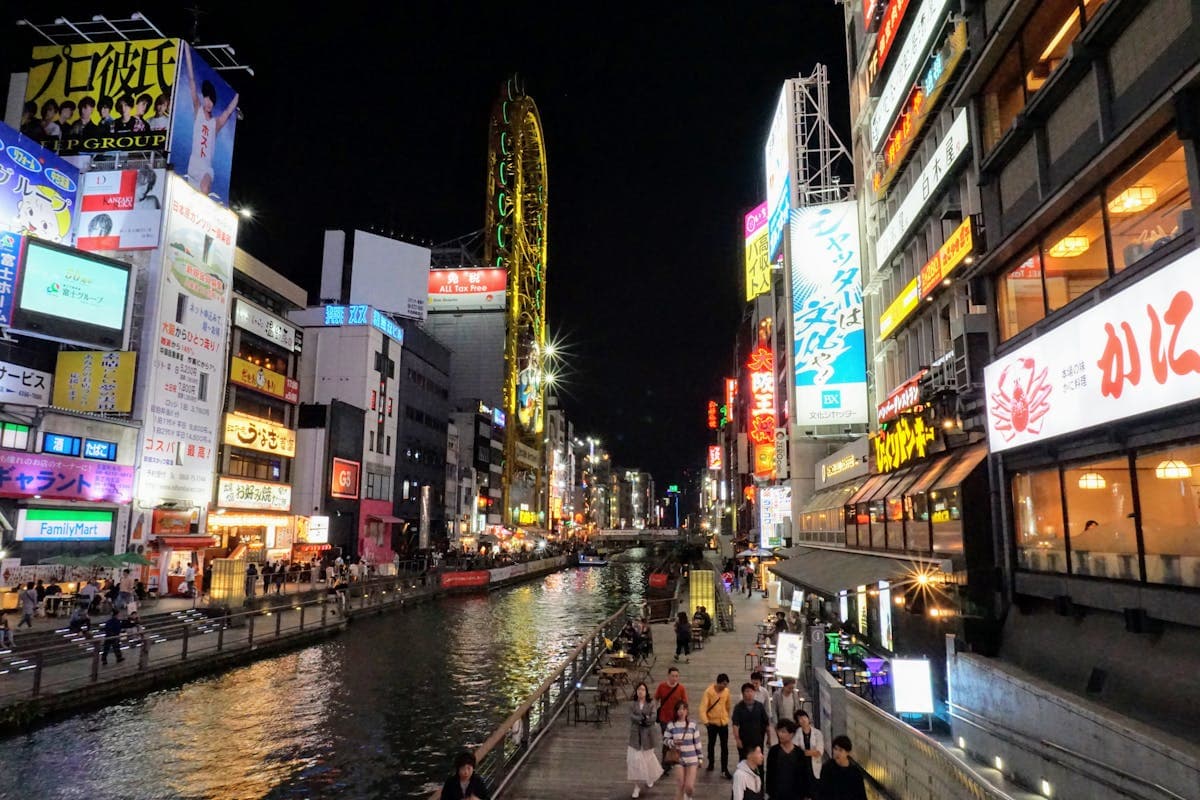
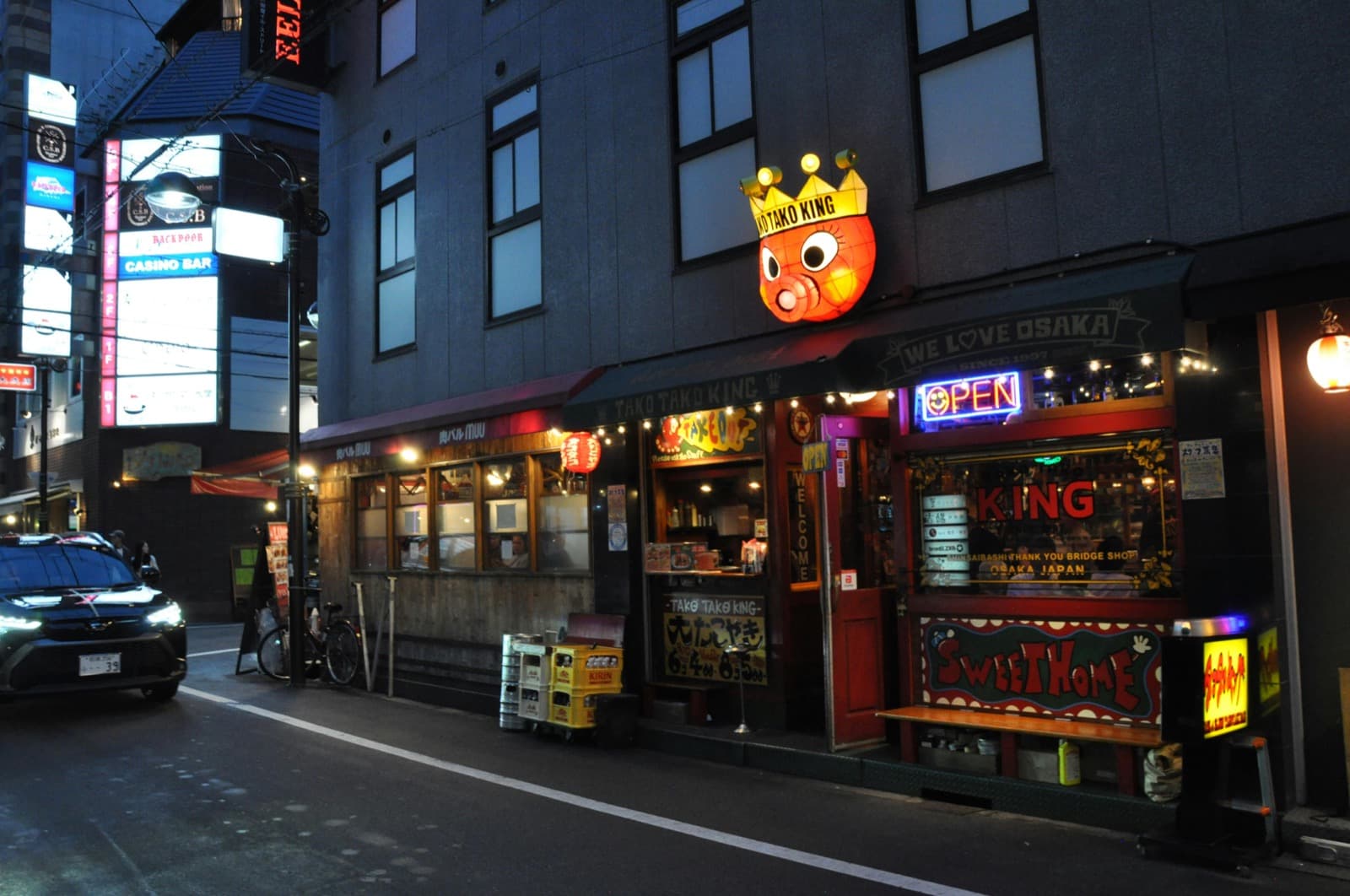
When night falls over the Dotonbori canal, the neon lights on both banks ignite and the city folds itself upside-down into the water. This is the image that draws millions to Shinsaibashi every year. Day one ends here.
Why 4 days in Osaka
Osaka is too big for 2 nights and too small for 5. The 3-night / 4-day shape is the sweet spot:
- Day 1: Arrive Kansai (KIX) → Dotonbori night
- Day 2: Osaka Castle + Shinsekai + Umeda Sky Building sunset
- Day 3: Universal Studios Japan or Kyoto/Nara day trip
- Day 4: Kuromon Market + duty-free + evening departure
The biggest difference from Tokyo: distances are small. Every neighbourhood is within a 20-minute subway ride. You only book one hotel and never relocate luggage, which matters when you've got 3 days and want to maximize ground time.
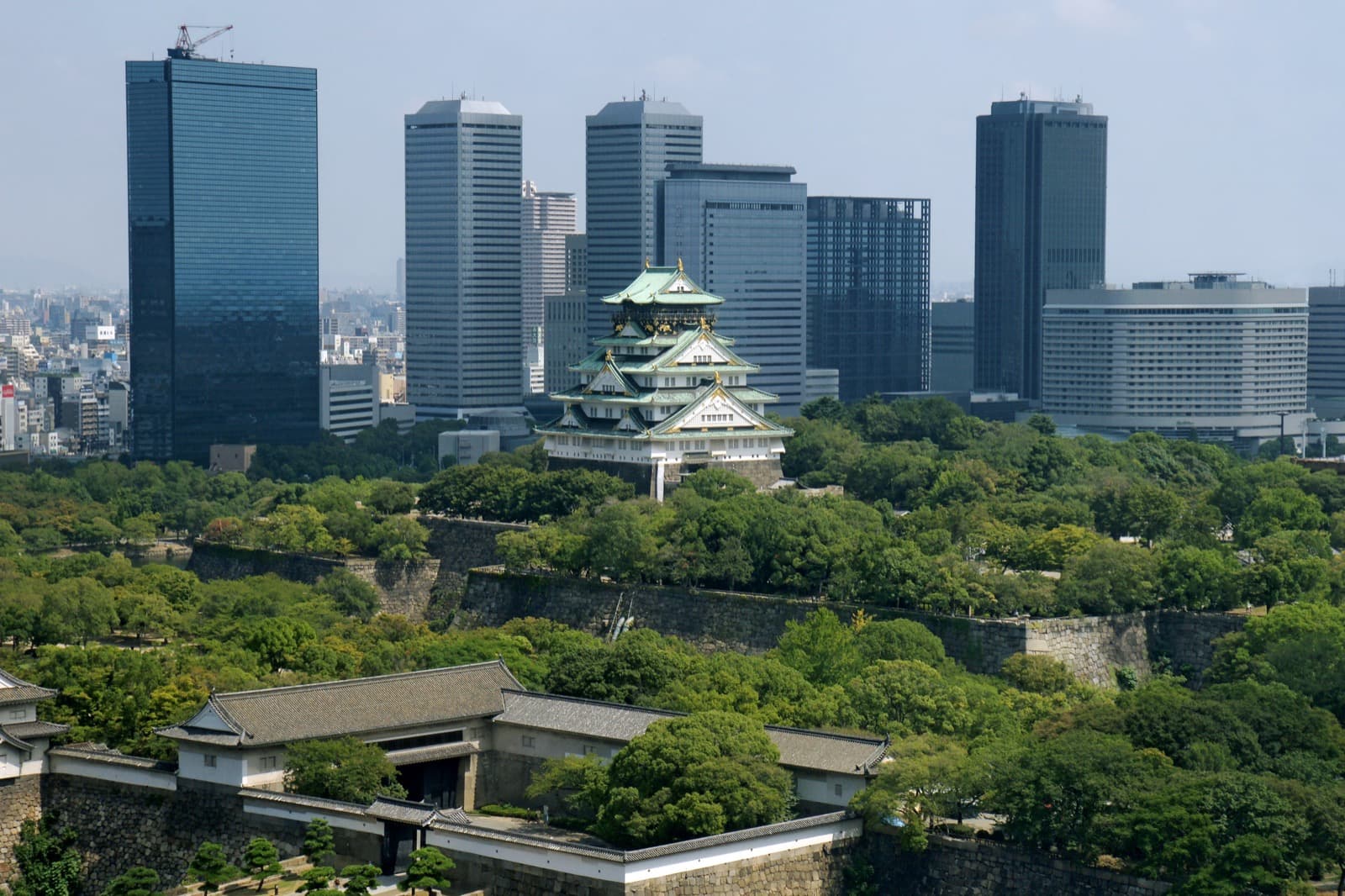
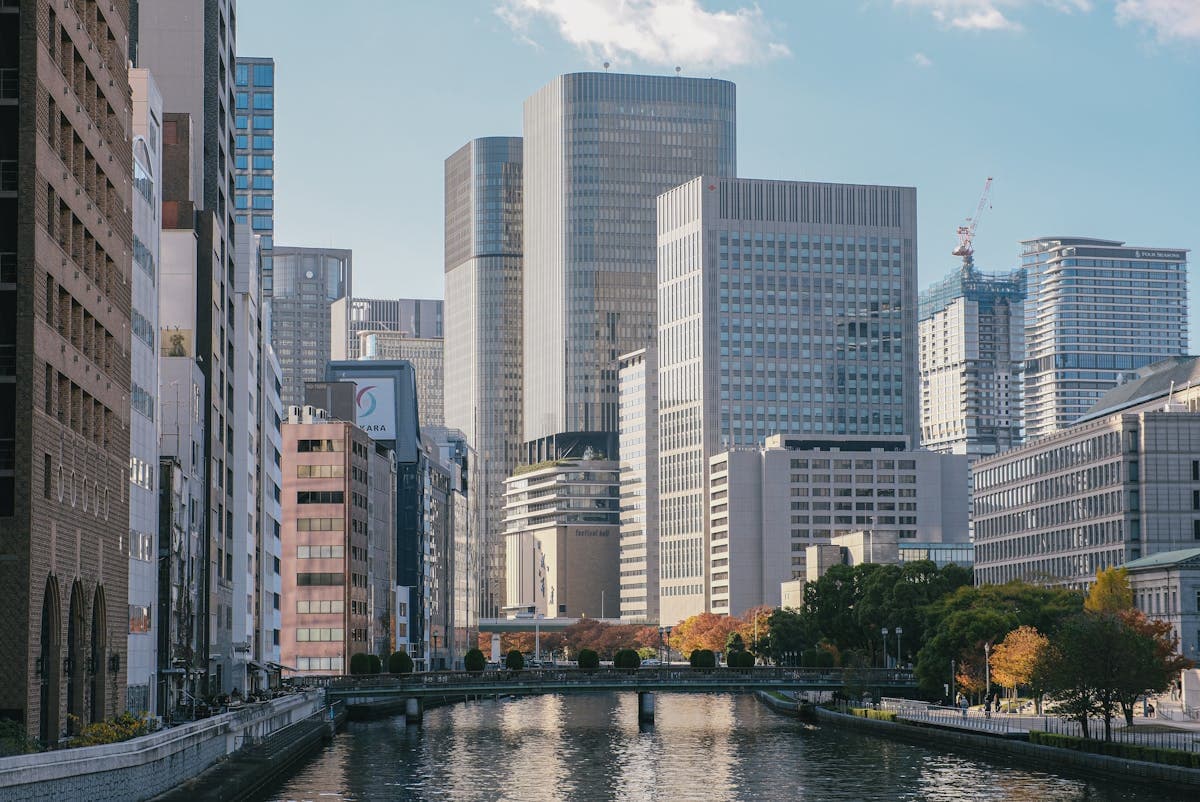
This view captures what makes Osaka special: a 400-year-old castle and a modern skyline standing side by side as if they've always belonged together.
Before you go: Visit Japan Web, ICOCA, eSIM, cash
- Visa: 90-day visa-free for most passports. Visit Japan Web (vjw-lp.digital.go.jp) pre-registration → single-QR entry at Kansai.
- Transit card: Osaka's equivalent of Suica is ICOCA. Issue one at Kansai Airport ticket machine (¥500 deposit + ¥1,500 starter). iPhone users can add ICOCA directly to Apple Wallet, no physical card needed.
- eSIM: $8–10 for 5GB/5 days via Airalo.
- Cash: Keep ¥30,000 on hand. Tsuruhashi market, old-school okonomiyaki joints, and yatai-style spots are cash-only.
Airport ↔ Hotel by Neighborhood (Both Directions)
This is the first thing that trips people up in Osaka. Kansai International Airport (KIX) is far from the city, so what you take depends on which neighborhood your hotel is in. Just read your row (as of 2026-08).
| Hotel area | Getting there (airport → hotel) | Getting back (hotel → airport) |
|---|---|---|
| Namba · Shinsaibashi · Dotonbori | Nankai Rapi:t 34 min ¥1,490 (reserved) / Airport Express 45 min ¥970 | Namba Station, same Nankai line |
| Umeda · Osaka Station | JR Haruka 50 min ¥1,910 / limousine bus ¥1,800 (nonstop) | Osaka Station (Haruka uses the Umekita underground platforms) · limousine |
| Shin-Osaka | JR Haruka direct, ~50 min | Haruka |
| Tennoji | JR Haruka 35 min ¥1,710 / JR Kanku Rapid, direct (cheaper) | Tennoji Station |
| USJ (Universal City) | Limousine direct (few runs, check the timetable) or JR (transfer to the Yumesaki Line at Nishikujo) | Limousine (luggage) · check the timetable |
How to actually board
The ticket step is where first-timers get stuck. In short:
- Tap-and-go vs. separate ticket. The Airport Express and JR local/rapid trains: tap your ICOCA and go. Rapi:t and Haruka can't be ridden on ICOCA alone; you need a separate limited-express ticket (the base fare can go on ICOCA). Buy Rapi:t at the Nankai counter/machine, Haruka at the JR counter. If Rapi:t is sold out, just switch to the Airport Express on the same floor.
- Where the station is. Kansai Airport Station is across the 2nd-floor walkway from Terminal 1; the JR and Nankai gates sit side by side there. Follow the signs.
- Luggage and budget. Heavy bags → the transfer-free Rapi:t or limousine. Cheapest → Airport Express ¥970.
The way back matters more
International flights want you at the airport 3 hours before departure. From Namba that's 34 minutes on Rapi:t plus check-in and security, so leave your hotel at least 4 hours before the flight. For a pre-dawn flight, check first departures: the Nankai Airport Express runs from Namba around 05:00, the Umeda limousine from about 04:50. Earlier than that, it's a taxi.
The 4 days at a glance
Drop a one-liner into Tripop, like "Build me an Osaka 4-day itinerary with Dotonbori, Osaka Castle, USJ," and a time-blocked plan appears in about 1-3 minutes.
Day 1: Arrival + Dotonbori at night
| Time | Event / Note |
|---|---|
| 10:30 | Arrive Kansai (KIX) |
| 11:30 | Visit Japan Web QR + bag claim~1 hour |
| 13:00 | Nankai Rapi:t to Namba34 min, ¥1,490 |
| 14:00 | Check in: Shinsaibashi hotel |
| 15:00 | 551 Horai pork buns¥460 for 2 pcs, Exit 8 Shinsaibashi |
| 16:00 | Shinsaibashi-suji shopping arcadeUNIQLO, GU, Tokyu Hands |
| 18:00 | Ebisubashi Bridge + Glico signIconic photo spot |
| 18:30 | Dinner, Ichiran Dotonbori¥990 solo ramen booth |
| 20:00 | Dotonbori canal walk + Kuidaore street |
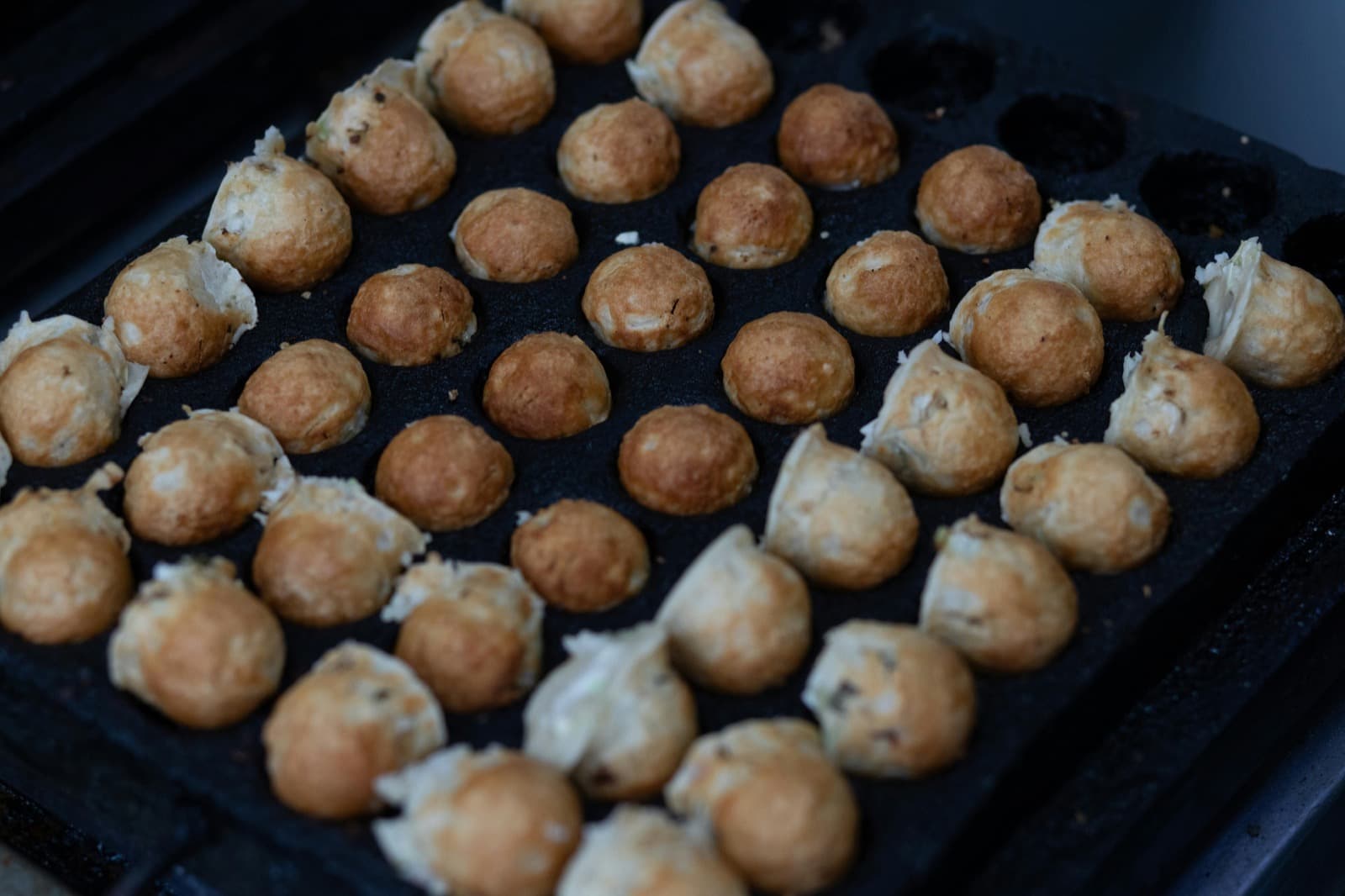
| 21:00 | Takoyaki, Takoya Doraku Wanaka8 pcs ¥600 |
| 22:00 | Back to hotel |
Tip. Book a hotel 5 minutes from Shinsaibashi or Namba station. Dotonbori is a 10-minute walk; Osaka Castle and Umeda are 10-minute subway rides. Single hotel for the whole trip, no luggage relocation. 551 Horai pork buns (buta-man) are Osaka's signature street snack at ¥460 for 2; eat them hot, right outside the shop.
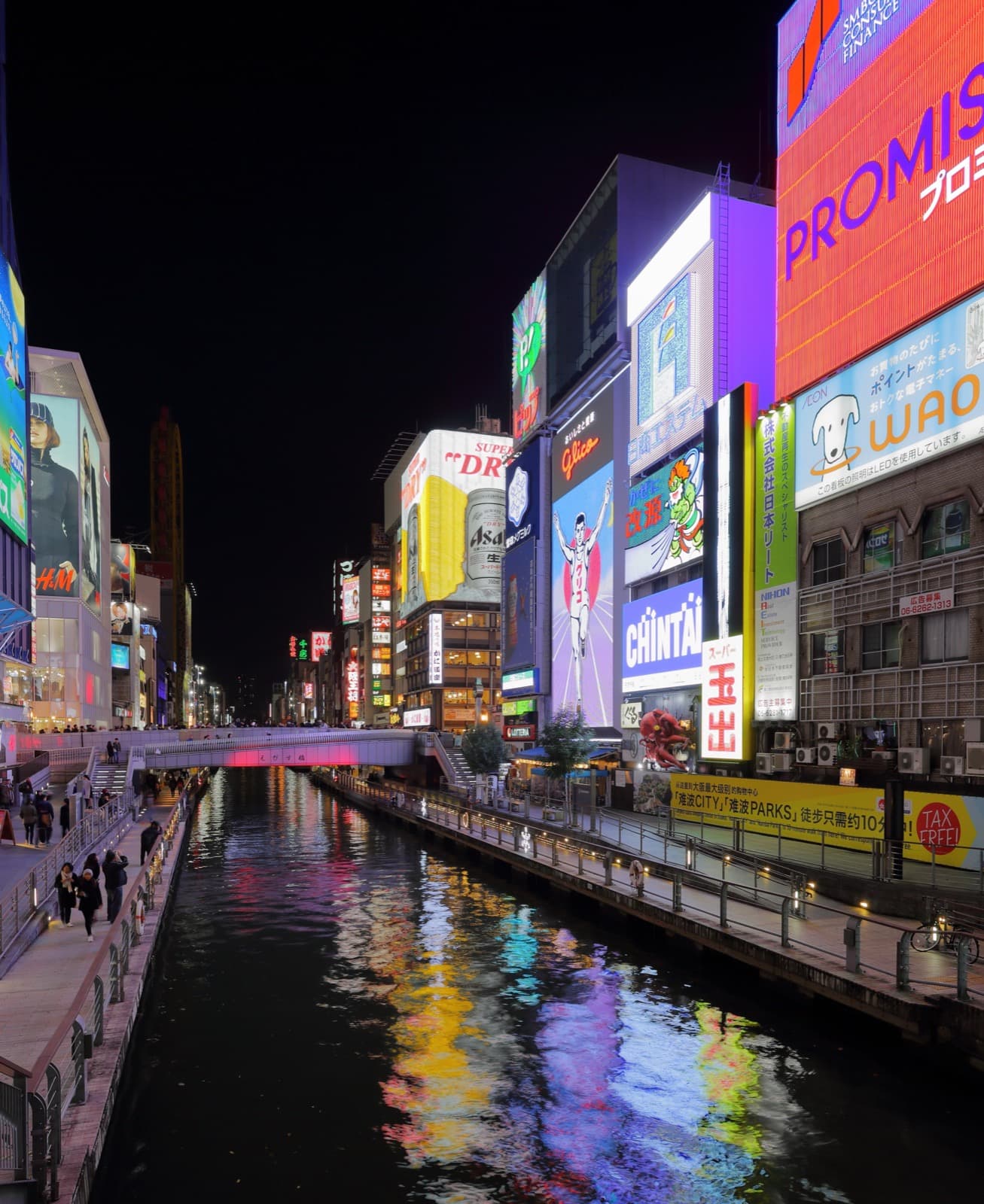
The Glico running man has watched over Dotonbori since 1935. By night, the neon stack rises four stories above the canal on both banks, and the whole scene doubles in the water below. You'll understand immediately why Osaka is called Japan's kitchen.
Dotonbori main branch, 2-minute walk from Ebisubashi. Solo dining booth with an order form: choose broth richness, noodle firmness, green onion amount. Signature tonkotsu ¥990. Open 24 hours. Perfect stop after the Glico sign photo.
Day 2: Osaka Castle + Shinsekai + Umeda Sky Building
| Time | Event / Note |
|---|---|
| 08:30 | Hotel breakfast or konbini |
| 09:30 | Arrive Osaka Castle ParkTenmabashi or Morinomiya station |
| 10:00 | Osaka Castle keep entry¥1,200 adults, 9:00–17:00 (open daily) |
| 12:00 | Lunch near the castleUdon / curry ¥1,000–1,500 |
| 13:30 | Tennoji → ShinsekaiMidosuji line |
| 14:00 | Tsutenkaku Tower¥900, best views mid-afternoon |
| 15:00 | Kushikatsu Daruma, Shinsekai branchSkewers ¥220–440 each |
| 17:30 | Move to UmedaMidosuji line |
| 18:00 | Umeda Sky Building Floating Garden¥2,000, open until 22:30 |
| 20:00 | Dinner, Okonomiyaki Fukutaro¥1,500 per person |
| 21:30 | HEP Five + Hankyu Umeda + LOFT |
Tip. Osaka Castle keep (¥1,200) is least crowded on weekday mornings. Open daily; closed only Dec 28–Jan 1 (Mondays included). Umeda Sky Building (¥2,000): enter 1 hour before sunset to catch daylight + golden hour + full night view in a single visit. Last entry at 22:00. Tsutenkaku (¥900) in Shinsekai is best mid-afternoon when queues are shorter.
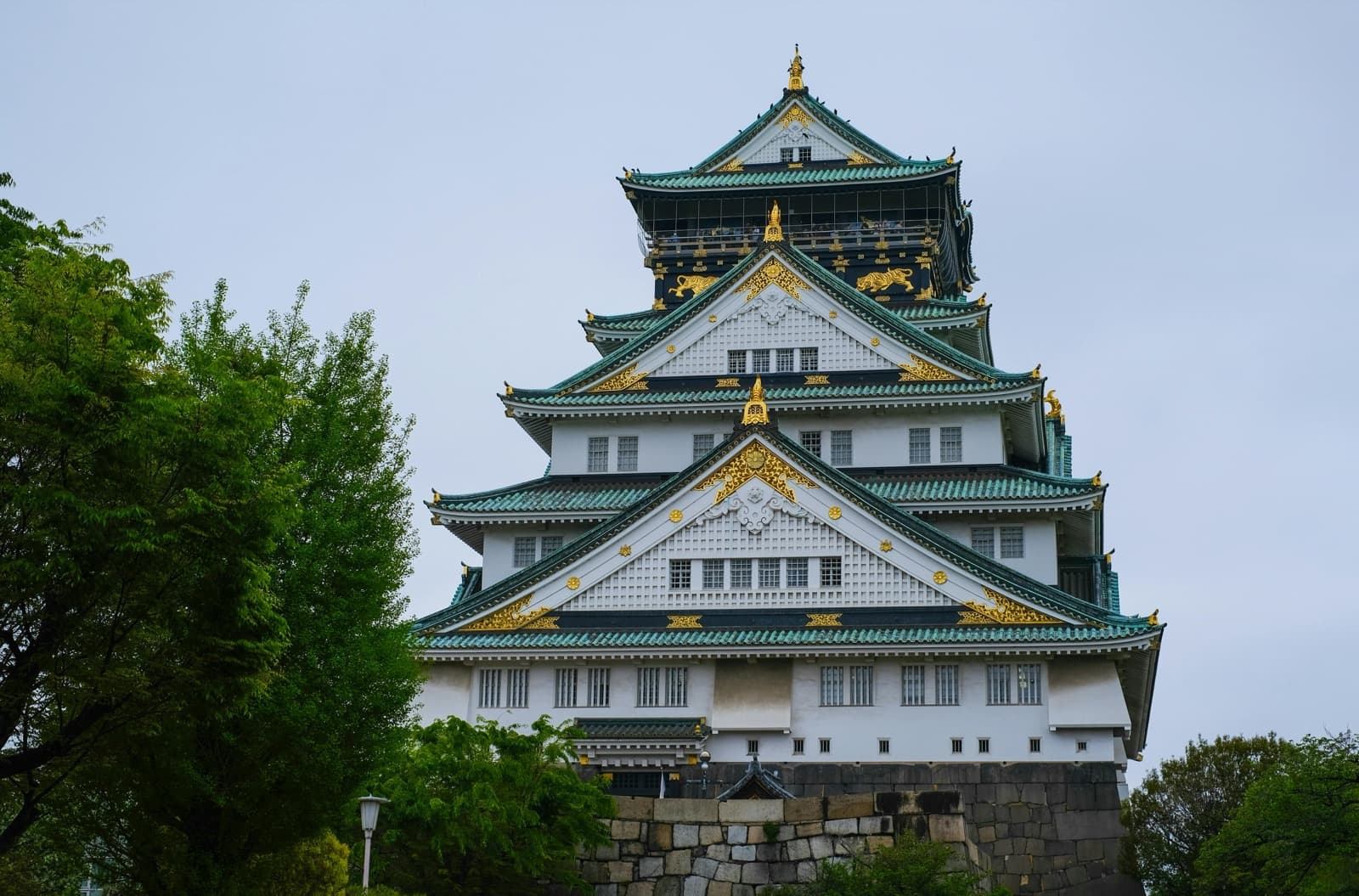
Built 1586, current structure reconstructed 1931. 8th-floor observatory with 360-degree city views. Admission ¥1,200. Hours 9:00–17:00 (last entry 16:30). Open daily, closed only Dec 28–Jan 1. 10-minute walk from Tenmabashi or Morinomiya station.
Read more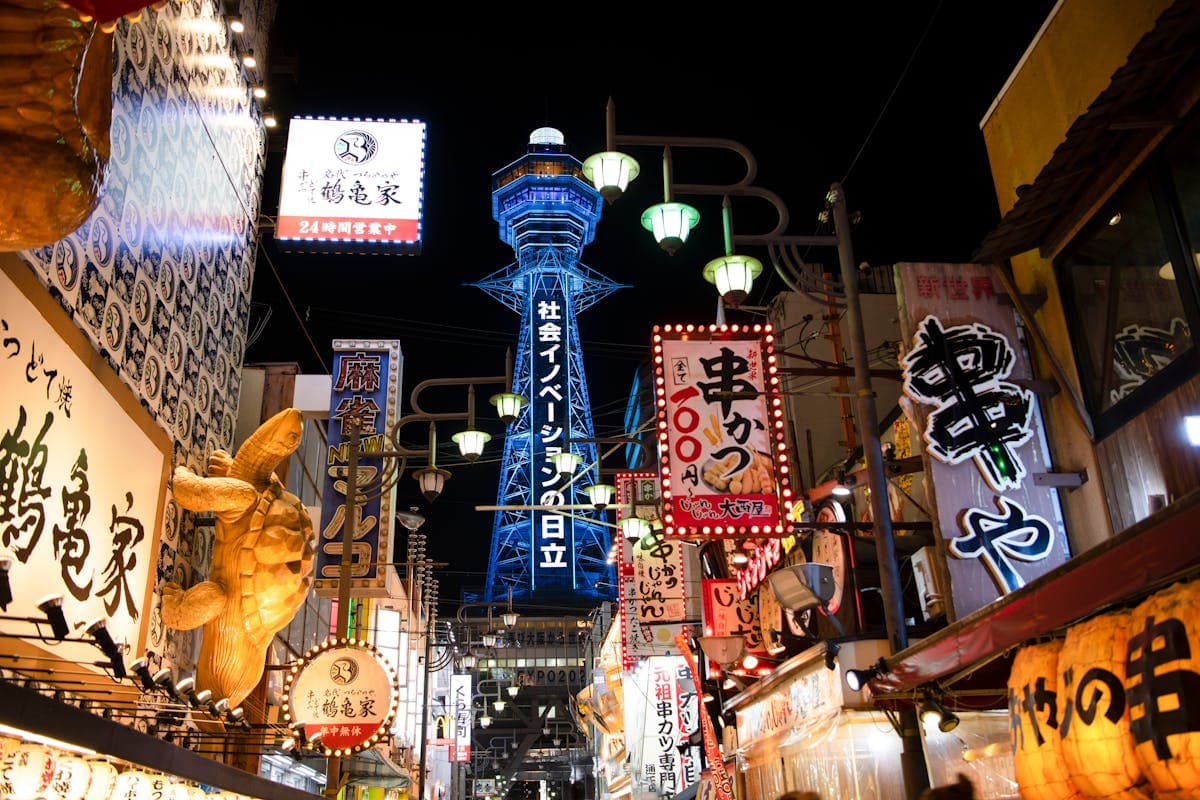
Shinsekai is Osaka's oldest entertainment district, unchanged in spirit since the 1950s. Tsutenkaku tower anchors the centre, and the streets around it are packed with kushikatsu (deep-fried skewer) restaurants with hand-painted signs and menu boards in katakana. Rougher around the edges than Dotonbori, and more interesting for it.
Est. 1929, Shinsekai flagship is the original branch. The house rule (you cannot dip a skewer twice) is famous throughout Japan. Pork, prawn, egg, and vegetable skewers ¥220–440 each. Lunch sets from ¥990. Open 11:00–22:30 (last order 21:30). 10-minute walk from Tennoji station.
Day 3: USJ or Kyoto/Nara day trip
Option A: Universal Studios Japan (USJ)
| Time | Event / Note |
|---|---|
| ~08:00 | Arrive USJ (Shinsaibashi → transfer to the Yumesaki Line at Nishikujo, ~30–40 min)Opens earlier in peak season; come earlier |
| 08:30 | 1-day Studio Pass¥8,600–10,900 (date-based) |
| 09:00 | Super Nintendo World, Mario KartArea Timed Entry Ticket required |
| 11:00 | Hogsmeade + butterbeer¥600 |
| 13:00 | Park lunch |
| 14:30 | Adventures, Minions / JawsUse Express Pass |
| 17:00 | WaterWorld live show4 shows daily, claim seat 30 min early |
| 19:00 | Night parade + fireworks |
| 21:00 | Back to hotel |
USJ reality ① Two ticket layers. One is the 1-day Studio Pass (admission), ¥8,600–10,900, priced by date. The other is the Express Pass, which skips lines and is separate: by number of attractions it splits into Express 4 (~¥12,000–19,000) and Express 7 (~¥19,000–28,000). Steep, but in peak season it saves your day.
② Super Nintendo World needs one more ticket. Area entry requires an Area Timed Entry ticket or a guaranteed-entry pass. Grab the timed-entry ticket in the USJ app the moment you enter; in peak season the morning slots sell out. Some Express Passes include a Nintendo World guarantee, but others (Variety, etc.) do not, so check the product name lists Mario Kart / Nintendo before buying.
③ Book ahead, compare on a platform. Buy tickets and Express Passes on the official USJ site/app, or get QR e-tickets on Klook or Trip.com. Platforms let you compare price and stock by date; popular-date Express Passes sell out as the day nears, so lock it in once your date is set.
④ Going in October = peak season. Mid-September to early November is Halloween season, USJ's busiest of the year. The park often opens earlier than the posted time, so check opening time in the app the night before and arrive 30–60 minutes early; otherwise the morning Nintendo timed-entry tickets go fast. At night zombies roam the streets (fine with a regular ticket), but the real horror mazes need a separate ticket or on-site timed entry, so plan for those if you want the scares, and with young kids or anyone who can't do horror, keep the day earlier and leave before evening.
Option B: Kyoto day trip (8 hours)
| Time | Event / Note |
|---|---|
| 08:00 | Shin-Osaka → Kyoto Shinkansen14 min, ¥1,420 |
| 09:00 | Fushimi Inari TaishaFree entry, thousands of torii gates |
| 11:00 | Gion, Sannenzaka / NinenzakaTraditional stone-paved streets |
| 12:30 | Lunch, Kyoto kaiseki or udon |
| 14:00 | Kinkaku-ji (Golden Pavilion)¥500 entry |
| 16:00 | Arashiyama bamboo grove + Togetsukyo Bridge |
| 18:00 | Back to Kyoto Station → Osaka |
How to choose. Families with kids → USJ. Couples / honeymooners / culture lovers → Kyoto. Indecisive? Half-day Nara (Nara Park deer) + half-day Kyoto is a practical hybrid. Both Fushimi Inari (free) and Kinkaku-ji (¥500) keep costs low on the Kyoto route.
Day 4 (Departure): Kuromon Market + duty-free + flight
| Time | Event / Note |
|---|---|
| 08:30 | Hotel breakfast + bag storage |
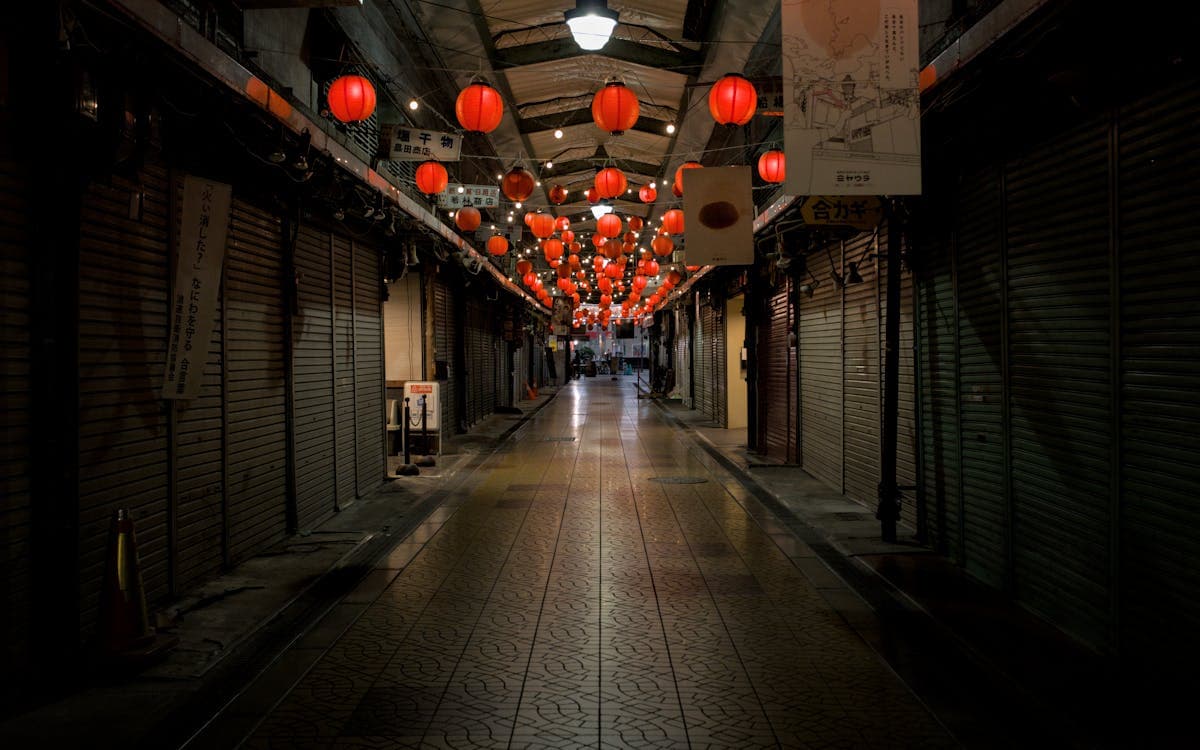
| 09:30 | Kuromon Market2-min walk from Nippombashi Station exit 10 |
| 10:00 | Street food, tuna sashimi, scallops, wagyu skewers¥1,000–2,000 each |
| 12:00 | Market sushi counter for lunch |
| 13:30 | Daimaru Shinsaibashi duty-freeCosmetics, OTC meds, snacks |
| 15:30 | Pick up bags + Nankai Rapi:t to KIX34 min, ¥1,490 |
| 16:30 | Airport + last duty-free |
| 18:30 | Departure |
Kuromon tip. Japanese locals call Kuromon "tourist Kuromon" and prefer Tsuruhashi for fresher fish at lower prices. But for first-timers who want the Japanese market atmosphere in the most accessible form, Kuromon delivers. Budget ¥3,000–5,000 for a full lunch plus 5 street-food samples.
Budget tracking: automatic yen conversion
Osaka prices run 10–20% below Tokyo on average. Tripop's expense tracker auto-converts every yen receipt to your home currency. One receipt photo → AI fills amount, currency, and category.
4-day Osaka budget per person (excluding flight + hotel):
- Food ~ 45% (ramen ¥990 / okonomiyaki ¥1,500 / dinner ¥3,000+)
- Activities ~ 25% (USJ + Osaka Castle + Umeda Sky)
- Transit ~ 10% (ICOCA + Rapi:t)
- Shopping ~ 20% (duty-free cosmetics + UNIQLO + Shinsaibashi)
Per-person total ~ $370–520 (excluding flight + hotel). Add ~$75 for USJ.
Companion sharing: essential for family trips
Osaka is one of the top family-trip destinations from Korea and growing in popularity for Western families thanks to USJ. With 4 people splitting up, group chats blow up with "where are you?" messages. Tripop's invite feature puts everyone on the same plan, with changes syncing automatically. Parents without the app access it in any browser at tripop.app/web.
AI travel assistant: even in Osaka
You: Is the Umeda Sky Building line long tonight?
AI:  Weekdays 17:30–18:30 → 20–40 min wait. Buy online to skip the queue.

You: Best takoyaki and okonomiyaki spots near Dotonbori?
AI:  Takoyaki, Takoya Doraku Wanaka (8 pcs ¥600, 3-min walk from Ebisubashi)
     Okonomiyaki, Kiji Umeda main branch (from ¥1,000)
Osaka packing checklist
- Visit Japan Web QR (register 48h before departure)
- eSIM activated before landing
- Type A 100V adapter (Japan voltage differs from Korea)
- ICOCA card (issue at Kansai Airport)
- ¥30,000 cash (markets + old-school ramen shops are cash-only)
- Folding umbrella (May–June, Sept–Oct rainy season)
- Comfortable walking shoes (USJ or Kyoto = 11,000+ steps)
Wrap-up
4 days in Osaka runs Dotonbori → Osaka Castle + Umeda → USJ or Kyoto → Kuromon + flight. Cheaper than Tokyo, easier logistically (single hotel), food-focused, and arguably the most fun-per-dollar prefecture in Japan.
- Airport to city: Rapi:t 34 min (Namba) or Haruka 35–50 min (Umeda / Shin-Osaka)
- Key prices verified 2026: Osaka Castle ¥1,200 / Umeda Sky ¥2,000 / Tsutenkaku ¥900 / Kinkaku-ji ¥500
- Tripop AI builds this skeleton in 1-3 minutes; drop in your flight + hotel PDFs and they link to the right days automatically
Build this Osaka trip in Tripop in 1-3 minutes
No need to copy this itinerary by hand. Type "Osaka 4 days, Dotonbori + Osaka Castle + USJ" into Tripop and a full time-by-time plan generates automatically; drop in your flight PDF and it organizes the vouchers too. Yen budget tracker, checklist, and companion sharing all in one app.
- Download on the App Store
- Get it on Google Play
- Start on the web (no install needed, works on any browser)
Photos: Pexels (Tamjeed A: Dotonbori canal, Hiroko Nakagawa: Osaka Castle park, David Dibert: Shinsekai Tsutenkaku, Huy Phan: Osaka city, Julien: Kuromon market), Pexels License.