
Among Korea's package-tour lineups, Spain plus Portugal is the steady seller right behind the classic Western Europe circuit. This is that circuit rebuilt as an independent traveler's route over 8 nights and 10 days. The skeleton is simple: two nights each in Barcelona, Madrid, Lisbon and Porto, moving east to west in one direction with no backtracking. There are three big city-to-city moves, plus one day-trip round trip each to Toledo and Sintra.
The whole itinerary at a glance
| Day | City | Route | Travel |
|---|---|---|---|
| Day 1 | Incheon → Barcelona | Evening arrival, around the hotel | Nonstop, about 14 hours |
| Day 2 | Barcelona | Sagrada Família, Gothic Quarter, La Boqueria | Metro, on foot |
| Day 3 | Barcelona → Madrid | Park Güell in the morning, high-speed train after | AVE, about 3 hours |
| Day 4 | Madrid | Prado Museum, Royal Palace, Sol and Plaza Mayor | On foot |
| Day 5 | Madrid → Lisbon | Half-day Toledo in the morning, evening flight | Train 30 min each way + flight 1 h 20 min |
| Day 6 | Sintra day trip → Lisbon | Pena Palace in the morning, Alfama after returning | Train 40 min each way |
| Day 7 | Lisbon → Porto | Belém district in the morning, afternoon train north | Train, about 3 hours |
| Day 8 | Porto | Livraria Lello, Ribeira, wine cellars, cruise | On foot |
| Day 9 | Depart Porto | Easy morning, then the flight home | 1 connection |
| Day 10 | Arrive Incheon |
The rule behind the route. This itinerary sees Spain first and pushes west into Portugal, so you never cover the same ground twice. Two nights per city still means only about one full sightseeing day in each, and deciding what that day goes to is the real job of this article. Each travel day (Days 3, 5 and 7) carries one morning sightseeing block, and all three follow the same rhythm: one sight in the morning, the move in the afternoon. Break that rhythm and everything behind it slips, so put only one early-slot reservation into a travel-day morning, and leave your luggage at the hotel to collect on the way to the station.
Before you go: entry (EES, ETIAS), currency, time zones
- Visa and entry: A Korean passport is visa-free in Schengen (90 days within any 180-day period, all Schengen countries combined). The passport must be valid at least 3 months beyond your Schengen departure date and issued within 10 years. The EES, started October 12, 2025, has been fully in force since April 10, 2026: you register fingerprints and a facial image at your first entry point (Barcelona), and later crossings are matched against that record. Queues can run long in peak season, so keep your arrival-day plans loose. ETIAS is not yet in operation as of August 2026; the official target is a start in the last quarter of 2026 with no exact date announced, so check the EU's official guidance before departure.
- Currency: Both countries use the euro (EUR). Cards are accepted almost everywhere, so carry only a little cash and favor a no-foreign-fee travel card.
- Time zones: Spain is 7 hours behind Korea (during daylight saving), and Portugal is one more hour behind Spain. With no border check, it is easy to miss that the clock changed.
- Flights: Book an open-jaw (multi-city) ticket into Barcelona and out of Porto and the backtracking disappears. Barcelona has a nonstop from Incheon; from Porto you fly home via a European hub.
- Connectivity: One multi-country Europe eSIM covers both countries.
What to see in each city
The four cities have sharply different characters: Barcelona is Gaudí, Madrid is museums, Lisbon is hills and the Age of Discovery, Porto is the river and wine.
Barcelona, two days of Gaudí
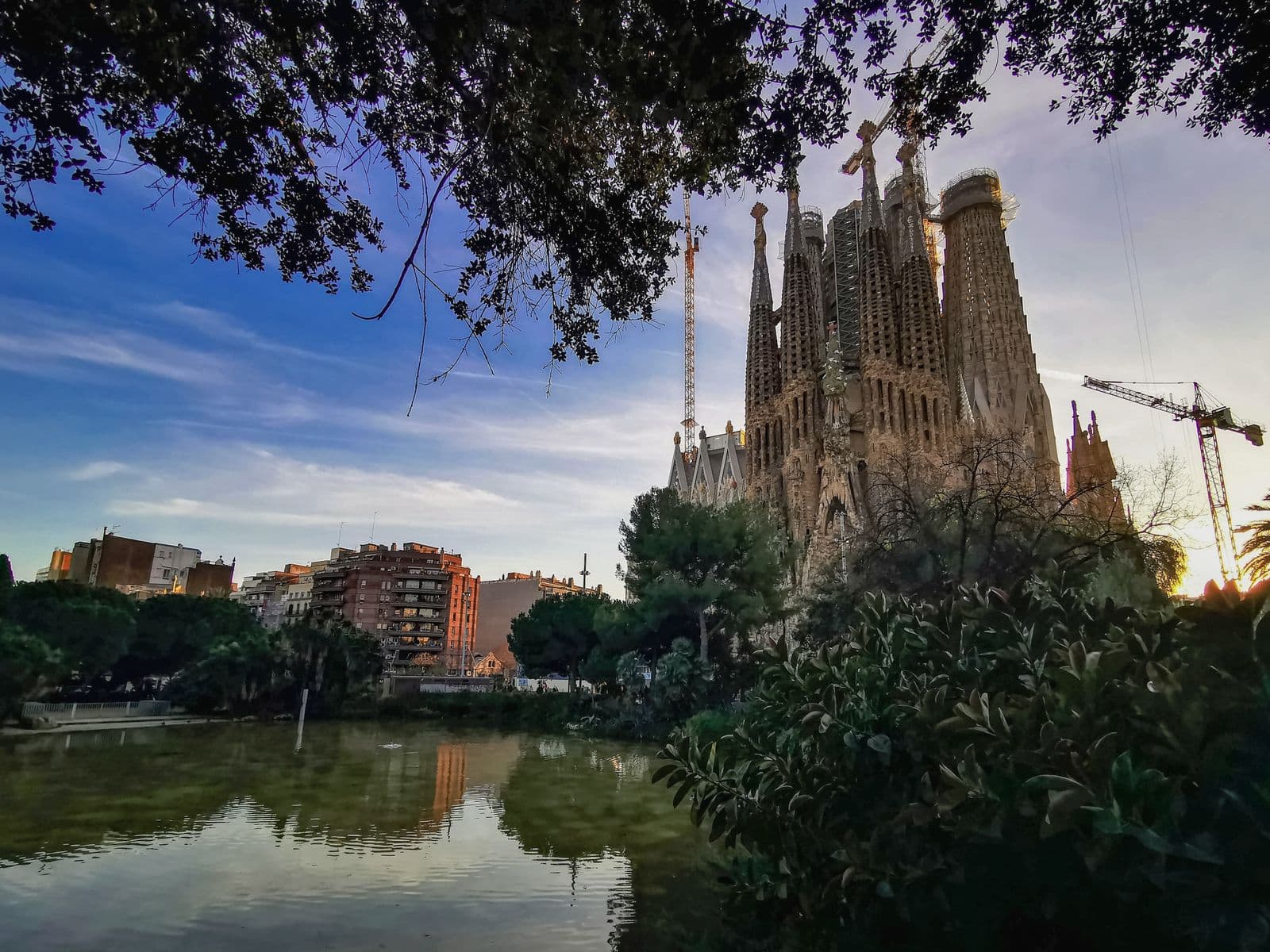
Sagrada Família Under construction since 1882, the basilica saw its central spire, the Tower of Jesus Christ, blessed on June 10, 2026, the centenary of Gaudí's death, making it the world's tallest church at 172.5 m. Work on the Glory Façade continues, so you will still see cranes, but ticket competition has only intensified. Entry is timed: €26 basic, €36 with tower access. Book the moment your dates are fixed.
Park Güell Gaudí's park of mosaic lizards and rippling benches. Admission is €18 (as of 2026, up from the earlier €10) and hourly entries are capped. The central terrace overlooking the city is the signature spot.
Gothic Quarter and La Boqueria Narrow medieval lanes, the cathedral, and the market off La Rambla. Fresh juice and jamón skewers make an easy lunch; the crowds draw pickpockets, so wear your bag in front.
Madrid, two days of museums
Prado Museum The home of Spanish painting, holding Velázquez's Las Meninas and Goya's Black Paintings. Admission is €15, but Monday to Saturday 6 to 8 pm and Sundays and holidays 5 to 7 pm are free. The free window draws very long lines, so see it properly on a paid daytime visit and save the free slot for a short return.
Royal Palace of Madrid One of Europe's largest palaces at some 3,000 rooms. Basic entry is €18; the Monday-to-Thursday evening free window covers EU citizens and residents and similar categories, so most Korean travelers do not qualify. Almudena Cathedral and the Sabatini Gardens next door round it into a half-day block.
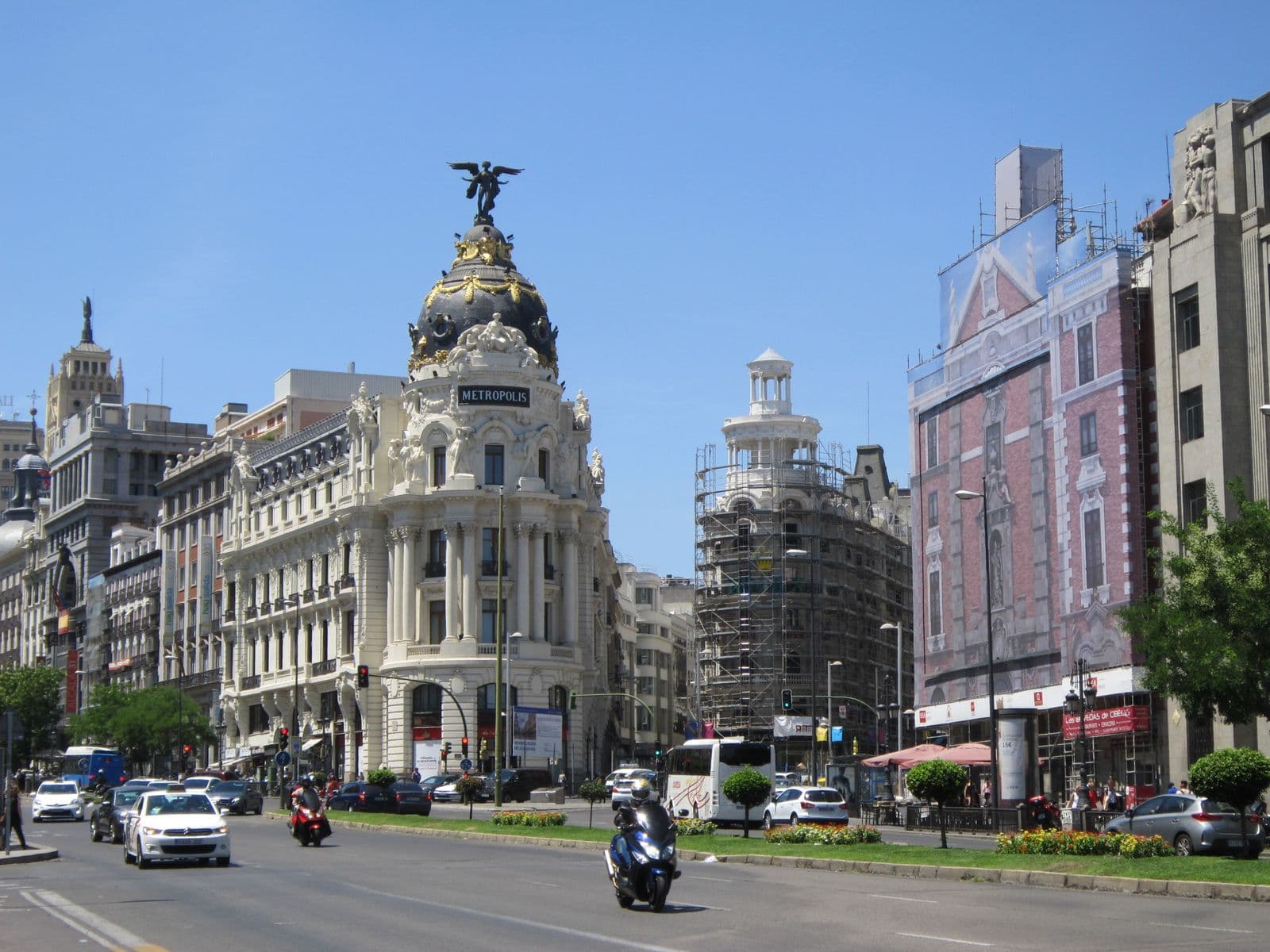
Sol, Plaza Mayor and Gran Vía Madrid's central axis. Spain's kilometre zero marker sits in Puerta del Sol, and after dark the lights of Gran Vía plus a plate of churros close the day well.
Toledo (half day) The old capital where three religions layered their monuments, about 30 minutes from Atocha by high-speed train plus a 20-minute walk from the station to the old town. The cathedral and the Tagus viewpoints fill a half day; note the cathedral is closed to visits on Sunday mornings, so check the day of the week. On this route the working plan is: out on an early Day 5 train, back in Madrid by around 1 pm, collect your bags from the hotel, and leave for the airport before 3 pm for the evening flight to Lisbon.
Lisbon, two days of hills and the Age of Discovery
Jerónimos Monastery A Manueline masterpiece built to honor Vasco da Gama's sea route to India. Entry €18, timed slots, and closed Mondays, so check the day of the week first. The carved cloister alone absorbs an hour.
Belém Tower The 16th-century fortress guarding the Tagus mouth reopened on May 27, 2026 after more than a year of restoration. Entry is €15 with timed slots and a sharply capped daily quota, so walk-up tickets are effectively out. Like Jerónimos it closes on Mondays; since this route puts Belém on the morning of Day 7, swap Days 6 and 7 if that day is a Monday. That moves Sintra onto the travel-day morning, which only works with the first Pena slot booked and your luggage stored at the hotel.
Pastéis de Belém The original egg-tart bakery, working from the monastery's recipe since 1837. It sits right next to Jerónimos, so it slots naturally into the Belém circuit. Cinnamon dusted over a tart still warm from the oven is the way it is eaten.
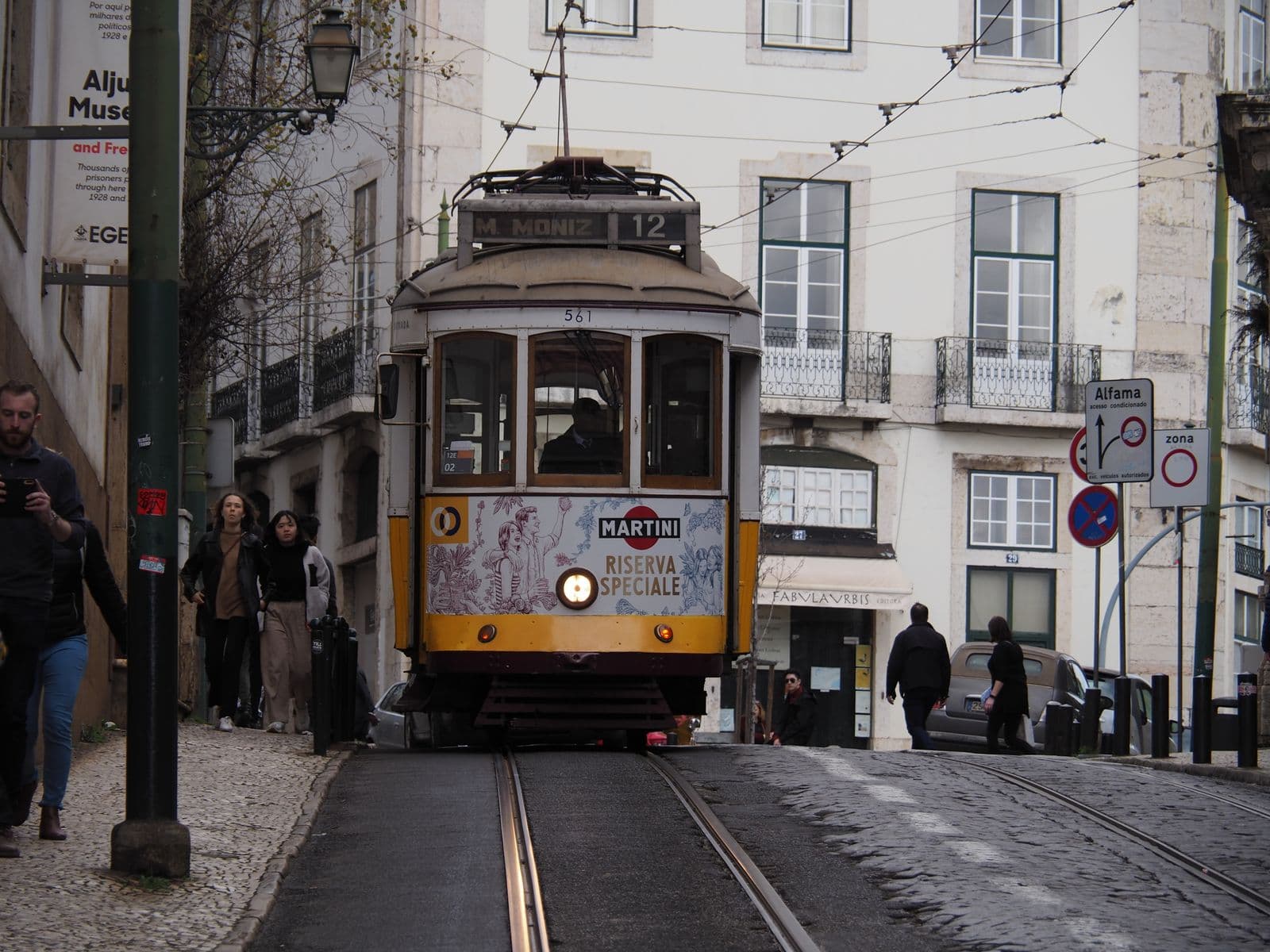
Alfama and São Jorge Castle Lisbon's oldest hillside quarter. Yellow trams squeezing up the lanes are the city's signature image; the famous No. 28 draws long daytime queues. In the evening, pair bacalhau (salt cod) with a fado house dinner. This quarter's turn comes after you return from Sintra on Day 6.
Sintra, built around Pena Palace
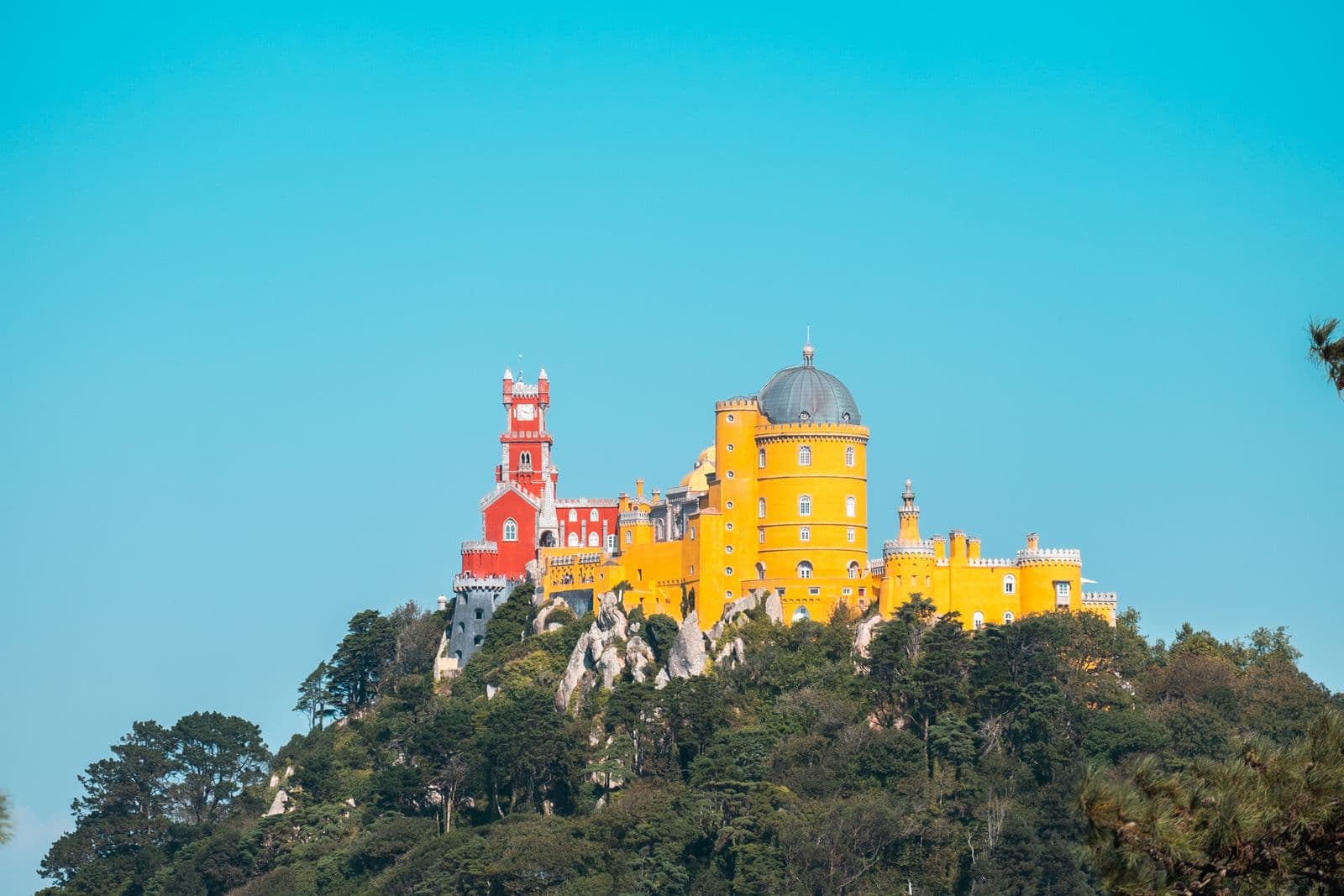
Pena Palace A 19th-century Romanticist palace of red towers and yellow ramparts above the forest. The park-plus-palace ticket is €20 with timed entry, and arriving after your slot can mean being refused entry. From Lisbon's Rossio station the commuter train to Sintra takes about 40 minutes (€2.55 one way plus a €0.5 reloadable card); it has no seat reservations, so you just top up the card at the station. At Sintra station you switch to the 434 loop bus, whose ticket is separate from the rail card and bought on the spot. In peak season the bus queue alone can eat tens of minutes, so the method is to book an early-morning slot and budget the 30-minute walk from the park gate up to the palace. Add Cabo da Roca or Quinta da Regaleira and your Alfama evening disappears; on a first visit, cut it at Pena plus Sintra's old town.
Porto, two days of river and wine
Livraria Lello The 1906 bookshop famed for its neo-Gothic wooden staircase. The official ticket-voucher is €15.95, credited if you buy one of the shop's own Edições Livraria Lello editions. By midday the queue wraps the block, so book the slot right after opening.
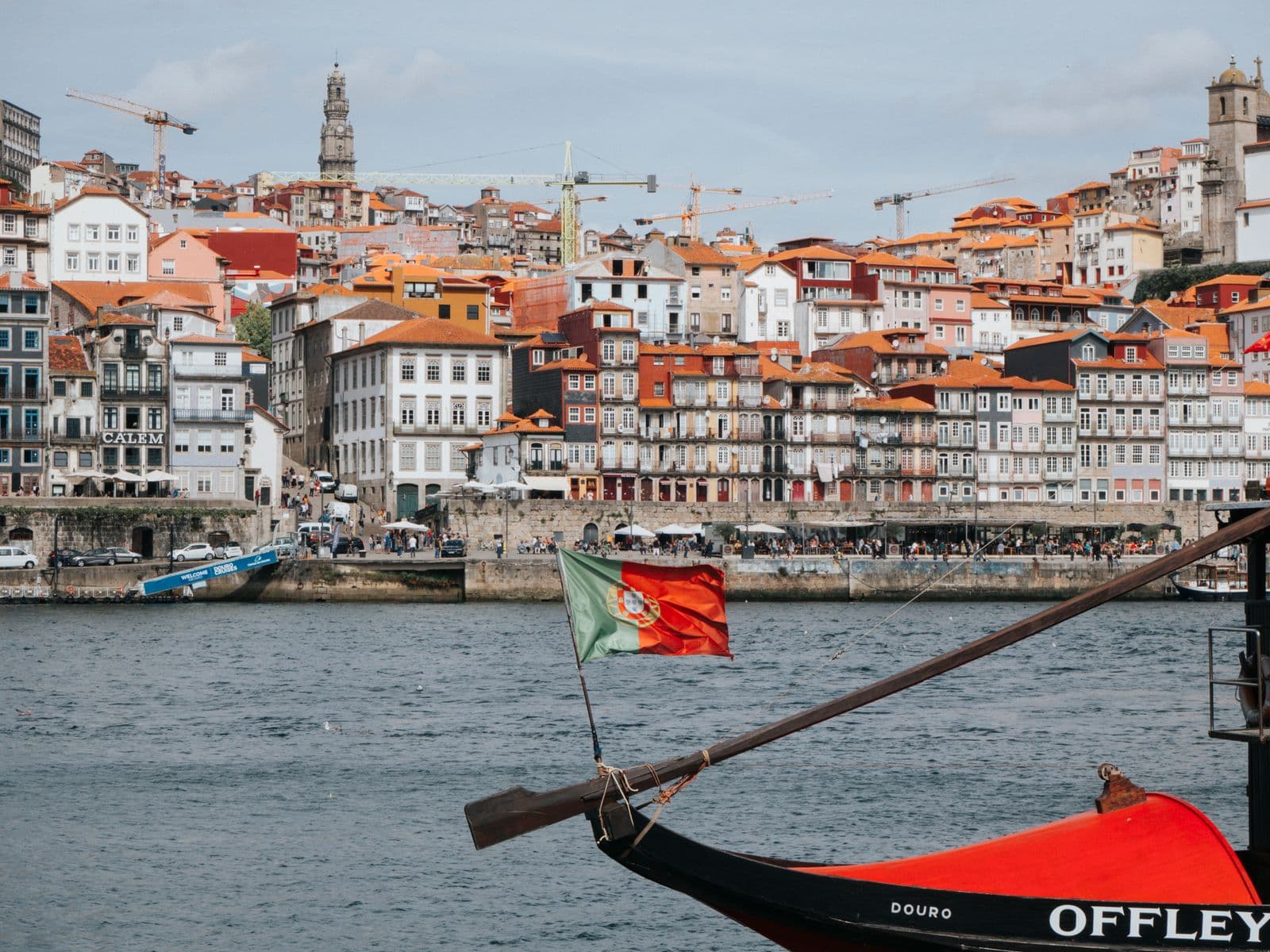
Dom Luís I Bridge and Ribeira A two-deck iron bridge designed by Théophile Seyrig, once Eiffel's business partner. The upper deck is walkable, and the view of Ribeira's orange roofs and the night lights from the Gaia hillside across the river is Porto's best-known scene.
Port wine cellar tours Across the bridge, the Vila Nova de Gaia riverfront lines up port lodges like Cálem and Sandeman. A tour with two or three tastings runs about €25 and takes 1 to 1.5 hours, an easy afternoon block. English sessions are frequent; confirm the language when you book.
Douro river cruise A 50-minute boat run past the six bridges, around €20. It sweeps both riverfronts, Ribeira and Gaia, from the water, which makes it a fitting last block to wrap up a city you have covered on foot.
Getting between cities: booking is half the trip
| Leg | Mode | Time | Per person (promo to walk-up) |
|---|---|---|---|
| Barcelona → Madrid | High-speed rail (AVE, iryo, Ouigo) | About 2 h 30 min to 3 h | €9~70 |
| Madrid → Lisbon | Flight | About 1 h 20 min | €40~100 + baggage |
| Lisbon → Porto | Alfa Pendular, Intercidades | About 2 h 50 min to 3 h 20 min | €15~36 |
Barcelona → Madrid Alongside state operator Renfe's AVE, competitors iryo and Ouigo run the same line, so early bookings surface promo seats starting in single-digit euros. Buy late and it can pass €70; no other leg swings more on booking timing. Promo fares are usually non-refundable and non-changeable, so buy once your dates are locked. Spanish high-speed stations X-ray luggage before the platforms and close boarding shortly before departure, so arrive at Sants or Atocha 30 minutes ahead.
Madrid → Lisbon No direct train links the two capitals. The roughly 1 h 20 min flight is the answer, and on landing the clock moves back one hour. Low-cost base fares include no checked bag, and a suitcase adds €30~50 each way, so compare fares with luggage included. From Lisbon airport the metro reaches the center in about 30 minutes (€1.9 a ride plus a €0.5 reloadable card).
Lisbon → Porto The Alfa Pendular high-speed service takes about 2 h 50 min; the full second-class fare is around €36 and promo fares start at €15 but sell only 5 to 60 days ahead and are non-refundable. Lisbon's departures originate at Santa Apolónia station on the east side of the center and call at Oriente, so from a Baixa hotel Santa Apolónia is the closer boarding point.
Airports From Barcelona airport, the Aerobus (about €7.5 one way) reaches Plaça de Catalunya in about 35 minutes, and the metro connects to Sants station for the Madrid train. On departure day in Porto, metro line E runs from the center to the airport in about 30 minutes (Z4 ticket €2.3 plus a €0.6 card).
Where to stay With this much moving, hotel location is half the route. Barcelona: Plaça de Catalunya to Eixample (the Aerobus terminus and the sightseeing axis). Madrid: Sol to Gran Vía (the walking axis with easy Atocha access). Lisbon: skip hilltop Alfama for flat Baixa to Avenida (suitcases and station access). Porto: around São Bento station and Avenida dos Aliados. The Ribeira riverfront and Alfama look wonderful and fight your suitcase up stone steps.
Adjust it to your travel style
The same eight nights bend differently depending on who is traveling and why.
| Style | Day to change | Take out | Put in | Why |
|---|---|---|---|---|
| Food-first | Day 4 afternoon, Day 8 evening | Royal Palace interior | Mercado de San Miguel; a francesinha and a second cellar in Porto | The palace's scale reads from the square outside, but Madrid's market and Porto's wine lodges only deliver once you are inside eating |
| Honeymoon or anniversary | Day 6 | The Sintra round trip | A slow Lisbon day, plus a Day 8 sunset cruise in Porto | The early Pena push and its bus queues are the trip's most tiring block; on a celebration trip, trading them for city walks and a Douro sunset returns more |
| Repeat visitors (know Barcelona) | Days 3~5 | One of Madrid's two days | An overnight in Seville (about 2 h 30 min from Madrid by high-speed rail) | On a second Spain trip, Seville's cathedral and Alcázar are the new card over the Prado, and the fast train makes the day split workable |
| Easy-pace | Day 5 | The Toledo half-day round trip | A Retiro Park walk and the Prado's free window | By day four the travel fatigue starts to bite; dropping the round trip and walking the city keeps the remaining five days alive |
The 8-night, 10-day budget, per person
Based on twin-share and departure from Incheon. It moves with the euro (about 1,600 KRW to the euro as of August 2026) and the season. Figures below are in KRW, where 만 means 10,000 KRW.
| Item | Budget | Standard | Comfort |
|---|---|---|---|
| Flights (multi-city) | 120만 | 160만 | 210만 |
| Hotels, 8 nights, per person | 60만 | 110만 | 170만 |
| Inter-city and local transport | 25만 | 35만 | 45만 |
| Admissions and tours | 20만 | 35만 | 50만 |
| Food, 9 days | 45만 | 65만 | 90만 |
| Total | about 270만 | about 405만 | about 565만 |
Transport covers the two rail legs and one flight plus the Toledo and Sintra round trips, airport links and low-cost baggage fees. Admissions add up the paid sights in this article (Sagrada Família €26~36, Park Güell €18, Prado €15, Royal Palace €18, Toledo cathedral, Jerónimos €18, Belém Tower €15, Pena €20, Lello €15.95) plus the cellar tour and cruise: doing them all lands at €200~230 per person, around 350,000 KRW. The budget tier assumes you take a few of them from the outside only. Food runs gentler than in France or Switzerland; a lunchtime menú del día (set course) settles at about €15.
Don't skip these
- Trains get cheaper the earlier you book; timed admissions sell out of the slots you want. Grab the promo rail seats and the Sagrada Família, Belém Tower and Pena slots first.
- Fly open-jaw (multi-city), into Barcelona and out of Porto, to erase the backtracking.
- Check your watch on arriving in Portugal. It is one hour behind Spain; booking-time mix-ups happen here.
- Jerónimos and Belém Tower close on Mondays. If Day 7 lands on a Monday, swap it with Day 6 (Sintra).
- One sight only on travel-day mornings, luggage at the hotel. Check out, store the bags, tour light, then collect them on the way to the station or airport.
- Be at the station 30 minutes early. Spanish high-speed stations screen luggage and close boarding early.
- Mind pickpockets. La Rambla, Puerta del Sol and Lisbon's trams are the hot spots. Bag in front; and since Spain requires foreigners to carry identification, keep your passport in an inside pocket rather than leaving it at the hotel.
In short
For Spain and Portugal in 8 nights and 10 days, the one-way westward line Barcelona (2 nights) → Madrid (2) → Lisbon (2) → Porto (2) is the most efficient shape.
- Entry: Schengen visa-free (90 days in any 180) + passport valid 3+ months + EES registration at first entry + ETIAS not yet in force (check before you go)
- Between cities: one high-speed train, one flight, one train. Only Madrid→Lisbon goes by air
- The Sagrada Família, Park Güell, Jerónimos, Belém Tower and Pena Palace are all timed-entry reservations; Jerónimos and Belém Tower close Mondays
- Both countries use the euro; Portugal runs one hour behind Spain
- Tripop keeps the city-by-city plans, trains and ticket vouchers in one place
Organize this Spain and Portugal trip in Tripop
Across four cities you stack up six train tickets and as many as eight timed admissions. Type one line into the Tripop app, "Spain Portugal 8 nights 10 days Barcelona Madrid Lisbon Porto", and a day-by-day skeleton takes shape; upload your flight, train and ticket PDFs and the vouchers sort themselves by city. A euro expense ledger and sharing with your companions, all in one app.
- Get it on the App Store
- Get it on Google Play
- Start right away on the web, on your PC with no install
What we verified
The day-by-day route in this article is a planning example. The admission fees and transport fares are values the Tripop travel desk checked against each venue's official site and booking pages on August 30, 2026. Europe's entry rules (EES in force; ETIAS start date unconfirmed), each sight's reservation rules and closing days, and train and air fares change with the season and exchange rates, so reconfirm them on the official sites before you leave. If a number here differs from what you find, it changed in between; let us know and we will fix it right away.
Images: Pexels (Mehmet Turgut Kırkgöz: the Sagrada Família in Barcelona, Lajos Kristóf Kántor: Gran Vía in Madrid, Theo Felten: an Alfama tram in Lisbon, Mo Eid: Pena Palace in Sintra, Natallia: Porto's Ribeira), Pexels License.