
West Europe is the trip you promise yourself at least once, the kind you save a long holiday like Chuseok for. This 3-country, 8-night, 10-day route fits Paris's Eiffel Tower, Switzerland's Jungfrau and Italy's Colosseum into one journey, laid out together with the inter-country transfers, the 2026 entry rules and each city's reservation requirements. Because it covers five cities in eight nights, a real forced march, the tricks for cutting travel time come first.
The whole itinerary at a glance
| Day | Country / City | Route | Travel |
|---|---|---|---|
| Day 1 | Depart Incheon | Overnight flight (1 night in the air) | Direct, about 12 to 14 hours |
| Day 2 | Paris, France | Eiffel Tower, the Seine, Champs-Élysées | Airport train |
| Day 3 | Paris | Louvre, Montmartre (or a half-day at Versailles) | Metro |
| Day 4 | Paris to Switzerland | Basel transfer, Lucerne | TGV + domestic train, about 5 hours |
| Day 5 | Interlaken, Switzerland | Climb to Jungfraujoch, Grindelwald | Mountain railway |
| Day 6 | Switzerland to Italy | Venice via Milan (travel day) | Train, 6 hours+ |
| Day 7 | Venice, Italy | San Marco, the Grand Canal, Burano | Water bus |
| Day 8 | Florence | The Duomo, the Uffizi, Piazzale Michelangelo | High-speed train |
| Day 9 | Rome | The Colosseum, the Roman Forum, the Trevi Fountain | High-speed train + metro |
| Day 10 | Depart Rome | Vatican in the morning, then fly home | Airport |
A note on the route. Because the plan covers five cities in eight nights, there are a lot of travel days. Day 4 (Paris to Switzerland) and Day 6 (Switzerland to Venice) effectively lose a whole day to getting there. In Rome, you have to split the Colosseum onto Day 9 and the Vatican onto the Day 10 morning to see both (doing them the same day is too much). If you want more breathing room, drop Venice or Switzerland and give that city an extra day.
Before you go: entry (EES, ETIAS), currency, flights
- Visa and entry: A Korean passport gets 90 days visa-free in the Schengen area. The passport must be valid for at least 3 months beyond your planned Schengen departure date and issued within the past 10 years. Since October 12, 2025 the EES has been in force, registering your fingerprints and face once at your first point of entry (Paris). France, Switzerland and Italy are all Schengen, so there is no border check when you move between them. ETIAS is due in the second half of 2026, and once it is in force you will need online approval before departure, so check.
- Currency: France and Italy use the euro (EUR); Switzerland uses the franc (CHF). Card payment is standard across Europe, so carry only a little cash and favor a card with no foreign transaction fee or a travel card.
- Flights: Booking multi-city (open-jaw), for example Paris in and Rome out, cuts out backtracking. A direct round trip from Incheon runs from 1.5 to 2.5 million KRW depending on the season.
- Connectivity: A single multi-country European eSIM covers all three countries.
What to see in each country
Since you tour three countries quickly, you pack in only each one's essentials.
Paris, France: the first two days
Paris packs its museums and landmarks into the city center, so two days cover the headliners.
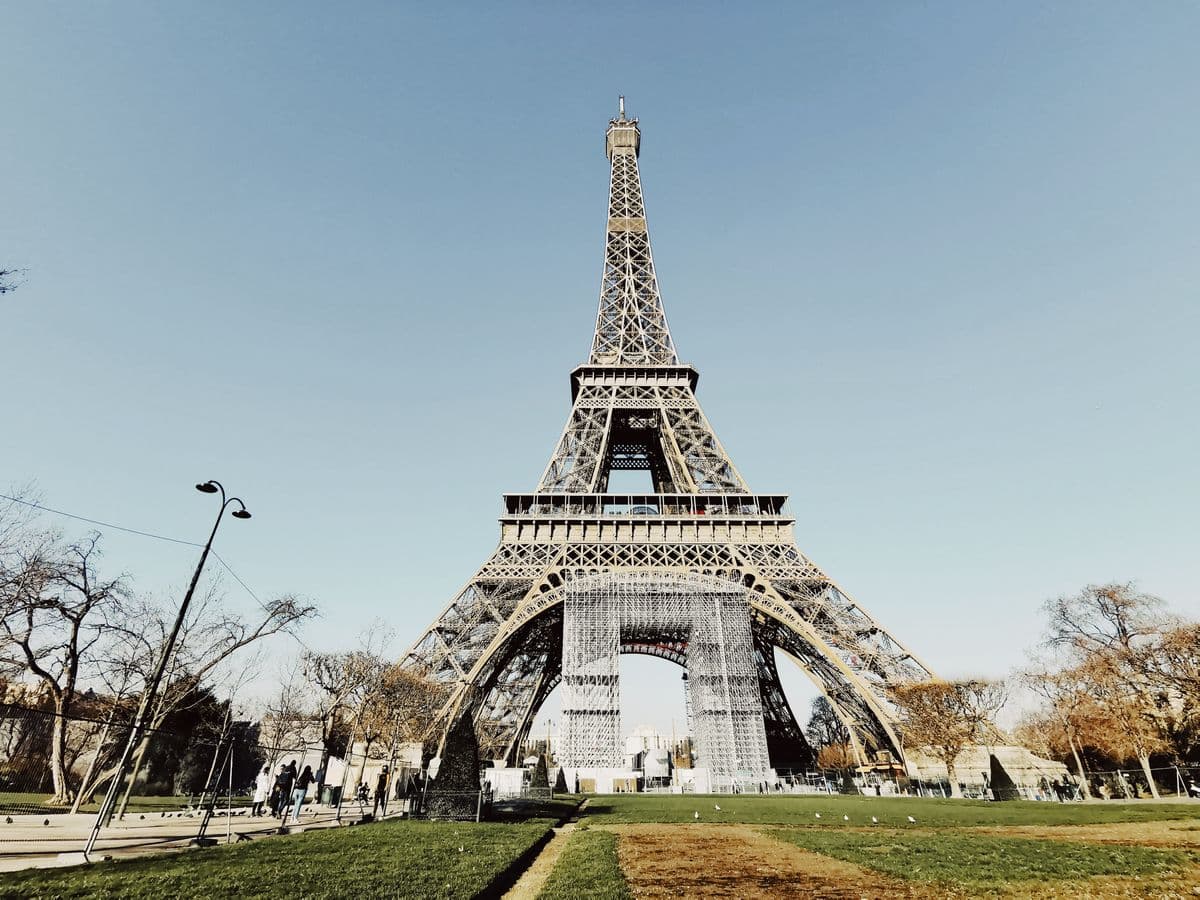
The Eiffel Tower Paris's symbol, a 324 m iron tower. You climb to the second floor by stairs or elevator and to the summit by elevator (summit, adult, about €35), and online advance booking is standard. Its lights, which sparkle for 5 minutes on the hour every night, are famous.
The Louvre Museum One of the world's largest museums, home to the Mona Lisa and the Venus de Milo. Admission is €22, and without a timed advance reservation you cannot enter on the day, so be sure to book ahead. You cannot see it all in a day, so plan a route around the signature works.
Montmartre and Sacré-Cœur An artists' quarter with a white basilica on the hill and a painters' square. It looks out over central Paris and is lovely at dusk; pickpockets are common in the alleys, so watch your belongings.
Palace of Versailles (optional) A royal palace just outside Paris, famous for the Hall of Mirrors and the grand gardens. It is an hour each way on the RER and the visit eats a whole half day, so do not pair it with the Louvre on the same day; set aside a separate day or save it for a future visit.
Switzerland: two days in the Alps
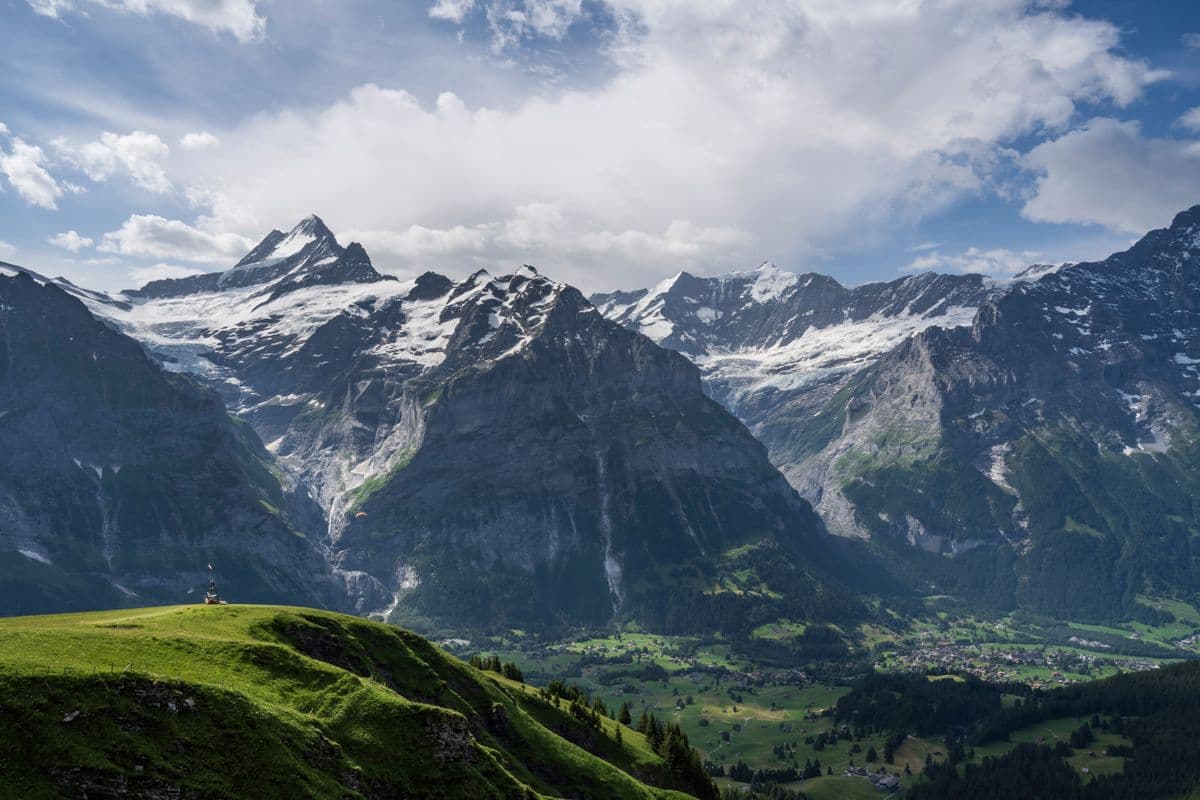
From Paris you go via Basel and base yourself in Interlaken or Grindelwald.
Jungfraujoch Europe's highest train station (3,454 m), known as the 'Top of Europe'. You change between the Eiger Express gondola and mountain railways to get up, and at the top there is perpetual snow and an ice palace. The 2nd-class round-trip list price is about CHF 239 to 261, with a mandatory CHF 10 seat reservation from May to October, and it depends on the weather, so check the forecast before you go up.
Grindelwald and Interlaken Villages ringed by Alpine peaks, with picture-perfect meadows and waterfalls. The cliff viewing platform and paragliding at Grindelwald First, and a walk through Interlaken between its two lakes, are the highlights.
Lucerne A lakeside city on the way over from Paris. The Kapellbrücke (a covered wooden bridge) and the Lion Monument make a good half-day.
Italy: from the city of water to Rome
Italy runs one direction: start in Venice, pass through Florence and head south to Rome.
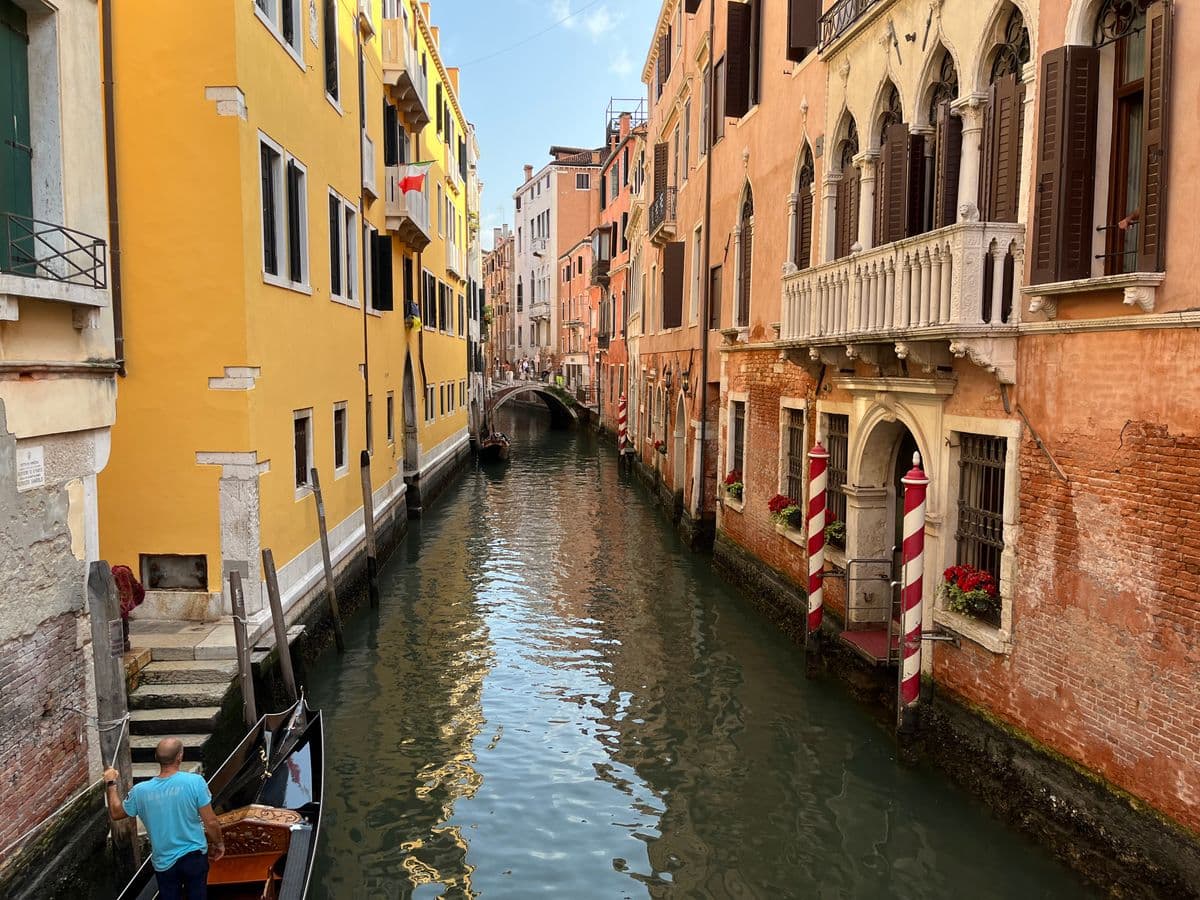
Venice A city of water you get around only by boat, with no cars. St. Mark's Square and Basilica, the gondolas of the Grand Canal, and the islands of Murano and Burano are the highlights. On certain peak days there is a city access fee (€5 to 10), so even overnight guests need to get an exemption QR code in advance.
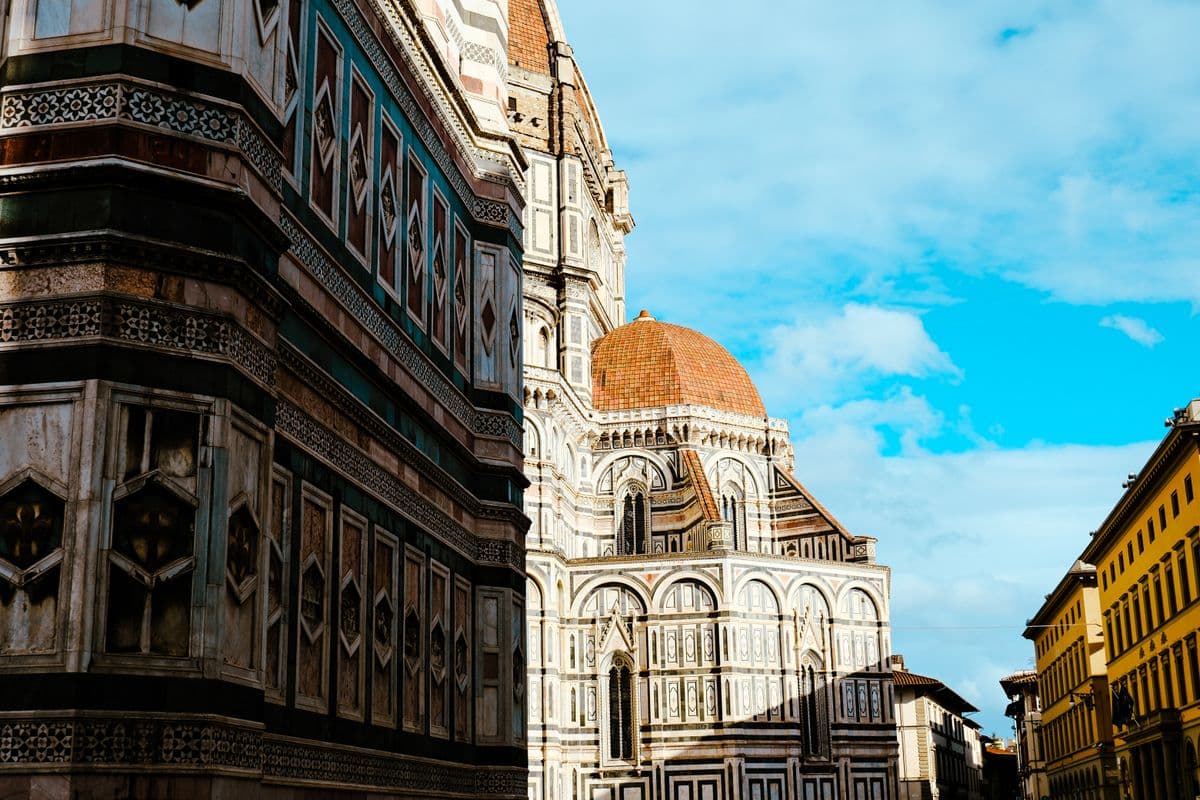
Florence The city where the Renaissance was born. The red-domed Duomo, the Uffizi Gallery (Botticelli's 'The Birth of Venus'), and the night view from Piazzale Michelangelo across the Arno are the core. The Duomo's cupola and the Uffizi are by reservation.
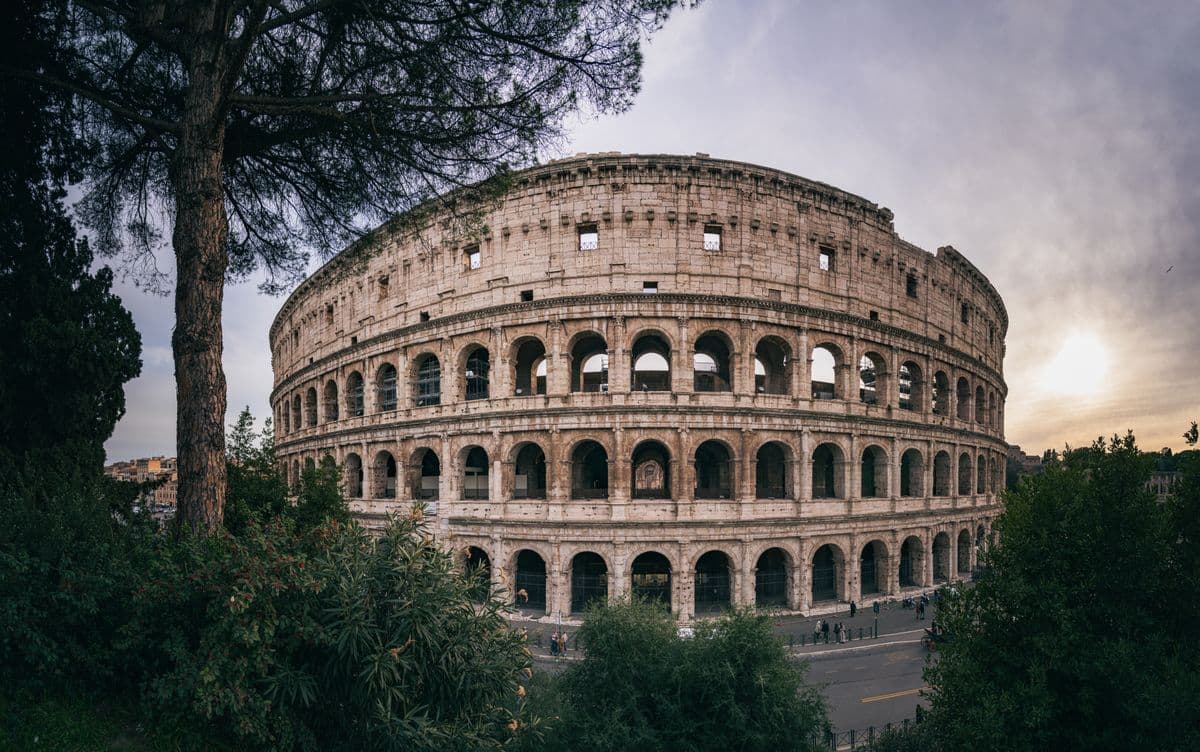
Rome A city where the ancient and the present overlap. The Colosseum and the Roman Forum, the Trevi Fountain and the Pantheon, and the country within the city, the Vatican (St. Peter's Basilica and the Vatican Museums), fill two days. The Colosseum requires a timed reservation and is name-based against your passport, while the Vatican Museums also sell on-site tickets, but an online reservation (€5) skips the line and helps in peak season.
Getting between countries: just know this
The success of a 3-country plan hinges on train reservations.
Paris to Switzerland For Interlaken and Lucerne, take the TGV Lyria from Paris Gare de Lyon to Basel (Basel SBB) in about 3 hours, then change to a Swiss domestic train. It is around 5 hours in total. Geneva and Lausanne are in the west, a different direction, so check your destination.
Switzerland to Italy From Interlaken you go via Milan to Venice. Including transfers it takes over 6 hours, so the day goes to travel; realistically, leave this day free of sightseeing.
Within Italy Trenitalia and Italo high-speed trains link Venice, Florence and Rome, and Florence to Rome is about 1 hour 30 minutes. High-speed reservation tickets do not need validation, but for regional (Regionale) mobile tickets you have to tap 'check in' in the app before boarding for them to be valid.
The 8-night, 10-day budget, per person
Based on twin-share and departure from Incheon. It moves a lot with the euro and franc exchange rates and with peak season. Figures below are in KRW, where 만 means 10,000 KRW.
| Item | Budget | Standard | Comfort |
|---|---|---|---|
| Flights (multi-city) | 150만 | 200만 | 250만 |
| Hotels, 8 nights, per person | 90만 | 150만 | 220만 |
| Trains (3-country travel) | 45만 | 55만 | 65만 |
| Admissions and tours | 45만 | 65만 | 80만 |
| Food, 9 days | 55만 | 75만 | 95만 |
| Total | about 385만 | about 545만 | about 710만 |
Admissions and tours combine the Jungfraujoch round trip (about 400,000 KRW) with entry fees for the Eiffel Tower, the Louvre, the Vatican, the Colosseum and Florence's galleries, so it piles up quickly city by city. Food costs more over the two Swiss days, since prices there are high (a plate of pasta at a restaurant runs around CHF 30).
Don't skip these
- Book trains and tickets the moment your dates are set. The TGV and Italian high-speed trains, Jungfraujoch seats, and the Louvre, Colosseum and Vatican are cheaper and more available the earlier you buy.
- Book multi-city (open-jaw) flights, Paris in and Rome out, to cut out backtracking.
- Switzerland uses the franc (CHF). Carrying only euros is inconvenient, so rely mainly on cards.
- The Colosseum is name-based. The English name on your reservation ticket must match your passport to enter.
- Leave travel days empty. Day 4 and Day 6 involve long journeys, so don't cram sightseeing into them.
- Guard against pickpockets. At the tourist sites and train stations of Paris, Rome and Venice, wear your bag in front and leave your passport at the hotel.
In short
For West Europe's three countries in 8 nights and 10 days, the most efficient route heads one direction south: Paris (2 nights) to Switzerland (2 nights) to Italy's Venice, Florence and Rome (4 nights).
- Entry: Schengen 90 days visa-free + passport valid at least 3 months + EES (once at your first entry point) + ETIAS (due second half of 2026, confirm before departure)
- Between countries: Paris to a Basel transfer, Switzerland to Venice a 6-hour-plus travel day, Italy by high-speed train
- Jungfraujoch, the Louvre, the Colosseum and the Vatican each have their own rules, so check reservations in advance
- France and Italy use the euro; Switzerland the franc
- Keep each city's plan, trains and ticket vouchers in one place with Tripop
Organize this West Europe trip in Tripop
From Paris to Rome there are many cities, and the tangle of train and ticket reservations is easy to lose track of. Type one line into the Tripop app, "West Europe 3 countries, 8 nights 10 days, Paris Switzerland Italy", and a day-by-day skeleton takes shape; upload your flight, train and ticket PDFs and the vouchers sort themselves by city. A euro-and-franc expense ledger and sharing with your companions, all in one app.
- Get it on the App Store
- Get it on Google Play
- Start right away on the web, on your PC with no install
What we verified
The day-by-day times and routes in this article are a planning example, not values copied from operator timetables. Europe's entry rules (EES in force 2025-10-12, ETIAS due in the second half of 2026, passport valid at least 3 months), the city-by-city admission fees and reservation rules, the Jungfraujoch fares and seat reservations, and train times and fares all change with the season and exchange rates, so reconfirm them on each official site before you leave. The budget table moves with your booking timing, peak season and exchange rates.
Images: Pexels (Mehmet Turgut Kırkgöz: the Eiffel Tower in Paris, Evelin Magnus: the Swiss Alps, Görkem Özdemir: the Colosseum in Rome, Barkalı: Florence's Duomo, John Browe: a Venice canal), Pexels License.