
Everyone who visits Bangkok eats Thai food. More and more travelers now go a step further: they pick out ingredients at a fresh market, pound curry paste in a stone mortar, and fire up a wok to stir-fry their own pad thai. A cooking class takes half a day and changes the way you eat Thai food for the rest of your life, which is why it has settled in as one of Bangkok's signature experiences.
Why a cooking class
Thai cooking is a cuisine of aromatics. Lemongrass, galangal, kaffir lime leaf, palm sugar: the balance those unfamiliar names create is something you only half understand by eating. A cooking class fills in the other half. Once you have handled the ingredients yourself, pounded them, and tossed them in a wok, you read a Thai menu with completely different eyes, at home just as much as in Bangkok.
What makes Bangkok the ideal place to learn is the sheer range of choice. Classes run in small home kitchens, in professional cooking schools with purpose-built stations, and in settings beside the city's canals. Years of teaching visitors have polished the format, so the classes assume nothing: even if you have never chopped an onion in your life, your plates come out looking like the real thing. And unlike a temple visit or a rooftop bar, this is a Bangkok experience that keeps paying off every time you cook at home afterward.
The classic format: a market tour plus four dishes
The most popular version, and the one worth defaulting to, is a half-day class that includes a market tour. The flow runs roughly like this.
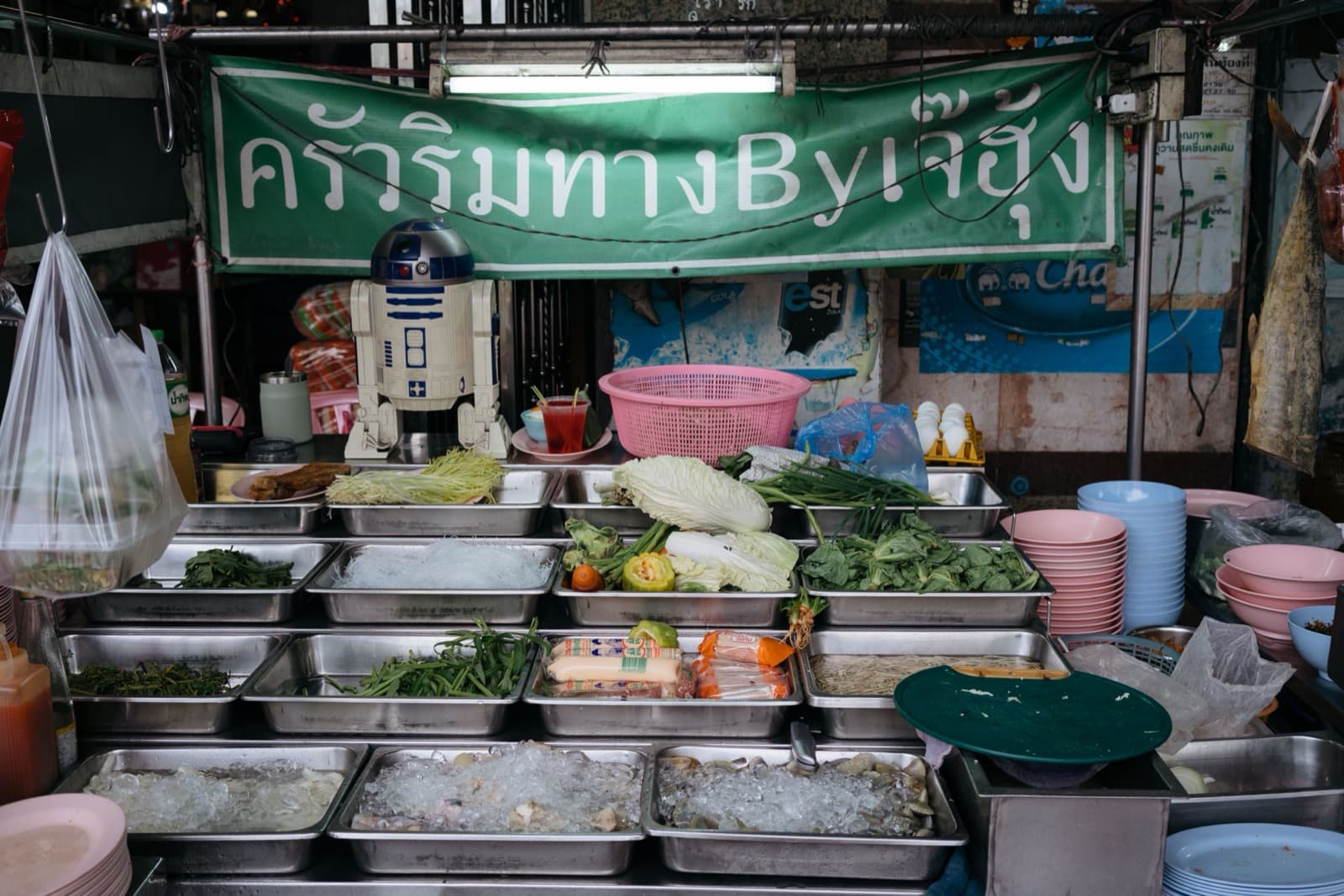
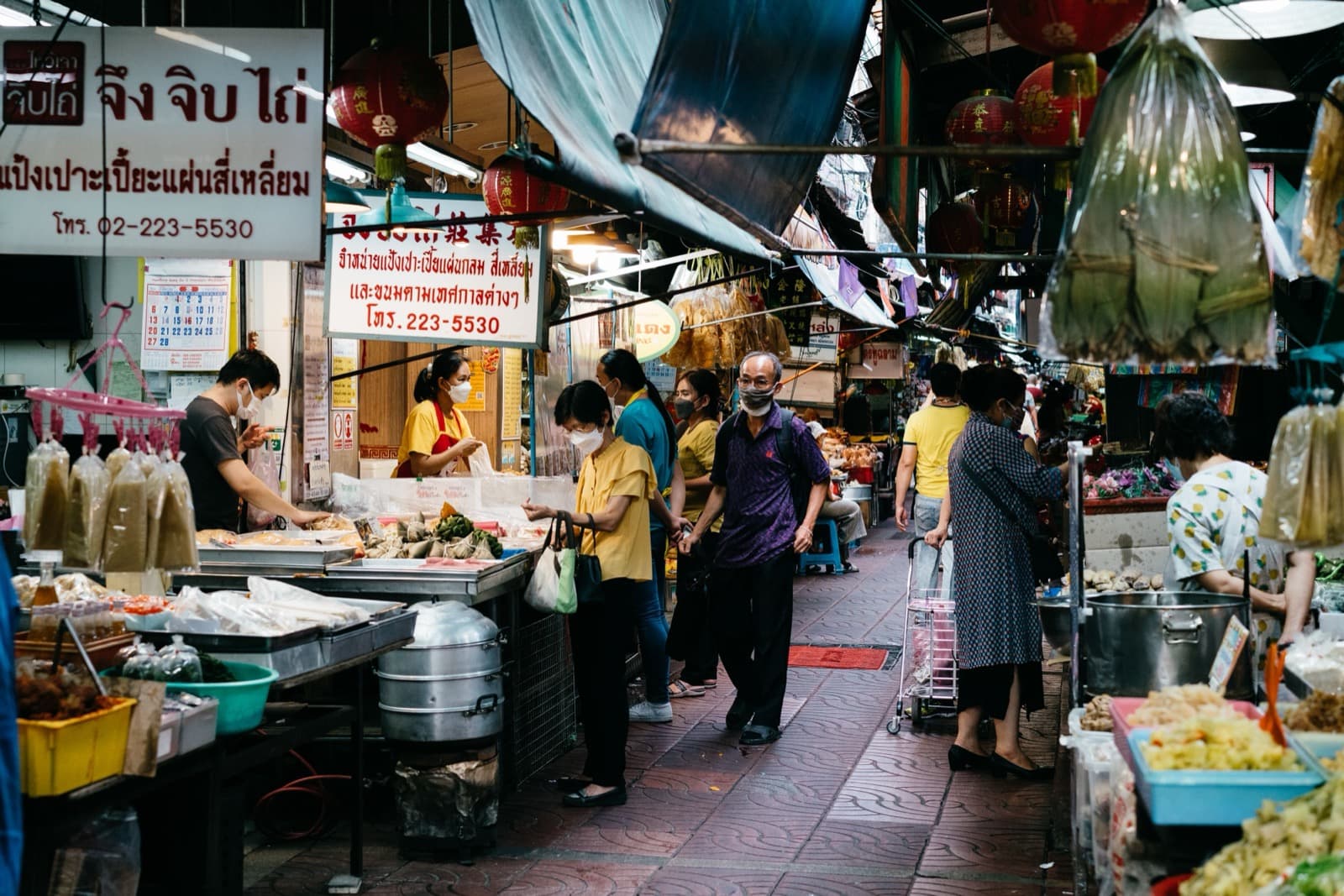
- Market tour: you shop alongside your instructor at a local fresh market, the kind of neighborhood market you find around Silom. Smelling, poking, and tasting your way through the aromatics one by one is the real heart of the class, and for many people the part they remember longest.
- Curry paste: the ingredients go into a heavy stone mortar and you pound the paste yourself. Your arm learns the lesson quickly: the more it aches, the deeper the aroma gets.
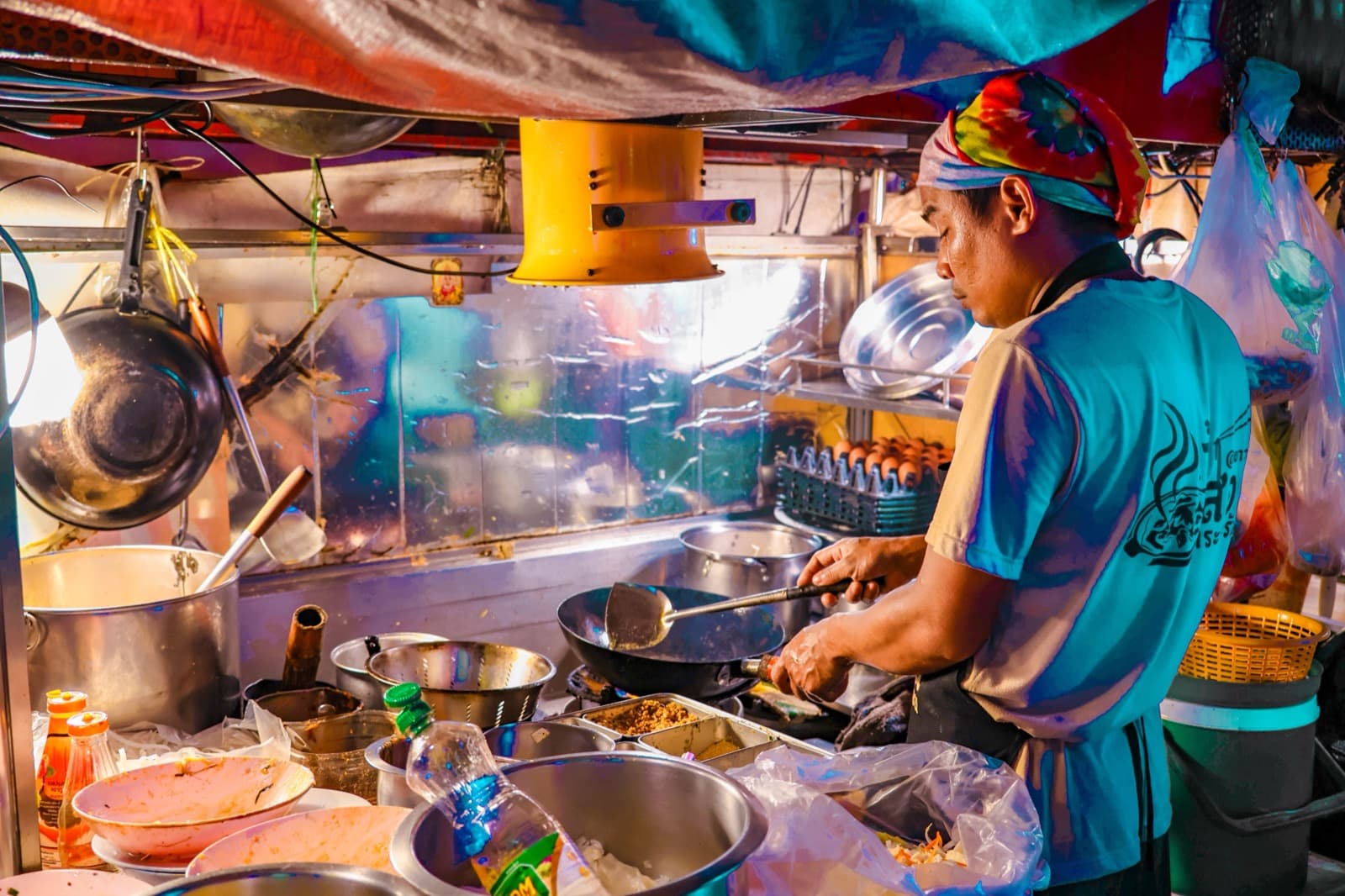
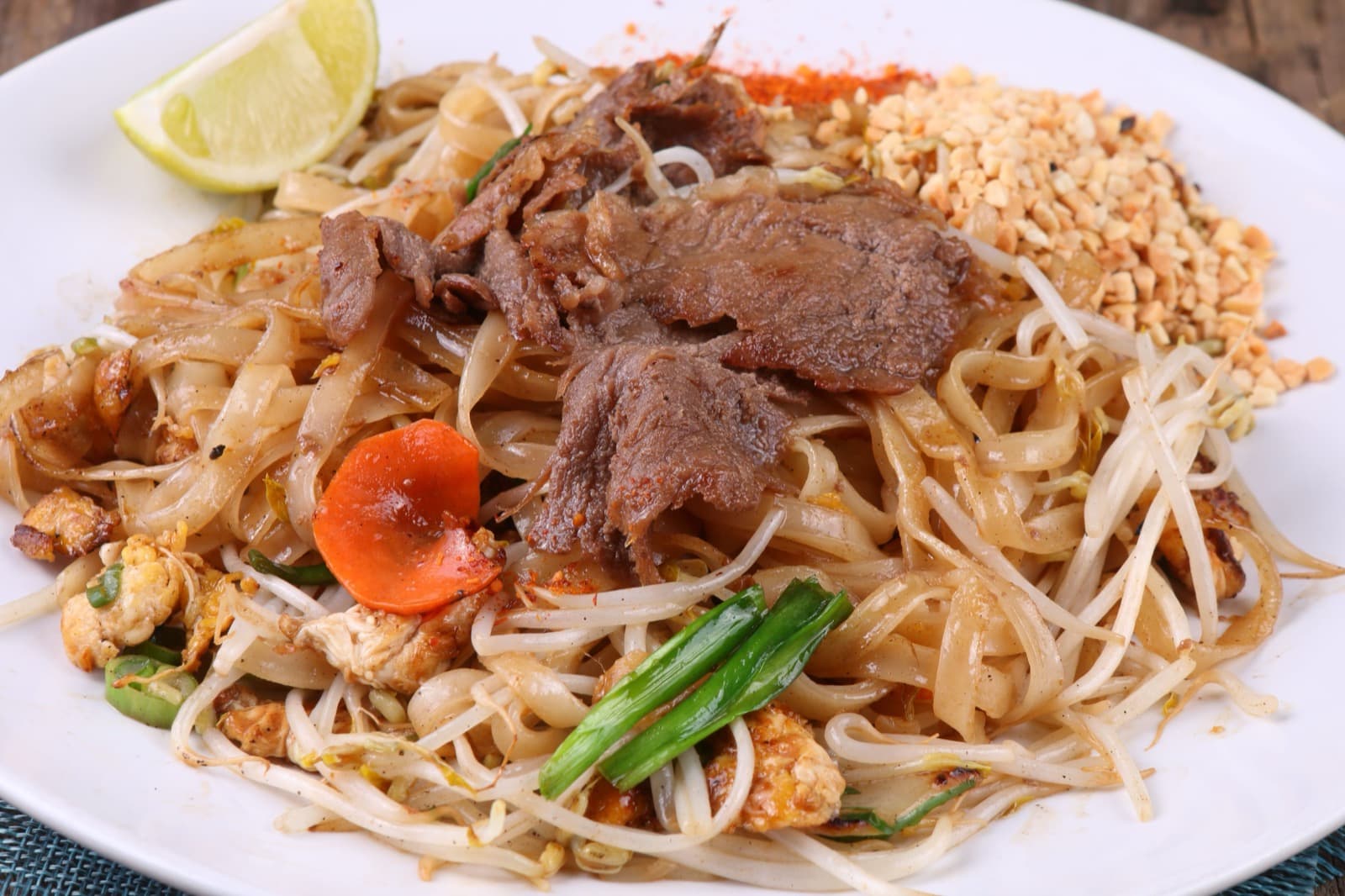
- Wok cooking: pad thai, green curry, and tom yum goong come together one after another, with the instructor at your elbow to steady your wok hand and call out the timing.
- The meal: you sit down to the full course you just cooked, still hot from the wok, and close it out with mango sticky rice for dessert.
How to choose your class
Booking platforms list so many options that choosing a class can feel harder than the cooking. Three criteria sort it out.
Vibe: a small class in a family's home kitchen feels intimate and personal, a professional school feels organized and well-drilled, and a canal-side class adds scenery to every course. Decide what kind of memory you want to bring home and choose accordingly. Inclusions: whether a market tour is part of the package makes the biggest difference to how deep the experience goes. Whether you can pick your own dishes from a menu, and whether vegetarian options are available, are also worth confirming before you pay. Time of day: a morning class shops while the market is at its loudest and freshest and leaves your evening free; an afternoon class rolls straight into dinner. If Bangkok's heat is a concern, mornings are kinder.
Skim a handful of recent reviews as a final filter. You are looking less for star ratings than for repeated mentions of the same instructor by name, which usually means the class is as personal as it claims to be.
What to wear and day-of tips
Dress light and comfortable, wear sneakers, and leave the rest to the class: aprons are almost always provided. The market leg of the tour is hot and crowded, so a bottle of water and a hat make that stretch far more pleasant. Spice levels can be adjusted while you cook, so if heat worries you, say so before the chilies go in. Most of all, come hungry. The schedule has you eating three or four plates in a row, so a light breakfast or a skipped lunch is the right call.
The recipes come home with you
A good class sends you off with recipe cards or a small booklet, and that turns out to matter more than it sounds. The first time you recreate that green curry in your own kitchen, weeks after the trip, the smell of the Bangkok market comes back with it. It becomes the souvenir you actually use, long after anything from a gift shop has gone to the back of a shelf. If sourcing ingredients back home worries you, take the exact names you learned in class to an Asian grocery and look for those. The eye you trained on the market tour pays off right there.
Folding it into a Bangkok day
Because the class takes half a day, it pairs neatly with everything else Bangkok does well. Take a morning class and your afternoon is free for the Grand Palace or a cafe crawl, with a night market waiting for dinner. Take an afternoon class and you can tour temples in the cool of the morning, then wander the riverside with a very full stomach as the lights come on. If you want day-by-day routes to build around it, we have laid them out in our 5-day Bangkok itinerary.
Five ingredients you'll learn at the market
Certain ingredients come up on every market tour, and learning to tell them apart is half the value of the morning. Lemongrass first: you learn to bruise the stalk before cooking to wake up its fragrance. Galangal looks enough like ginger to fool anyone, yet smells like something else entirely. Kaffir lime leaves release a burst of citrus the moment you tear them. Palm sugar explains the rounded sweetness underneath so much of Thai cooking. And bird's eye chilies teach the rule every visitor learns the hard way: the smaller the chili, the fiercer the heat. The moment you can tell these five apart, a Thai menu stops being a list of names and starts being a set of flavors you can predict.
Something for every travel party
The class works for almost any group, just differently. Traveling solo, you get a cooking station to yourself and the rare pleasure of total, uninterrupted focus. Couples tend to turn it into a contest, trading judgments on each other's wok technique between fits of laughter. Families discover that kids love the pounding and the mixing most of all, and there is a particular magic in watching a picky eater clean a plate for the sole reason that they cooked it themselves. Minimum ages vary from class to class, so check that one detail when you book.
A sense of the budget
Class prices vary widely by format and platform, so treat any single number with suspicion and check current prices on a booking platform for your dates. The baseline product is a half-day class with a market tour, three or four dishes, and the meal itself; small private sessions sit higher up the scale. On the day, carry a little baht in cash for market-tour snacks or any extra ingredients you cannot resist. Weigh what the fee actually buys (a full meal, a recipe set, and half a day of entertainment rolled into one) and it is easy to see why travelers consistently rank cooking classes among Bangkok's best-value activities. And the bag of spices you carry home from the market is a bonus souvenir no other Bangkok activity hands you.
At a glance
- What: a half-day class pairing a market tour with Thailand's signature dishes
- Menu: pad thai, green curry, tom yum goong, and mango sticky rice are the classic four
- Types: home kitchens, professional schools, canal-side settings; choose by vibe
- Booking: compare inclusions and reviews on a platform; high season sells out early
- Prep: light clothes, an empty stomach, and an early word about spice levels
- Takeaway: recipe cards, the souvenir you will still be using next year
Slot it into your Bangkok itinerary
Type "plan 5 days in Bangkok with a half-day cooking class" into Tripop and the AI slots the class in, then arranges the rest of each day around it. Attach your booking voucher to the event and it opens offline on the morning of the class, no signal required. Log the class fee and your market spending in the foreign-currency expense tracker in baht as you go, and the exchange-rate math is settled for you at the end of the trip.
Images: Pexels (Haneul Trac: wok cooking; UNDO KIM: pad thai; Markus Winkler: market ingredients and market scenes), Pexels License.