
Pairing Paris with the Alps, the France-plus-Switzerland combination is one of Western Europe's oldest travel formulas. This guide reshapes it into an independent 6-night, 8-day route. The skeleton is simple: 2 nights in Paris, 3 in Interlaken, 1 in Lucerne, moving west to east in one direction with no backtracking. Paris effectively gets a day and a half, compressed into the Louvre, the Eiffel Tower and the Seine; the real core is three days in the Swiss mountains. Because Jungfraujoch is half about weather, the itinerary builds in a buffer day so you climb on the clearest of your Interlaken days. It is a classic honeymoon combination, but 2026 demands a fresh budget: the Louvre's admission and the Swiss Half Fare Card both went up this year. We start with that maths.
The itinerary at a glance
| Day | City | Plan | Transport |
|---|---|---|---|
| Day 1 | Incheon → Paris | Evening arrival, around the hotel | Nonstop, about 14 hours |
| Day 2 | Paris | Louvre in the morning, Seine and Eiffel Tower after, lights at night | Metro, walking |
| Day 3 | Paris → Interlaken | Montmartre early, midday TGV Lyria with a change in Basel | Trains, 5-plus hours |
| Day 4 | Jungfrau region | Jungfraujoch (on a clear day), Grindelwald | Mountain rail, gondola |
| Day 5 | Jungfrau region | First and Bachalpsee, Harder Kulm in the evening | Gondola, funicular |
| Day 6 | Lauterbrunnen → Lucerne | Waterfall valley in the morning, midday transfer, Chapel Bridge and old town | Train, about 1 h 50 min |
| Day 7 | Lucerne → Zurich Airport | Evening flight: morning lakeside walk then departure. Midday flight: straight to the airport | Train, about 1 h 10 min |
| Day 8 | Arrive Incheon |
The logic of the route. There are only two big intercity moves, Day 3 (Paris to Interlaken) and Day 6 (Interlaken to Lucerne), though counting the airport transfers you handle your suitcase on four days, so pack light. Do not count arrival day as sightseeing. Paris nonstops tend to land in the evening, and with the EES biometric queue you are unlikely to reach your hotel before late evening, past most restaurant kitchens, so treat the in-flight meal as dinner and scout a late-opening spot near your hotel for a snack. That is why Paris in practice means Day 2 plus the morning of Day 3, a day and a half. Days 4 and 5 deliberately have no fixed order. A clouded-in Jungfraujoch is not worth its fare, so read the forecast and swap the two days: summit on the clear day, First or the valley on the grey one, following the reservation method in the Jungfraujoch section below since peak-season seat reservations complicate a pure last-minute swap. Both mountain days live or die by the morning: leave Interlaken Ost before 8 a.m. to improve your odds against both the tour-group crowds and the afternoon cloud build-up. Three weekday checks: the Louvre closes on Tuesdays (swap with the Orsay, closed Mondays, if Day 2 lands on one), Versailles variants must avoid Mondays, and Zurich return nonstops skip some days of the week, so check your Day 7 weekday before ticketing.
Before departure: entry (EES, ETIAS), two currencies, flights
- Visa and entry: Korean passports are visa-free in Schengen (90 days in any 180, all Schengen states combined). The passport must be valid at least 3 months beyond your planned Schengen departure and issued within 10 years as of entry. The EES, launched 12 October 2025 and fully operational since 10 April 2026, registers fingerprints and a facial image at your first Schengen entry point, which on a nonstop is Paris. ETIAS is not yet in operation as of September 2026; a late-2026 start had been announced but no confirmed date has been published, so glance at the EU's official page (travel-europe.europa.eu) before you fly. France and Switzerland are both Schengen, so there is no border check between them in principle, but France has notified temporary internal border controls covering the Swiss border (notified period through late October 2026), so passports can be inspected on the train to Basel. Keep yours on you.
- Two currencies: France uses the euro (about 1,560 KRW) and Switzerland the franc (CHF, about 1,670 KRW) as of September 2026. Contactless cards are the default in both; carry only small cash. If a terminal or ATM offers to charge you in KRW (DCC), always choose the local currency. Switzerland is in Schengen but outside the EU customs union, so tax refunds on French purchases follow the EU-exit procedure as you cross into Switzerland by train; check that process separately.
- Flights: The default is a multi-city ticket, into Paris and out of Zurich. Paris has nonstops from Korean Air, Asiana, Air France and T'way on varying days; Zurich has summer-season nonstops (late March to late October) from Korean Air and SWISS on split weekdays. Zurich departures are not daily, so matching your return weekday to an operating day is step one of ticketing. In winter, with no Zurich nonstop, this route runs smoothest in summer.
- Connectivity: One multi-country Europe eSIM covers the trip, but check that Switzerland is included. Switzerland sits outside the EU roaming rules and some Europe plans genuinely exclude it.
- Time difference: 7 hours behind Korea in summer time, 8 in winter.
Regions and how to split your time
| Region | Key spots | Getting around | Time to give it |
|---|---|---|---|
| Central Paris | Eiffel Tower, Louvre, Montmartre, Seine | Metro €2.55 a ride, roughly 30 minutes between major sights | 2 days |
| Jungfrau region | Interlaken (base), Grindelwald, Jungfraujoch, First, Lauterbrunnen | Mountain rail and gondolas; Interlaken to Grindelwald in the 30-minute range | 3 days |
| Lucerne | Chapel Bridge, old town, lake cruise | About 1 h 50 min by train from Interlaken | 1 day |
Times are based on operators' official timetables as of September 2026. Paris to the Jungfrau region eats half a day (5-plus hours), so even if you stretch Paris and shrink Switzerland, the two transfer days stay in the plan.
What to see, city by city
The three zones have distinct characters: Paris is urban density, the Jungfrau region is mountain scale, and Lucerne is the lakeside town in between.
Paris, two dense days
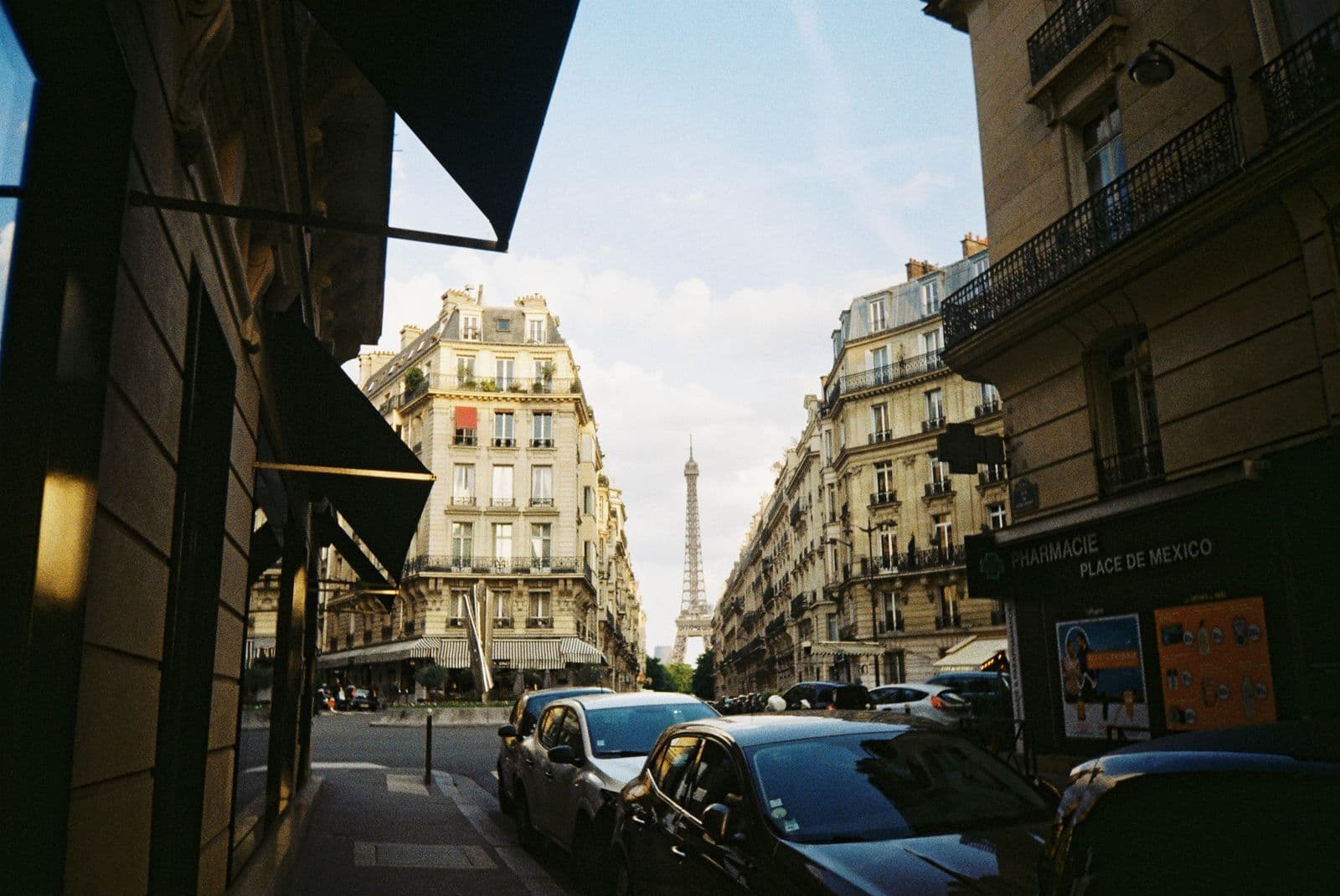
Eiffel Tower The 330 m icon of Paris. Adult tickets run €36.70 by lift to the summit, €23.50 by lift to the 2nd floor, or €14.80 by stairs (2026), with timed online booking the default. Same-day counter tickets sometimes remain even when online slots sell out, but that depends on crowds, so rely on the reservation. The famous sparkle runs for about five minutes on the hour after dark, and it is a view you watch from Trocadéro or the Champ de Mars across the river, not from the tower itself.
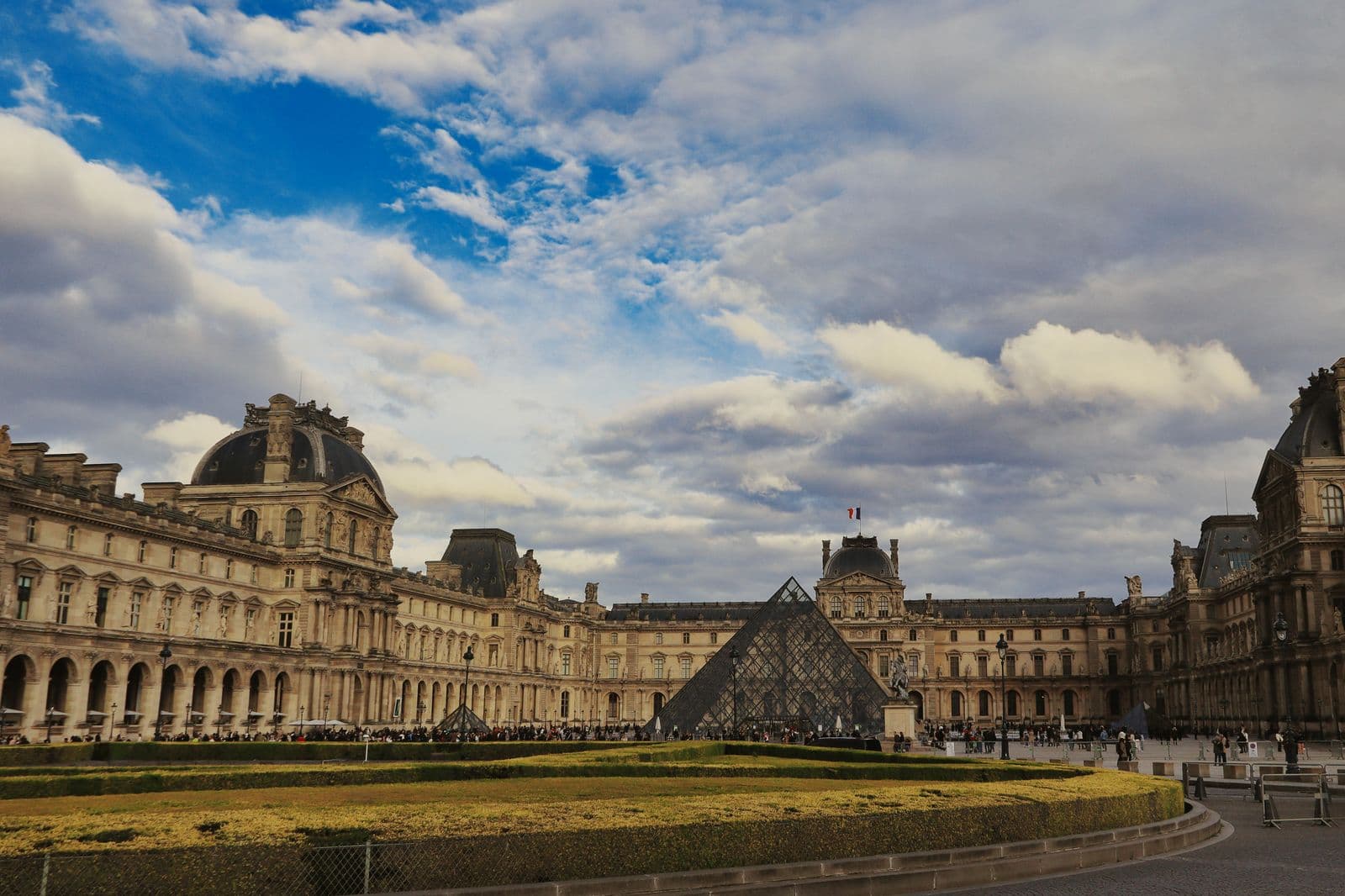
Louvre The world-scale museum of the Mona Lisa and the Venus de Milo. From 14 January 2026 admission for adults who are neither EEA nationals nor residents rose to €32 (from €22; most travellers from Korea pay the new rate). Timed advance booking is the norm and reserved slots enter first. It is too big for a day, so plan half a day on a highlights route, and book the opening slot at 9 a.m.: a late-morning slot pushes lunch, the Eiffel Tower and the evening cruise all backwards. Closed Tuesdays.
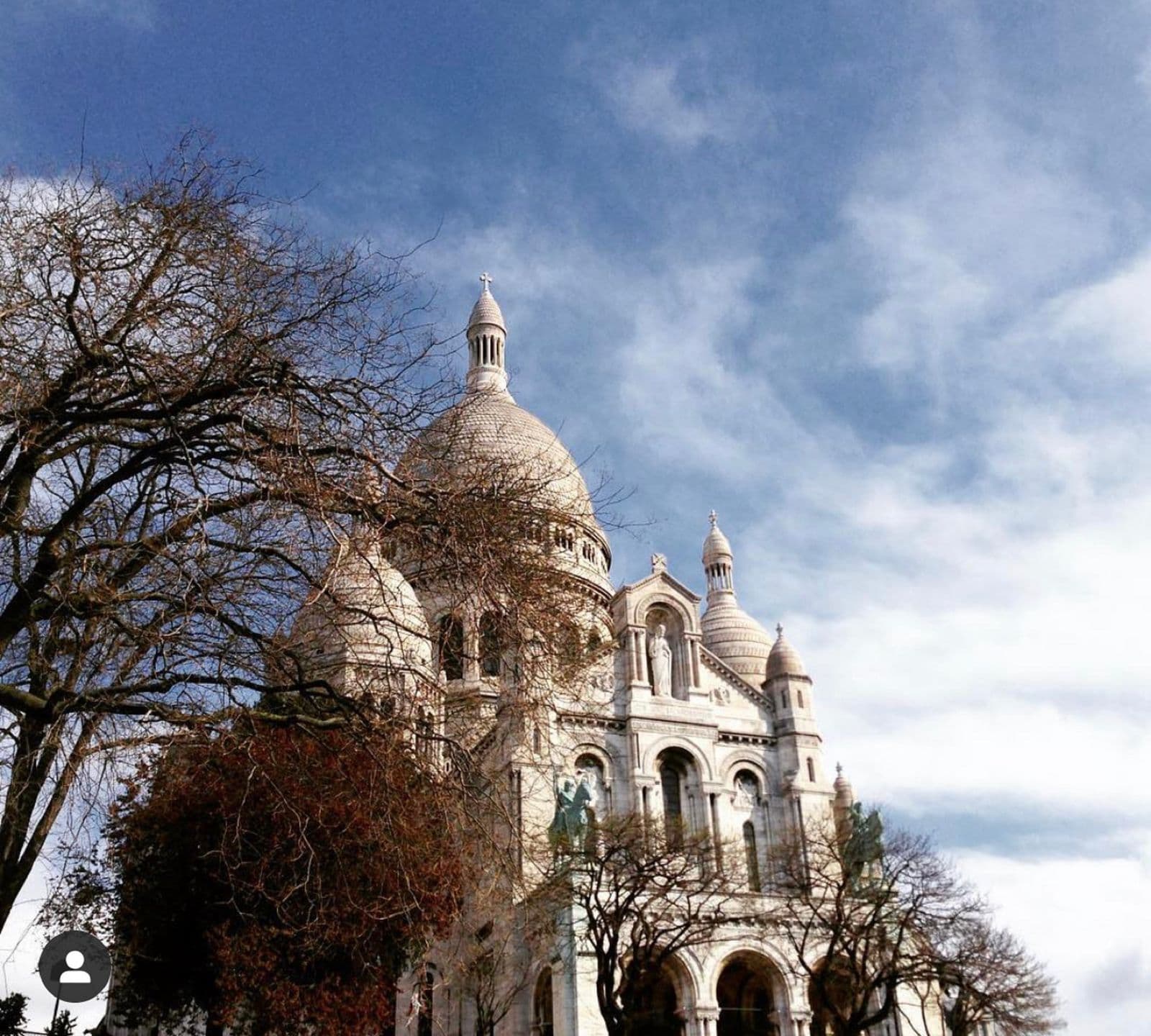
Montmartre and Sacré-Cœur The artists' hill with the white basilica. The basilica itself is free, and the funicular (a metro ticket) spares you the stairs. The Day 3 morning plan works like this: leave your luggage at the hotel and go up empty-handed. From the recommended Opéra area it is a few metro stops, so head out around 8, see the quiet basilica and the view, be back by 11 to collect your bags, and you make the midday TGV. It is a short visit by design: basilica and viewpoint only, skip the lanes, and plan on a sandwich at the station for lunch. This is stair country, no place for a suitcase, and pickpocketing is a standing caution in the narrow lanes, so wear your bag in front.
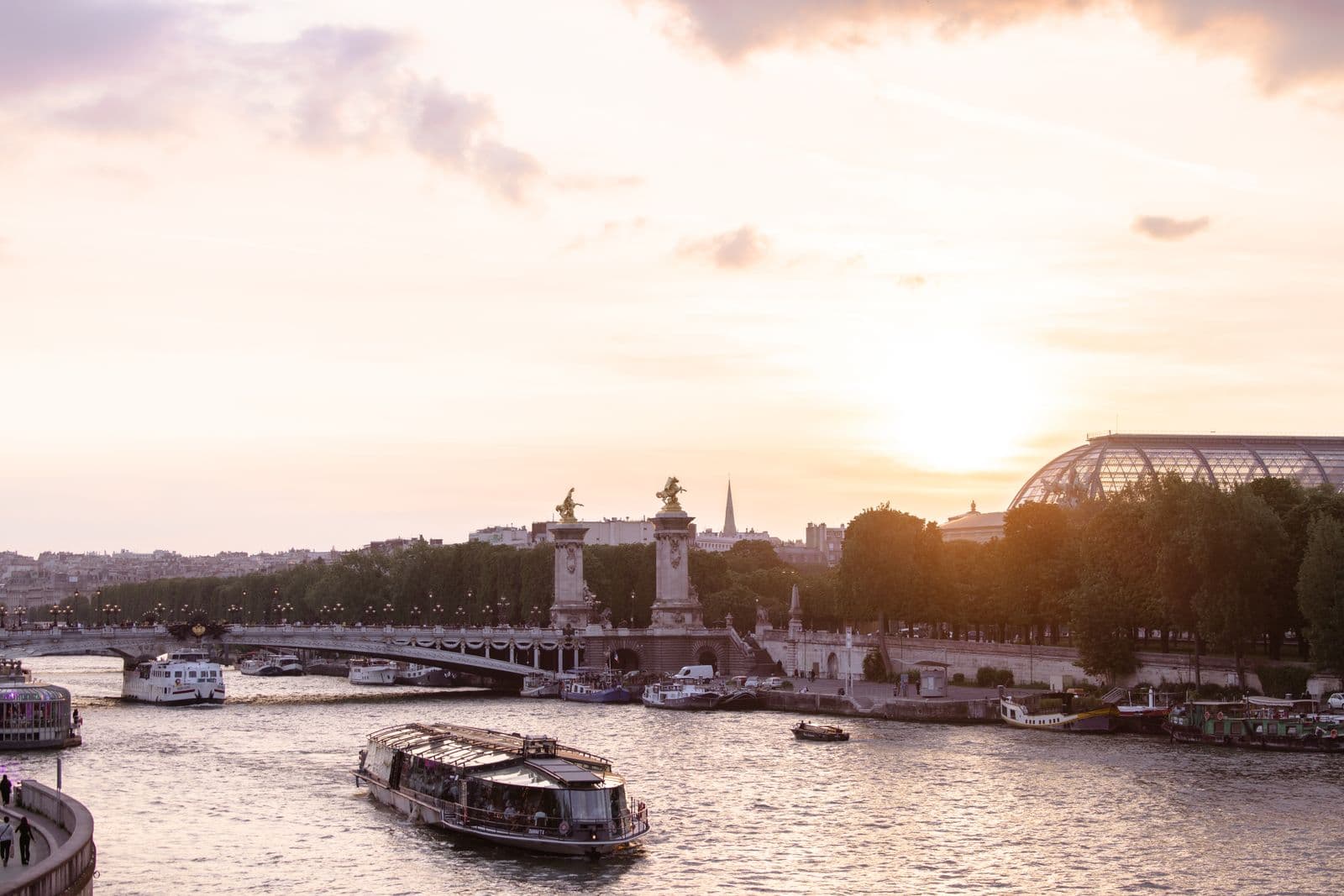
Seine cruise One-hour boats from the foot of the Eiffel Tower (Bateaux Parisiens: €20 at the counter, €18 online) sweep the bridges and landmarks from river level. The round just after sunset shows Paris lit, which fits the Day 2 evening block. Note the late summer sun (about 21:56 in late June, still around 20:30 in late August): in high season have dinner first, then the night round, while from September the earlier sunset lets the cruise follow the Eiffel Tower naturally.
Musée d'Orsay (optional) The converted rail station of the Impressionists. €16 online (€14 on site); Thursdays it stays open to 21:45 with entry after 6 p.m. dropping to €12 online. On a two-day Paris leg pick either the Louvre or the Orsay, and if you want both, use the museums-first variation in the concept table below. Closed Mondays. For just the Louvre and the Orsay, the Paris Museum Pass (2 days, €85 in 2026) does not pay off.
The Jungfrau region, the heart of the trip
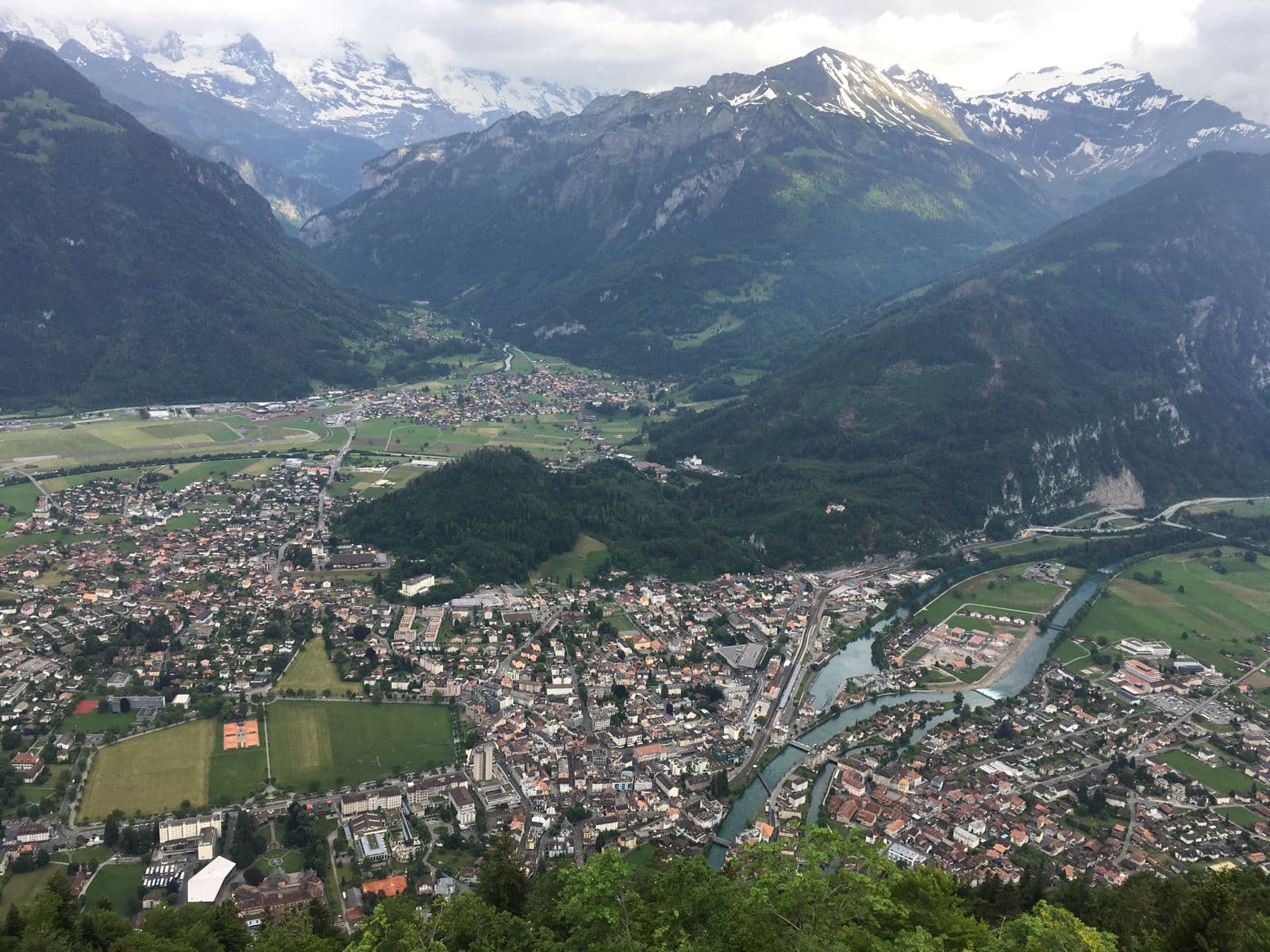
Interlaken, between two lakes, is the base; the real mountain gateway is Grindelwald, a train ride in the 30-minute range. Keep the hotel fixed in Interlaken and day-trip light for all three days.
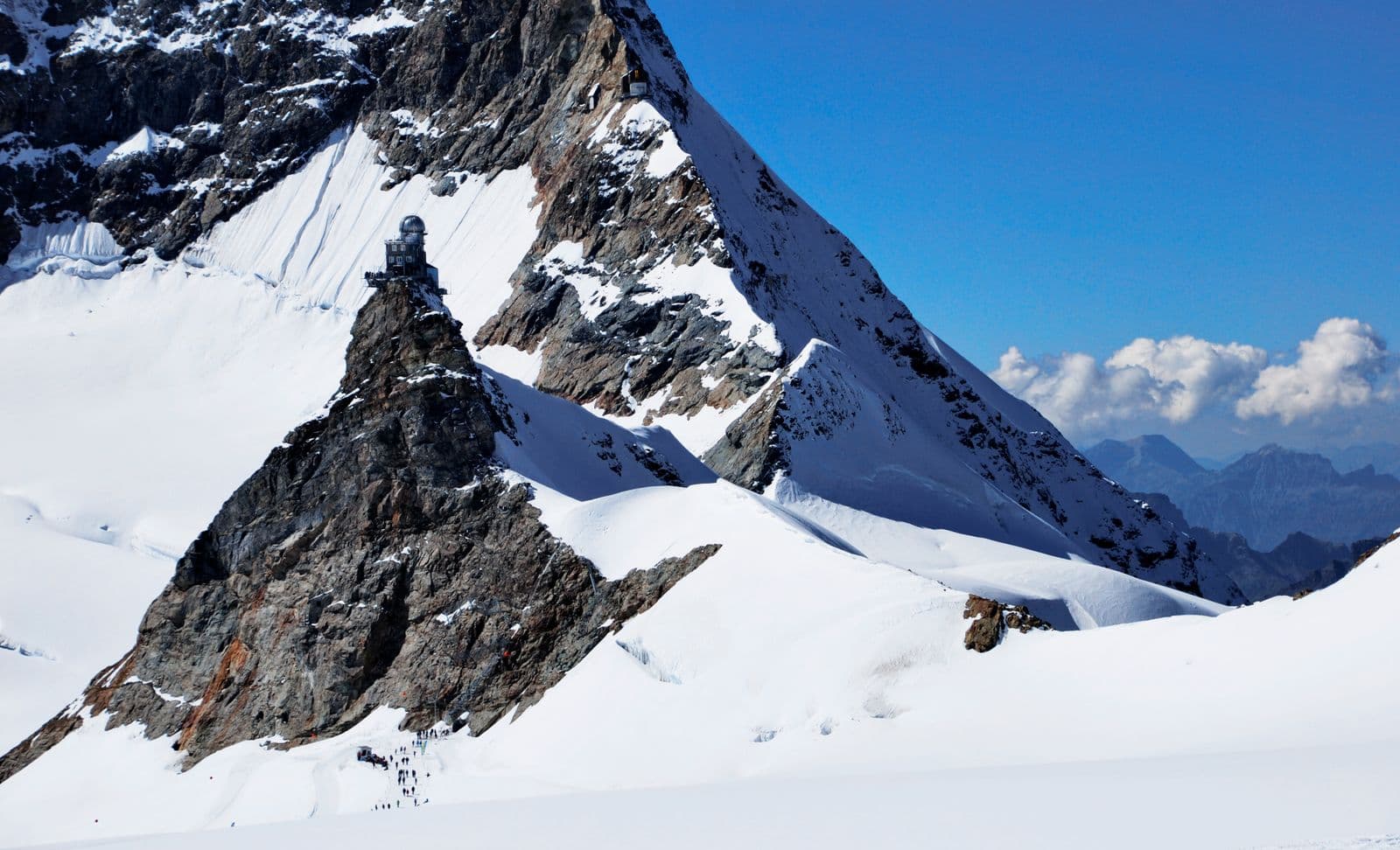
Jungfraujoch Europe's highest railway station (3,454 m). From Grindelwald Terminal the Eiger Express gondola reaches Eigergletscher in 15 minutes, where you change to the rack railway. The May-October 2026 full return fare is CHF 261.20 from Interlaken Ost or CHF 239.20 from Grindelwald, and in that window a CHF 10 round-trip seat reservation is mandatory. The booking method is this itinerary's key practical detail. Reservations are sold separately from the travel ticket and fix a time slot rather than a seat, and clear-day morning slots in June to September can sell out in advance. So do not wait for the morning of: once the forecast firms up two or three days out, secure the morning slot for your chosen day. If neither day looks certain, holding both mornings is CHF 10-per-person insurance, and unused reservations cancel free until the day before travel. Up top are the snow terraces and the Ice Palace; it can be below freezing in midsummer, so bring a proper layer. Rising some 2,500 m from Grindelwald Terminal (943 m) in around 50 minutes, some visitors feel a headache or dizziness at the top: walk slowly, and if it hits hard, go down rather than push on. Checking the official summit webcam before you commit is the single best money-saving habit in this plan.
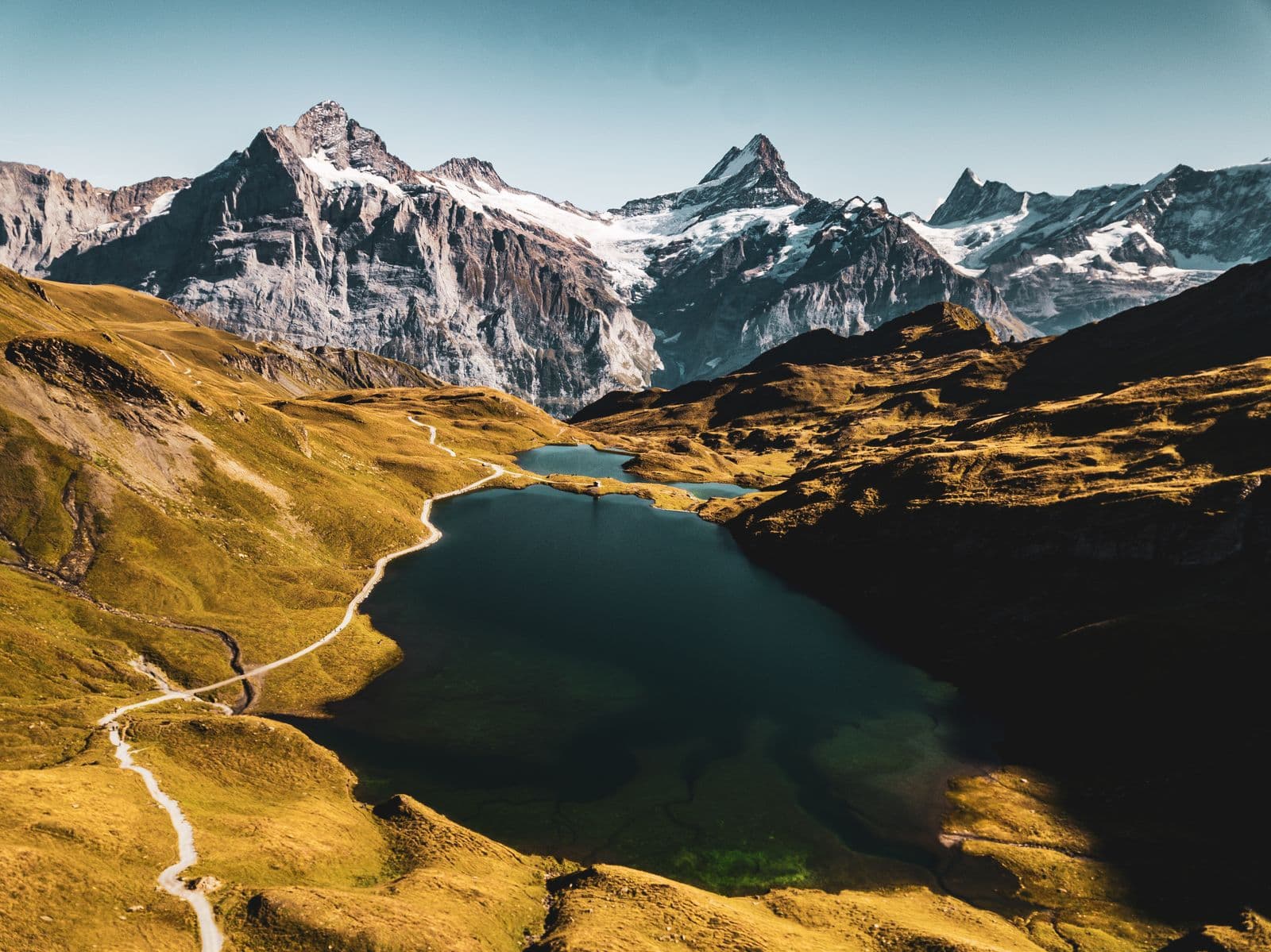
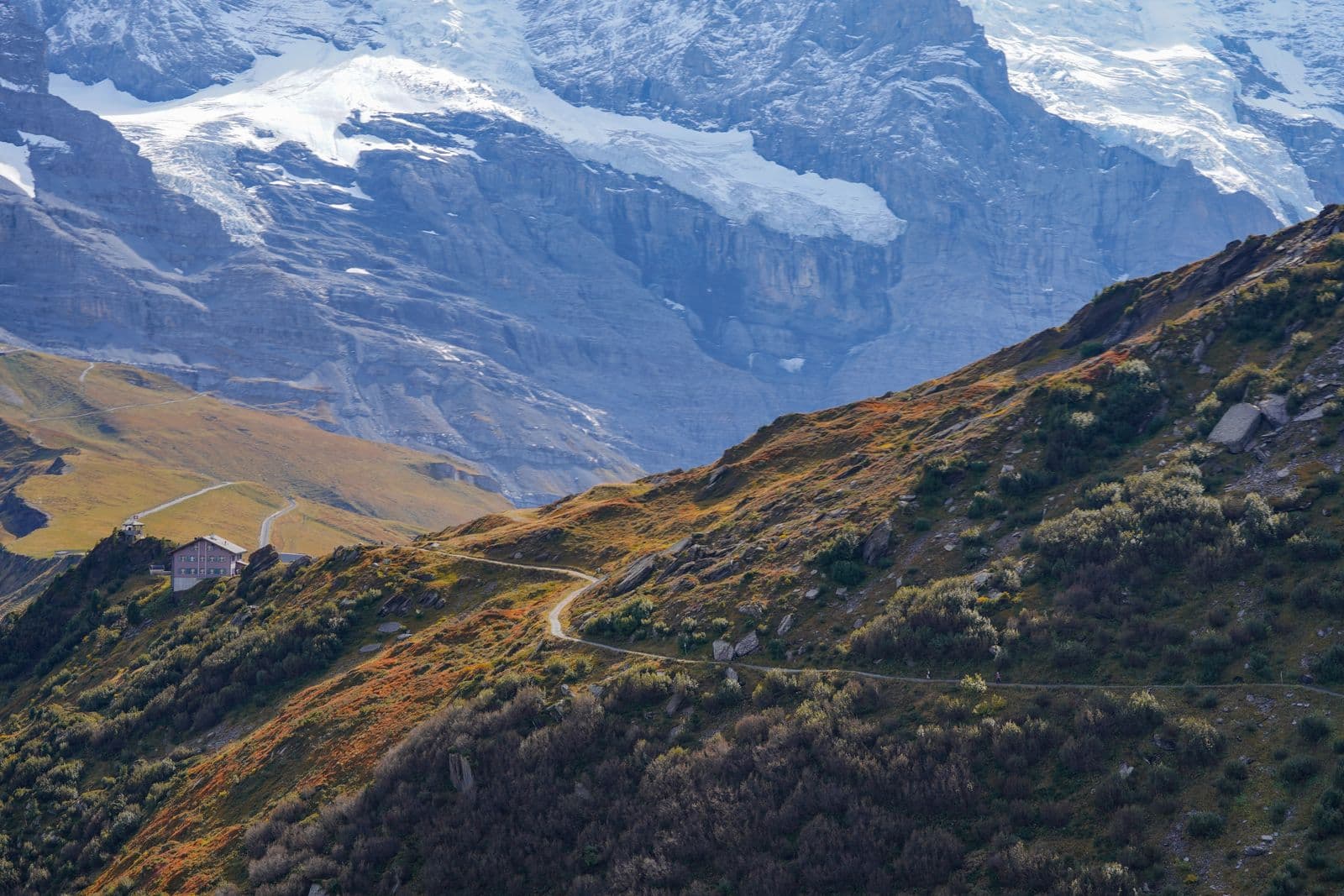
First and Bachalpsee The cliff-top viewpoint above Grindelwald by gondola (return CHF 76, May-October 2026). The free Cliff Walk viewing walkway is included with the gondola ticket, and an hour-plus walk along the ridge path (officially about 1 h 50 min round trip) reaches Bachalpsee, where the peaks mirror in the water. The path is gentle gravel, fine in trainers on a dry day, but expect slick stretches after rain or lingering snow. If Jungfraujoch is scale, this is the postcard: doing both on separate days is the classic use of three Jungfrau days.
Harder Kulm Interlaken's own viewpoint, 10 minutes up by funicular from town (return CHF 44, May-October). The two lakes, the town and the Eiger-Mönch-Jungfrau line share one frame, which makes it the evening block. It runs 3 April to 29 November in 2026 and closes for winter.
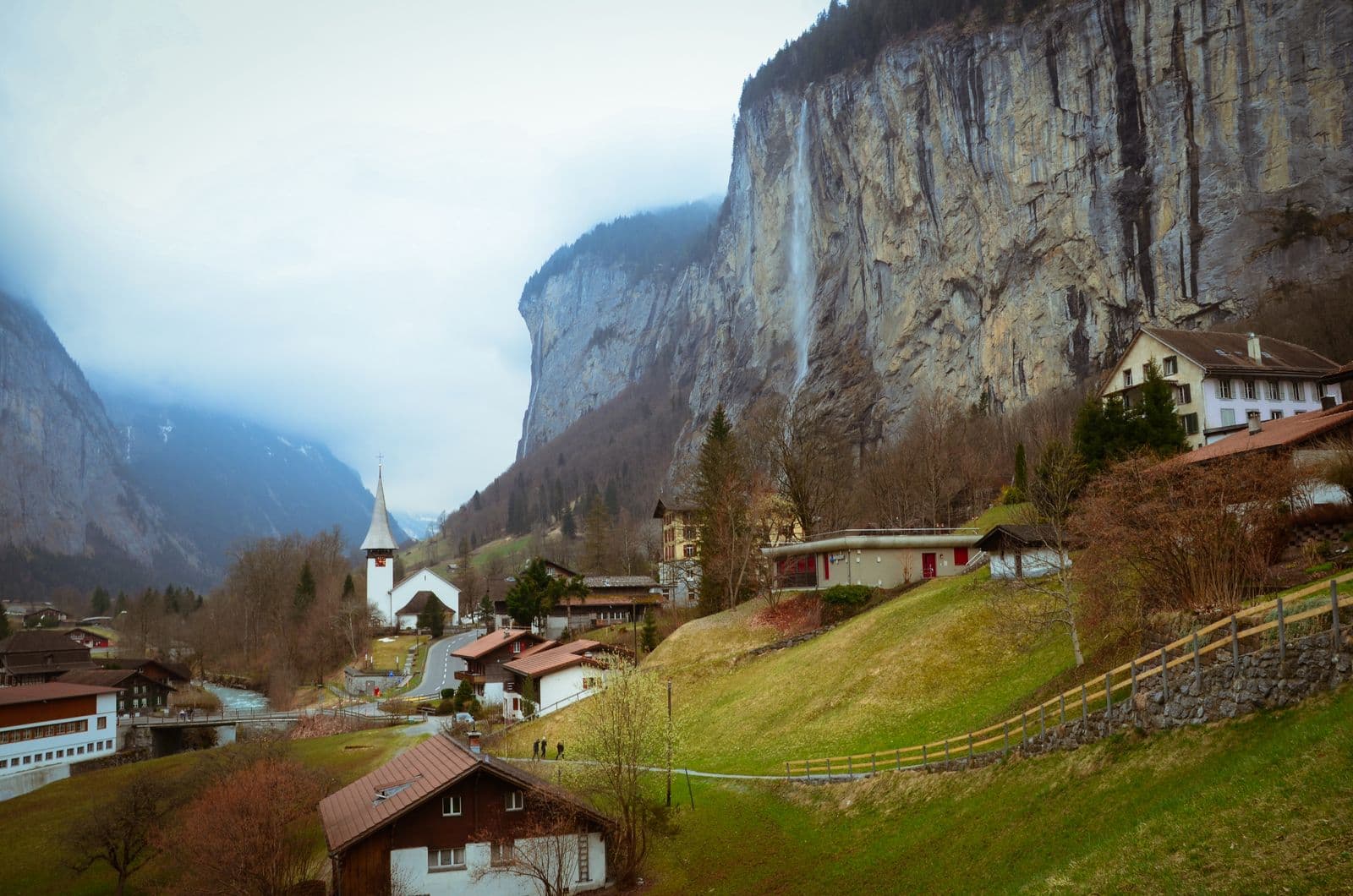
Lauterbrunnen The U-shaped valley village said to hold seventy-two waterfalls. It is about 20 minutes by train from Interlaken Ost, and the flat walk to the foot of Staubbach Falls is free. The Day 6 plan is to stash luggage in the Interlaken Ost lockers and go early, keeping it to an hour or two of falls and village, then take the midday train onward (the Lucerne line runs about hourly) so the afternoon survives. Trümmelbach Falls deeper in the valley (glacier water boring through the rock indoors; CHF 18 as of September 2026; a bus link from Lauterbrunnen station) belongs not to Day 6 but to a grey-day swap on Day 4 or 5, when the mountain plan clears space.
Set a plan B for a washed-out stretch, too. Bern's old town, about 55 minutes away by train, walks almost entirely under arcades, dry in the rain; the Thun and Brienz lake boats have indoor seating and take the half-fare discount (check sailing status on the day); and Trümmelbach (which can close when the water runs too high, so confirm same-day) rounds out three options that keep even two bad-weather days off the hotel bed.
Lucerne, the last day
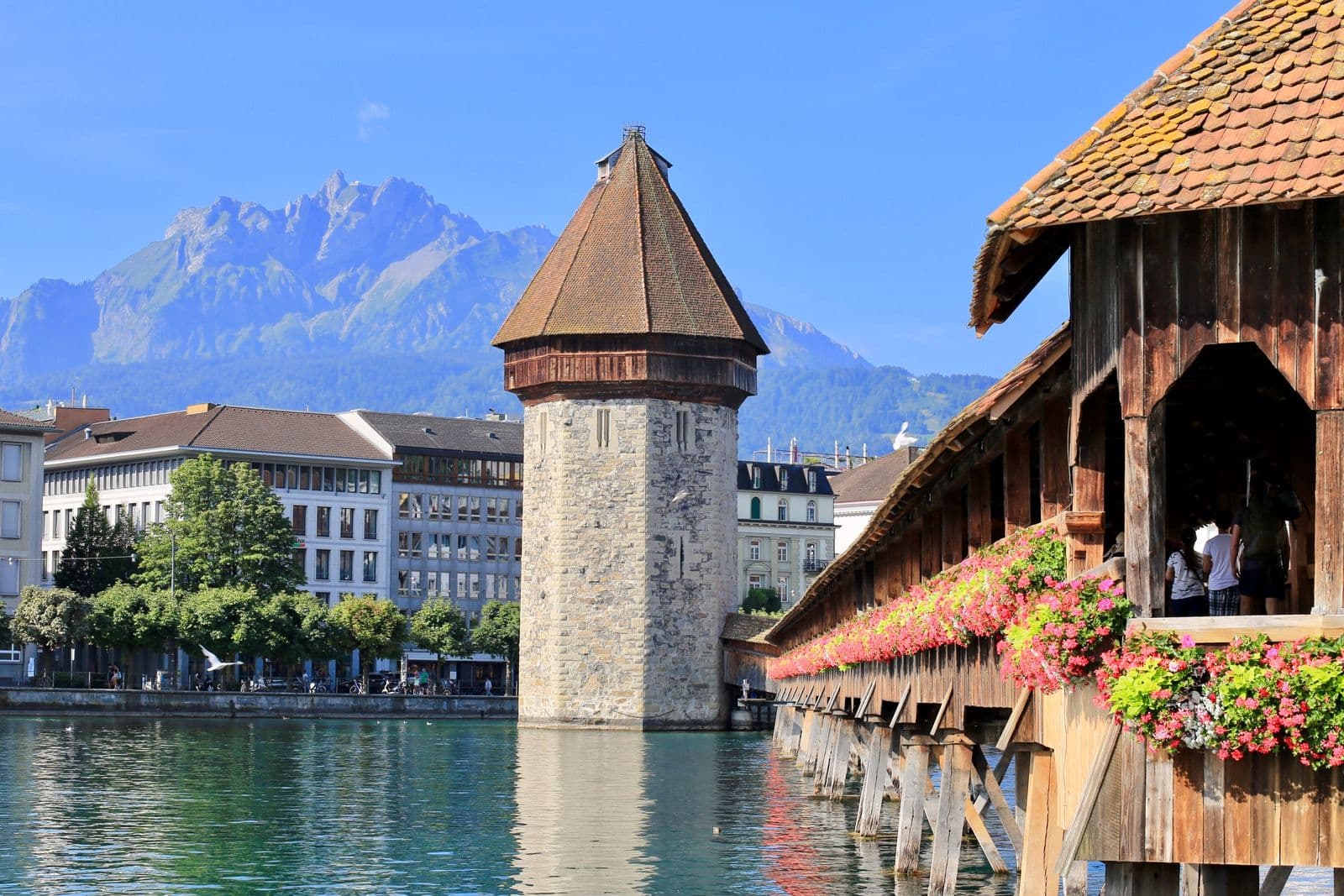
Chapel Bridge and the old town The wooden covered bridge over the Reuss and its octagonal Water Tower are Lucerne's signature. Crossing is free, and the painted facades of the old town and the Musegg wall follow on foot. The train over from Interlaken (the Luzern-Interlaken Express, about 1 h 50 min) rides the Brünig pass and the lakes, so the transfer doubles as sightseeing. Arrive before 3 p.m. and you can loop the old town before shops and museums close; the bridge, lanes and lakefront are outdoors and carry into an evening stroll.
The Lion Monument The rock-cut memorial to the Swiss Guards who fell in the French Revolution, about 15 minutes' walk from the old town, free. Well known through Mark Twain's line about it, it suits a departure-morning walk when your flight leaves in the evening (with a midday flight, see it the night before).
Lake cruise (optional) Lake Lucerne boats start from roughly one-hour rounds, so an evening flight leaves room for one. Scheduled services take the half-fare discount; check conditions on special tourist cruises. With a midday flight, skip the boat and end with the previous evening's walk.
Getting around: the Half Fare Card is the axis of the maths
| Leg | Mode | Time | Fare per person (2026) |
|---|---|---|---|
| Paris airport → city | RER B airport ticket | About 25~35 min | €14 |
| Paris → Basel | TGV Lyria | About 3 h | From €49 (dynamic) |
| Basel → Interlaken Ost | Train (direct services) | About 2 h | Half fare with the card |
| Interlaken → Lucerne | Luzern-Interlaken Express | About 1 h 50 min | Half fare with the card |
| Lucerne → Zurich Airport | Train (direct) | Around 1 h 10 min | Half fare with the card |
Airport to the city RER B is the default. The airport-leg ticket is €14 (2026), and with paper tickets withdrawn from sale in November 2025 you load a Navigo Easy card (€2) or your phone. In town it is €2.55 per metro or RER ride, €2.05 by bus, €12.30 for a day pass (airport legs excluded). The 25~35 minutes in the table is train time to Gare du Nord or Châtelet; door to door with terminal walking and a transfer, plan on close to an hour. With lots of luggage or three people, the flat-rate taxi is the alternative: €56 to the Right Bank, €65 to the Left Bank, all-in from the official rank with no luggage or passenger extras.
Paris → Interlaken TGV Lyria runs Paris Gare de Lyon to Basel SBB in about 3 hours, six times daily at roughly two-hour intervals. Pricing is dynamic: Standard opens from €49 and climbs as seats sell. At Basel change for Interlaken Ost (about 2 hours on direct services; direct and Bern-change services alternate), one change in total on a direct connection for a five-hour-plus journey (a Bern routing makes it two changes). Swiss domestic trains need no reservation, so only the TGV wants early booking. TGV luggage space is tight: be on the platform 20 minutes early and board as soon as doors open, fit name tags (a French rail requirement), and keep your case in a rack you can see, since grab-and-run theft targets the minutes before departure. A French rail strike can wipe out this leg, so checking traffic info in the booking app a day or two ahead is part of the plan.
Inside Switzerland, the Half Fare Card The visitors' Half Fare Card (one month) rose from CHF 120 to CHF 150 in January 2026 and still comes out ahead on this shape of trip. The maths: halving Jungfraujoch (CHF 261.20 → 130.60), First (76 → 38) and Harder Kulm (44 → 22) alone saves CHF 190.60, beating the card price, and trains from Basel to Zurich Airport plus scheduled lake boats are mostly half price (up to 50% off) on top. The Swiss Travel Pass 4-day (adult, consecutive, 2nd class, CHF 309) makes flatland trains free (including up to Grindelwald and Wengen in this region) but gives only 25% off the Jungfraujoch section above them, and since this budget is concentrated in the mountains with short flat legs, the Half Fare Card wins the arithmetic. On a rail-heavy grand tour the comparison flips, so judge passes by the shape of the route. Buy before you leave: purchase on the official SBB web shop with your start date set to Day 3 and it issues as a QR (shown in the SBB app if bought with an account), then buy train tickets at the half-fare (1/2) rate and show both QRs at inspection. No physical card to wait for.
Counting back on departure day Zurich Airport's station connects into the terminal on foot. On the three-hours-before rule, an evening departure (Korean Air's summer notice says 19:30) makes a train from Lucerne around 15:00 comfortable, leaving the day free until then. A midday departure (SWISS's published 13:15) means a train before 9 and straight to the airport: write off Day 7 sightseeing and finish Lucerne the night before. Which case you are in changes the whole shape of Day 7, so settle it the day you ticket.
Where to stay In Paris, the Opéra-Louvre belt (1st, 2nd, 9th) is the anchor: good airport-rail and Gare de Lyon access, and busy pavements after dark. In Interlaken, walking distance to Ost station serves the mountain trains, and around the Höhematte lawn the Jungfrau hangs in your window. In Lucerne, anywhere between the station and Chapel Bridge covers a one-night stay.
Adjust it to your travel party
The same six nights bend differently by who is going and why.
| Concept | Day to change | Take out | Put in | Why |
|---|---|---|---|---|
| Honeymoon | Evenings of Day 2 and 5 | The standard cruise, one city dinner | A Seine dinner cruise (book ahead), the sunset slot before Harder Kulm's last descent | Honeymoon satisfaction turns on the quality of two evenings, not the sight count. The post-sunset cruise round and Harder Kulm at dusk show different pictures for the same fare |
| Museums and palaces | Day 5 | First and Bachalpsee | Shift a night to Paris (3 and 2), Orsay on Thursday night (€12) and half a day at Versailles (Passport €35 high season, €25 low; closed Mondays) | The Orsay and Versailles each swallow half a day; without moving one mountain day to Paris they physically do not fit |
| With parents | Day 5 | The roughly 1 h 50 min Bachalpsee round trip | The First gondola with the Cliff Walk, a Lake Brienz cruise | Bachalpsee is a gravel walk at 2,265 m. The Cliff Walk extends from the gondola's top station with far less walking, and the boat shows the same massif from a seat |
| Winter (Dec–Mar) | Days 4 and 5 | Harder Kulm (closed), seat reservations (optional off-season) | The off-season Jungfraujoch fare (CHF 224.40 return from Interlaken), Grindelwald snow play | Winter cuts mountain fares and lifts the reservation mandate, but short days push climbs into the morning, and with no Zurich nonstops in winter, price the flights as connections |
The budget, per person for 6 nights, 8 days
Based on two sharing a room, departing Incheon. These are budget allocations by travel style, not live quotes, and they move with exchange rates and season. Swiss hotel and food prices are among Europe's highest, so the arithmetic differs from an Eastern European trip of the same length.
| Item | Budget | Standard | Comfortable |
|---|---|---|---|
| Flights (multi-city) | 1.50M | 2.00M | 2.60M |
| Hotels, 6 nights, per person | 0.70M | 1.15M | 1.70M |
| Transport (TGV, Half Fare, local) | 0.50M | 0.60M | 0.70M |
| Admissions and mountain rides | 0.30M | 0.47M | 0.60M |
| Food, 8 days | 0.35M | 0.55M | 0.85M |
| Total (KRW) | ≈3.35M | ≈4.77M | ≈6.45M |
Standard transport (600,000 KRW) assumes a TGV fare above the €49 floor, the Half Fare Card (CHF 150, about 250,000 KRW), half-fare trains from Basel through Zurich Airport plus regional round trips (assumed around CHF 70), and Paris city and airport legs. Catch the TGV at its floor price and you trend toward the budget tier; book late and you overshoot. Standard admissions (470,000 KRW) add up the half-fare Jungfraujoch (CHF 130.60) with its reservation (CHF 10), First (CHF 38) and Harder Kulm (CHF 22), plus the Louvre (€32), the Eiffel summit (€36.70) and the cruise (€18). The budget tier swaps Jungfraujoch for First only and takes the Eiffel stairs (€14.80); the comfortable tier adds the Orsay and a dinner cruise. Food splits sharply by country: Paris runs €40~60 a day on bakery mornings and bistro dinners, while a Swiss restaurant meal is CHF 25~40, so even one restaurant meal a day with supermarket fill-ins puts the four Swiss days at 250,000~350,000 KRW. The standard 550,000 stacks two effective Paris days on that plus transit-day snacks, so if you plan to eat out three times a day in Paris, read the comfortable column, and the 350,000 floor assumes Switzerland mostly from the supermarket shelf. Budget one fondue (CHF 25~30 a head) if it is on your list, and lean standard.
Above all else
- Booking order: flights, Louvre, TGV, Eiffel Tower. The Zurich nonstop's weekday limits make flights first; the Louvre's timed slots and the TGV's dynamic fares come next. Buy Jungfraujoch travel tickets flexibly around the weather, but grab the peak-season seat reservation (a time slot) as soon as the forecast firms.
- The morning webcam is half of Jungfraujoch. CHF 261.20 on a clouded-in day buys a train ride, not a view. Use the buffer-day structure and climb on the clear one.
- Buy the Half Fare Card before departure. Set the start date to Day 3 in the official SBB web shop and the half fare applies from your very first Basel leg, with train tickets purchasable at the 1/2 rate in advance.
- Keep your passport on you on the train. France's temporary border checks mean inspections can happen on Basel-bound services.
- Paris paper tickets are no longer sold. Load a Navigo Easy card or your phone before leaving the airport and the two city days run smoother.
- Always refuse DCC. When a terminal or ATM offers a KRW amount, choose the local currency.
- Supermarkets are the Swiss price buffer. Water, fruit and sandwiches from the ubiquitous station and town supermarkets cut food costs sharply, and ordinary tap water is drinkable, so an empty bottle earns its space (fountains marked non-potable excepted).
- Summit weather ignores the calendar. Jungfraujoch hits sub-zero in August. Pack one early-winter layer.
- Check your travel insurance for mountain terms. Emergency transport or rescue in the Alps is priced in another league; carry cover with overseas treatment and rescue limits.
- Pickpockets. Be sharpest in the crowds of the Paris metro, the Montmartre steps and the Champ de Mars lawn, and even in Switzerland never leave bags unattended on platforms.
- The Sunday factor. Many Paris shops and most small-town Swiss shops close Sundays; fill that day with museums, mountains or boats you have confirmed are open.
In short
France and Switzerland in 6 nights and 8 days works best as Paris (2 nights) → Interlaken (3) → Lucerne (1) in one direction, with a weather buffer built around Jungfraujoch.
- Entry: Schengen visa-free (90 in 180 days), passport 3+ months valid, EES registration at first entry (Paris on a nonstop), ETIAS not yet live (check before departure), French border checks possible on trains
- Fly multi-city, into Paris and out of Zurich; Zurich nonstops are summer-seasonal, so check your return weekday first
- For Swiss mountain fares, the Half Fare Card (CHF 150) beats the Swiss Travel Pass on this route
- The Louvre at €32 (2026 non-EEA rise), the Eiffel summit at €36.70 and Jungfraujoch at CHF 261.20 (May–Oct, reservation extra) anchor the budget
- Weather-buffer Jungfraujoch; check museum closing days (Louvre Tue, Orsay Mon) before fixing Paris
- Keep city-by-city plans, trains and ticket vouchers in one place with Tripop
Plan this trip with Tripop
Currencies switch mid-trip and the tickets pile up: TGV, mountain rail, admissions. Type "France Switzerland 6 nights Paris Interlaken Lucerne" into the Tripop app and a day-by-day frame appears; upload flight, rail and admission PDFs and the vouchers sort themselves by city. Spending in euros and francs lands in one ledger, converted to your home currency.
- Get it on the App Store
- Get it on Google Play
- Start on the web, no install needed
What we verified
The day-by-day route in this guide is a planning example, and the admission and transport figures were checked by the Tripop travel desk on 12 September 2026 against each operator's official site and ticketing pages. Europe's entry systems (EES in force, ETIAS start date unannounced, French temporary border checks), Jungfrau Railways and Paris attraction fares and booking rules, flight and rail schedules and both exchange rates all change over time, so re-check the official pages before departure. If a number here differs from what you find, tell us and we will fix it promptly.
Images: Pexels (Darya Sannikova: Paris street and Eiffel Tower, detait: Louvre, buşra gülen: Sacré-Cœur, Tom D'Arby: Jungfraujoch, Lea Renner: Jungfrau hiking trail, Som Thapa Magar: Bachalpsee, Adrian Limani: Lauterbrunnen, ILOVESwitzerland: Chapel Bridge, Baublewave: Interlaken, Josh Withers: the Seine), Pexels License.