
Six nights, three cities
Travel north through Rome for 3 nights → Florence for 2 → Venice for 1. This plan is for two adults visiting Italy for the first time who enjoy museums and walking. It assumes arrival in Rome on Day 1, departure from Venice on Day 7 and arrival in Incheon on Day 8. Adjust the first and last days to your actual flights.
| Day and overnight stay | Main plan | Condition that matters |
|---|---|---|
| Day 1 · Rome | Airport → hotel, dinner | Leave booked sightseeing out while you handle arrival and jet lag |
| Day 2 · Rome | Colosseum and Forum → Navona, Pantheon, Trevi | Secure the morning admission first |
| Day 3 · Rome | Vatican Museums → St Peter’s → Trastevere | Check Sunday closures |
| Day 4 · Florence | Short Rome walk → train → Piazzale Michelangelo | Leave time to collect luggage and reach the station |
| Day 5 · Florence | Uffizi → Signoria and Ponte Vecchio → Accademia | Both museums close on Mondays |
| Day 6 · Venice | Duomo dome → train → Doge’s Palace and evening walk | Only if an early dome booking fits a train around midday |
| Day 7 · In flight | Walk or go straight to the airport, depending on the flight | No sightseeing for a morning departure |
| Day 8 · Incheon | Arrival | Check the arrival date on the ticket |
Arrival day stays clear, and transfer mornings have only one main stop. Day 6 is the busiest. Without an early dome ticket, skip the climb and reach Venice earlier. Moving the Doge’s Palace to departure day can clash with your flight.
Check weekdays before buying tickets
| Your dates | Change to make |
|---|---|
| Day 3 is Sunday | Swap Rome Days 2 and 3. The Vatican’s last-Sunday free opening also has holiday exceptions and queue conditions |
| Day 5 is Monday | Adjust travel dates or nights per city; otherwise replace both museums with outdoor sightseeing |
| Only late dome slots remain on Day 6 | Skip the dome and keep the train and Doge’s Palace plan |
| Day 7 is Sunday or a religious holiday | Leave out a morning visit inside St Mark’s |
Check the Vatican’s official closure calendar and each Florence museum’s calendar first. Moving both Monday-closed museums onto an already busy Day 6 is not a useful fix.
Rome: one day for ancient sites, one for the Vatican
Day 1 · Reach the hotel and eat nearby
Take Leonardo Express from FCO to Termini, then continue to your hotel. Check the final walk or transfer for Monti and west-Termini hotels, and a bus or taxi connection for the Pantheon/Navona area. For a late arrival, confirm the hotel’s check-in deadline and contact method first, then eat nearby. Even if the flight lands earlier, leave non-refundable sightseeing bookings out while immigration and jet lag remain uncertain.
Day 2 · From the Colosseum to the historic centre
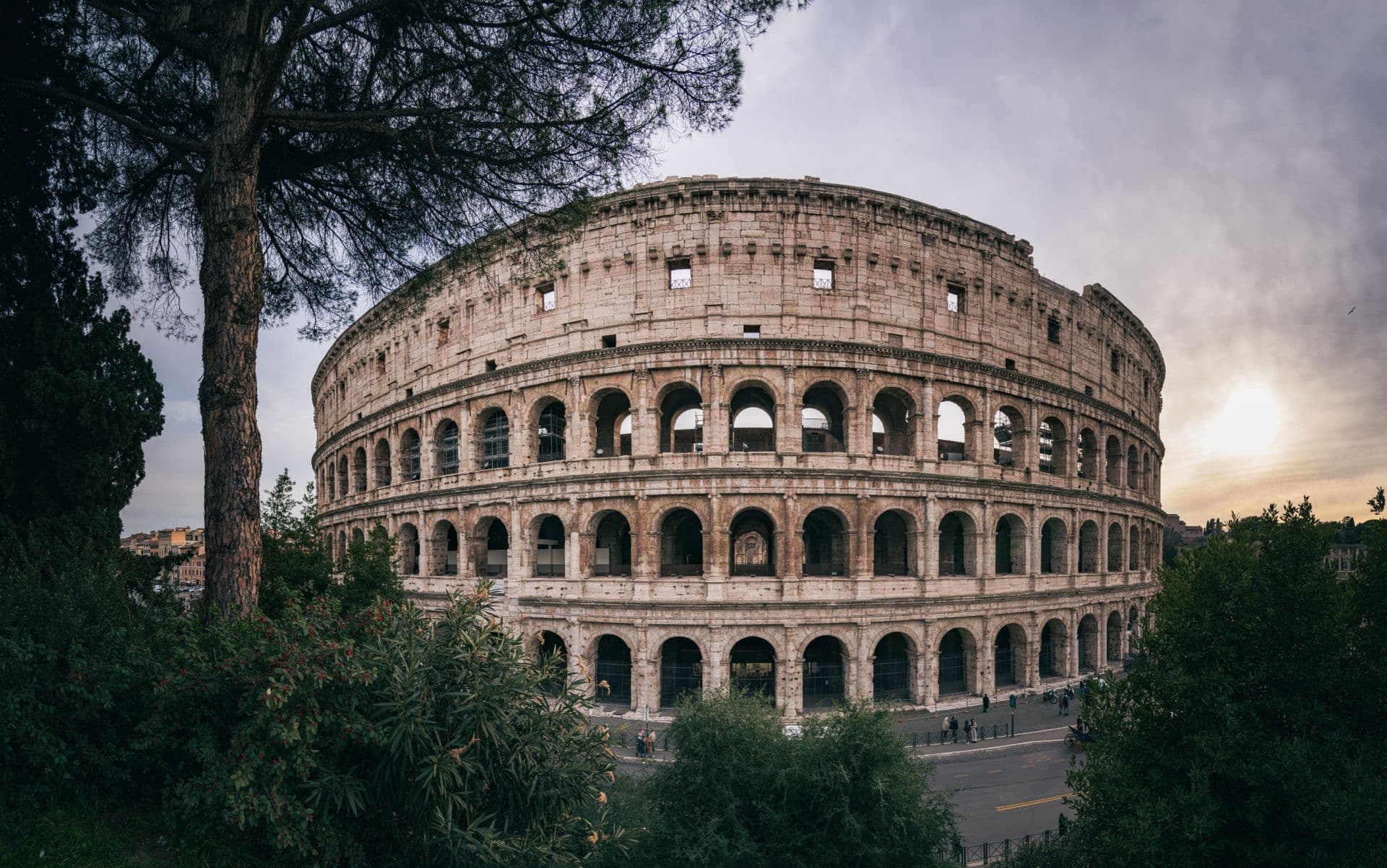
The Colosseum is the ancient amphitheatre; the neighbouring Roman Forum and Palatine contain remains of civic and everyday life. Give this group the morning, then walk from Piazza Navona to the Pantheon and the Trevi Fountain after lunch. In heat, add breaks among the ruins and drop one afternoon square.
After seeing the Colosseum’s arena structure, walk through the Forum to distinguish the spaces for public life from the building for spectacle. For a deeper ancient-Rome visit, leave more time for the Forum and Palatine and fewer afternoon squares. Bring shade and water in hot weather; refill a bottle at Rome’s nasoni drinking fountains, rather than treating ornamental fountains as water supplies.
Inside the Pantheon, the opening at the centre of the dome lets light into the building. At Navona, see the Fountain of the Four Rivers and the square; at Trevi, choose between the free view from the upper square and the paid lower area.
| Site and ordinary adult ticket | Booking and coverage |
|---|---|
| Colosseum €18 | Standard 24-hour ticket: Colosseum, Forum and Palatine; arena and underground excluded |
| Full Experience €24 | Product including the underground and arena, with separate availability and visiting conditions |
| Pantheon €7 | From 1 July 2026; buy officially online or on site, with security and entry queues separate |
| Trevi lower area €2 | Non-resident visitors during paid-access hours; the upper-square view is free |
Colosseum tickets are named, timed and released 30 days before visiting. Book each visitor under the name on their identification and bring it. Name changes are restricted, so do not enter the lead traveller’s name for everyone.
The first Sunday of each month is an exception. Under the free-Sunday rules, collect free tickets on site in order of arrival; the arena and underground are excluded. Choose another day if you need a fixed morning admission.
Day 3 · The Vatican Museums and St Peter’s have different entrances
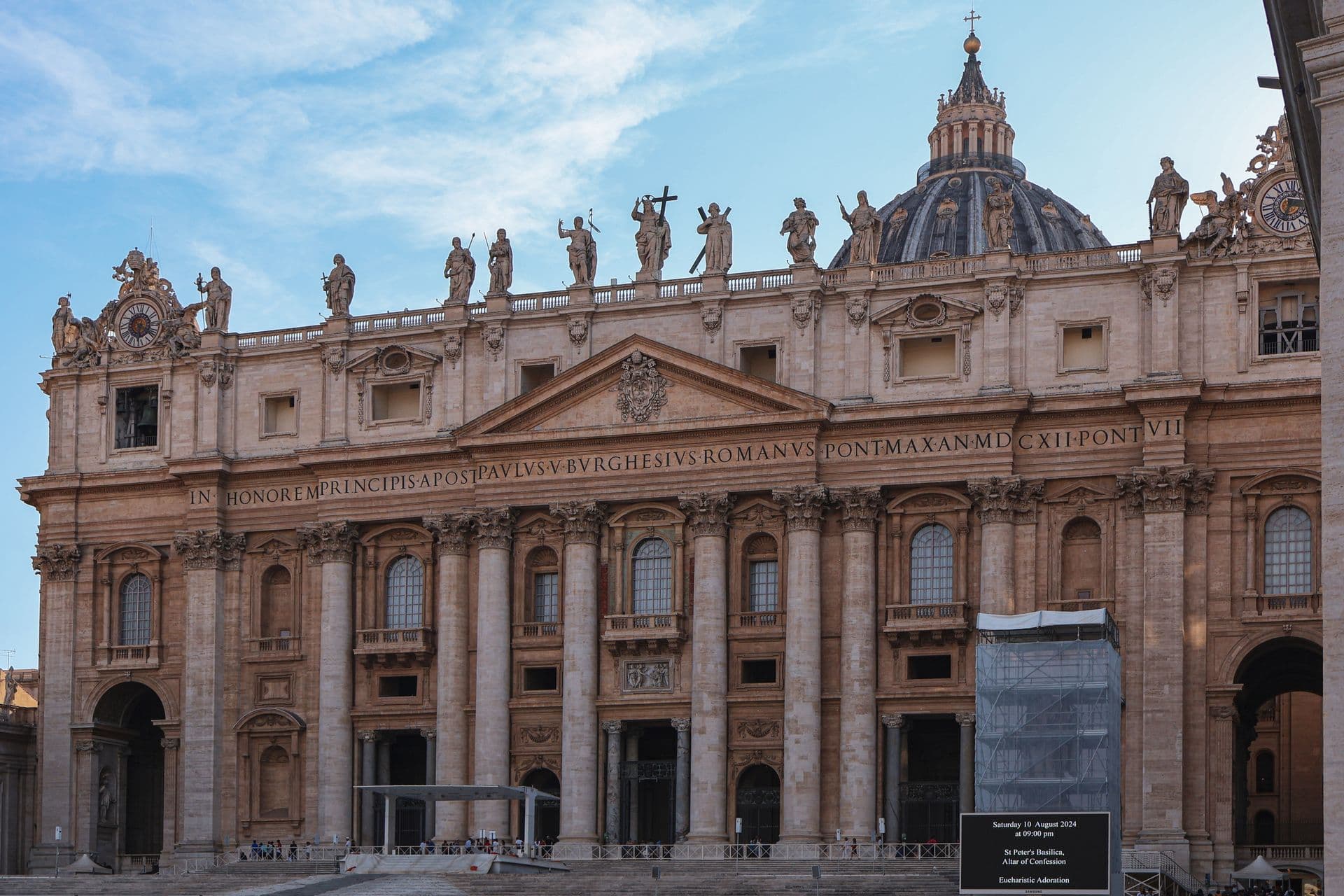
The Vatican Museums include the Sistine Chapel ceiling and The Last Judgement. Reserve a morning slot and allow half a day, then walk to St Peter’s after lunch. Do not assume an individual visitor can use a group-only passage directly from the museums to the basilica.
Allocate about 15–20 minutes to leave the museums and walk around the walls to the square, then allow separately for the basilica security queue. That walking allowance is a planning estimate. Check access notices for Wednesday papal audiences and religious events.
| Visit | Price and choice |
|---|---|
| Vatican Museums | Standard €20 plus €5 online booking fee; this plan uses a €25 timed reservation |
| St Peter’s Basilica | Main basilica entry is free, with security separate from the museum ticket |
| St Peter’s dome | Optional paid visit; check the official stair/lift combinations and inclusions |
Even with the lift, the dome has 320 final steps. Choose the main basilica alone if stairs are unsuitable. Follow the basilica’s official dress guidance: cover shoulders; men wear long trousers, and women wear trousers or a skirt below the knees. The museums also require modest clothing. Use dates actually offered in the official booking calendar instead of relying on a supposed universal “midnight, 60 days ahead” release rule.
Trastevere for dinner, a shorter next morning
Trastevere’s lanes across the Tiber have restaurants and wine bars. Choose carbonara, cacio e pepe or amatriciana for dinner. It is not a direct onward metro journey from the Vatican, so check a bus or taxi route; eat near the hotel if tired. Sightseeing inside Santa Maria in Trastevere may be restricted during worship.
Use the square outside Santa Maria in Trastevere as an evening meeting point instead of crossing the city for a restaurant name alone. When sightseeing is permitted, look at the apse mosaics before eating in the neighbouring lanes. After a long Vatican visit, leave further sights across the river for another day.
On Day 4, leave luggage at the hotel and walk from Piazza di Spagna along Via del Babuino to Piazza del Popolo, then up to the Pincio viewpoint. At the Spanish Steps, look towards the church of Trinità dei Monti; from the Pincio, look across Rome’s roofs. Via dei Condotti is a short shopping detour from Piazza di Spagna, but leave a long shopping session for a day without a train.
The Spanish Steps are not a picnic or seating area. Under Rome’s public-space rules, do not sit or camp on monuments, and do not drag suitcases or strollers over the historic steps. Plan a café or permitted bench break separately. Stay local instead if your hotel is near the Pantheon or Navona, and work backwards from luggage collection and the journey to Termini.
Take the Rome walk only after confirming luggage storage at the hotel, using a train around midday as a planning starting point. Subtract luggage collection, station travel and boarding time from the actual departure to find when the walk must end. On arrival at Florence SMN, go to the hotel to check in or request storage before heading to Piazzale Michelangelo; immediate room access depends on the hotel’s check-in terms.
Florence: separate museums from the dome climb
Day 4 evening · Piazzale Michelangelo
Piazzale Michelangelo is a free viewpoint across the Arno, looking towards the Duomo and Ponte Vecchio. Allocate about 30 minutes for the uphill walk from the centre, or take a bus. If it rains or the train arrives late, keep the riverside walk and dinner instead.
Day 5 · Uffizi, Ponte Vecchio and Accademia
At the Uffizi, the morning focuses on Renaissance painting, including Botticelli’s The Birth of Venus and Primavera. Allow about three hours, then continue to Piazza della Signoria and the goldsmiths’ shops on Ponte Vecchio. The David in the square is a replica; the original is at the Accademia, planned for the afternoon.
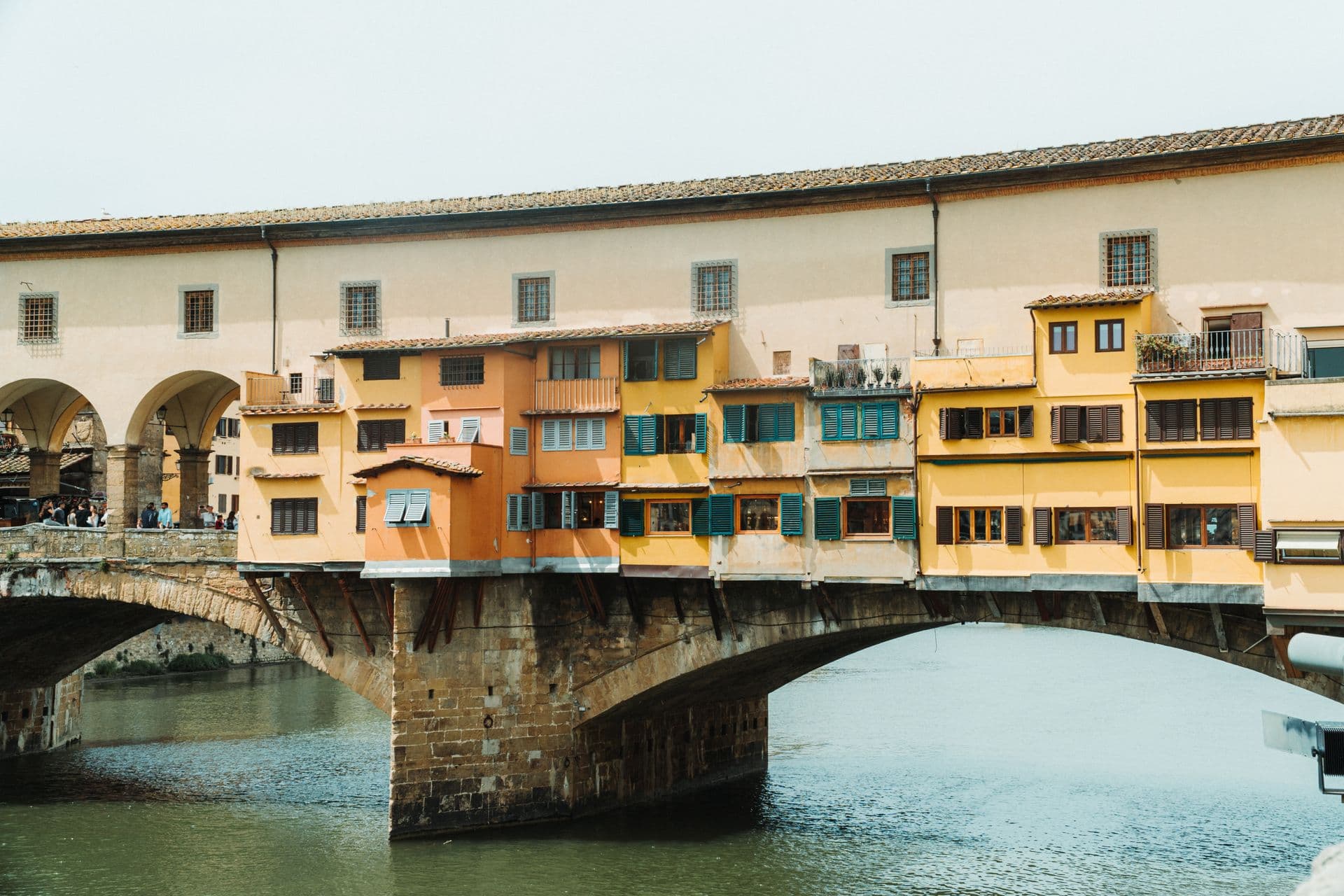
Choose the paintings you want to see at the Uffizi and leave time to read their labels. The Birth of Venus depicts Venus arriving ashore from the sea; comparing its figures with other Renaissance paintings gives the visit a focus. Signoria and Ponte Vecchio are the outdoor break between museums, so avoid inserting another paid museum along that stretch.
Allocate about one hour for the Accademia and leave lunch and a café break between museums. If art is a lesser interest or standing is difficult, skip the Accademia and spend longer by the river.
The two museums reward different approaches. Use the Uffizi for a longer, selective painting visit, and the Accademia for the original David together with Michelangelo’s unfinished Prisoners along the approaching gallery. Comparing bodies still emerging from stone with the finished David gives the visit more purpose than checking off one famous statue. The Accademia has no internal cloakroom for large bags: follow its official visitor guidance and leave luggage at the hotel. If timings slip, drop the Accademia instead of rushing both museums and losing the break.
| Ordinary adult ticket | Condition for this plan |
|---|---|
| Uffizi €29 in advance | Distinct from €25 same-day purchase; named timed entry, closed Mondays |
| Accademia €20 + €4 reservation | €24 with reservation; closed Mondays |
| Brunelleschi Pass €30 | Fixed dome booking; baptistery, bell tower, museum and Santa Reparata included, valid for three days from the selected date |
Day 6 morning · Climb only with an early slot
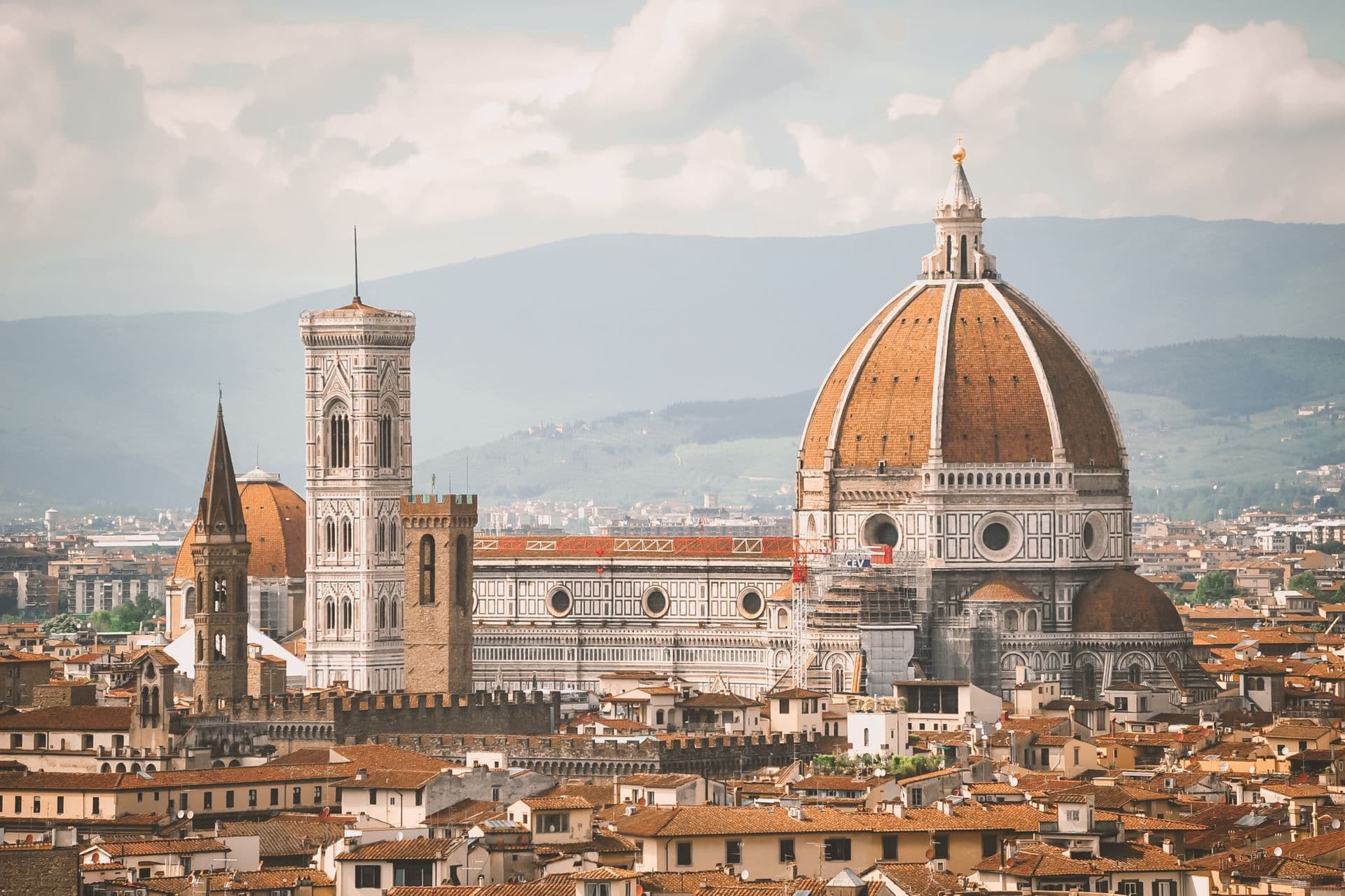
Free access to the Duomo’s main church and climbing its red dome are separate visits. Reserve the dome with the Brunelleschi Pass and bring photo identification. 463 steps and no lift are the important choice criteria. Backpacks, suitcases and medium/large bags must be left at the designated storage, Piazza Duomo 38/r. Allow time to drop them off and retrieve them before your train.
Include the climb only if an early visit leaves time to retrieve bags and reach the station. A three-day pass does not mean this onward itinerary can cover every included facility. If skipping the climb, see the exterior and continue to the station. The dome is scheduled to close for maintenance on 16–20 November 2026; leave the climb out if your dates overlap.
At the central market, lampredotto or a panino can be a lunch option. The traditional market and upstairs food hall have different hours; check the upstairs food hall’s hours for an evening visit. Bistecca alla fiorentina is ordered by weight, so confirm the menu unit and total weight first.
Lampredotto is Florence’s sandwich of slow-cooked beef offal. Choose a panino with another filling if offal is unsuitable. The market and kiosk food described by Florence’s tourism office fits a lunch without time for a long restaurant meal; plan a steak dinner after agreeing the cut’s weight and how many people will share it.
Venice: protect the evening, keep departure day flexible
Day 6 · Doge’s Palace, Rialto and canals after dark
After reaching Santa Lucia station, leave your luggage at the hotel and go to the Doge’s Palace. This former seat of the Venetian Republic includes a route to the prisons across the Bridge of Sighs. The plan allocates about two hours.
The ordinary Doge’s Palace ticket is €35. A €30 rate requires purchase more than 30 days before visiting; check the particular product conditions. Standard April–October closing is 19:00 with last entry at 18:00, though special openings can differ. If a delayed train leaves too little visiting time, check change/refund terms rather than forcing the visit.
Spend the evening around Rialto and the Grand Canal, followed by cicchetti at a bacaro in Cannaregio. A standing snack and a seated meal may have different prices and table charges; check the menu.
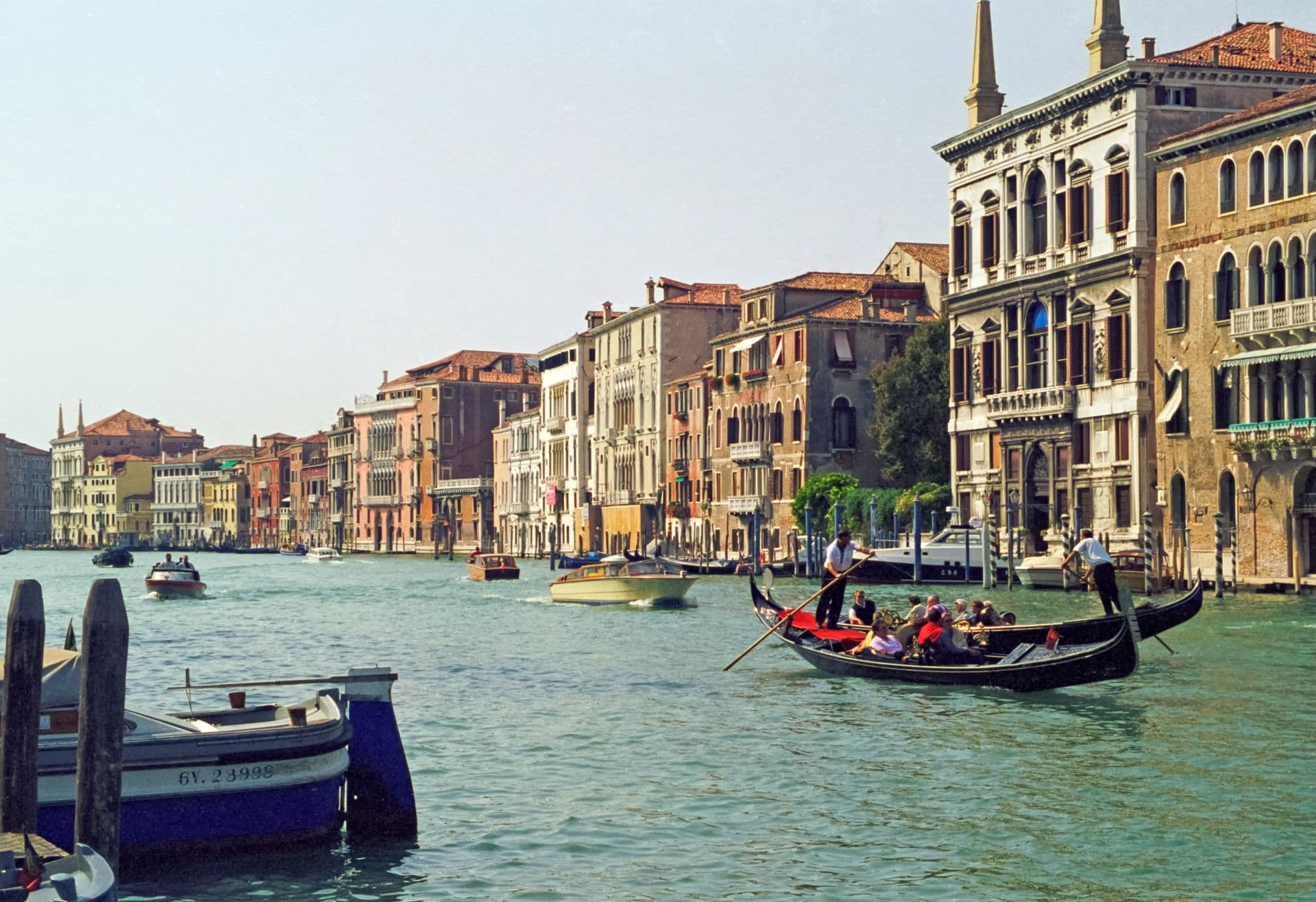
At Rialto, look at the bridge crossing the Grand Canal and the waterways on either side, then continue through lanes towards your hotel. If you leave the Doge’s Palace late, shorten the detour to Cannaregio and eat near Rialto or the hotel instead. Decide whether you want small cicchetti or a seated meal; there is no need to tour several bars after a tiring day.
Day 7 · Is there time to go inside St Mark’s?
Walk through St Mark’s Square the previous evening or on departure morning. Add the basilica’s golden mosaics only when your flight leaves enough time. Ordinary interior entry is €10 and the bell tower €15 separately; check official products and hours.
| Flight or weekday | Default choice |
|---|---|
| Morning to midday departure | Go to the airport without sightseeing reservations |
| Afternoon flight but tight airport transfer | A brief square walk only; skip the interior |
| Departure after 16:00 plus a first 09:30 slot Monday–Saturday | Enter only if luggage collection and the actual airport service still leave enough time |
| Sunday or religious holiday | Tourist access starts in the afternoon, so skip a morning interior visit |
“After 16:00” is not an automatic safe connection. This plan uses arrival at the airport three hours before an international flight as a planning allowance, with the hotel-to-pier walk, boat waiting, transfer and luggage collection calculated separately. Follow the airline if it requires longer.
Price water buses and gondolas differently
ACTV water buses have a €9.50 ordinary 75-minute ticket and a €25 24-hour ticket. The pass is cheaper when you need three separate 75-minute tickets within 24 hours, costing €28.50. Transfers within a ticket’s validity can share one ticket, so do not count boardings alone. Alilaguna airport services are not included. Check the destination and any shortened service before boarding a Grand Canal route.
Gondola fares are per boat, not per person: daytime 09:00–19:00 costs €90 for 30 minutes; nighttime 19:00–04:00 costs €110 for 35 minutes. Sharing a €90 daytime ride between two makes €45 each; splitting it among the maximum five makes €18 each. Check the city’s official gondola information and agree on duration and payment before boarding. This is not a promise that the operator will find strangers to share with you.
Airport links, intercity trains and hotel locations
Two main train journeys
| Leg | Time and ordinary adult one-way basis | Check before booking |
|---|---|---|
| FCO airport ↔ Rome Termini | Leonardo Express: 32 minutes, €14 | First/last train for the day, then onward travel to the hotel |
| Rome → Florence SMN | Italo: about 1 hour 25 minutes, advertised from €14.90 | Actual fare and change terms for the date |
| Florence SMN → Venice Santa Lucia | Italo: about 2–2 hours 15 minutes, advertised from €18.90 | Distinguish Mestre from Santa Lucia |
| Venice ↔ Marco Polo airport | Alilaguna: €18 one way | Pier, route-specific duration and walk to the airport terminal |
The train “from” prices are the operator’s advertised route minimums. They are neither a promise for your date nor a maximum fare. Compare actual Trenitalia and Italo departures, luggage and change conditions.
Use the train and seat on a timed high-speed e-ticket. For a paper regional ticket, follow its pre-boarding validation instructions. Leonardo Express Tap&Tap uses designated terminals at the departure station, rather than any card on an ordinary gate.
For Florence, select Firenze Santa Maria Novella (SMN); for a hotel on Venice’s historic islands, select Venezia Santa Lucia (S. Lucia). Venezia Mestre is on the mainland, so choosing only by the city name adds another transfer. You still need a boat or walk from Santa Lucia to the hotel: the train journey time is not your hotel arrival time.
Alilaguna’s €18 fare includes one large bag and one hand bag, with extra luggage charged separately. From San Marco, consult the actual timetable for your chosen route. Adding the boat, waiting and walking to a three-hour airport buffer means preparing to leave the hotel earlier than four hours 30 minutes before the flight in a typical plan. This allowance does not replace a selected departure’s timetable.
If a late Rome arrival or early Venice flight does not fit public transport, ask the hotel about an airport transfer and confirm departure time and total cost. Book the previous day rather than assuming a water taxi will be immediately available. A Rome return flight also requires separate time to travel back from Venice.
Near Piazzale Roma, compare the airport bus first
Near San Marco or Rialto, compare Alilaguna using the actual pier and airport route. Near Santa Lucia station or Piazzale Roma, start with the ATVO airport express bus. Walking to its departure point can avoid a longer canal transfer. Check the chosen date’s official sales page and timetable for fare and journey time.
The same connection works from the airport into the city. With an online ATVO ticket, head outside Exit D to the second lane on the left: stop 3 is for Venice, while stop 4 is for Mestre. Going to the airport, buy online or at the Piazzale Roma ticket office or machine; add waiting and road traffic to the airport buffer.
For a four-star hotel, check luggage access as well as location
| City | Default hotel area | When to change it |
|---|---|---|
| Rome, 3 nights | West of Termini or Monti | Pantheon/Navona for evening walking, with an extra station transfer |
| Florence, 2 nights | Between SMN and the Duomo | Nearer the station with large suitcases |
| Venice, 1 night | Historic-island access to Rialto or San Marco | Prefer fewer stepped bridges from the pier |
An island stay makes evening and morning walks easier. Mestre can be useful, but requires separate return transport and last-service checks; this one-night island-based route cannot simply be copied unchanged.
What to change for your party or the weather
| Situation | Replace | Adjustment required |
|---|---|---|
| Art focus | Day 4 squares → Borghese Gallery | Only when the official slot fits luggage collection and the train |
| Honeymoon or celebration | One Florence night → an extra Venice night | Drop one Florence museum and the dome; gain a Venice morning and Burano time |
| Children or difficulty with stairs | Both dome climbs → squares and a Grand Canal water bus | Check separately whether the Colosseum ticket includes the arena |
| Returning visitor | Day 4 Rome morning → Orvieto stop | Verify regional train, funicular and luggage storage; add at least half a day and rewrite the high-speed train plan |
| Rain or strong heat | Shorten viewpoints and long walks through ruins | Focus on already-booked interiors and increase breaks |
Per-person budget: the standard example targets four-star sharing
These are planning allocations for two adults departing from Incheon and sharing one room for six nights. They are not live airfare or hotel quotes, and have not been converted into prices from your own departure country. The standard scenario targets four-star hotels with KRW300,000 per room per night, shared between two for six nights. Festivals, holidays and availability on Venice’s historic islands can require more money or a different location.
| Item · KRW per person | Saving example | Standard example | Roomier example |
|---|---|---|---|
| Flights · into Rome/out of Venice | 1,100,000 | 1,600,000 | 2,500,000 |
| Accommodation · share of 6 nights | 500,000 | 900,000 | 1,500,000 |
| Airport, intercity and local transport | 150,000 | 220,000 | 300,000 |
| Admissions and optional tours | 200,000 | 350,000 | 500,000 |
| Food and snacks allowance | 400,000 | 600,000 | 850,000 |
| Total · accommodation tax and other extras separate | 2,350,000 | 3,670,000 | 5,650,000 |
The saving example means reducing paid sights and hotel class or location; it does not guarantee four-star accommodation throughout. The higher example is not a ceiling. Food is an allowance for the full eight-day schedule and can be adjusted for included airline meals and actual time in Italy.
What is covered, what to add
| Item | Calculation basis |
|---|---|
| Transport | Two high-speed legs, airport links and city travel; replace with booked totals |
| Main paid sights | Colosseum18 + Vatican25 + Pantheon7 + Trevi2 + Uffizi29 + Accademia24 + Florence pass30 + Doge’s Palace35 = €170 |
| Optional visits | Add only what you choose: St Peter’s dome, St Mark’s interior €10, bell tower €15 and a gondola |
| Accommodation tax | Check whether room quotes include it and the city/class/season’s per-person nightly rate; separate from the totals above |
| Other extras | Shopping, insurance, connectivity, restaurant cover charges and personal additional orders |
For adults in four-star hotels, accommodation tax is Rome €7.50 × 3 nights + Florence €7 × 2 nights + Venice’s historic centre €4.50 × 1 night = €41 per person. The Venice rate applies February–December; January is €3.10, making the same itinerary €39.60. Check exemptions, accommodation classification and whether your room quote already includes the tax.
At an illustrative €1 = KRW1,600, €170 in admission costs is KRW272,000. This is not a current exchange-rate quote. A daytime gondola shared by two adds €45 per person, almost filling the standard KRW350,000 admission/tour allowance. Increase that item if adding the dome or St Mark’s.
For meal planning, use €15–25 for a restaurant meal in a visitor area and €5–8 for a simple panino as assumptions, then adjust to menus. Check coperto/service charges when seated and whether steak prices are per 100g or per kilogram.
Entry and transport checks before departure
| Check | Basis for this itinerary |
|---|---|
| Passport and stay | Check visa eligibility for your nationality; passport valid at least three months beyond planned Schengen departure and issued within the previous ten years |
| EES | Fully implemented from 10 April 2026; eligible non-EU short-stay visitors undergo entry/exit recording and biometric procedures at the external Schengen border |
| ETIAS | On 13 September 2026, operations and applications had not started; recheck before departure |
| Rome local travel | ATAC Tap&Go BIT €1.50/100 minutes; each traveller consistently uses their own same card or device |
| Venice access fee | Check whether your date is officially charged; separate from accommodation tax, with guest-exemption procedures on applicable days |
| Rail strikes or service changes | Check your operator’s train, guaranteed services and change terms; do not board a different train arbitrarily |
What a 100-minute Rome ticket covers
ATAC Tap&Go requires one card or device per person, used consistently. Tap again whenever you change buses or trams; transfers within the ticket’s valid 100 minutes do not create another charge. If you start with a physical card, do not switch to its phone-wallet version: they are treated as different payment media.
The metro includes one continuous journey. Stay within the gates when changing between A, B and B1; the official A–C interchange exception is different from re-entering after sightseeing. Do not budget a metro return after visiting the Colosseum as covered merely because some of the 100 minutes remain.
Select your nationality, residence and visit purpose in the official Italian visa checker. A visa-free short stay, where eligible, is normally limited to 90 days in any 180 across the whole Schengen Area, not 90 days separately in Italy. A European connection may place first Schengen entry at the connecting airport instead of Rome, so leave adequate connection time.
In 2026, Venice’s access fee applied on 60 selected days from 3 April through 26 July. September, the month checked here, falls outside that period. From 27 July until new charging rules take effect, payment, registration and exemption proof are not required. On a charged day, overnight guests should ask their accommodation about the exemption QR or accepted alternative proof for their stay. Do not reuse these dates automatically for another trip: check the official city portal.
Italy uses the euro. Carry a card and some small cash, and keep bags and phones close at crowded stations and sights. Check whether mobile data covers Italy and your transit country. For the Incheon-based example, Italy is seven hours behind Korea during Italian daylight saving and eight hours behind in winter.
Put this itinerary into Tripop
Set the overnight dates, train departures and admission slots first, then add them to Tripop. Start with Create a trip and use the booking-document guidance to organise the documents you need. Adjust any AI-generated timetable to actual reservations and opening hours.
What we verified
Tripop checked facility, transport and EU sources for prices, booking and entry conditions on 13 September 2026, then checked Rome public-space rules, ATAC transfers, ATVO airport buses, artworks and food descriptions on 14 September. Routes, visit durations, airfare, accommodation and food are planning examples, not first-hand reporting; the photographs illustrate the locations. Before travel, recheck EES, ETIAS and the official booking links in the article.
Our editorial policy explains the role of AI and the correction process. Please tell Tripop about errors.
Archive photographs: Pexels · Görkem Özdemir (Colosseum), C1 Superstar (St Peter’s), Fede Roveda (Florence Duomo), Michael Hamments (Grand Canal), Mihai Vlasceanu (Ponte Vecchio). Pexels License.