
Okinawa gathers emerald seas, subtropical nature, and a dash of American culture onto one island, which is why it's such a popular pick for a 4-night, 5-day beach, family, or honeymoon trip. Tripop's AI built the itinerary, splitting central Naha (Kokusai-dori, Shurijo Castle), the center (American Village, Cape Manzamo), the north (Churaumi, Kouri Island), and the beaches into one area per day with no wasted backtracking. We added the rental car, visa, budget, and where to eat.
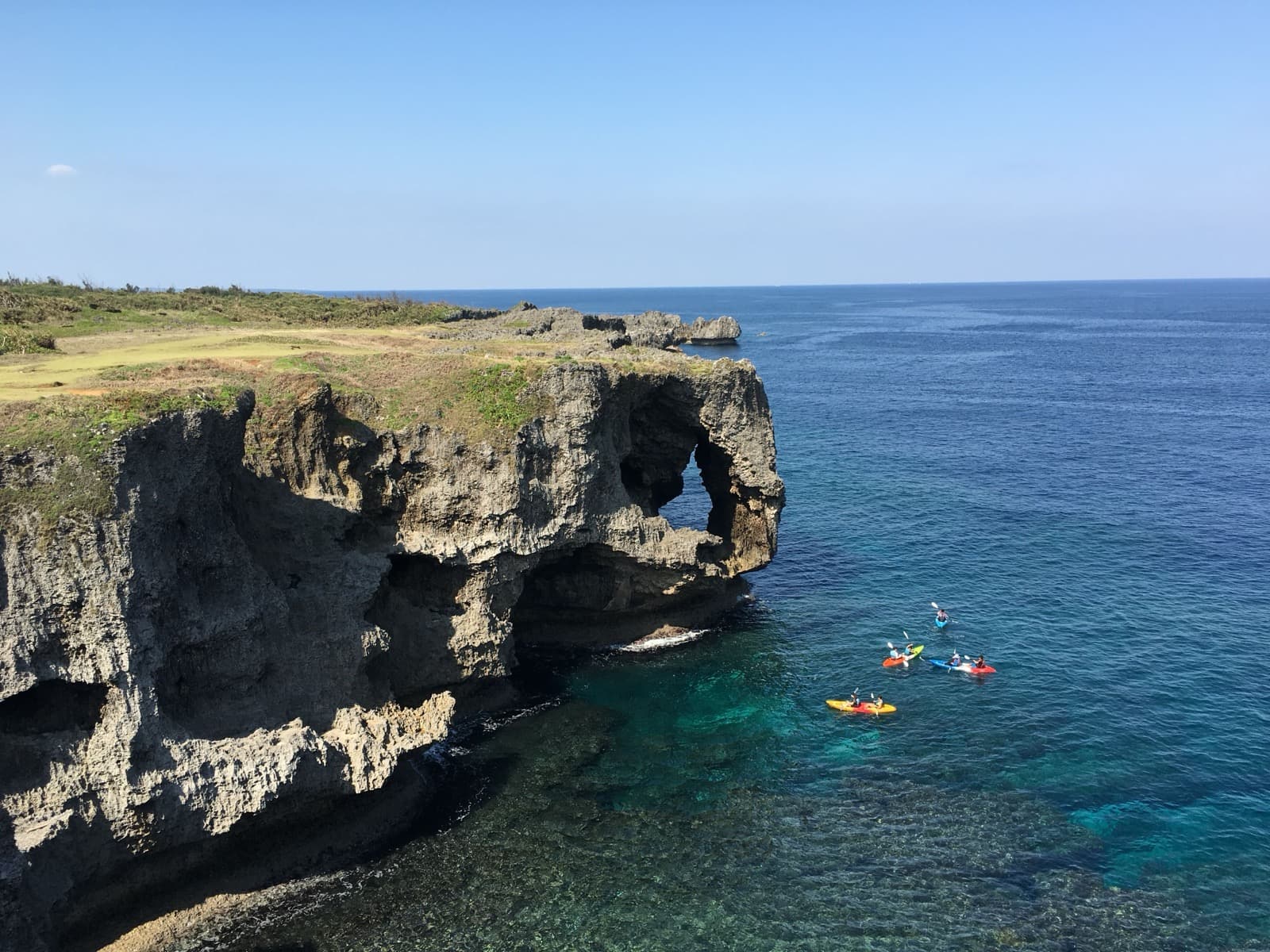
Waves breaking below the elephant-trunk cliff at Manzamo. Okinawa is ringed with subtropical coastline like this, so just driving the coast roads by rental car fills half the trip on its own.
Why 4 nights, 5 days: Naha, center, north, and the beaches in balance
Two nights barely covers Naha and the central coast. To fit in Okinawa's real draw, the north (Churaumi, Kouri) and the beaches, you need four nights and five days. Split the island one area per day and you can take it at an easy pace.
- Day 1 (arrival): Naha's Kokusai-dori + the south (Okinawa World, Peace Memorial Park)
- Day 2: The central coast, American Village + Cape Manzamo + the Onna shoreline
- Day 3: The north, Churaumi Aquarium (morning) + Kouri Bridge and Kouri Island
- Day 4: Beaches and water sports (snorkeling, kayaking)
- Day 5 (departure): Shurijo Castle + a last look at Kokusai-dori
Laid out this way, you get downtown shopping and food (Kokusai-dori), American culture (American Village), big nature (Churaumi, Manzamo, Kouri), and beach time all in the mix. Naha sits at the southern tip and Churaumi at the northern end, so a north–south round trip eats up two to three hours each way. The key to smart routing is not bouncing between the two in a single day.
Before you go: visa, connectivity, payments, and the rental car
Unlike a typical Japanese city trip, Okinawa adds one more thing to prepare: the rental car. Sort these four and you'll rarely hit a wall on the ground.
- Visa (as of 2026): Many nationalities, Korea's and most Western passports included, get up to 90 days of visa-free entry to Japan. To speed up arrival, register your immigration and customs declarations on Visit Japan Web before you fly and get your QR codes ahead of time. Naha Airport's international-arrivals hall gets congested at peak times, and a QR code cuts the wait dramatically.
- Connectivity (eSIM): Data coverage across Japan is solid, and if you buy an eSIM before you fly, maps and translation work the moment you land. Rental-car navigation is in Japanese, so it's easier to run Google Maps alongside it.
- Payments: Cash matters a little more here than in the big cities. Large shops and resorts take contactless cards fine, but some soba joints, markets, and parking lots are cash-only, so carry a few days of yen. The Yui Rail and buses accept both the local OKICA card and nationwide IC cards like Suica.
- Rental car and driving permit: Getting around the north and center all but requires a car. Your home license alone won't let you drive; you'll need an International Driving Permit (under the Geneva Convention), plus your passport and home-country license, issued before you leave. A compact car runs about ¥5,000–8,000 a day, plus the collision-damage waiver, ETC toll transponder, and fuel.
Naha Airport → city, and the rental-car routing
- Naha Airport (OKA): Direct flights from Seoul (Incheon) or Busan take roughly two hours (about 1h40m–2h15m). The domestic and international terminals are connected, and the Yui Rail's Naha Airport Station links straight to the terminal.
- Yui Rail (monorail): From Naha Airport to Kenchomae, the closest stop to Kokusai-dori, it's about 13 minutes and ¥290. Trains run every 10 minutes, and a 1-day pass is ¥1,000 (valid 24 hours), which pays off on days you stay in town. Since 2025, contactless credit-card tap payments are capped at ¥800 a day, so you can ride for less than the paper day pass. It also runs straight to Shurijo Castle (Shuri Station).
- Renting the car: You shuttle from the airport to a nearby rental office to pick up the car. Book ahead for peak season and holidays. If your first day is Naha-only, renting from Day 2 instead saves on parking and city traffic.
- Where to stay: First-timers should base around Kokusai-dori or Kenchomae (downtown, with the monorail, food, and shopping all walkable). If you're focused on beaches and resorts, the Onna village coast works better; for northern sightseeing, staying near Motobu or Nago keeps your routing tight.
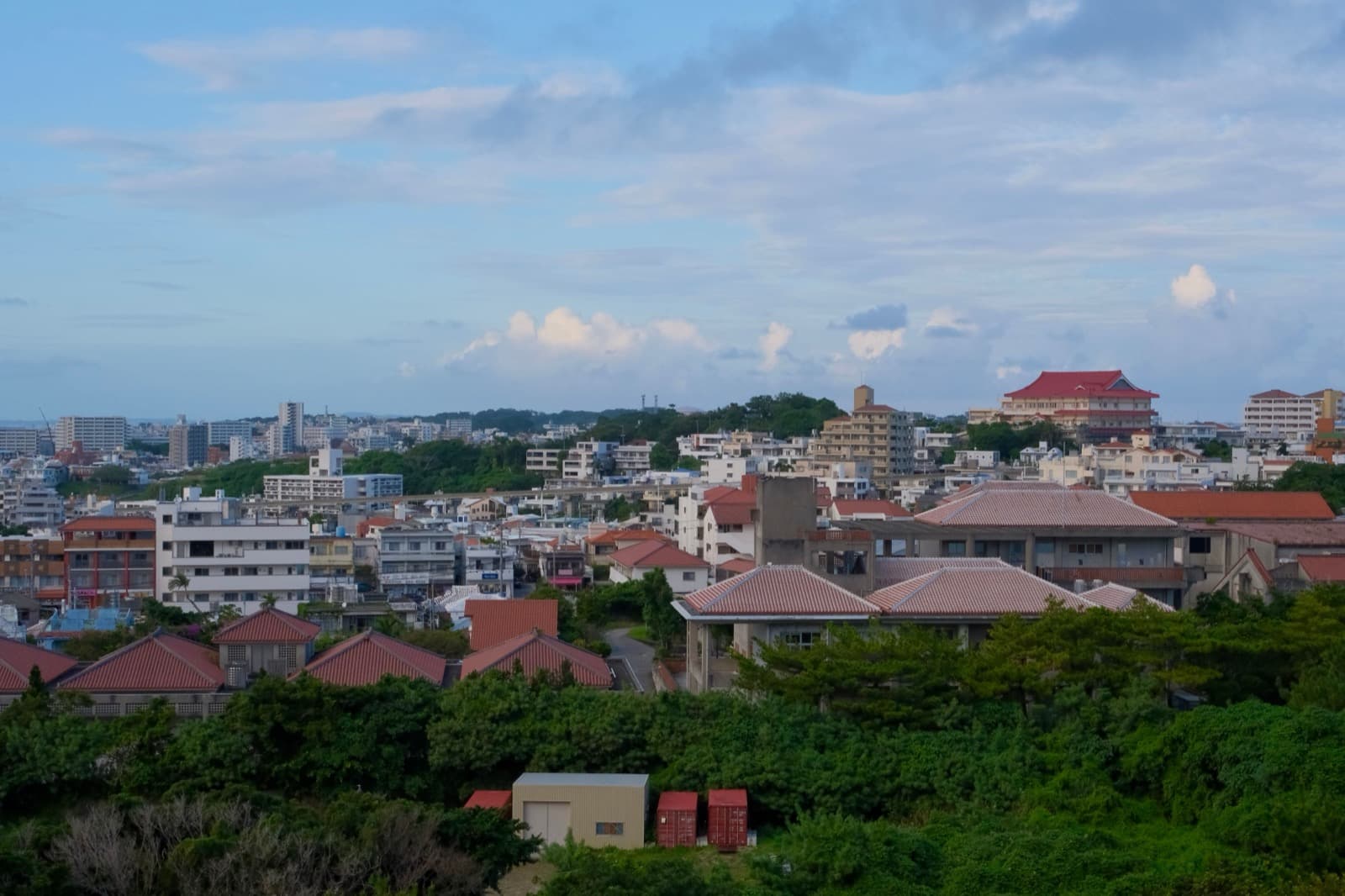
Day 1: Naha's Kokusai-dori + the south
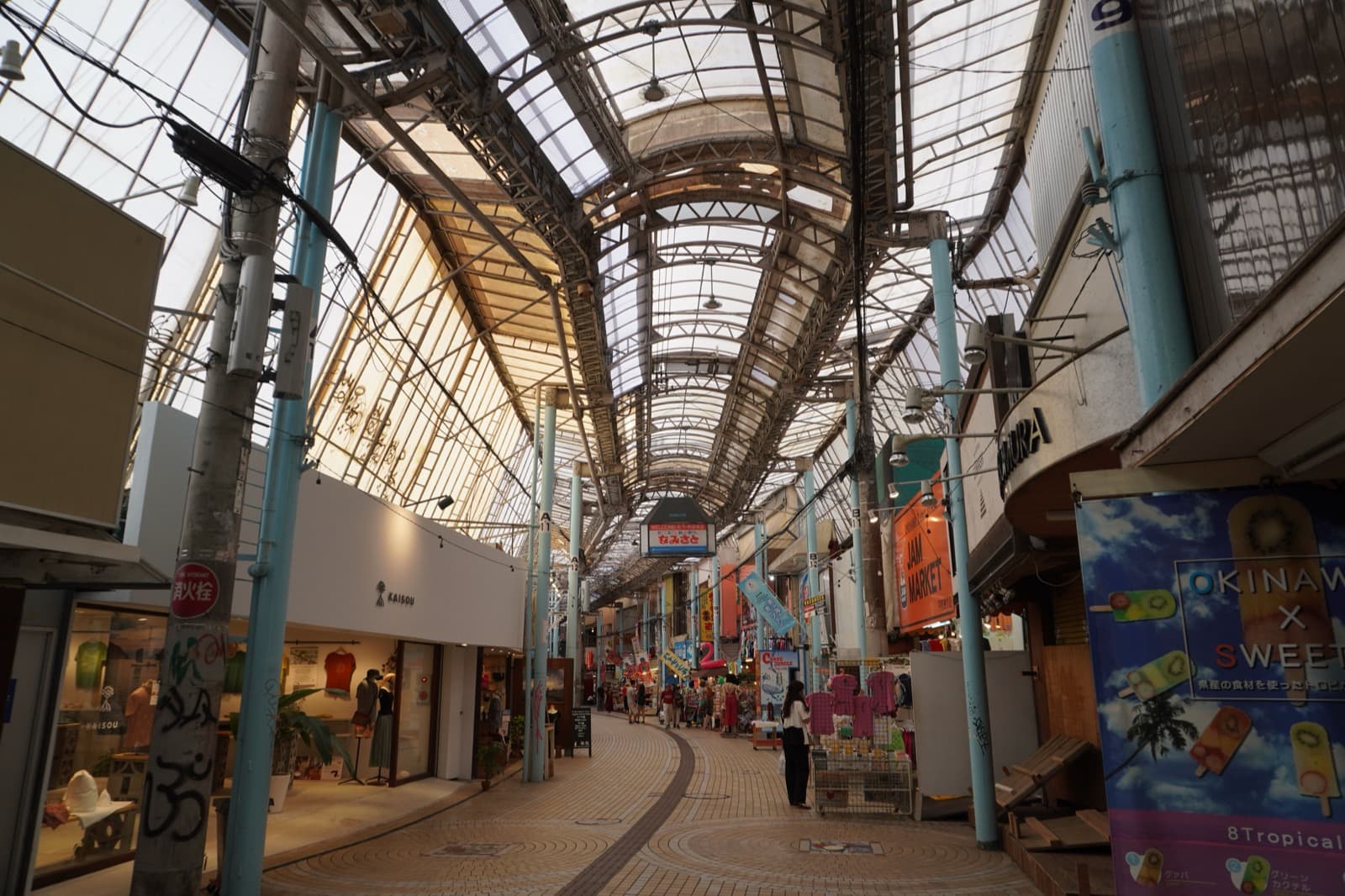
Start the first day light and centered on Naha, allowing for jet lag and travel fatigue. Kokusai-dori (International Street) is Naha's main drag, about 1.6 km of souvenir shops, izakaya, Blue Seal ice cream, and markets. Picking out fish at Makishi Public Market and having it prepared as sashimi at one of the second-floor eateries is a classic Okinawan experience.
If you have time and energy left, bundle the south by rental car. Okinawa World, famous for Gyokusendo Cave (adults ¥2,000, including the cave, the Ryukyu Kingdom village, and an eisa performance), Peace Memorial Park, which records the pain of the Pacific War, and Sefa-utaki, a sacred site of the Ryukyu Kingdom, are the south's headline stops. The south is 30 minutes to an hour from Naha, so half a day is plenty.
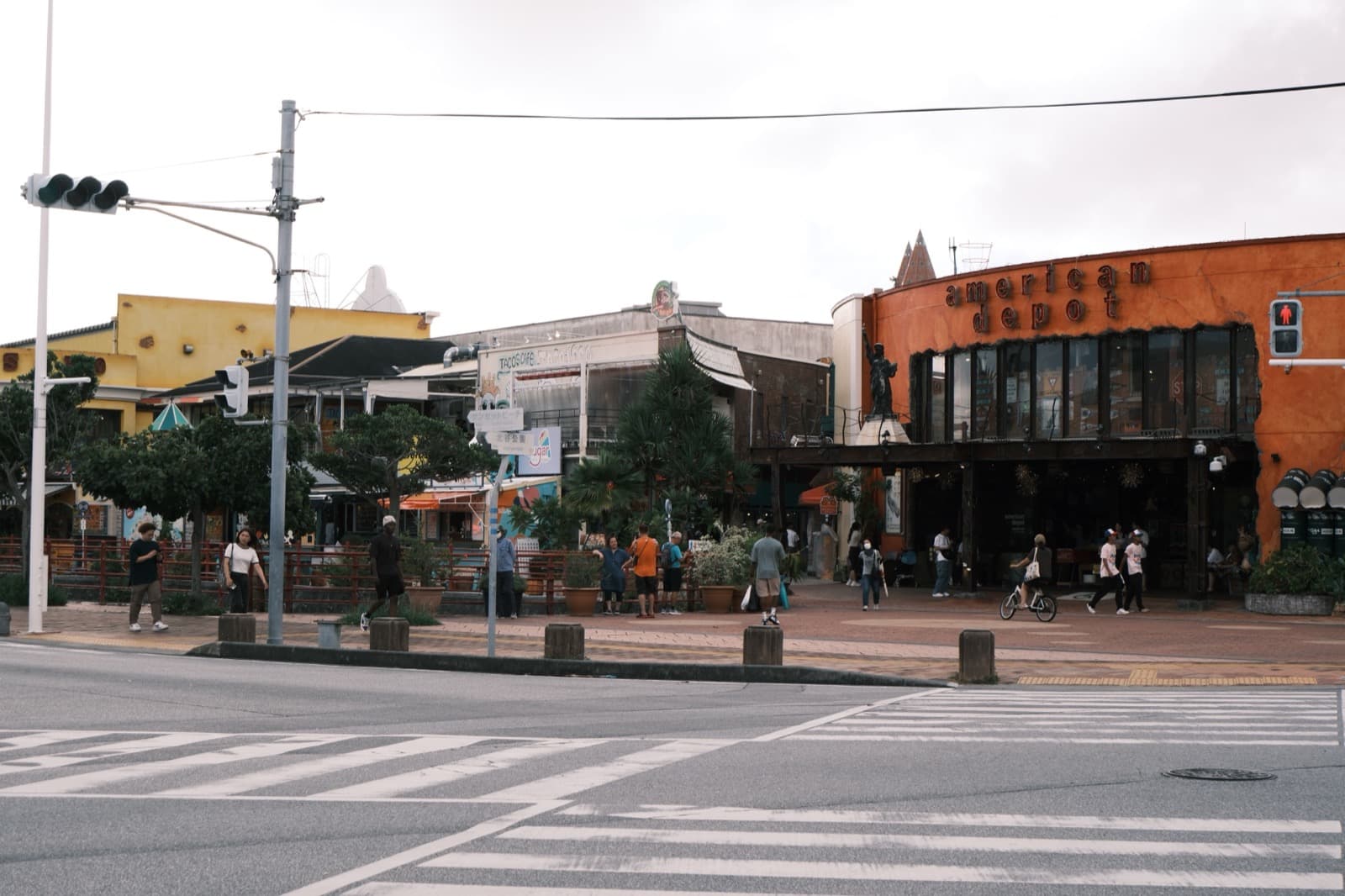
Day 2 · The central coast: American Village + Cape Manzamo + the Onna shoreline
On the second day, drive north through the central coast. Chatan's American Village clusters a big Ferris wheel, colorful shopping arcades, and American-style cafés, and the sunset here is especially pretty. It's where you feel the exotic, only-in-Okinawa atmosphere left behind by the US military presence.
Continue up to Onna village and you reach Cape Manzamo, Okinawa's signature cliff lookout. It's a scene of elephant-trunk-shaped rock meeting the emerald sea, and admission is about ¥100. The Onna shoreline around Manzamo is a run of upscale resorts and beaches, good for a swim or a café break. For dinner, go for agu pork, Okinawa's black pork, as shabu-shabu or yakiniku.
Day 3 · The north: Churaumi Aquarium + Kouri Island
This is the highlight of the trip. Head to Churaumi Aquarium early in the morning. The landmark Kuroshio Tank is one of the largest aquarium tanks in the world, and the sight of whale sharks and manta rays gliding through it is the showstopper. Tour groups pile in during the afternoon, so it's quietest right after opening. The Ocean Expo Park around the aquarium also has Emerald Beach and a dolphin show, so half a day slips by fast.
After lunch, make for Kouri Bridge. A free bridge about 1,960 m long cuts across the emerald water, and the drive over it is a scene in itself. Bundle in Kouri Island's Heart Rock and lookouts, plus snorkeling off a Sesoko Island beach, and you'll get the full measure of the northern sea.
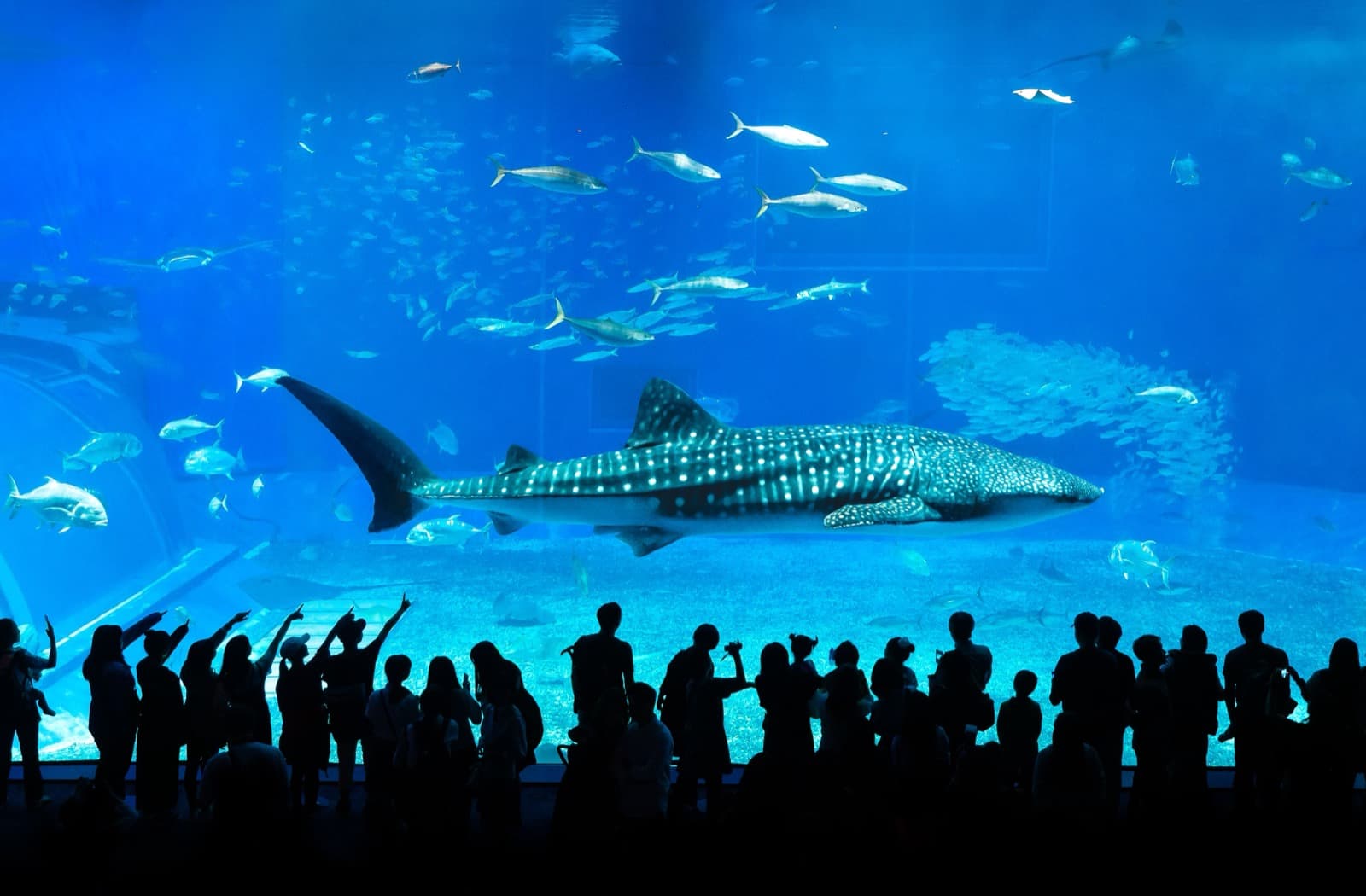
Visitors gazing up into Churaumi's Kuroshio Tank. The moment a whale shark over 8 m long passes overhead pulls a gasp out of kids and adults alike.
Day 4: Beaches and water sports
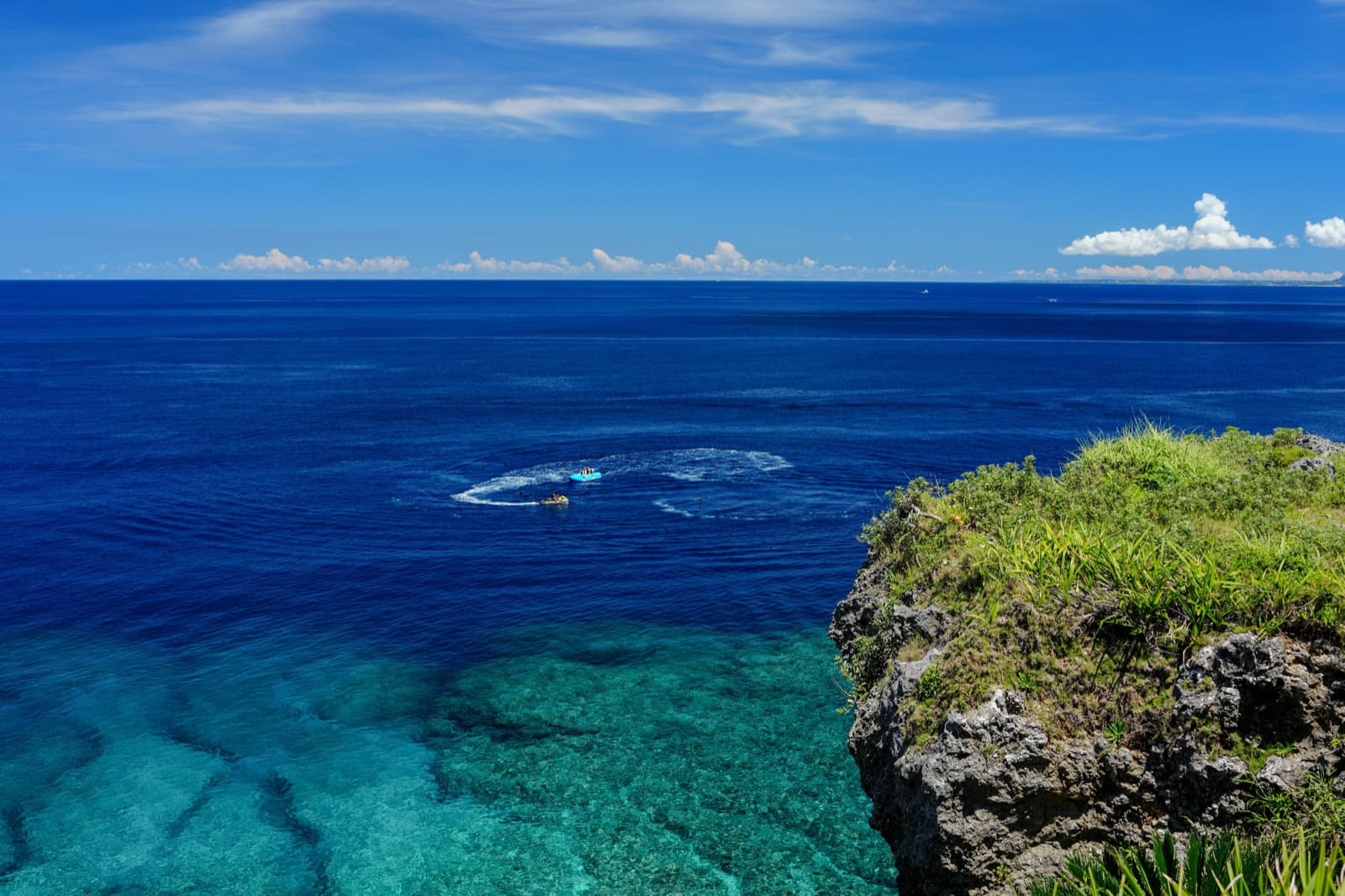
The fourth day goes entirely to the sea. Swim at Emerald Beach or Sesoko Beach, or snorkel and dive at Onna's Blue Cave. Marine activities like kayaking, SUP, and parasailing are plentiful too, bookable as half-day programs through your resort or a local operator.
Staying an extra day up north opens more options. JUNGLIA (in Nakijin village), a large theme park that opened in summer 2025, is making waves with attractions like a dinosaur safari; overseas-visitor admission is ¥8,800 for adults, so it's worth booking ahead through the likes of Klook or Trip.com. The World Heritage Nakijin Castle ruins (adults ¥1,000), where curving ramparts frame a sea view, also pair nicely with the north.
If getting in the water feels like too much, lounging at a resort pool and beach is an Okinawan kind of day in its own right. Cap the evening with umibudo (sea grapes), fresh sashimi, and Okinawan home cooking. July through September brings the chance of typhoons, so if the forecast turns, it's safest to leave room to swap this day for indoor stops (Churaumi, American Village).
Day 5: Shurijo Castle + a last look at Kokusai-dori
On the last day, slot in Shurijo Castle before heading to the airport. Once the royal palace of the Ryukyu Kingdom, Shurijo lost its main hall to a 2019 fire, and the restored hall opens to the public from November 23, 2026. Its exterior was finished in summer 2025, so even now the paid area (adults ¥400) lets you see the completed hall and the restoration in progress, while the Shureimon gate and the stone walls and ramparts that survived the fire remain open in the free area. Whether you can see inside the hall depends on when you go, so check the open areas on the official site before you visit. It's about a 15-minute walk from Shuri Station on the Yui Rail.
After that, do your last shopping at Kokusai-dori and Makishi Public Market (Blue Seal ice cream, sata andagi, Okinawan sea salt, souvenirs), then return the rental car and head to Naha Airport. Aim to drop the car off a comfortable two to three hours before your flight.
Okinawa food: soba, taco rice, agu pork, umibudo
Okinawa has its own food culture, distinct from mainland Japan. Learn a few dishes and every meal is a treat.
- Okinawa soba: Noodles made from wheat rather than buckwheat, topped with braised pork belly (rafute) and fish cake. A filling bowl runs about ¥700–900.
- Taco rice: An Okinawan fusion dish of taco meat, cheese, and lettuce over rice. About ¥600–900.
- Agu pork: Okinawa's black pork, enjoyed as shabu-shabu or yakiniku, about ¥3,000–5,000 per person.
- Umibudo: A seaweed nicknamed "sea grapes" that pops on the tongue. About ¥500–800 as a side.
- Blue Seal and sata andagi: Okinawa's signature ice cream (about ¥400) and fried doughnuts (about ¥100 each). Perfect snacks along Kokusai-dori.
The 4-night, 5-day budget (per person, flights separate)
Excluding airfare, local costs run about ₩700,000–1,100,000 (roughly $500–800) per person, based on two people splitting a car and lodging in summer. A guesthouse in the off-season lands in the ₩600,000s; a resort in peak season, more. Here's roughly how it breaks down.
| Category | Share | Notes |
|---|---|---|
| Lodging (4 nights) | 30–35% | Ranges widely, from downtown business hotels to Onna resorts |
| Shared rental car | 20–25% | Compact car ¥4,000–8,000/day + fuel, parking, tolls |
| Food | 25–30% | Soba ¥700–900, agu pork shabu ¥3,000–5,000 per person |
| Admissions & activities | 10–15% | Churaumi ¥2,180, Okinawa World ¥2,000, half-day snorkeling |
| Misc & shopping | 10% | Blue Seal, souvenirs, snacks |
Kokusai-dori, the beaches, Kouri Bridge, and Manzamo are free or just a few hundred yen, so overall prices stay reasonable. Add the new JUNGLIA theme park, though, and the ¥8,800 overseas-visitor admission comes on top. Honeymooners and resort-goers will see lodging take a bigger share; families and activity-lovers, the experiences.
The north's two highlights. The whale sharks and manta rays of the Kuroshio Tank (quietest early morning) and the drive across the 1,960 m Kouri Bridge over an emerald sea. If you've come to Okinawa, this is a pairing you don't want to miss.
The wide-open sea view from the elephant-trunk cliff at Manzamo (about ¥100 to enter) and the Ferris wheel, American-style arcades, and dusk sunset of Chatan's American Village. A driving route that ties up the central coast in a day.
Three tastes you'll find only in Okinawa, not the mainland: wheat-noodle Okinawa soba (¥700–900), taco-meat-over-rice taco rice, and black-pork agu shabu. Add umibudo and Blue Seal to round it out.
In short
A 4-night, 5-day Okinawa trip captures the essentials with no north–south backtracking if you split it one area per day: central Naha (Kokusai-dori, Shurijo Castle) → the center (American Village, Manzamo) → the north (Churaumi, Kouri Island) → beaches and water sports. Emerald seas, subtropical nature, and a thread of American culture, all gathered on one island: that's the appeal of Okinawa. The Yui Rail is enough for central Naha, but a rental car is all but essential for the north and center, so get an international driving permit ahead of time. Sort your visa (90 days visa-free), Visit Japan Web, and eSIM before you fly and you won't hit a wall on the ground.
This Okinawa plan, built in 1-3 minutes with Tripop
Tell Tripop "make me a 4-night, 5-day Okinawa plan with Churaumi, Manzamo, Kouri Island, and Kokusai-dori," and the skeleton above appears automatically. Add the rental-car routing, restaurants, an expense log, and a checklist to finish it off. Your itinerary and vouchers open offline too: on the plane, mid-drive, or out on the northern coast where the signal gets patchy. On a trip with as much moving around as Okinawa, that's especially reassuring.
Images: Pexels (Robert Yang: Cape Manzamo cliff; William Warby: Churaumi Aquarium's Kuroshio Tank; Ryutaro Tsukata: emerald beach; William Chen: northern coast cliffs; Aiwa Hu: Kokusai-dori; Yun Li: American Village; Davina: Naha cityscape), Pexels License.