
Prague, Vienna, Budapest: the trio that package tours have bundled for decades, reworked as an independent route with one firm decision. No day trips. No Dresden, no Český Krumlov; three cities explored properly, and the spare night goes to the city with the longest evenings. Prague 2 nights, Vienna 2, Budapest 3, because the baths, the Danube lights and the ruin bars all come alive after dark. The numbers changed a lot in 2026, so every fee and rule here was rechecked against official sources.
Where the 7 nights actually go
The allocation comes first: Prague 2 nights, Vienna 2 nights, Budapest 3 nights, 7 nights on the ground plus one overnight flight home, nine days in all, heading north to south with no backtracking. Budapest gets the extra night for a simple reason: its headline experiences, the thermal baths, the illuminated Parliament, the ruin bars, all run in the evening, and three nights let you give the cruise, the baths and the hilltop view each an evening of its own. If you would rather have three nights in Prague with a day trip attached, the better fit is our Central Europe four-country itinerary, which builds in a Dresden day trip.
| Day | City | Plan | Transit and notes |
|---|---|---|---|
| Day 1 | Incheon → Prague | Afternoon arrival, check in, evening stroll on Old Town Square | Around 13 hours nonstop (planning assumption); on a one-stop flight you land late and skip the stroll. Time difference -8h (-7h in DST) |
| Day 2 | Prague | Old Town Hall tower early (half price first hour) → Charles Bridge → afternoon Prague Castle circuit → riverside night views | Walking + trams, 90-min ticket 46 CZK app / 50 paper |
| Day 3 | Prague → Vienna | Morning direct railjet (about 4h) → afternoon St. Stephen's Cathedral, Kärntner Straße, Graben → evening café | Praha hl.n. → Wien Hbf, seat reservation recommended |
| Day 4 | Vienna | Schönbrunn first slot (pre-booked) → afternoon Upper Belvedere → evening: a concert if you pre-booked one, a café otherwise | Single ticket €3.20, 24-hour pass €10.20 |
| Day 5 | Vienna → Budapest | Morning direct railjet (close to 3h) → afternoon Fisherman's Bastion and Matthias Church → evening Danube night cruise | Arrives Keleti station, metro connections |
| Day 6 | Budapest | Parliament guided tour (pre-booked) → afternoon Széchenyi Baths → evening ruin bars | Baths are cheaper on weekdays |
| Day 7 | Budapest | St. Stephen's Basilica and downtown walk → afternoon Margaret Island if clear, Andrássy Avenue and a café if rain is due → Gellért Hill night view | Metro + walking |
| Day 8 | Budapest → departure | Check out, leave bags at the hotel, morning stroll (Central Market Hall Mon–Sat; it closes Sundays, so swap in Váci utca or the riverbank) → collect bags → 100E airport bus → evening flight | Overnight on the plane |
| Day 9 | Arrive Incheon | Afternoon arrival |
Check four weekdays before you lock dates. First, Széchenyi costs 13,200 HUF Monday to Thursday but 14,800 HUF Friday through Sunday; if either Day 6 or Day 7 falls Monday to Thursday, put the baths there, and if both fall Friday to Sunday, fall back on the Good Morning ticket (before 9 am, 11,800 HUF Fri–Sun). Second, St. Stephen's Basilica on Day 7 opens at 1 pm on Sundays (Mon–Sat from 9 am); if Day 7 is a Sunday, move the basilica to the afternoon and start with Margaret Island or a downtown walk; if rain is forecast on top of that, spend the morning indoors or in a café, take the basilica at 1 pm, and watch the night lights from the Pest riverbank instead of the hill climb. Third, parliamentary or official events can close that day's Parliament tour slots: open the booking page first, see which slots exist that week, and build the rest of the week around it. If no tour runs, see the Parliament lit up from across the river instead and give the morning to the Central Market Hall or Andrássy Avenue. Fourth, the Day 8 Central Market Hall stroll only works Monday to Saturday (Mon 6–17, Tue–Fri 6–18, Sat 6–15); the hall closes on Sundays, so a Sunday departure swaps it for Váci utca or the Danube bank.
Before departure: one entry system, three currencies
All three countries are in Schengen, so there is exactly one set of entry formalities. The real logistical variable is your wallet: the currency changes three times.
| Item | Details |
|---|---|
| Schengen entry | Korean passports visa-free 90 days in any 180. EES biometric registration fully operational since 10 April 2026; fingerprints and facial image recorded at first entry, Prague Airport on this route |
| ETIAS | Not in operation, no applications collected as of October 2026. Start date to be announced several months ahead; €20 once live. Any site charging a fee today is unofficial |
| Passport | Valid 3+ months beyond your planned Schengen departure, issued within the last 10 years |
| Border checks | Austria has notified temporary controls at its Czech and Hungarian borders (16 Sep 2026 – 15 Mar 2027). Expect possible passport checks on cross-border trains; keep it on you |
| Currencies | Czech koruna (≈62 KRW), euro in Austria (€1 ≈ 1,510 KRW), Hungarian forint (1,000 HUF ≈ 4,100 KRW). Converted at early-October 2026 ECB reference rates |
| Payments | Contactless cards standard in all three cities. If a terminal offers KRW billing, always pick the local currency |
| Connectivity | One multi-country Europe eSIM covers all three |
| Time zone | All three cities -8h from Korea (-7h during DST) |
EES needs no preparation: it is a registration done at the border, not an application, and children under 12 are exempt from fingerprints. In its first fully operational year the registration queue can back up when several widebodies land together, so keep the arrival evening loose rather than timed. ETIAS spent years being reported as "coming in 2026", but the official page currently gives no start date, saying only that it will be announced several months in advance. There is nothing to do now. For cash, bank ATMs are the default in all three cities; Prague's private exchange booths in the Old Town have a long history of rate disputes, and the simplest policy is to skip them entirely.
Two border-crossing trains and the airports at both ends
Four big transits: the airport in, two trains, the airport out. Each one is about working backwards from a deadline.
| Leg | Mode and time | Field notes |
|---|---|---|
| Prague Airport → city | Trolleybus 59, 15 min → metro line A at Nádraží Veleslavín | Regular city fares apply; buy before boarding (machines or the PID Lítačka app). Suitcases over 25×45×70 cm need a 25 CZK luggage ticket (23 in the app), so with big bags the 24-hour pass (app 140 / paper 150 CZK, one bag included) is the simple buy |
| Prague → Vienna | Direct railjet around 4h (4:03–4:26 on the planner), ČD and ÖBB jointly, RegioJet competing | Praha hl.n. → Wien Hbf. Promo fares are train-specific, non-refundable, on sale 180 days ahead. Do not skip the seat reservation |
| Vienna → Budapest | Direct railjet close to 3h (2:53 observed) | Wien Hbf → Budapest-Keleti, metro connections. Departures through the day, roughly hourly |
| Budapest centre → airport | Bus 100E, about 40 min, 2,500 HUF | Boards at Deák Ferenc tér and Kálvin tér, runs 24/7 (every 6–10 min daytime). Pay and validate on board with a bank card (Pay&GO) |
Official booking channels: ÖBB (oebb.at) or Czech Railways (cd.cz) for the railjets; on Vienna–Budapest it is worth comparing Hungarian Railways (MÁV), whose promos sometimes undercut ÖBB on the same train. RegioJet (regiojet.com) is the private alternative on Prague–Vienna. Everything is dynamically priced, so the moment your dates are fixed is the moment to buy; promo fares are typically non-refundable, so only after the itinerary is final. During the temporary border-control window, on-board passport checks can add delays, so keep the first hours after arrival unscheduled; this corridor also sees rolling maintenance notices, so check ÖBB's service updates the day before you ride.
The departure-day arithmetic: for intercontinental flights out of Europe, arriving 3 hours before departure is the safe margin, and the 100E takes 40 minutes from the centre, so leave your hotel near Deák at least 4 hours before the flight. The 100E runs around the clock, which also covers early-morning departures.
Zones and time allocation
| Zone | Anchor sights | Getting around | Time to give it |
|---|---|---|---|
| Prague Old Town and Malá Strana | Old Town Square, Astronomical Clock, Charles Bridge | Mostly walking, trams as backup | Day 1 evening + Day 2 morning |
| Prague Castle district | Castle circuit, St. Vitus Cathedral, Golden Lane | Tram 22 or an uphill walk | Day 2 afternoon |
| Vienna inside the Ring | St. Stephen's, Kärntner Straße, Graben, cafés | Walking + U-Bahn | Arrival afternoon plus evenings |
| Vienna palace axis | Schönbrunn, Upper Belvedere | U-Bahn and trams; Schönbrunn is out on U4 | One full day |
| Budapest, Pest side | Parliament, St. Stephen's Basilica, ruin bar district | Metro + walking | 1.5 days |
| Budapest, Buda side | Fisherman's Bastion, Matthias Church, Gellért Hill | Uphill walk or bus | Half a day plus a night-view evening |
Time allocation is an editorial plan (2026-10); leg times follow the operator-confirmed figures in the text and transport table. In every city, pick lodging relative to the station you leave from next. In Prague, between the main station and Wenceslas Square, but favour the blocks toward the square over the park right outside the station at night. In Vienna, a U-Bahn stop with an easy run to the Hauptbahnhof is the benchmark; inside the Ring the same class of room costs top of the band. In Budapest, favour Deák Ferenc tér over Keleti, because the city's walking core and the airport bus both start there even though your train arrives at Keleti; just keep a couple of blocks between you and the densest ruin-bar streets, which stay loud on weekend nights.
Two days in Prague: a morning square and a castle on the hill
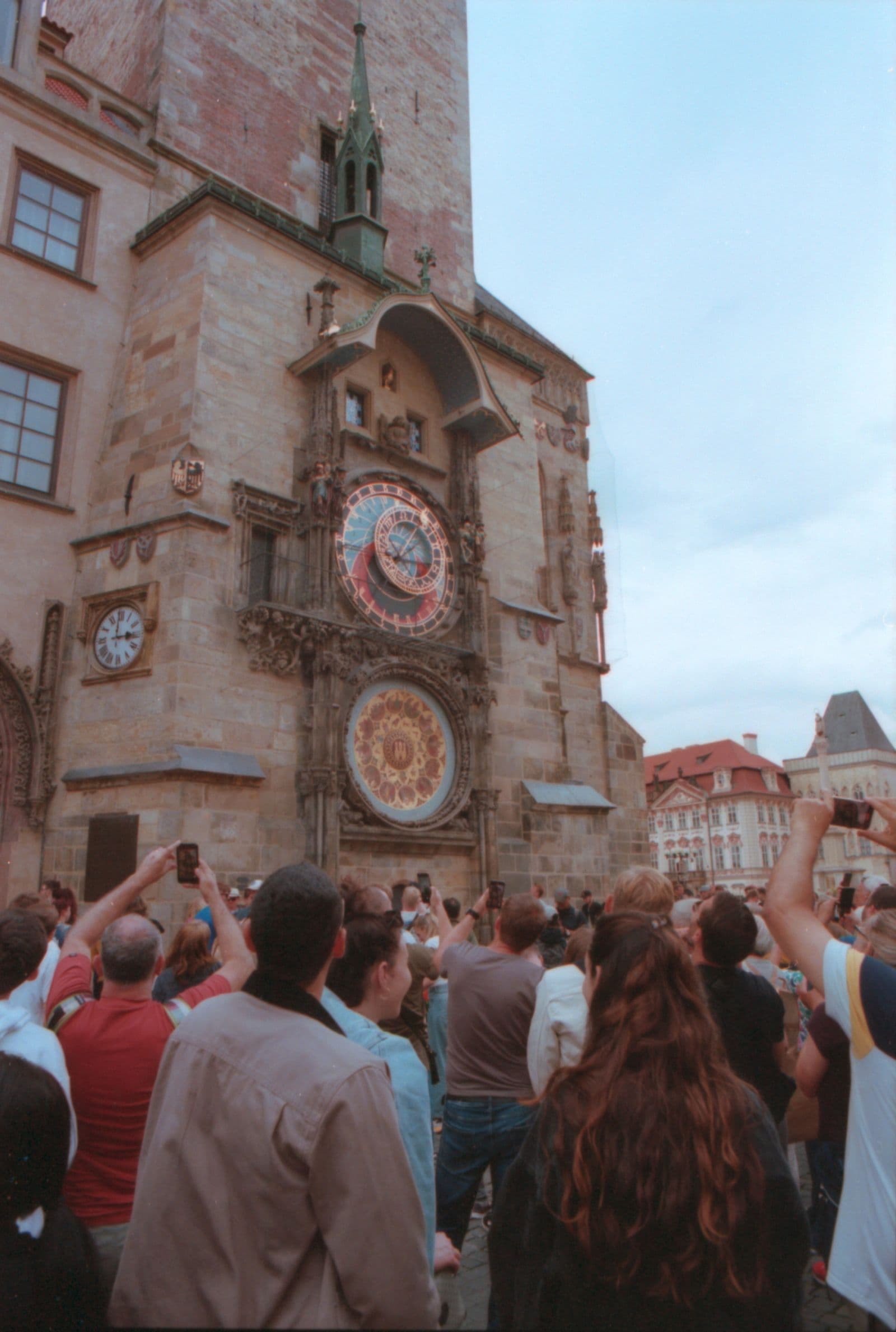
Old Town Square and the Astronomical Clock Spend both the arrival evening and the Day 2 morning here. The clock has run since 1410 and its hourly procession of the Twelve Apostles draws the crowd, but the real payoff is the view over the square and the red roofs from the Old Town Hall tower. Tower admission is 350 CZK at the counter (450 CZK for the skip-the-line online ticket), and it is half price every day during the first hour after opening; April to December that means a 9 am start, which beats both the crowd and the price.
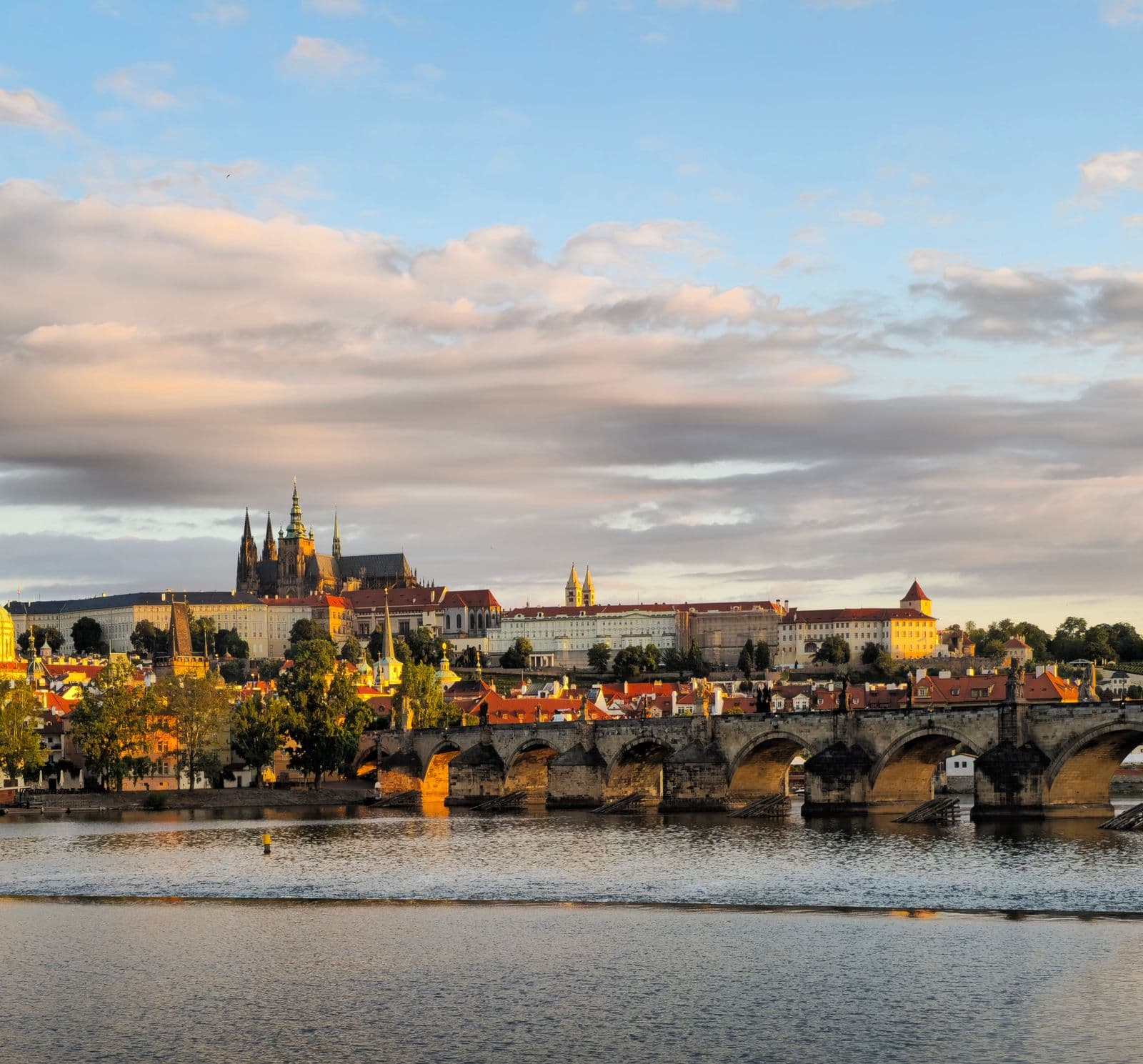
Charles Bridge The stone bridge joining the Old Town to Malá Strana was begun in 1357 under Charles IV and finished in 1402. By mid-morning it fills shoulder to shoulder, so cross it once after the tower as part of the route, and come back at dawn or after dark if photos are the point. The bridge towers at both ends and the thirty statues are the subjects; for the classic night shot of the castle, the Kampa Island riverbank is the standard spot.
Prague Castle and St. Vitus Cathedral Day 2 afternoon is the hill. The grounds and gardens are free to walk, but the interiors that matter, St. Vitus Cathedral, the Old Royal Palace, Golden Lane, need the circuit ticket: 450 CZK adult, valid two consecutive days, one entry per building, non-refundable. The historical buildings open 9–17 April to October and only to 16:00 November to March; from November, flip Day 2 so the castle circuit takes the morning and the clock tower and Charles Bridge move to the afternoon (the tower stays open to 20:00, or 19:00 in deep winter, leaving plenty of evening margin). That swap trades away the tower's first-hour half price (a 175 CZK difference) to protect the castle interiors. Note also that St. Vitus Cathedral's interior opens at noon on Sundays, and the Royal Garden and the other castle gardens close from November through February. Official online sales run through the GetYourGuide network; on-site ticket queues get long on peak mornings. Give it half a day, and walk down Nerudova street on the way out.
Two days in Vienna: palaces in the morning, cafés at night
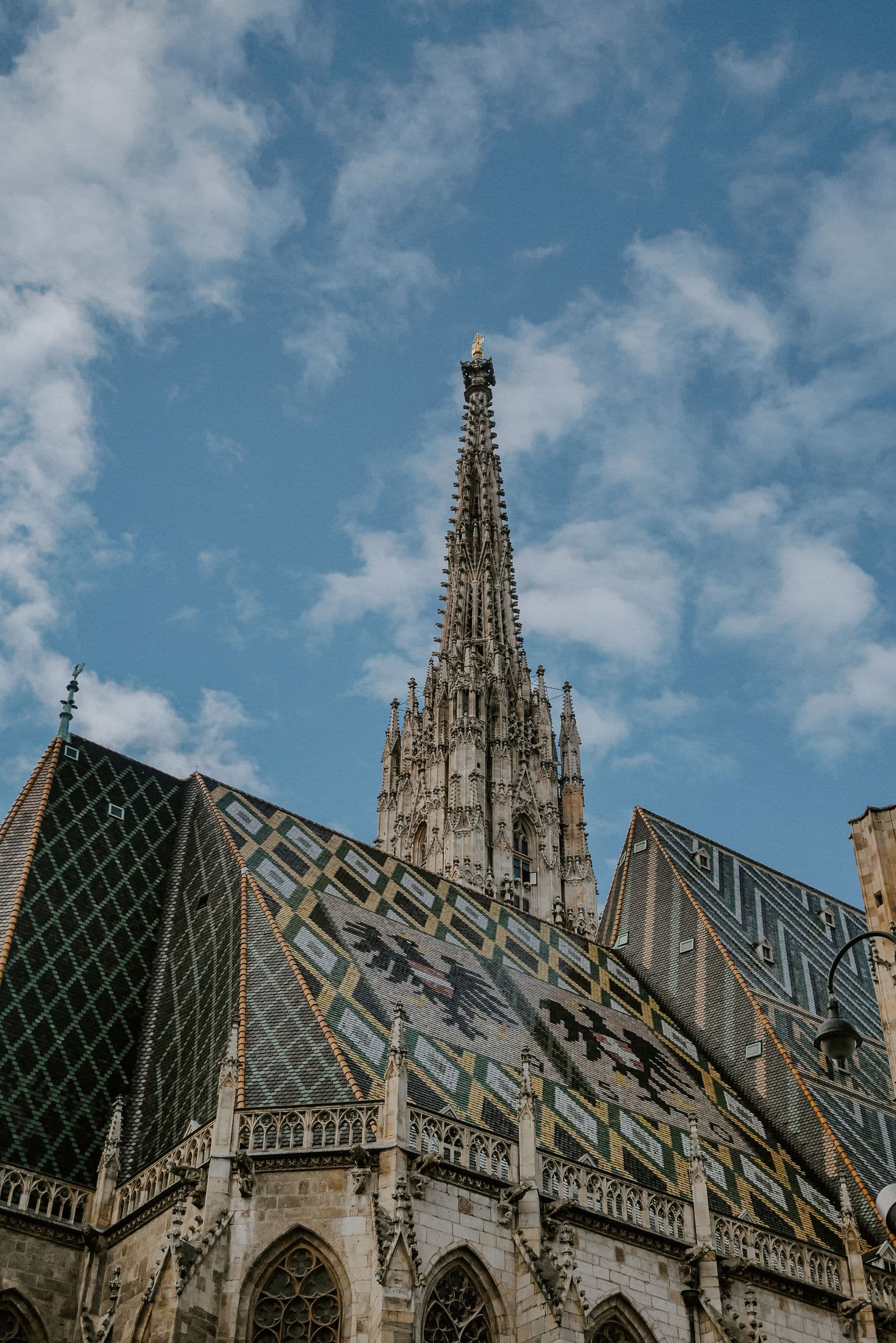
St. Stephen's Cathedral Reaching Vienna on Day 3 afternoon, this is the first stop after the hotel. Coloured glazed tiles draw the Habsburg double eagle across its roof. Tourist visiting hours are short: Monday to Saturday 9–11:30 and 13–16:30, Sundays and holidays 13–16:30. If the train and check-in go smoothly and you reach the square before 4 pm, go in the same day. If you are later than that, the default is to settle for the exterior and the evening walk; the interior reopens at 9 am the next morning (1 pm on Sundays and holidays), which collides with the Schönbrunn first slot, so only come back if you are willing to push that slot later. The south tower is a 343-step climb with no lift; save it for a day with legs and time to spare. The Kärntner Straße and Graben pedestrian axis starts at the cathedral square and makes the natural evening walk.
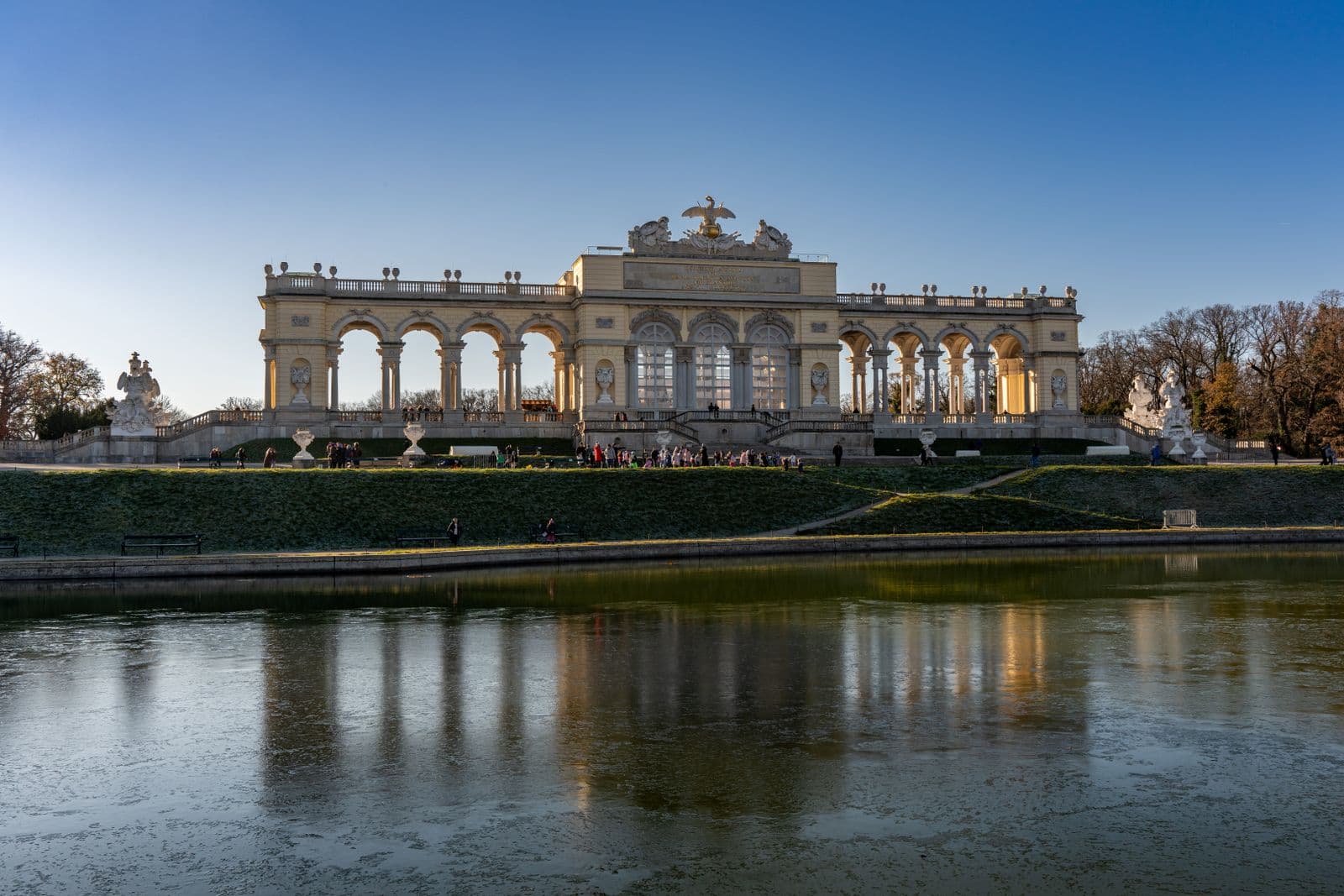
Schönbrunn Palace Day 4 starts at the Habsburg summer residence. Entry is by timed slot through the official shop (imperialtickets.com): the State Apartments route is €30 (about 40 minutes), the full Palace Ticket €42 (about 75 minutes), last admission 45 minutes before closing (2026 tariff sheet, valid 1 July – 2 November, checked). The gardens and the Gloriette hill are free, so the classic half day is the first interior slot followed by a walk down through the park. Arriving without a booking usually means an afternoon slot or none.
Upper Belvedere The baroque palace gallery that holds Klimt's The Kiss. Adults €23, open daily 9–18; an online ticket sends you straight to the entrance rather than the ticket desk. Two hours is enough, which is why it pairs with Schönbrunn into one full Vienna day. The view over the city from the upper garden is in the free zone.
Hofburg and the Sisi Museum The combined ticket for the Imperial Apartments and Sisi Museum is €20, but timing matters this season: from 6 October to 18 November 2026 the Sisi Museum exhibition rooms close for refurbishment, the apartments run short hours (10:00–16:30), and tickets are discounted 25%. For any trip between this article going live and 18 November, make the façade on Michaelerplatz and the palace gardens the default and skip the interior; from 19 November the full visit is back. Entry is only guaranteed with a timed online ticket, sold through the official shop (imperialtickets.com).
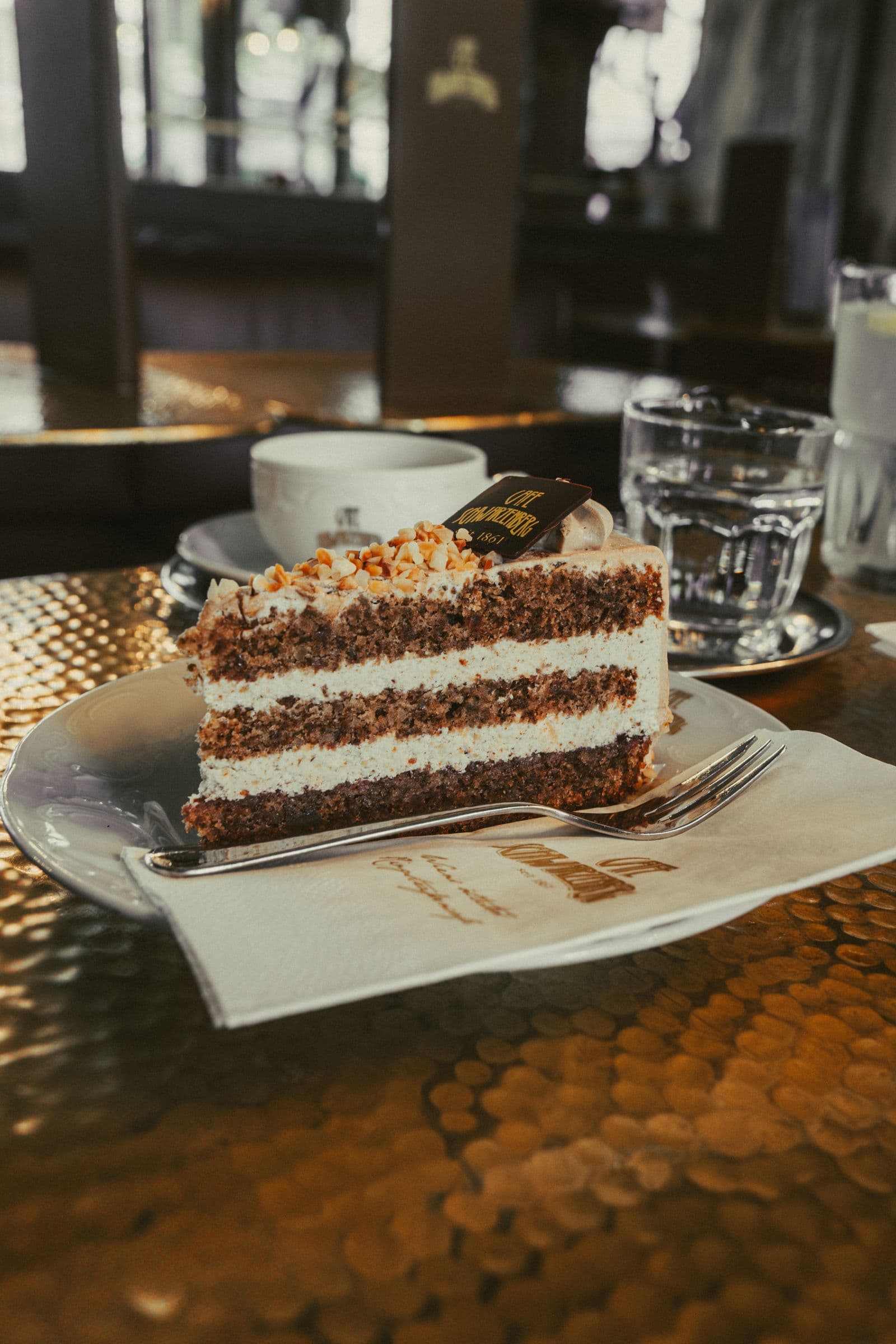
Café culture This is the city where hundred-year-old cafés, Café Sacher of the Sachertorte among them (daily 7:00–23:00), get museum-level respect. One caveat: the marble-columned Café Central closed on 16 March 2026 for a full renovation, with reopening slated for winter 2026, and the operator points guests to DECENTRAL at Freyung 3 in the meantime. The famous rooms queue into the evening, so timing your visit away from meal hours is the easiest way to get a table. If you would rather spend the evening on music, the State Opera's same-day standing room or a chamber concert in a church are the standbys; seating and dress rules vary by performance, so check the official page for that night.
Three days in Budapest, planned from the evening backwards
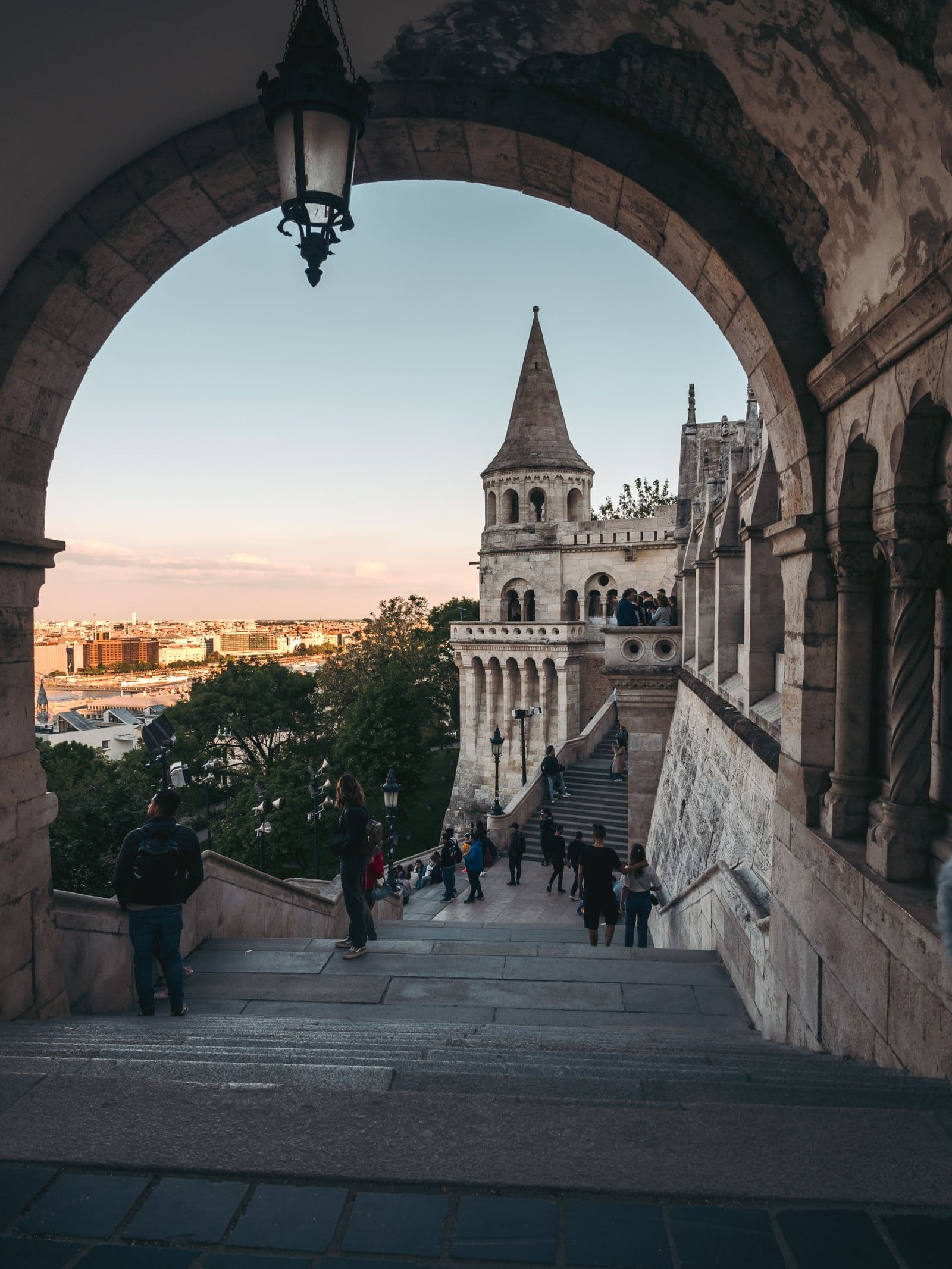
Fisherman's Bastion and Matthias Church On Day 5 afternoon, buy your 72-hour travelcard at a station ticket machine first (inspections are frequent), drop your bags at the hotel and climb Castle Hill. The white limestone terraces and conical turrets face the Parliament straight across the Danube. Next door, Matthias Church wears its trademark Zsolnay ceramic roof; entry is 3,400 HUF and the 197-step tower tour 4,000 HUF. Liturgy and events close parts of the day, so check the official page for that day's hours before you plan the climb.
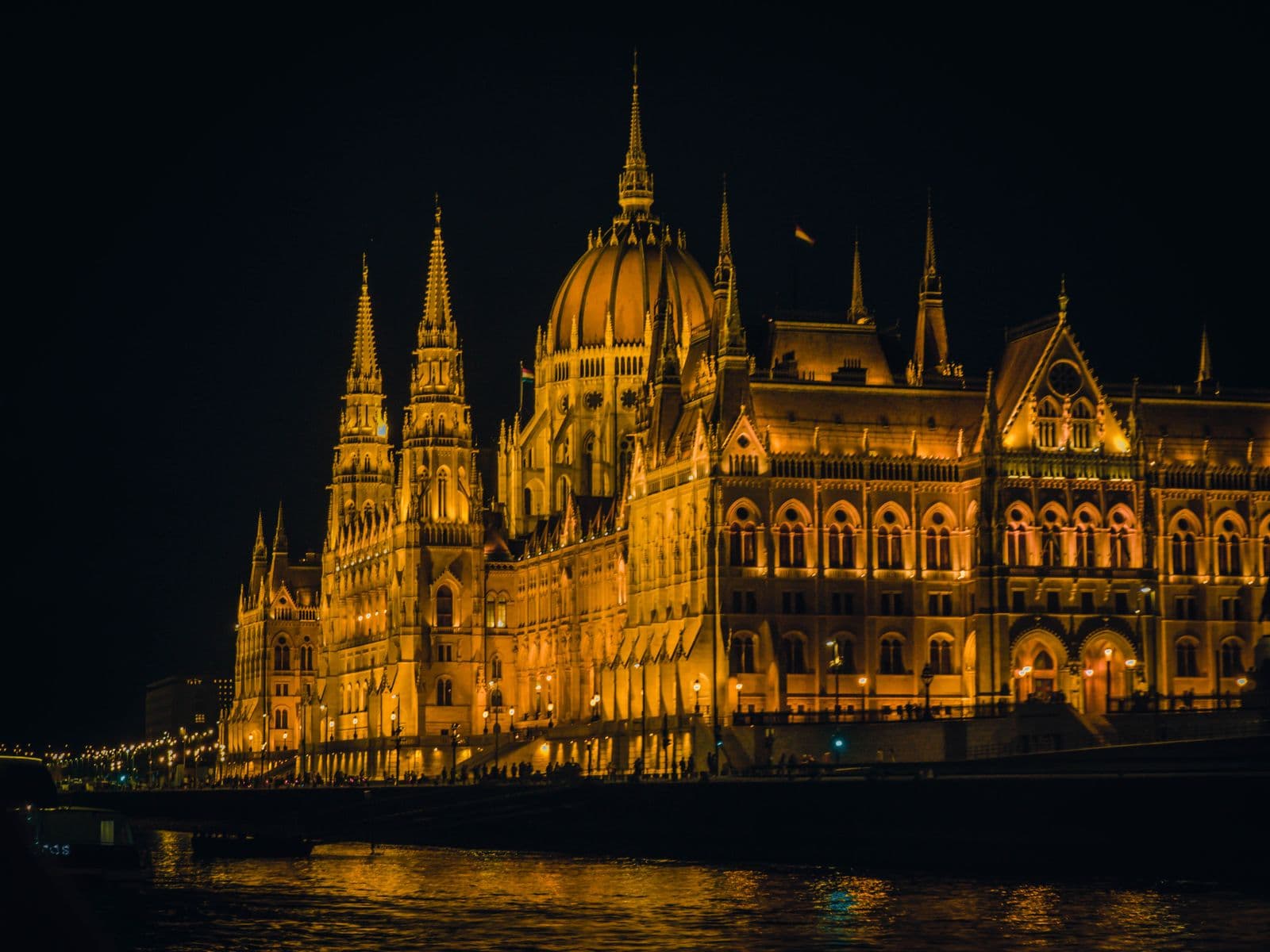
The Parliament The neo-Gothic Parliament is consumed twice: once from inside on the Day 6 morning guided tour (45 minutes, including the Holy Crown under the dome), once at night from across the river or a cruise deck. Interior tours are sold only through the official vendor (jegymester), and the small group sizes sell out fast; in early October 2026 we found four consecutive days with every slot gone. The vendor listed several weeks of slots at once, so open the booking page the moment your dates are fixed, and note that parliamentary or official events can close that day's slots. Pricing is two-tier by nationality: 14,000 HUF for non-EEA adults, 7,000 HUF for EEA (published rate as of 1 January 2026; confirm at checkout), so pick the right category when you book.
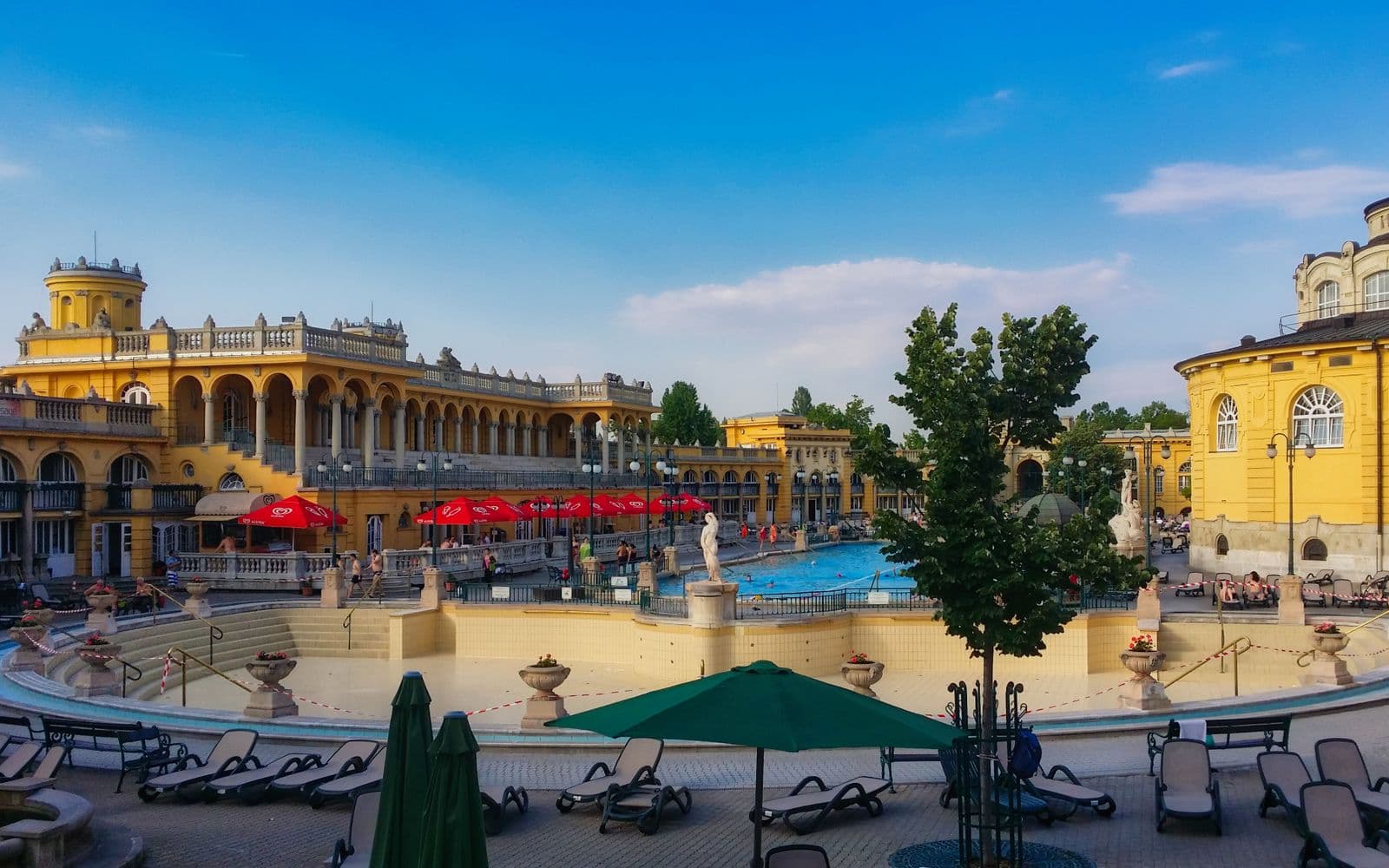
Széchenyi Baths The yellow neo-baroque bath palace in the City Park. A day ticket with locker costs 13,200 HUF on weekdays (Mon–Thu), 14,800 HUF Friday through Sunday and 15,800 HUF in peak periods; the online-only Fast Track (from 15,200 HUF) skips the ticket queue. The Good Morning ticket, entry before 9 am, is the cheapest and quietest at 10,500 HUF Monday to Thursday (not sold in peak periods). There is no rental: bring a towel, a swimsuit and slippers (wearing slippers is mandatory), plus a swim cap for the lap pool. Children under 14 have not been admitted since August 2025. Changing is communal rooms plus a personal locker by default; a private changing cabin is a separate ticket if you have big bags or want the privacy. Steam rising off the outdoor pools in the evening is the famous scene, but it is also the crowd's favourite hour, so this plan defaults to a weekday afternoon. And note: Gellért, the art nouveau icon, has been closed for full renovation since 1 October 2025 with reopening slated for 2028, so filter out any guide built around it.
St. Stephen's Basilica The basilica anchors downtown Pest and the Day 7 morning. The church opens Monday to Saturday 9–18 and Sundays 13–18, while the panorama terrace under the dome runs daily 9–19. Ticketing splits into church, panorama and combined options: the church ticket is the default, and on a clear morning the combined ticket with the dome terrace earns its price, while on a grey day skip the terrace and keep the church only. Buy on the official vendor (bazilika.jegy.eu). From the basilica square, the walk through Deák Ferenc tér onto Andrássy Avenue is the standard Pest promenade.
Danube night views and ruin bars The Parliament, the Chain Bridge and Buda Castle switching on in a single line is this city's defining scene. The cheapest seat is the free walk up Gellért Hill; on the water, one-hour cruises vary widely by route and drinks package, so compare what is included rather than the headline price. Cruise on Day 5 evening, hill on Day 7 evening, and you see the same lights from two angles. The ruin bars are repurposed derelict buildings in the old Jewish Quarter (District VII), with Szimpla Kert the original and still the landmark.
Practical details at a glance
| Sight | Price (adult) | Hours | Notes |
|---|---|---|---|
| Prague Castle circuit | 450 CZK | Historic buildings 9–17 (Nov–Mar to 16:00) | Valid 2 consecutive days, one entry per building, non-refundable. Official online via GetYourGuide |
| Old Town Hall clock tower | 350 CZK counter, 450 CZK online | Apr–Dec 9–20 (Jan–Mar 10–19) | Half price first hour daily, lift +100 CZK |
| Schönbrunn Palace | State Apartments €30, Palace Ticket €42 | Timed entry, last admission 45 min before closing | imperialtickets.com, book the first slot |
| Upper Belvedere | €23 | Daily 9–18 | Klimt's The Kiss; online ticket goes straight in |
| Sisi Museum and Imperial Apartments | €20 | 6 Oct–18 Nov 2026: museum rooms closed, apartments 10–16:30, 25% off | Timed entry; book on the official shop (imperialtickets.com) |
| St. Stephen's Cathedral (Vienna) | Free nave zone + paid areas | Tourist hours Mon–Sat 9–11:30, 13–16:30; Sun 13–16:30 | South tower is a 343-step climb |
| Parliament tour (Budapest) | Non-EEA 14,000 HUF, EEA 7,000 HUF (published rate, 2026-01-01) | 45-min guided tour; parliamentary/official events can close slots | jegymester only, sells out early; confirm the fee at checkout |
| Matthias Church | 3,400 HUF, tower 4,000 HUF | Varies with liturgy, check same day | Tower is 197 steps |
| Széchenyi Baths | Mon–Thu 13,200 HUF, Fri–Sun 14,800, peak 15,800 | Good Morning (before 9 am) 10,500 Mon–Thu / 11,800 Fri–Sun, not sold in peak | Bring towel, swimsuit and slippers (no rental); under-14s not admitted; Fast Track online only |
| St. Stephen's Basilica (Budapest) | Church / panorama / combined tickets | Mon–Sat 9–18, Sun 13–18, terrace 9–19 | bazilika.jegy.eu |
Swap by travel party and priorities
| Concept | Days changed | Drop | Add | Why |
|---|---|---|---|---|
| Day-tripper | The whole split | This 2-2-3 allocation | Prague 3 nights + a Dresden day trip via our four-country itinerary | Taking a day trip out of a 2-night Prague erases Prague itself. With exactly one full day in the city, spending it on a train is a trade that does not work; day trips belong to a 3-night Prague |
| Habsburg and museums | Days 5–7 | Budapest's third night | A third Vienna night, Hofburg interiors and a museum day | Vienna's palaces and museums are consumed in day-sized units; two days end at Schönbrunn and Belvedere. But from 6 Oct to 18 Nov 2026 the Sisi Museum rooms are closed, so during that window the original plan wins |
| Baths-first, slow pace | Days 6–8 | Day 7 morning basilica, Day 8 morning stroll | A second Széchenyi visit on the Good Morning ticket (Mon–Thu 10,500 HUF), afternoon nap; bags stay at the hotel | Mornings are the emptiest and cheapest hours at the baths, and clearing a morning is what preserves the energy for the night views |
| With kids | Days 3, 5 and 6 | Evening plans on train days; the Day 6 Széchenyi visit | A slow morning after each travel day; City Park and Margaret Island instead of the baths; reach the Astronomical Clock 10 minutes before the hour | Train days drain children first, so the evening has to go. Széchenyi has not admitted under-14s since August 2025, so on this concept the baths come out entirely. The clock show lasts minutes; arriving just before the hour means seeing it without the wait |
Food: seven dinners across three cities
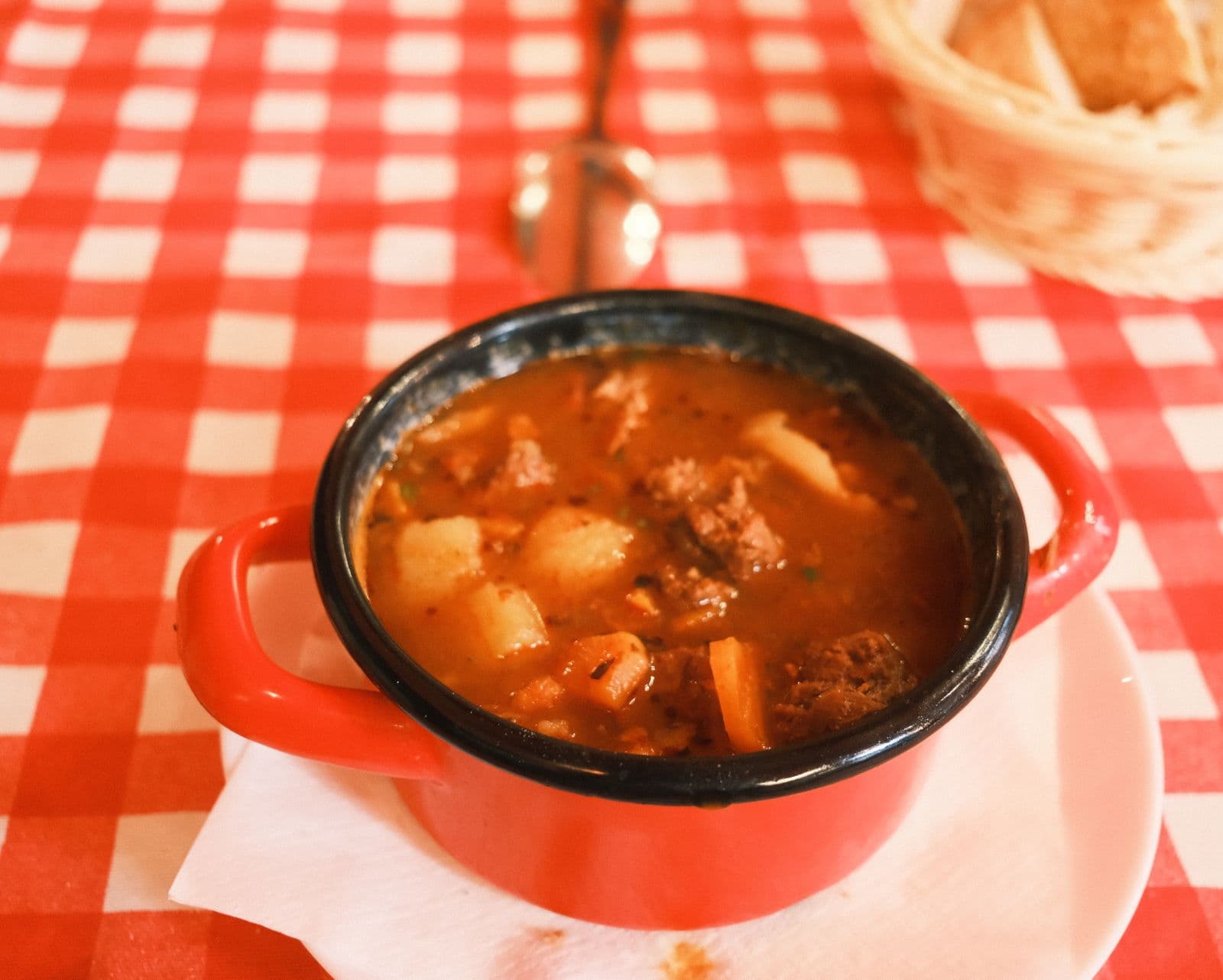
The axis per city. Prague: koleno (roast pork knuckle) and svíčková (beef in cream sauce), with the chimney-cake trdelník as street snack; the beer-cheaper-than-water joke still lands, so one dinner belongs in a hospoda. Vienna: schnitzel and tafelspitz, and one evening should be traded for cake and a melange in a grand café, which is the local way. Budapest: gulyás, lángos and chicken paprikash, at the lowest restaurant prices of the three capitals, so all three dinners can comfortably be sit-down meals. Per-restaurant prices vary too much to print; in all three cities, one or two streets behind the main sight buys a better plate for the same money.
The budget per person, 7 nights 9 days
Basis: double occupancy, Incheon departure, multi-city flights into Prague and out of Budapest. Conversions use €1 = 1,510 KRW, 1 CZK = 62 KRW, 1,000 HUF = 4,100 KRW (planning values derived from early-October 2026 ECB reference rates, not live quotes). Flight, lodging and food bands are editorial planning assumptions; the budget flight tier assumes a one-stop routing, while nonstops sit in the standard band and up. The lodging band assumes mid-range 3-star doubles in the centre; peak season or upscale station-side hotels will exceed the top end. Train figures assume early booking; last-minute fares exceed the band.
| Item | Budget | Standard | Comfort |
|---|---|---|---|
| Flights (multi-city) | 1.25M | 1.65M | 2.10M |
| Lodging 7 nights, per person | 0.55M | 0.85M | 1.40M |
| Trains and city transit | 0.12M | 0.18M | 0.25M |
| Admissions and tours | 0.20M | 0.29M | 0.40M |
| Food, 9 days | 0.35M | 0.55M | 0.75M |
| Total (KRW) | ≈2.47M | ≈3.52M | ≈4.90M |
The standard admissions figure works out as: Prague Castle 450 CZK + clock tower 350 CZK + Schönbrunn State Apartments €30 + Belvedere €23 + Matthias Church 3,400 HUF + Széchenyi Mon–Thu 13,200 HUF + Parliament non-EEA 14,000 HUF ≈ 255,000 KRW, plus about 40,000 KRW for a night cruise ≈ 295,000 KRW, rounded down to 0.29M in the table. Budget drops the Parliament interior and the cruise (the free Gellért Hill view covers the night skyline) and takes the clock tower at the first-hour half price, about 187,000 KRW at posted fees with the rest as slack (in winter, moving the tower to the afternoon forfeits the half price and adds roughly 11,000 KRW); Comfort upgrades Schönbrunn to the Palace Ticket (€42) and adds Széchenyi Fast Track, the basilica combined ticket and a ruin-bar evening. The transit line's floor assumes both international legs on promo fares, with city transit at a Prague 72-hour pass (app 340 / paper 350 CZK), a Vienna 24-hour pass (€10.20) plus singles, and Budapest's 72-hour travelcard (5,750 HUF) plus the 100E (2,500 HUF).
Season and weather
The three cities share one continental climate, so one packing standard covers all. Spring and autumn are the walking sweet spot. Summer trades midday heat for long evenings, which suits this itinerary's night-heavy design. From late autumn the days shorten and Prague Castle's historic buildings switch to the 16:00 winter closing, so afternoons need to start earlier. From late November all three cities fill their squares with Christmas markets, which slot naturally into this plan's evening walks. Winter outdoor bathing at Széchenyi is the steam-rising postcard scene, but your head freezes while your body soaks: bring a hat.
Don't skip these
- Buy the train tickets first. Both intercity legs are dynamically priced; promo fares open 180 days out, train-specific and non-refundable.
- Open the Parliament booking page before anything else. Small groups sell out days ahead and parliamentary or official events can close slots; this reservation is the backbone of Day 6.
- Schönbrunn: first slot of the day. Timed entry means walk-ups get afternoon slots or nothing. Official shop only.
- Gellért Baths is closed until its planned 2028 reopening. Plan baths around Széchenyi, bring towel, swimsuit and slippers, and note under-14s are not admitted.
- EES needs nothing from you in advance. Fingerprints and photo at Prague Airport, done. ETIAS is not live; any site charging for it today is unofficial.
- Keep your passport on you aboard the trains. Austria has temporary controls notified on its Czech and Hungarian borders through 15 March 2027.
- Refuse KRW billing. When a terminal or ATM offers won, choose the local currency. Skip Prague's private exchange booths.
- Pickpocket basics. Charles Bridge and the clock crowd, Kärntner Straße, Budapest trams: bag in front.
Summary
Prague, Vienna and Budapest in 7 nights 9 days: a one-way run south, Prague (2) → Vienna (2) → Budapest (3), three cities deep and no day trips.
- Two train legs only: about 4h to Vienna, close to 3h to Budapest; early booking is the biggest saving
- One entry system: Schengen visa-free plus on-arrival EES registration at Prague Airport; ETIAS not yet live
- 2026's new numbers: Vienna single €3.20 and day pass €10.20, Budapest 24h card 2,750 HUF and 100E 2,500 HUF, Gellért closed, Sisi Museum partly closed this autumn
- Three bookings form the skeleton: Schönbrunn slot, Parliament tour, two international trains
- Per person 2.47–4.9M KRW including flights (planning assumption); the variable is booking timing
Organize this trip with Tripop
Three cities, three currencies, a different booking portal for every sight. Type "Prague Vienna Budapest 7 nights" into the Tripop app and it drafts the day-by-day skeleton; upload your flight, rail and admission PDFs and the vouchers sort themselves by city. The shared expense ledger handles koruna, euros and forints in one place.
- Download on the App Store
- Get it on Google Play
- Start on the web, no install needed
What we verified
The rules and fees in this article were checked one by one by the Tripop travel desk on 5 October 2026 against the European Commission's EES and ETIAS pages and the internal border control notifications list, ÖBB's official journey planner and Sparschiene terms, the official pages of Prague Castle, Prague Integrated Transport (PID) and Prague Airport, Schönbrunn's official 2026 tariff sheet (PDF), Belvedere, the Sisi Museum and St. Stephen's Cathedral, and Budapest's BKK fares, Széchenyi (prices and house rules) and Gellért baths, Matthias Church, St. Stephen's Basilica, the Parliament's official ticket vendor, and Café Central's renovation notice. The Parliament fee is the one item we could not open directly that day because the official site demands a CAPTCHA; the figure reflects the official page's published notice (as of 1 January 2026) confirmed indirectly, so re-check it at checkout. Day-by-day routing and the budget bands are editorial planning examples, not operator timetables or live quotes. Before departure, give the official ETIAS page, Prague Castle, Schönbrunn and Széchenyi Baths one more look. If a number here no longer matches reality, tell us and we will fix it.
Images: Pexels (Ivan Dražić: Prague Castle and Charles Bridge, Carlo Jünemann: crowd at the Astronomical Clock, Vladimir Srajber: Gloriette at Schönbrunn, Ejov Igor: St. Stephen's Cathedral roof, Jonas Horsch: Vienna café cake, Harris Rigorad: Parliament at night, George Zografidis: Fisherman's Bastion, Domenico Adornato: Széchenyi Baths courtyard, kirpiklipencere: goulash), Pexels License.