
The Sapporo Snow Festival dates are already out: the 77th edition runs February 4 (Thu) to 11 (Thu), 2027, and Korea's Seollal holiday (February 6 to 9) sits squarely inside it. The festival itself is free to enter, so there is little to spend on site; instead, flights and hotels dry up fast. That is why this guide, written for readers departing from Korea, covers booking order before the course, and lays out the three venues plus the Otaru Snow Light Path across 3 nights and 4 days using official figures.
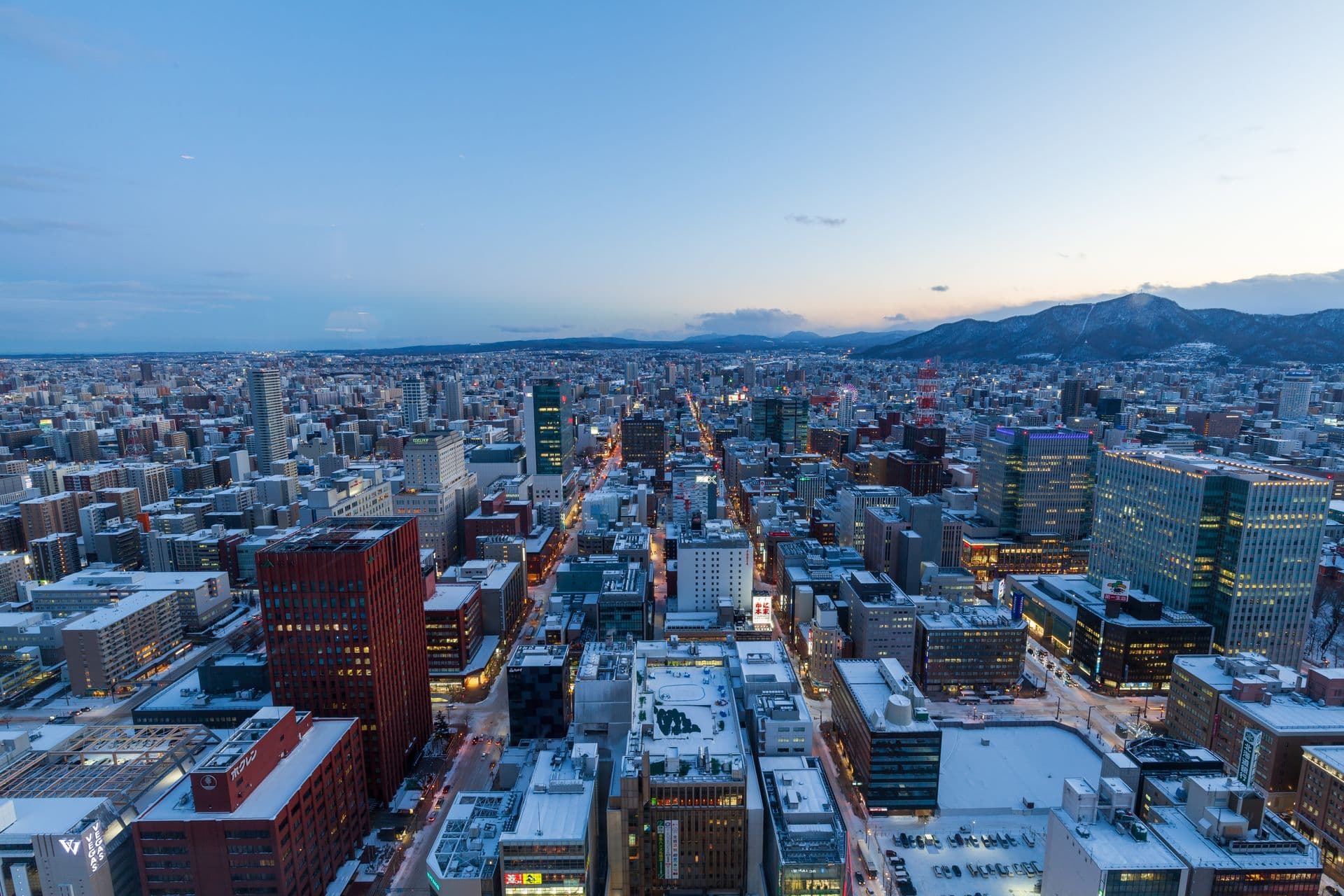
What the Snow Festival deserves your days for
The skeleton is simple: sculptures are best at night, snow play is a daytime thing. The Odori and Susukino venues come alive once the illuminations switch on in the evening, while Tsudome runs daytime only, 10:00 to 16:00 (2026 basis). So you spread three evenings across the illuminated venues and fill the days with Tsudome, Otaru or downtown walks. The three venues themselves take about a day and a half, which is why a 3-night trip absorbs a half day in Otaru comfortably.
| Day | Area | Course | Transport and notes |
|---|---|---|---|
| Day 1 | Arrival, Odori | New Chitose Airport to hotel, evening Odori illuminations and the TV Tower, then the Susukino venue | JR Rapid fastest 33 to 37 min; lights until 22:00 and 23:00 (final day 22:00; 2026 basis) |
| Day 2 | Tsudome, downtown | Daytime snow play at Tsudome (10:00 to 16:00), Clock Tower and Tanukikoji, dinner then the Mt. Moiwa night view, ending at the Susukino venue | 15-min walk from Sakaemachi Station or shuttle |
| Day 3 | Otaru | Midday train out, Otaru Canal and Sakaimachi Street, evening Snow Light Path (Feb 6 to 13), return at night | JR fastest 32 min, 800 yen one way |
| Day 4 | Market, departure | Nijo Market morning, then New Chitose Airport | Assumes an afternoon flight |
No kids in the party? Swap Day 2's daytime. Tsudome is a snow-play venue, and adults tend to finish it quickly. Give that daytime to downtown (Clock Tower, Nijo Market, Tanukikoji) or Shiroi Koibito Park, and split the night-venue viewing across two evenings instead.
Dates are fixed, details come in December: booking order is half this trip
Here is what the organizers announced on July 13, 2026 for 2027: February 4 (Thu) to 11 (Thu), eight days, at the Odori venue (Nishi 1 to Nishi 11 blocks), the Tsudome venue and the Susukino venue. Odori plans five large snow sculptures with mid-size and small sculptures and winter attractions, and the affiliated Snow Sports Park 2027 follows February 12 to 14 at the Premist Dome. The 2027 versions of venue programs and hours are published progressively on the official site from mid-December.
The stacked variable is Seollal. Korea's 2027 Lunar New Year falls on Sunday, February 7, with the holiday running Saturday the 6th through Tuesday the 9th (substitute holiday). That is dead center of the festival, and Korean demand piles onto those four days.
- Now (autumn): lock in Incheon to New Chitose flights first; hurry if departing within the holiday
- Picking dates: for all four days to overlap the festival, depart February 4 to 8; a February 9 departure still catches the festival on the first three days, and departing on the 10th makes Day 2 the festival's final day
- Right after flights: hold a downtown room (Sapporo Station to Odori to Susukino) on cancellable terms
- Mid-December: fine-tune evening plans as venue details are published
- Just before departure: check that season's snowfall and service updates
If your dates can flex a day or two, departing February 4 to 5 or on the 9th, the holiday's last day, avoids the peak. The festival runs through the 11th, so two days remain after the holiday ends.
Before departure: entry, connectivity, payment
| Item | Details |
|---|---|
| Visa | Korean passport holders: visa-free for 90 days (tourism) |
| Entry procedure | Register immigration and customs on Visit Japan Web in advance and pass with QR codes |
| Connectivity | A Japan-only eSIM is enough |
| Payment | Contactless cards as the default, small cash on hand. Markets, food stalls and small diners still lean cash |
| Time difference | None (same as Korea) |
| Exchange rate | 100 yen ≈ 870 KRW (September 2026, working assumption) |
Sapporo has one transport-payment quirk worth knowing. From March 26, 2026 the Sapporo subway applies a daily fare cap to contactless credit-card tap-in rides. Once your accumulated fares reach 830 yen on weekdays or 520 yen on weekends and holidays, further rides that day are free, which equals a day pass without visiting a counter. It applies to the subway only, at adult fares only, and only rides tapped with the same card or device all day are combined; a physical card and a phone count separately even with the same card number, and one card cannot cover a companion's fares, so each rider needs their own. Since Tsudome (Toho Line) and the moves between venues are all subway trips, the cap suits a Snow Festival itinerary well. JR, the streetcar and city buses still take Suica-type transit IC cards or cash.
Airport to hotel: rail is the default wherever you stay
Three hotel zones make sense: around Sapporo Station (best connections), Odori (walkable to the venue) and Susukino/Nakajima-koen (nightlife and food). In festival week these three zones sell out first; the later you book, the farther from the venues you end up.
| Hotel zone | Going (airport to hotel) | Returning (hotel to airport) |
|---|---|---|
| Around Sapporo Station | JR Rapid Airport, fastest 33 to 37 min, 1,230 yen | Same. Up to 6 trains per hour in the daytime |
| Odori | JR to Sapporo Station, then Namboku Line 1 stop (210 yen) or 10-min walk | Reverse. Subway recommended with large luggage |
| Susukino/Nakajima-koen | JR to Sapporo Station, then Namboku Line 2 to 3 stops (210 yen) | Reverse. Check first-train times for morning departures |
How to ride. New Chitose Airport Station connects directly to the terminal; follow the signs from international arrivals to the gates. Suica-type ICs tap straight through. Add the reserved u-seat (1,000 yen, 800 yen ticketless online) only if you have large luggage or want a guaranteed seat; unreserved cars need no booking.
Working backwards on departure day. Arriving 2 to 2.5 hours before an international flight is safe; with the 40-minute train ride and boarding buffer, leave Sapporo Station 3 hours before departure. February is a season when heavy snow delays trains, so add another 30 to 60 minutes when snow is forecast. For early-morning flights, confirm subway and JR first-train times the night before.
Areas and how much time each deserves
| Area | Key spots | Transport | Time to give it |
|---|---|---|---|
| Odori venue | Large snow sculptures, TV Tower | Direct at Odori subway station, on foot within the venue | 1 to 2 evenings |
| Susukino venue | Ice sculptures, Ramen Yokocho, Tanukikoji | Namboku Line Susukino Station | Every evening |
| Tsudome venue | Snow slides, snow raft | Toho Line Sakaemachi Station, 15-min walk or shuttle | Half a day |
| Downtown in between | Clock Tower, Nijo Market | On foot between Odori and Susukino | Daytime gaps |
| Mt. Moiwa | Ropeway observatory | Streetcar plus free shuttle or 10-min walk | One evening |
| Otaru (nearby) | Canal, Snow Light Path, Sakaimachi Street | JR fastest 32 min, 800 yen one way | Half day to evening |
What to see, day by day
The Odori venue, from your first evening
Odori venue The east-west Odori Park becomes the venue across its Nishi 1 to Nishi 11 blocks. For 2027 five large snow sculptures are planned to anchor the site, with mid-size and small sculptures and food stalls lining the blocks as in past years (2026 basis). Admission is free, the venue is open all day, and sculpture illuminations run from sundown to 22:00. The site stretches over a kilometer, so budget at least an hour just to walk it end to end.
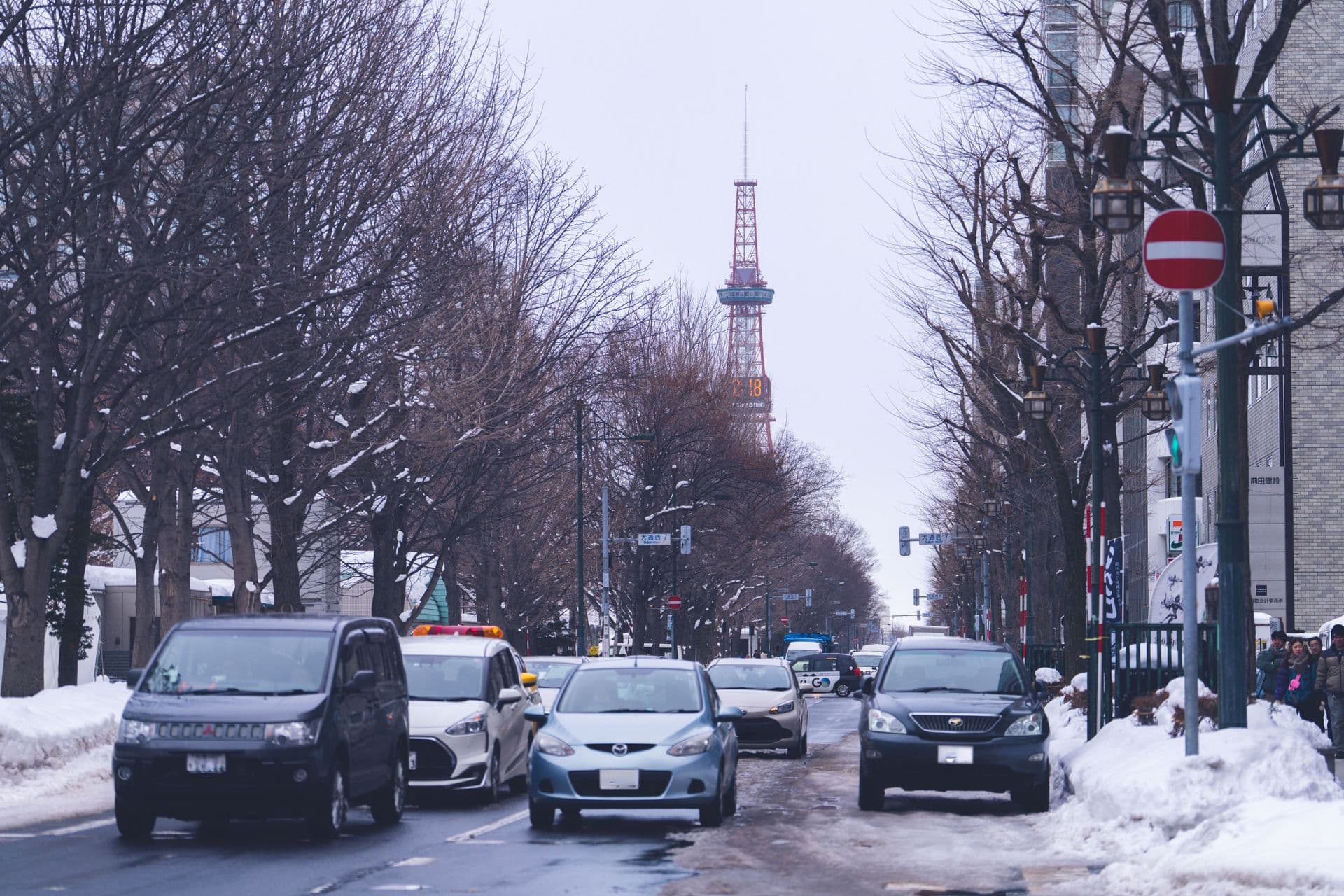
Sapporo TV Tower The observatory at Odori Park's east end (1,200 yen, 9:00 to 22:00, last entry 21:50). During the festival it is the seat that looks straight down the illuminated row of sculptures, which makes a night ascent worth the fee. Pair it with your first-evening venue walk for a clean route.
The Susukino venue, as the day's last stop
Susukino venue The boulevard in front of Susukino Station turns pedestrian and lines up with ice sculptures. In 2026 sixty were shown, including the popular fish-frozen-in-ice pieces, and the lights stayed on until 23:00 (22:00 on the final day). Because it stays lit later than Odori, it works as the last stop after dinner. The 2027 lineup goes up on the official site from mid-December.
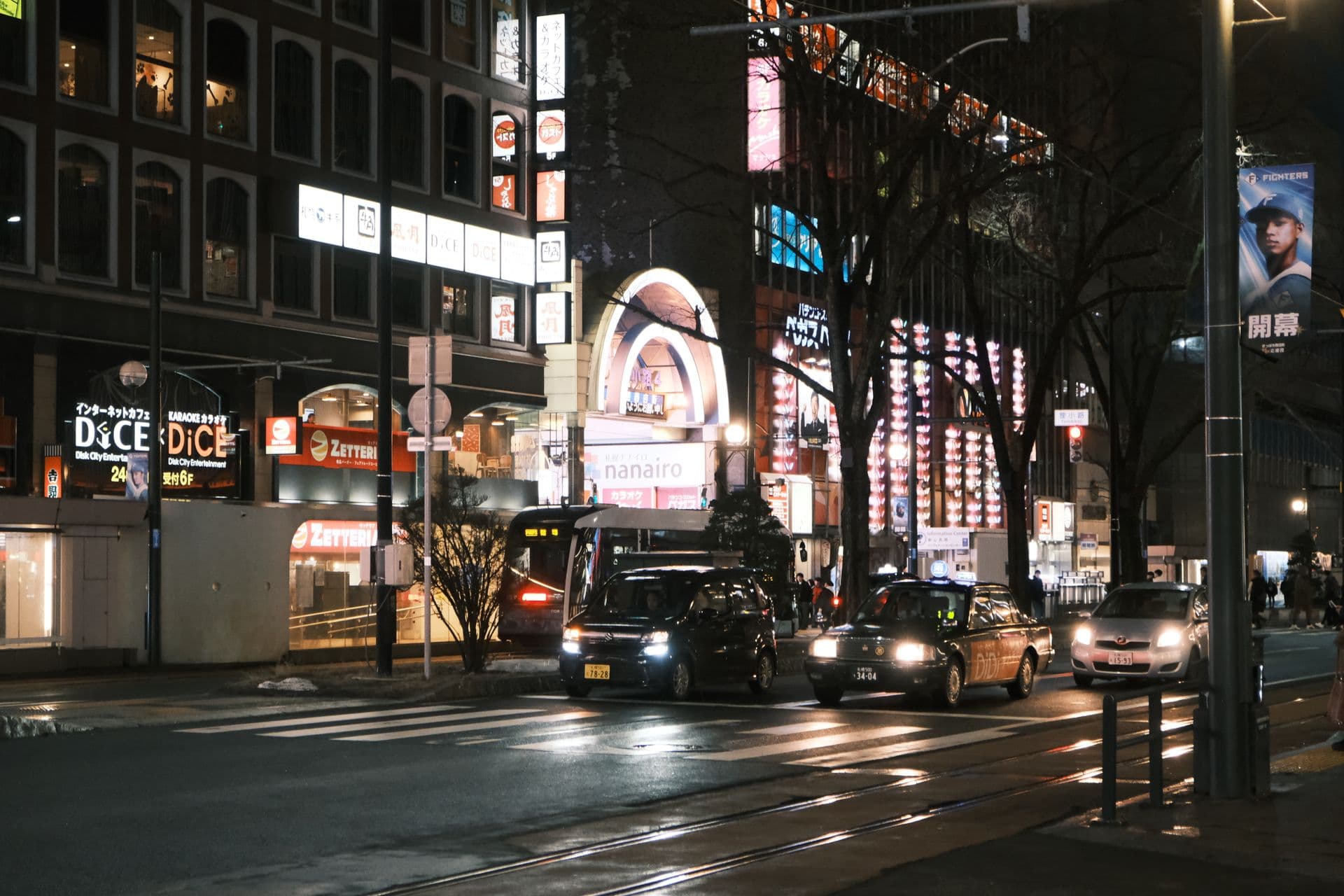
Tanukikoji Arcade A roofed shopping arcade running east-west just south of Odori. It does not cover the whole walk between the two venues, but ducking into it along the way lets you thaw out while browsing souvenirs and drugstores.
The Tsudome venue, the daytime for snow play
Tsudome venue The venue built around hands-on snow play. Outdoor attractions such as tube slides and the snow-play field are free; the snowmobile-pulled snow raft is 1,200 yen for adults and 600 yen for elementary age and under, and the indoor kids' park is paid (2026 basis). Hours are 10:00 to 16:00, daytime only, and attraction reception closes early when crowded. The large tube slider is single-rider for ages 4 and up, children too small to wear a helmet cannot ride the snow raft, and the no-age-limit family slider seats children 4 and under with a companion (2026 basis). It is a 15-minute walk from Sakaemachi Station on the Toho Line, with shuttle buses running. With kids, arriving right at opening saves the most queue time.
Downtown in between, for daytime gaps
Sapporo Clock Tower A wooden building from 1878, a few minutes on foot from the Odori venue. Seeing the exterior in passing is enough, which makes it easy to slot into a daytime transfer.
Nijo Market A walkable downtown market where shops serve seafood rice bowls and crab from the morning. Drop by on your last morning for breakfast and light shopping, then head for the airport. This assumes an afternoon flight; with a departure before noon, skip the market and go straight to the airport.
The Mt. Moiwa night view, with the venue lights added in
Mt. Moiwa Ropeway A ropeway plus mini cable car climb to an observatory over the snow-covered city. Round trip 2,100 yen; winter hours (December to March) are 11:00 to 22:00 with the last ascent at 21:30. From the streetcar's Ropeway Iriguchi stop (230 yen per ride) a free shuttle runs every 15 minutes, but on weekdays only from 17:17 (weekends and holidays from 10:47 in winter), before which it is a 10-minute uphill walk (about 0.5 km). During the festival crowds surge, so eat dinner in Susukino first and ride up between 19:00 and 20:00; coming down, finish with the Susukino venue, whose lights stay on latest, and you keep margin against both the 21:30 last ascent and restaurant closing times.
A half day in Otaru: the canal and the Snow Light Path
Otaru Canal The canal promenade lined with stone warehouses goes under snow in winter. From Sapporo Station it is 32 minutes at the fastest by JR Rapid Airport, 800 yen one way, an easy half-day trip. Walk the canal and streets by day, stay for the evening lighting, then head back.
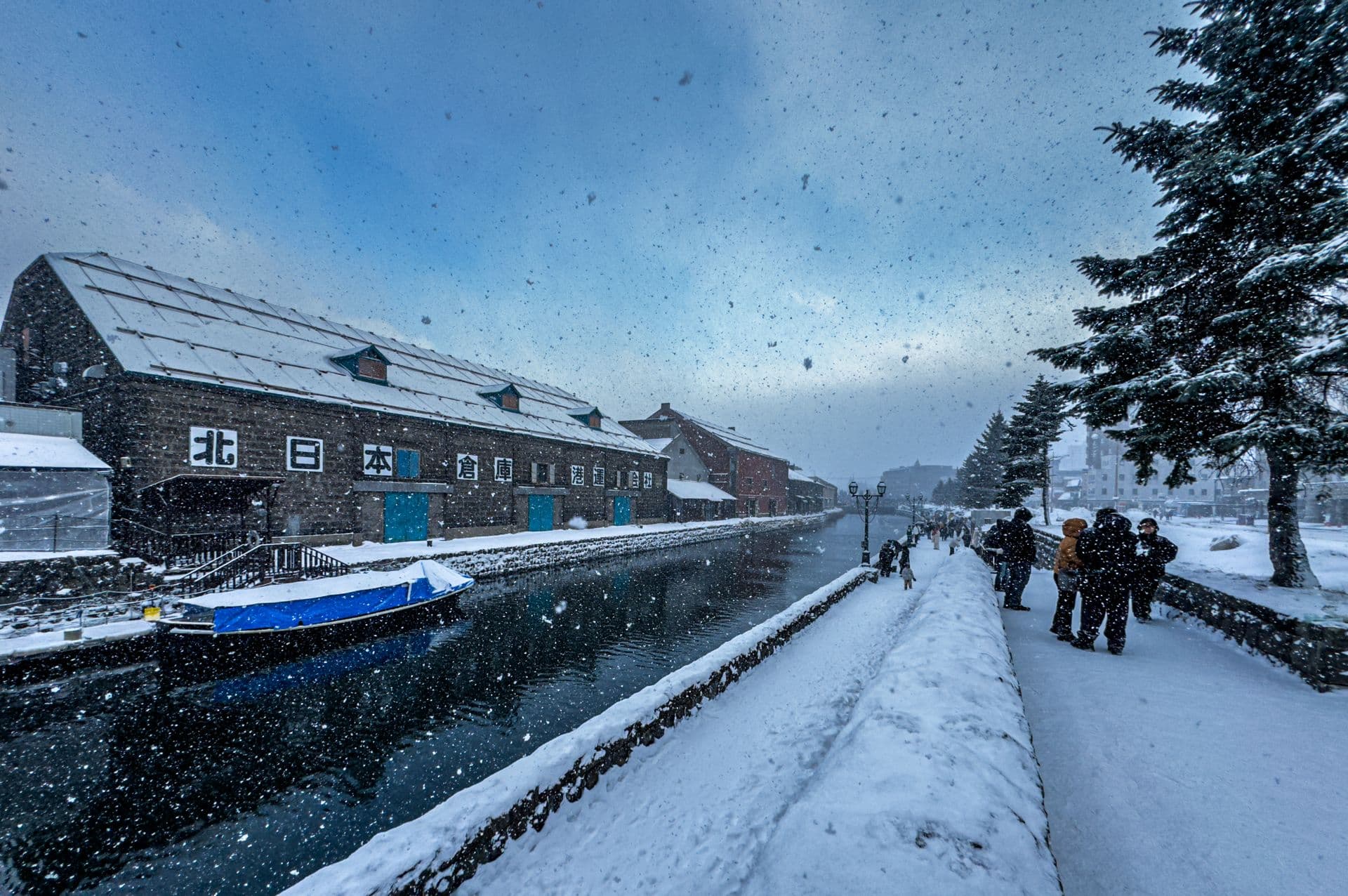
Otaru Snow Light Path Otaru's winter event of candle-lit snow lanterns, confirmed for February 6 to 13, 2027. It overlaps the Snow Festival on February 6 to 11, so with a departure between February 4 and 9, Day 3 falls inside that window and one trip covers both cities' winter events. Venues and hours are not yet announced, so check the Otaru tourism association's notices before departure.
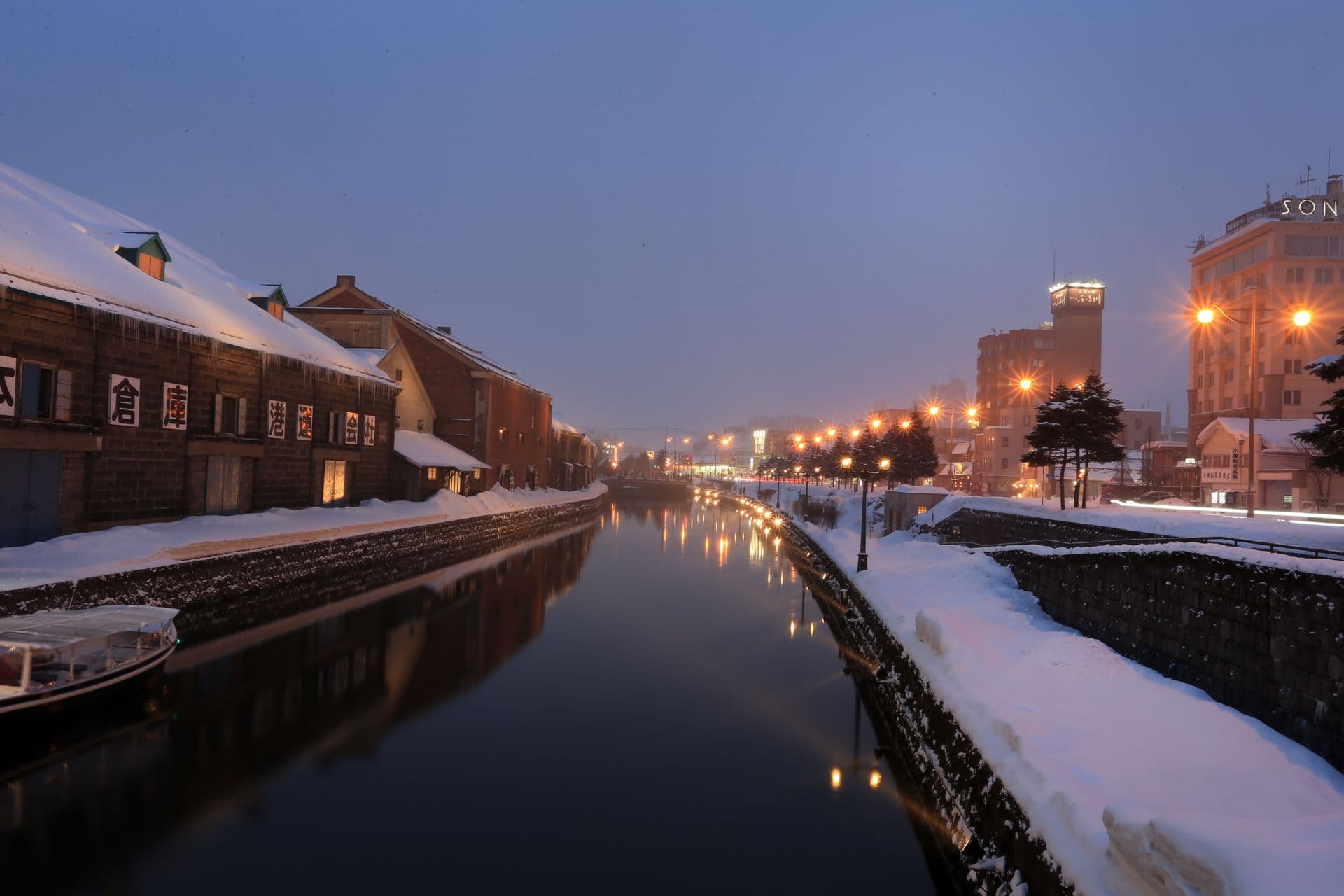
Sakaimachi Street The old merchant street running on from the canal, lined with glassworks, the music box hall and dessert shops. If you turn back after the canal alone, Otaru is over in an hour; adding this street fills out the half day and makes the train time worth it.
Practical info for the sights
| Sight | Fee (adult) | Hours | Notes |
|---|---|---|---|
| Three festival venues | Free | Odori lights to 22:00, Susukino to 23:00 (final day 22:00), Tsudome 10:00 to 16:00 | 2026 basis; 2027 versions from mid-December |
| Tsudome snow raft | 1,200 yen (600 yen elementary and under) | Within venue hours | Outdoor snow play is free (2026 basis) |
| Sapporo TV Tower | 1,200 yen | 9:00 to 22:00 (last entry 21:50) | The seat above the illuminated row |
| Mt. Moiwa Ropeway | Round trip 2,100 yen | Winter 11:00 to 22:00 (last ascent 21:30) | Shuttle weekdays from 17:17, winter weekends from 10:47; walk 10 min before that |
| Otaru Snow Light Path | Outdoor lighting event | February 6 to 13, 2027; details TBA | Evening lighting; see association notices |
| Shiroi Koibito Park | 1,200 yen | 10:00 to 17:30 (last admission 16:30) | Indoor-centered, bad-weather fallback |
Fees were checked against each official page in September 2026. Winter-season fees and festival details refresh annually, so give them one more look before departure.
Adjust the plan to your party and dates
| Concept | Day changed | Remove | Add | Why |
|---|---|---|---|---|
| Seollal departure (Feb 6 to 9) | Whole trip | Any same-day booking assumptions | Flights and room locked early; visit venues at earlier hours | The four holiday days sit dead center of the festival, so room and restaurant queues stretch far longer. Popular restaurants tend to be easier at lunch than at dinner |
| With kids | Days 2 and 3 | Mt. Moiwa at night, the late return from Otaru | Tsudome right at opening, Shiroi Koibito Park, Otaru by daylight only | Sub-zero outdoor queues at night drain children first. Daytime hands-on venues and indoor stops break up the cold exposure so the itinerary keeps moving |
| Weekdays around the peak | Whole trip | The weekend-holiday window | Depart February 4 to 5, or on the 9th, the holiday's last day | Same festival, with relatively lighter airfare and room pressure. Departing February 10 to 11 shrinks festival viewing to the first day or two, with only the Snow Light Path left by Day 3 (from a February 12 departure both events are over), and February 11, the festival's final day, is a Japanese public holiday |
| Onsen half day | Day 2 daytime | Tsudome | A Jozankei day-trip bath (reservation-only Kappa Liner bus, 1,700 yen one way, 1,460 online) | For an adults-only trip the night venues cover the snow viewing, so the daytime is better spent on gorge snowscapes and a hot bath. The bus books from one month ahead until 17:00 the day before |
Food: how to spread three dinners
The three dinners work like this. Start the first evening light with miso ramen at Ramen Yokocho, leaving plenty of viewing time. On the second day, settle Susukino soup curry before riding up Mt. Moiwa. On the third day the return from Otaru's lighting runs late, so eat dinner in Otaru before heading back. A crab course takes an hour and a half or more at the table, so do not attach it to the Otaru day; book it for the first or second evening instead and move that day's ramen or soup curry to a lunch slot or drop it. Treat the daytime venue stalls as snacks and settle dinners in the districts. Prices vary too much by restaurant to print here: a crab course raises the bill sharply, in which case read the budget table's comfortable column.
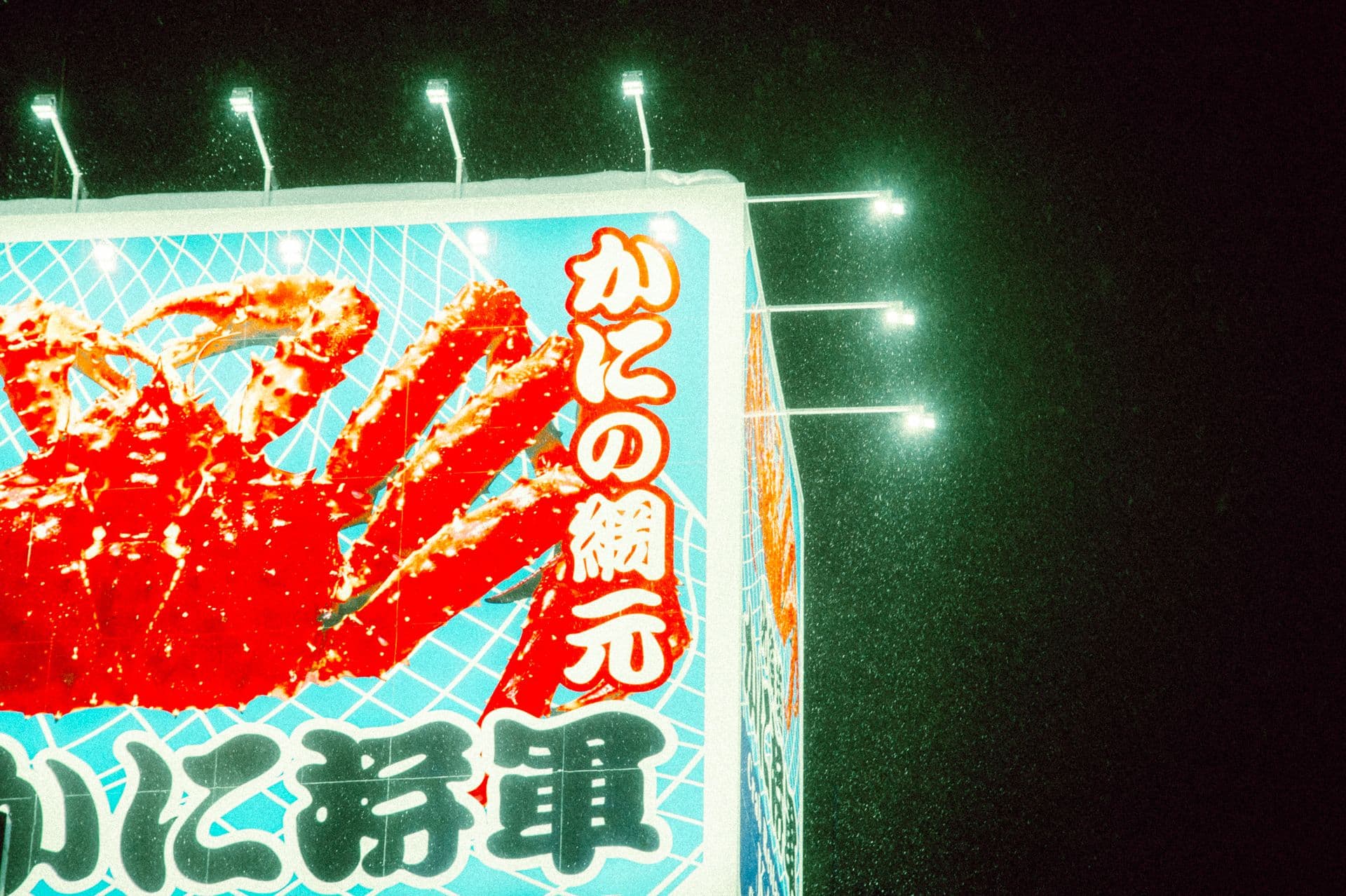
Every dinner district is crowded during the festival. If you commit to a long queue, steer that night's viewing toward Susukino, whose lights stay on latest, and the timing still works.
Budget for 3 nights and 4 days, per person
Based on double occupancy, departing from Incheon in Snow Festival week, converted at 100 yen = 870 KRW (September 2026). The flight, hotel and food bands are editorial planning assumptions (examples), not live quotes, and the exchange rate is a working assumption.
| Item | Budget | Standard | Comfortable |
|---|---|---|---|
| Round-trip flight | 300K | 450K | 600K |
| Hotel, 3 nights per person | 240K | 400K | 600K |
| Food, 4 days | 140K | 200K | 260K |
| Transport and admissions | 70K | 100K | 130K |
| Total (KRW) | ~750K | ~1,150K | ~1,590K |
Because festival admission is free, on-the-ground spending stays small. The standard column's transport and admissions break down as JR airport round trip 2,460 yen, about 1,500 yen of subway over two days, Otaru round trip 1,600 yen, Mt. Moiwa 2,100 yen, streetcar round trip 460 yen and TV Tower 1,200 yen, roughly 9,000-plus yen, or the 80,000-KRW range; the table's 100K adds a small city-transit reserve on top. The comfortable column adds the snow raft, Shiroi Koibito Park and an onsen bath (1,000 to 2,000 yen by facility). Choosing the onsen half-day variation drops the snow-raft share and adds the 2,920-yen Kappa Liner round trip, putting comfortable transport and admissions at around 130,000 KRW. The budget column drops one observatory and Otaru. The real variables are the top two rows, flights and lodging: the later you book, the sooner the budget column disappears.
Season and weather
By the Japan Meteorological Agency's climate normals, February in Sapporo averages minus 2.7C, with daytime highs of 0.4C, morning lows of minus 6.2C and 116 cm of monthly snowfall. That is only a touch milder than January (average minus 3.2C), so take Seoul midwinter clothing and add one more layer of protection. Waterproof insulated boots or slip-on shoe spikes, gloves, an ear-covering hat and heat packs are the working kit. Venue viewing means one or two hours standing and walking on snow, so pace yourself through indoor cafes and roofed stretches like Tanukikoji to reheat.
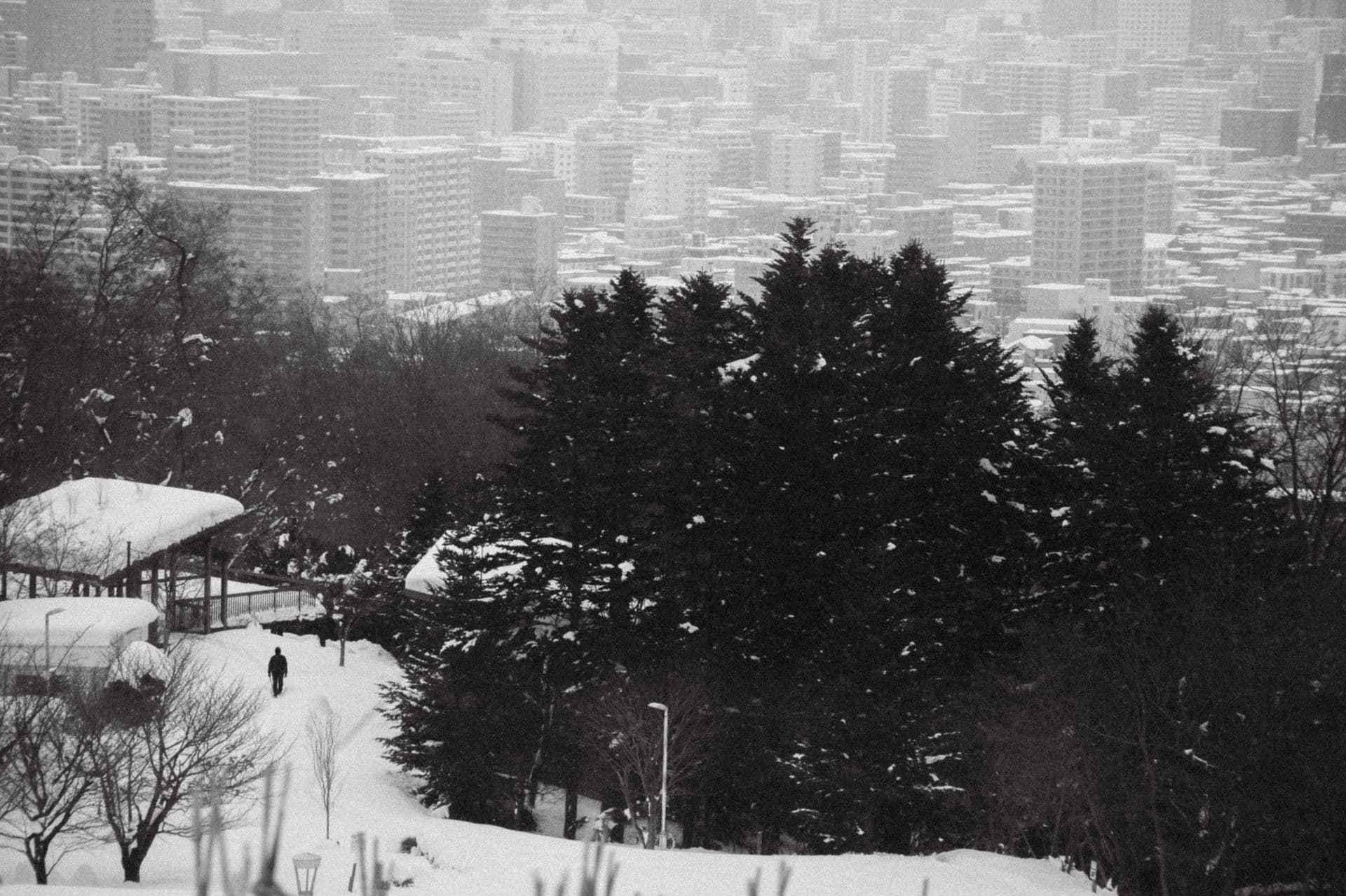
Days are short in this season, and the venues' main act begins once the illuminations switch on. Keep daytime plans light and hold two or three evening hours open for the venues; that is this trip's rhythm.
Do not miss these
- Booking order is half the trip. Dates (Feb 4 to 11) are fixed, so flights first, then a cancellable downtown room. Hurry if departing within Seollal (Feb 6 to 9).
- Three free venues, three time windows. Odori lights to 22:00, Susukino to 23:00 (final day 22:00), Tsudome daytime 10:00 to 16:00 (2026 basis).
- 2027 details arrive from mid-December on the official site. So far only the outline, such as five planned large sculptures, is out.
- The Otaru Snow Light Path (Feb 6 to 13) overlaps. Set Day 3's afternoon for Otaru and one trip covers both events. JR fastest 32 minutes, 800 yen one way.
- Contactless tap wins on the subway. The daily cap (830 yen weekdays, 520 weekends) applies automatically (adult fares only, one card per person, same card or device). Venue moves are all on subway lines.
- Absorb winter delays with margin. On departure day, add buffer to the 3-hours-before calculation for possible snow delays.
Wrap-up
The 2027 Sapporo Snow Festival is confirmed for February 4 to 11, with Korea's four-day Seollal holiday sitting wholly inside it. Split the trip as sights by night (Odori and Susukino illuminations), play by day (Tsudome), and Otaru's Snow Light Path (Feb 6 to 13) nearby, and 3 nights 4 days is exactly the right size.
- Booking order: flights in autumn, then a downtown room, then re-check details from mid-December
- Airport transfer by JR Rapid Airport, 1,230 yen, fastest 33 to 37 minutes
- Festival admission free; only the venue time windows differ
- Otaru by JR, 800 yen one way, half a day to an evening
- Per-person budget 750K to 1,590K KRW including flights; flights and lodging are the variables
Organize this Snow Festival plan in Tripop
Illumination hours by venue, the Otaru lighting evening, backworked departure margins: this itinerary runs on time variables. Type "Sapporo Snow Festival 3 nights 4 days" into the Tripop app and a day-by-day skeleton appears; upload your flight PDF and hotel confirmations and they are filed as vouchers. Yen expense tracking and companion sharing live in the same app.
- Get it on the App Store
- Get it on Google Play
- Start on the web, no install needed
What we verified
The dates and fees in this article were checked one by one by the Tripop travel desk on September 29, 2026 against the Snow Festival official site's 2027 outline announcement, the Otaru tourism association's notice, JR Hokkaido's fare pages (reflecting the April 2025 revision), the Sapporo City Transportation Bureau, the Mt. Moiwa Ropeway and each facility's official pages. Venue hours and Tsudome attraction fees are 2026 (76th edition) figures, with 2027 details refreshing from mid-December. The entry rules follow the Ministry of Foreign Affairs guidance verified on September 13, 2026, and the Jozankei bus fares follow the September 19 verification. Before departure, give the festival official site, the Otaru tourism association and Visit Japan Web one more look. If a number here differs on site, let us know; we will check and fix it right away.
Images: Pexels (jason hu: winter Sapporo panorama, Saya Azeem: Odori TV Tower, nana liu: Susukino at night, Jatin Chadha: Otaru Canal snowfall, Jeffry Surianto: Otaru Canal evening, Dương Nhân: Kani Shogun sign and hillside snowscape), Pexels License.