
Scan a café menu anywhere in Vietnam right now and one newcomer keeps appearing: salt coffee, or cà phê muối. Strong phin-dripped coffee over sweet condensed milk, topped with a cap of lightly salted whipped cream. It sounds odd until the first sip, and then it makes complete sense. Born around 2010 at a small café in Hue, the drink went global after CNN and other international outlets picked it up, and tasting one has quietly become an essential mission on any trip to Vietnam.
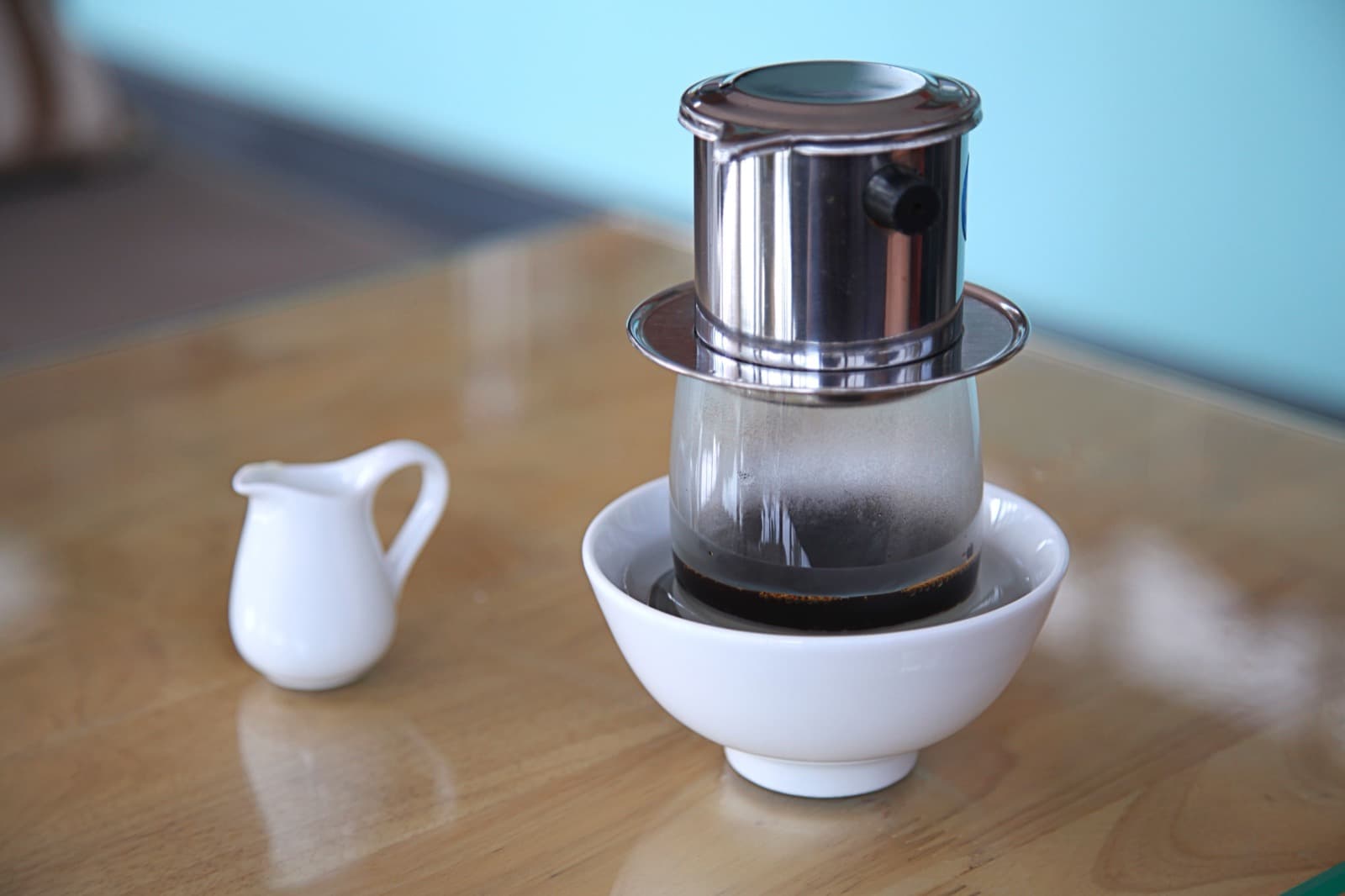
If Vietnamese coffee has a signature move, it is taking something fiercely bitter and taming it with something rich. Condensed milk has done that job for more than a century. Salt coffee is the newest twist on the same idea, and for many travelers it turns out to be the most memorable one.
The Birth of Salt Coffee: A Small Café in Hue
The story begins in Hue, the former imperial capital on the banks of the Perfume River in central Vietnam. Around 2010, a café opened there under the name 'Cà Phê Muối', which translates, quite literally, to 'salt coffee'. The founders were wrestling with a familiar local problem: the robusta beans that dominate Vietnamese coffee brew up strong, dark, and harshly bitter. Their answer came from the kitchen rather than the roastery. Salt, as cooks have known forever, suppresses bitterness and lifts sweetness. Apply a careful pinch to the cream, and rough robusta suddenly turns round and smooth.
The café's name became the drink's name, and word of mouth carried it well beyond the city. When CNN and other international press covered it, the drink jumped from regional curiosity to global trend, retracing the exact path Hanoi's egg coffee had walked a few years earlier: one quirky hometown invention growing into a national standard.
What It Tastes Like: Sweet and Salty in One Glass
Salt coffee is a drink you experience in layers. At the bottom sits sweet condensed milk. Above it, strong coffee that has dripped slowly through a phin, the small metal filter that defines Vietnamese brewing. And on top rests whipped cream that has been lightly salted, just enough to change everything.
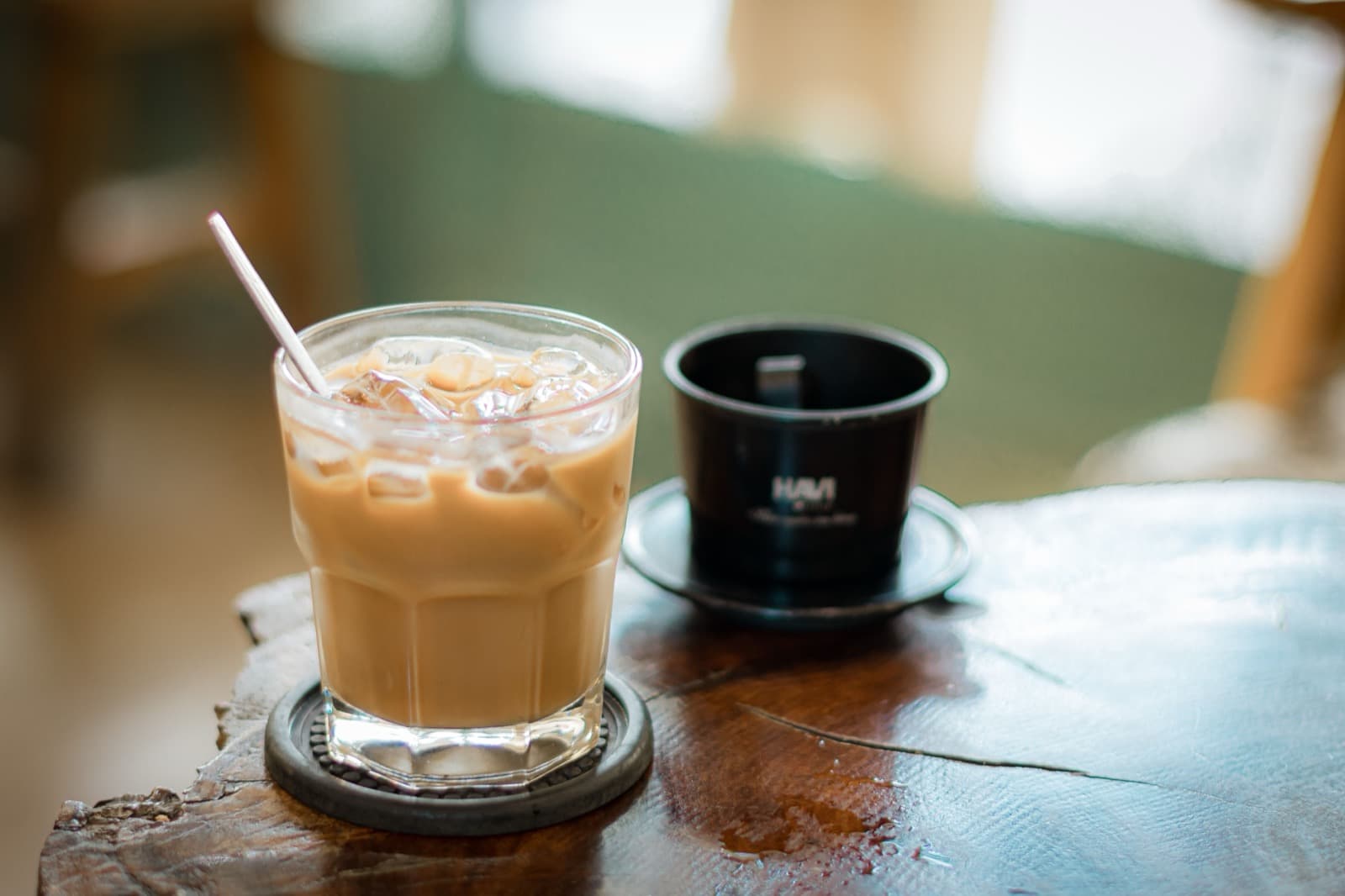
Take your first sip without stirring. The cream arrives first, silky and faintly savory, and then the bitter coffee cuts through from below. Now stir the whole glass and taste again: the sweet, the salty, and the bitter fold into one another, and you are suddenly holding a completely different second drink. Two drinks in one glass is the standing joke about cà phê muối, and it happens to be accurate.
The crucial thing to know is that it is not actually salty. The salt is there to amplify sweetness and round off bitterness, the same sweet-salty principle that makes salted caramel work. If classic Vietnamese condensed-milk coffee has always been a touch too sweet for you, this is the version most likely to win you over.
Where to Drink It
Hue is the pilgrimage site. The original café is still pouring, and the whole city treats the drink as hometown pride, so almost any café you wander into serves a very good glass. Hue sits a couple of hours by car from Da Nang, which is why so many travelers based in Da Nang fold a salt coffee stop into a Hue day trip, pairing the imperial citadel and the royal tombs with the city's most famous modern invention.
You do not have to reach Hue, though. The trend is fully nationwide now. Café menus in Da Nang, Nha Trang, Ho Chi Minh City, and Hanoi list cà phê muối as a matter of course, from sleek air-conditioned chains to plastic-stool corner spots. One practical tip: neighborhood cafés full of locals tend to pour stronger, more generous versions than the ones on heavily touristed streets.
How to Order It and How to Drink It
Ordering could not be simpler. Find cà phê muối on the menu and point; muối is the Vietnamese word for salt. If you feel like saying it out loud, 'kah-feh moo-oy' gets you close enough for any barista to smile and nod. Most places offer both hot and iced versions. In Vietnam's heat the iced version is the crowd favorite, while the hot version lets you appreciate the salted cream at its richest and silkiest.
For the drinking itself, follow the local ritual. Take one sip before stirring to taste the layers as they are, then stir well and drink the rest as a blended whole. And if your glass arrives with the phin still perched on top, dripping away, do not rush it. Those few minutes of waiting while the coffee falls drop by drop are part of Vietnamese café culture, an enforced pause that the whole country seems to agree is the point.
Turn It Into a Vietnam Coffee Tour
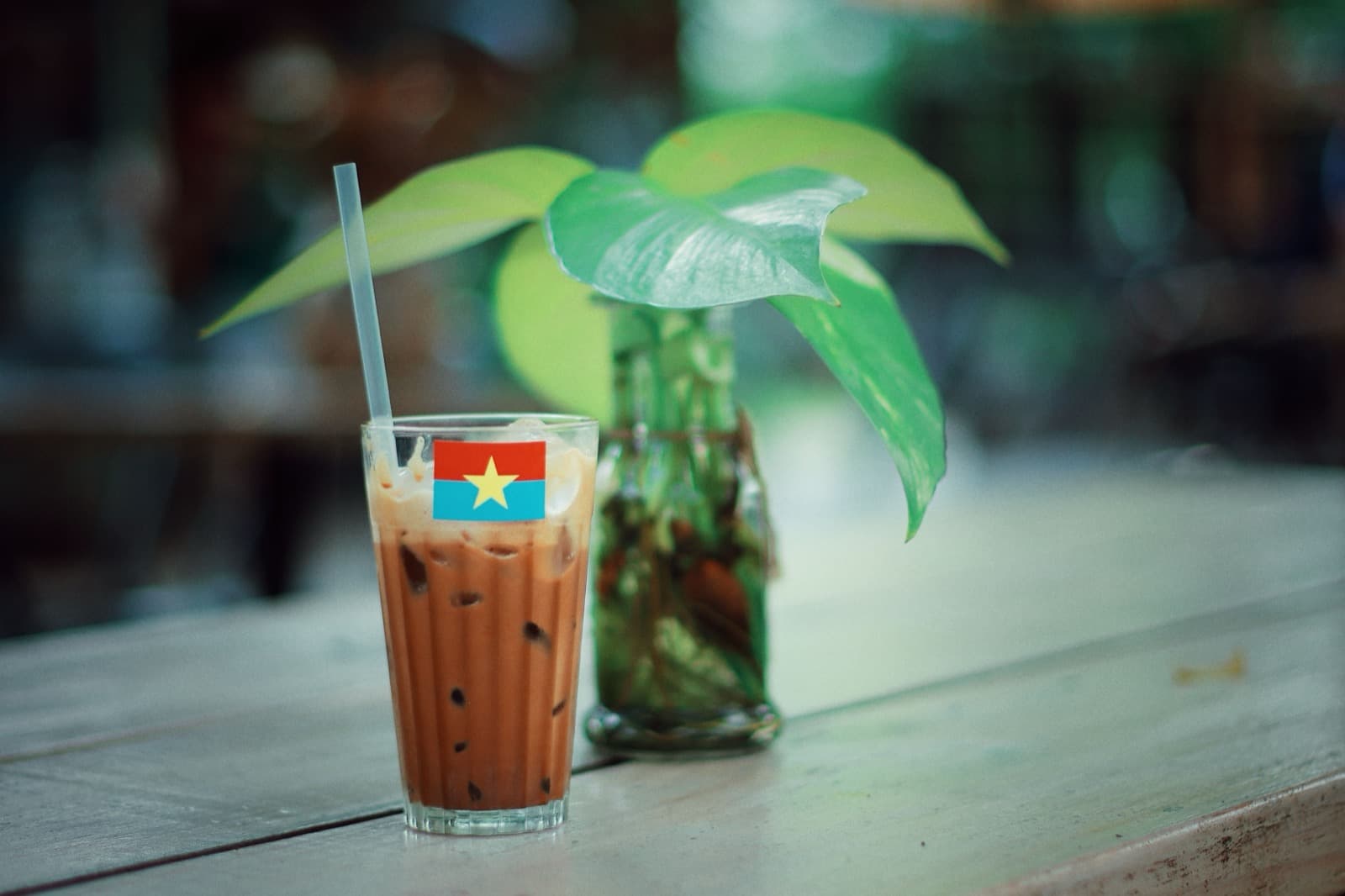
Salt coffee also makes a perfect opening move for a wider tour of Vietnamese coffee, which can easily become one of the axes of your whole trip. Egg coffee, the Hanoi original, tops strong coffee with whipped egg-yolk cream that tastes like warm custard. Coconut coffee blends in coconut milk for a frosty, tropical kind of refreshment. And the classic cà phê sữa đá, iced coffee with condensed milk, is the baseline that every one of these drinks riffs on. Each city fields its own champion, so if you slot just one coffee into each day of your route, you end up with a natural, self-guided tasting tour threaded through the sightseeing.
A Long Vietnamese Afternoon at a Café
The deeper charm here is the pace. Vietnamese café culture runs on unhurried time: you take a low stool at the edge of the pavement, watch the river of motorbikes flow past, and wait for the phin to finish its work. The waiting is sightseeing in itself. Prices are low enough that plenty of travelers make two or three café stops a day without a second thought, and one salt coffee is exactly the comma a hot afternoon needs. Bring a notebook along and the travel journal practically writes itself.
At a Glance
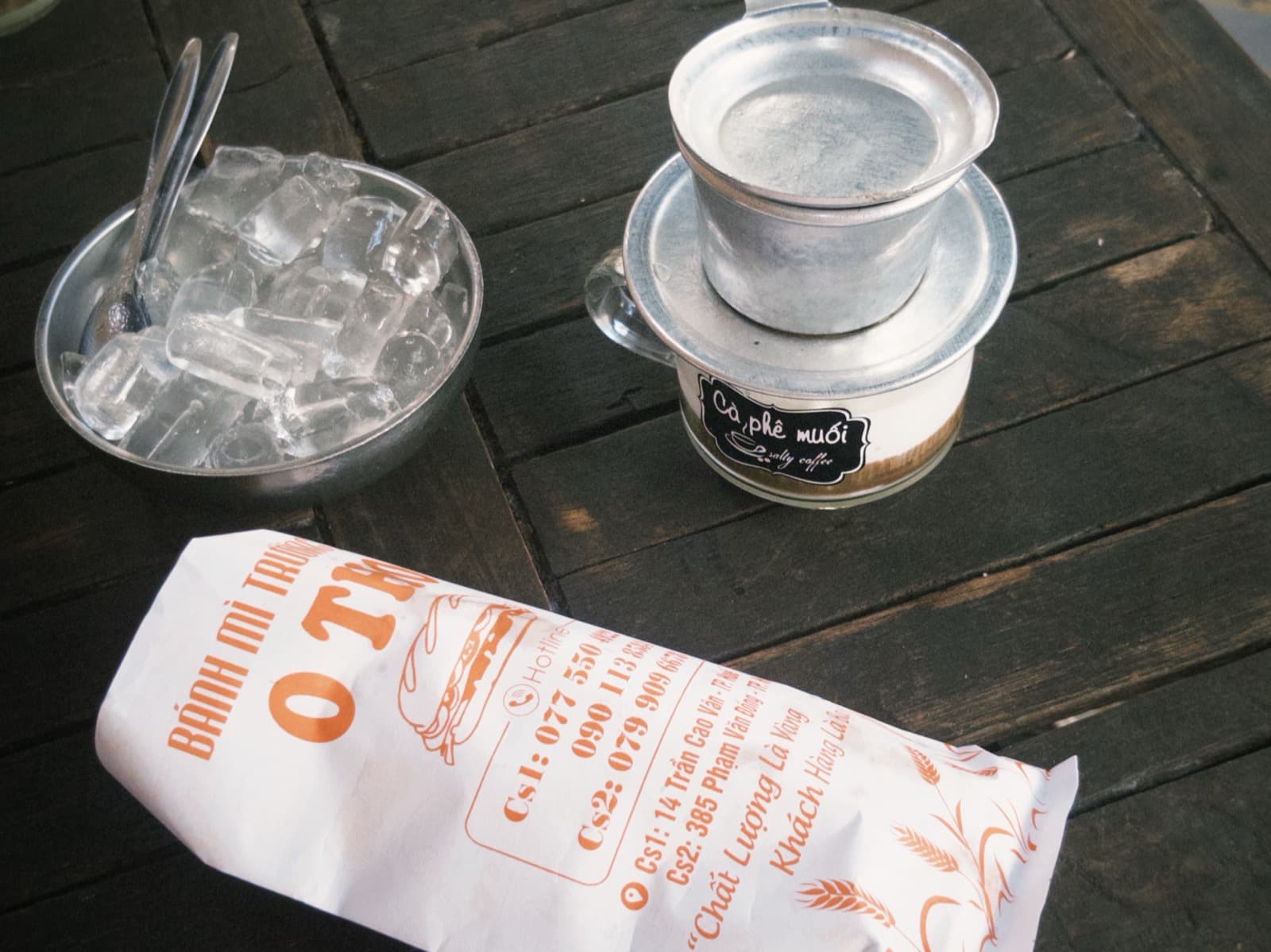
- What: a layered drink of phin coffee, condensed milk, and lightly salted cream, called cà phê muối
- Origin: the café 'Cà Phê Muối' in Hue, around 2010; CNN and international press coverage took it global
- Where: Hue is the pilgrimage, and it is now on café menus in Da Nang, Nha Trang, Ho Chi Minh City, and Hanoi
- Ordering: point at cà phê muối on the menu; choose iced or hot
- Drinking: one sip before stirring, one after
- Extend it: egg coffee (Hanoi), coconut coffee, and classic cà phê sữa đá make a full coffee tour
How to Fit It Into Your Vietnam Itinerary
Salt coffee is a mission that costs your itinerary almost nothing. Ask Tripop, the AI travel planner, for something like 'plan 5 days in Da Nang', get a day-by-day schedule, and then drop a salt coffee stop into an afternoon café break. Heading to Da Nang? Layer one café onto the flow of the Da Nang 3-night 5-day itinerary. Nha Trang more your style? Do the same with the Nha Trang 3-night 5-day itinerary. Log each coffee in the foreign-currency expense tracker in Vietnamese dong and the exchange-rate math is settled for you, and the whole itinerary opens offline, so the plan stays in your pocket even when the café wifi does not.
Images: Pexels (Nikita Belokhonov: phin filter; Nguyễn Tiến Thịnh: iced phin and iced coffee; lhthoai: drip coffee and banh mi), Pexels License.