
On a first walk through Seoul's old city center, the place names can be easy to mix up. Gwanghwamun is a gate of Gyeongbokgung Palace; Gwanghwamun Square is the public space in front of it. Bukchon is a neighborhood of hanok, traditional Korean houses where people still live. Jongmyo is a shrine that houses the spirit tablets of kings and queens and remains a place of ancestral rites. Understanding those differences gives the day's tiled roofs and courtyards more meaning: you can begin to see why the buildings have such different forms.
This route follows Gwanghwamun Square → Gyeongbokgung Palace → Bukchon → Insadong → Jongmyo Shrine. Set aside a full day during your stay in Seoul, with time for lunch and seated breaks. You will be walking through palace grounds as well as Bukchon's sloping alleys, so the distances between map pins alone do not make this a short stroll.
Choose your day of the week first
Saturday is a convenient starting point if you want to explore at your own pace. You do not have to build your Jongmyo visit around one guided-tour departure, and you can visit Bukchon during the daytime. If you want an English guide to explain Jongmyo, choose a Monday, Thursday or Friday tour time first, then adjust the earlier stops around it. There are no regular English tours at Jongmyo on Saturdays.
| Day | How to combine Gyeongbokgung and Jongmyo | Where Bukchon fits |
|---|---|---|
| Monday, Thursday, Friday | Visit Gyeongbokgung, then arrive for Jongmyo's scheduled entry in your tour language | Keep the daytime alley walk short enough to reach Jongmyo on time |
| Wednesday, Saturday | Use Jongmyo's self-guided admission to set your own pace | Finish sightseeing in the residential alleys within 10:00–17:00 |
| Sunday | Shorten the route to Gyeongbokgung, Insadong and Jongmyo | Skip the residential alleys in keeping with the alley rest-day guidance |
| Tuesday | Move the palace-and-shrine visit to another day; both normally close on Tuesdays | Plan Bukchon separately from your palace visit |
When a regular closing day falls on a public holiday, an exception allows opening that day and closure on the next non-holiday. Self-guided Wednesday visits are also separate from free admission, so check the fee section below. Notices for your date on the Royal Palaces and Tombs Center's visiting-hours page take precedence over this general weekday pattern.
For autumn 2026 visits: Gyeongbokgung and Jongmyo offer free admission during the Chuseok holiday period of 24–27 September, with self-guided visits at Jongmyo. Gyeongbokgung's regular guided tours do not run during this period. Jongmyo's foreign-language tours pause on 24–26 September and resume normal operation on 27 September. Jongmyo has also announced a switch to self-guided visits for 7–11 October and 29 October–15 November, so compare these notices with your travel dates. Free admission during the latter period excludes closing days. See the Gyeongbokgung Chuseok notice, Jongmyo Chuseok notice, and October–November notice.
The day's order and the names to save on your map
The times below are a planning example, including meals and travel between stops. They are not measured walking times or confirmed reservations. If you join a Gyeongbokgung tour or rent hanbok, allow less time for Bukchon and Insadong. If Jongmyo interests you most, protect that entry time first.
| Example time | What to do | Where to leave room |
|---|---|---|
| 09:15–09:40 | Get your bearings at Gwanghwamun Square, looking toward the palace | Confirm the exact meeting point with your companions |
| 09:40–11:45 | See Geunjeongjeon Hall and Gyeonghoeru Pavilion at Gyeongbokgung | Allow for tickets and the grounds, plus the 10:00 changing of the guard if wanted |
| 11:45–13:00 | Reach Bukchon and walk through a few alleys | Count the approach and uphill walking as part of the same block of time |
| 13:00–14:00 | Have lunch and sit down for a break | Reduce sightseeing time if the meal involves a long wait |
| 14:00–15:10 | Explore Insadong-gil and Ssamzigil | Give the Jongmyo entry time priority over shopping |
| 15:10–15:40 | Head to Jongmyo's main entrance and buy tickets | Leave preparation time if you have chosen the 16:00 English tour |
| From 15:40 | Visit independently or join the 16:00 tour | Check the entry format and seasonal closing times |
Saving an entrance or a meeting address is more useful than saving only a neighborhood name. These Google Maps links search for places. For the actual walk, also check the entrances, pedestrian signs and directions in the map app you use.
| Korean and English names to save | Address or point to distinguish | Map |
|---|---|---|
| 광화문광장 · Gwanghwamun Square | 172 Sejong-daero; the square in front of the gate | Find the place |
| 경복궁 · Gyeongbokgung Palace | 161 Sajik-ro; entry from the Gwanghwamun side | Find the place |
| 북촌한옥마을 · Bukchon Hanok Village | Around Bukchon-ro 11-gil; check the tourist-restriction signs | Find the place |
| 인사동 쌈지길 · Ssamzigil | 44 Insadong-gil; the shopping building | Find the place |
| 종묘 · Jongmyo Shrine | 157 Jong-ro; head for the main-entrance ticket office | Find the place |
Gwanghwamun: find your bearings between the square and the palace
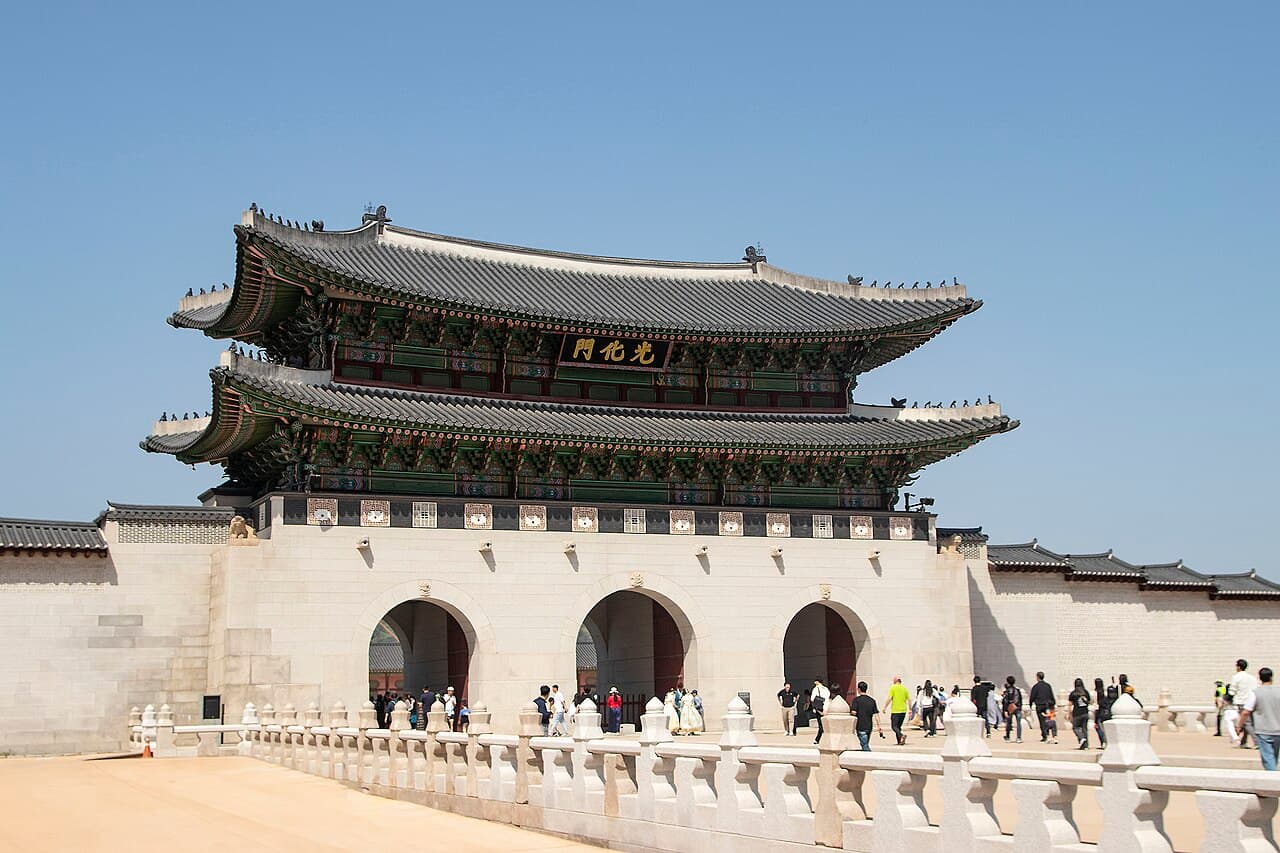
Seen from the front, Gwanghwamun's three arches and the pavilion above establish a central axis. Separate the palace beyond the gate from the wide public square in front. Looking at the gate from the square and buying a ticket to explore the palace grounds need their own time in your plan. A meeting point labeled only “Gyeongbokgung” can leave one person waiting in the square while another has already entered the palace.
For the square, compare the Haechi Madang connecting passage or Exit 7 of Gwanghwamun Station on Line 5 with Exit 6 of Gyeongbokgung Station on Line 3, depending on where you are coming from. Choose and share one precise point near the exit you will actually use. Events or access controls may alter the walking route on the day. See the official directions to Gwanghwamun Square.
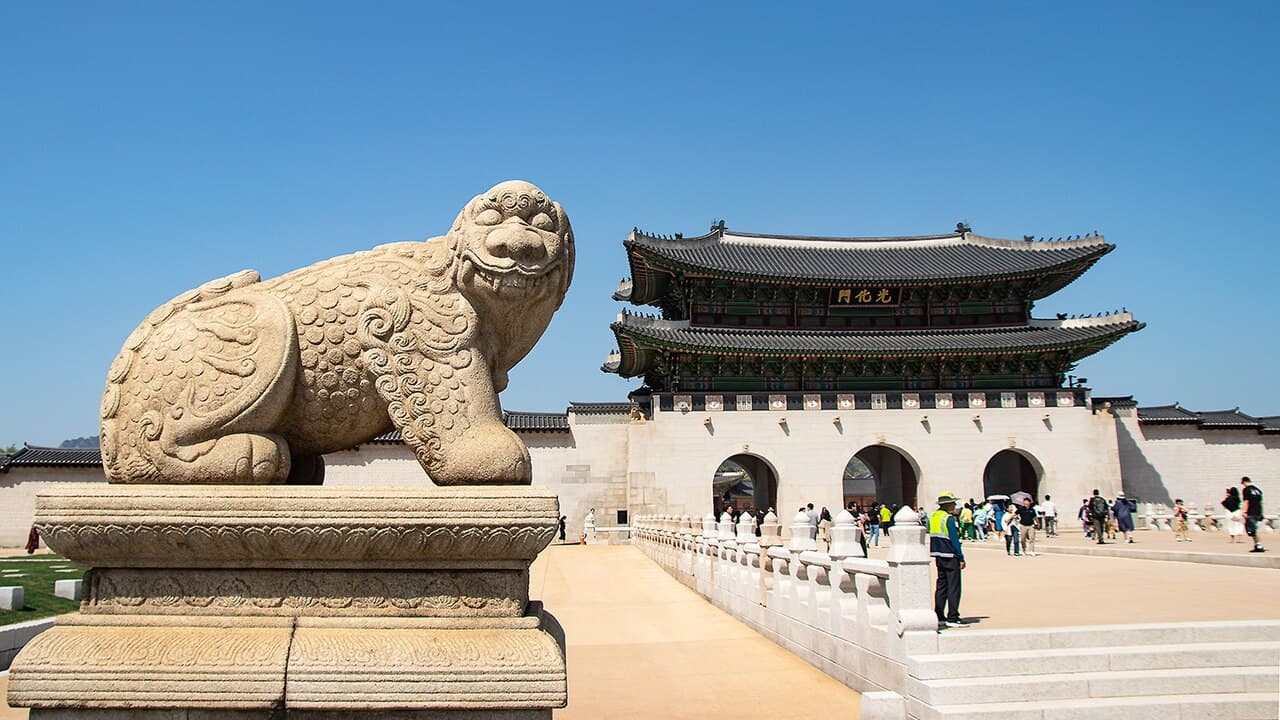
After taking in the whole gate, look at a closer detail such as a stone haechi statue. Notice its face and body, then look back at the gate: the smaller elements become easier to distinguish within the broad view. If you choose a statue as your meeting point, specify which side it is on. Keep the stop brief and stand where you will not block people walking past or taking photographs.
Gyeongbokgung: Geunjeongjeon's courtyard and Gyeonghoeru's pond
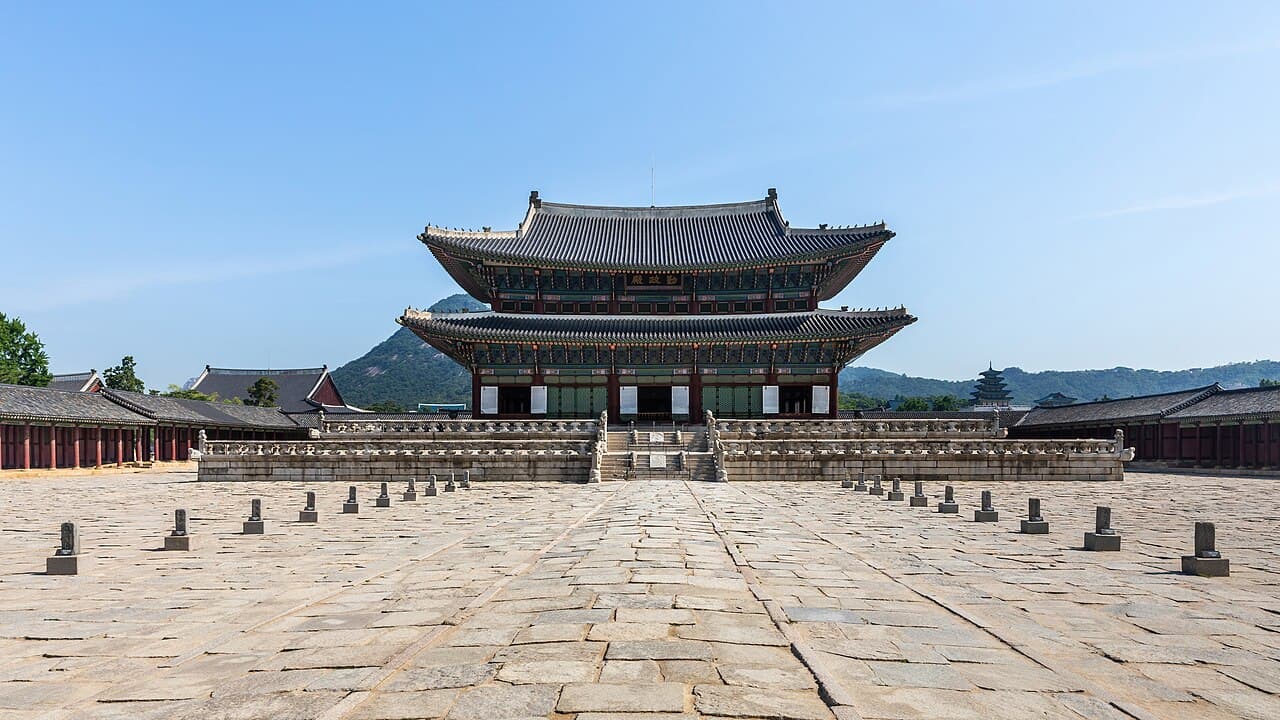
Geunjeongjeon is the palace's main throne hall, used for royal coronations and major ceremonies. Look beyond the building itself to the breadth of the forecourt and the axis continuing from the gate. Knowing that this space was arranged for official ceremonies helps explain why it feels different from the smaller rooms and domestic spaces of a hanok. You can pause here to understand one courtyard before moving on, rather than trying to rush through the entire palace. See the official guide to Gyeongbokgung's grounds.
An access restriction applies to Geunjeongjeon's raised stone terrace, or woldae, from 2 September to 31 October 2026. During this period, view the hall and forecourt from the visitor paths outside the barriers instead of climbing onto the terrace. See the Geunjeongjeon terrace notice.
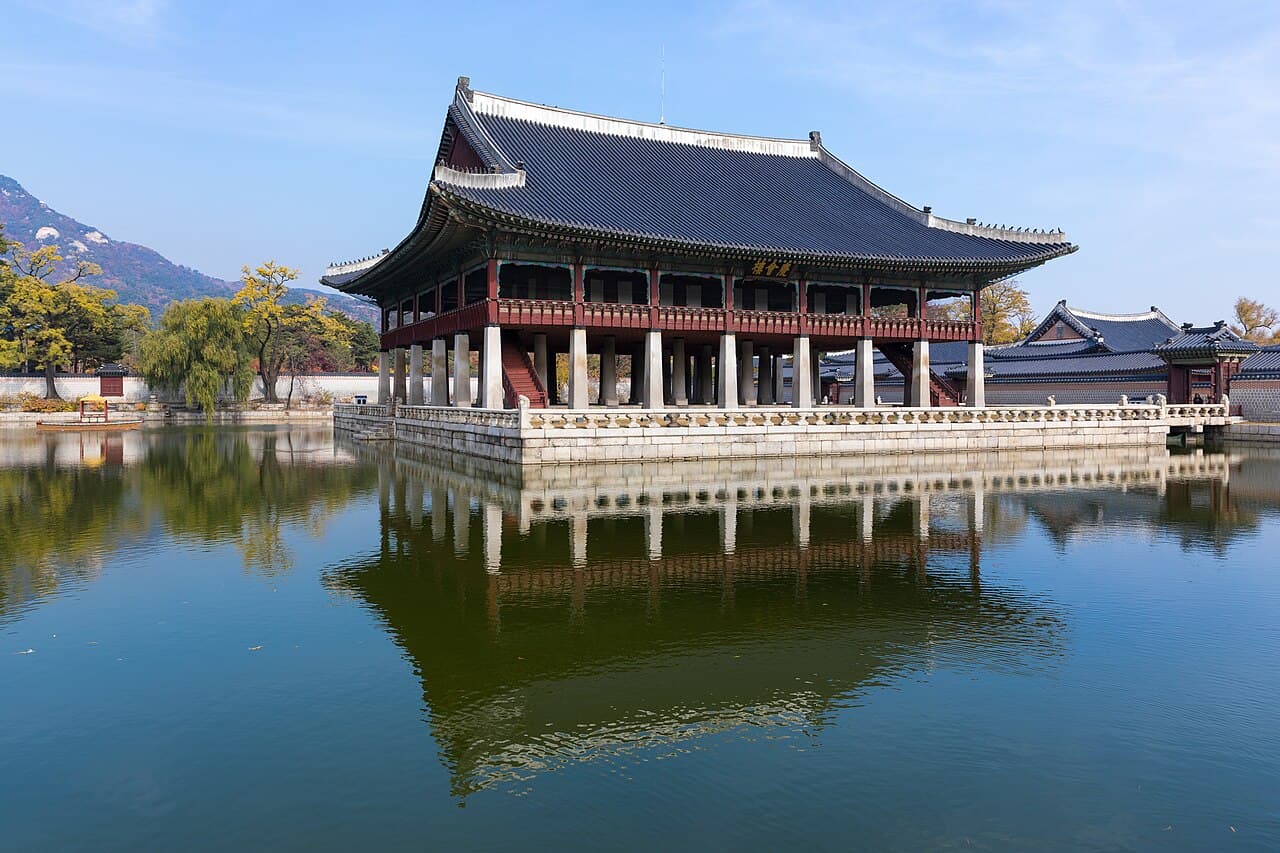
Gyeonghoeru is a pavilion where large banquets were held for the king, officials and foreign envoys. After the more vertical composition of Geunjeongjeon's courtyard, here you can take in the pond and the building's long horizontal form together. This route allows time to see the exterior from outside the pond. Special visits that take you up into the pavilion have separate operating and reservation conditions; do not assume they are included with ordinary palace admission. See the introduction to Gyeonghoeru.
On regular operating days, English tours depart at 11:00, 13:30 and 15:30, last about 60–90 minutes, and meet in front of the Gyeongbokgung Information Center inside Heungnyemun Gate. Individual parties of fewer than 10 can join without advance reservations, but check closure and special-operation notices first. Following the full 11:00 tour means leaving later than the example schedule above. Shorten or skip Bukchon to preserve time for lunch. See the regular Gyeongbokgung tour schedule.
The changing of the guard in front of Gwanghwamun takes place at 10:00 and 14:00 and lasts about 20 minutes. It is a different event from the guard-duty ceremonies at 11:00 and 13:00. Check for cancellations or changes on your visiting day. Choosing the morning changing of the guard, rather than waiting for both performances, leaves time to see Bukchon during the day and continue the route. See the official guard-ceremony information.
Bukchon: a short, quiet walk through a lived-in neighborhood
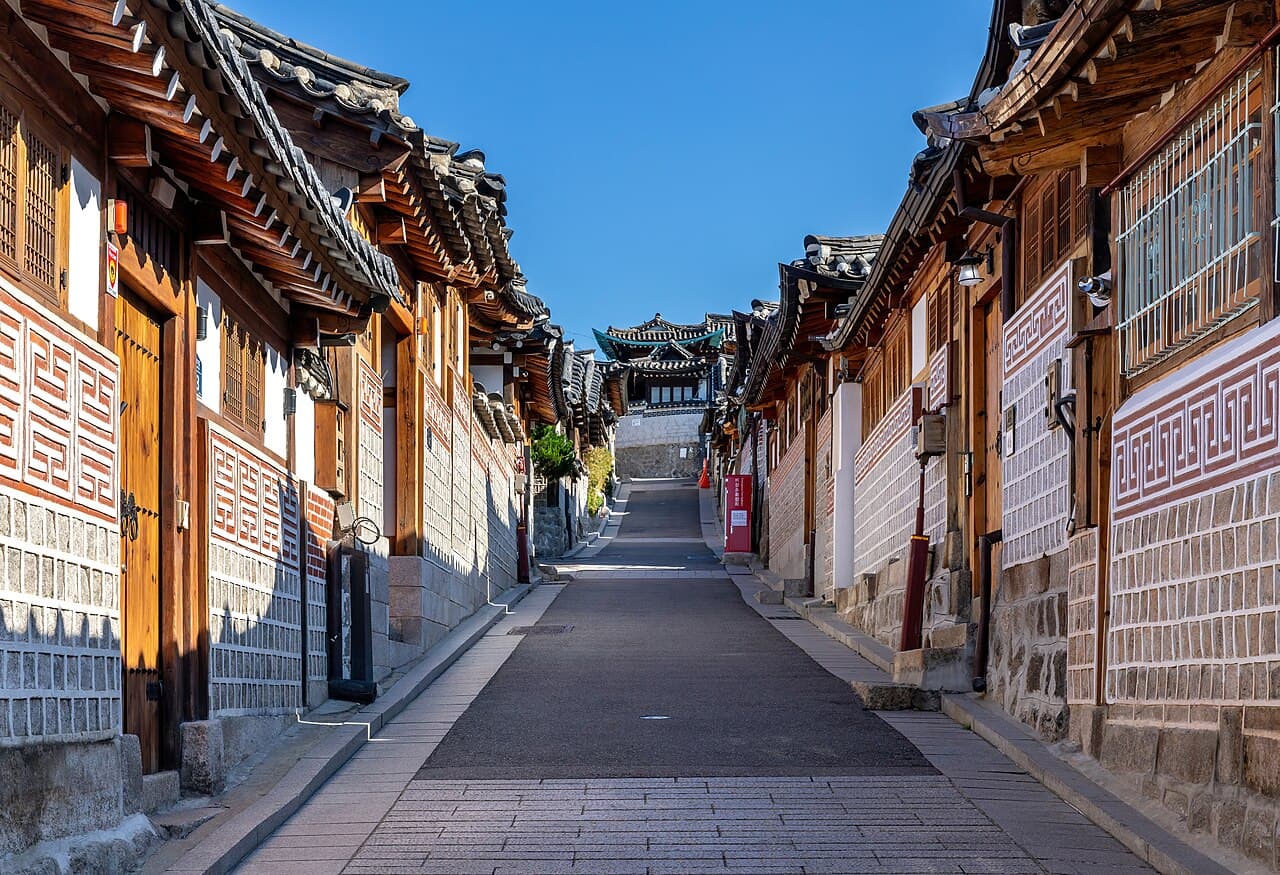
Bukchon is a residential neighborhood, not an outdoor exhibition you enter with a single ticket. Everyday life continues between the hanok and the lanes. On the slopes, the heights of walls and roofs shift, and some alleys open up a view downhill. Avoid lingering in front of someone's gate for a photograph or pointing your camera into a home. This itinerary keeps the visit to a few alleys, walked quietly during permitted hours.
Tourist visits to the red zone around Bukchon-ro 11-gil are restricted from 17:00 until 10:00 the following day. Visitors who break the rule may receive a KRW 100,000 fine. This is not a statement of business hours for all of Bukchon. Even where access exceptions apply to accommodation guests or shop customers, those exceptions do not also allow sightseeing and tourist photography during restricted hours. Check the current Jongno-gu guidance and FAQ, together with signs on site, for the precise boundaries.
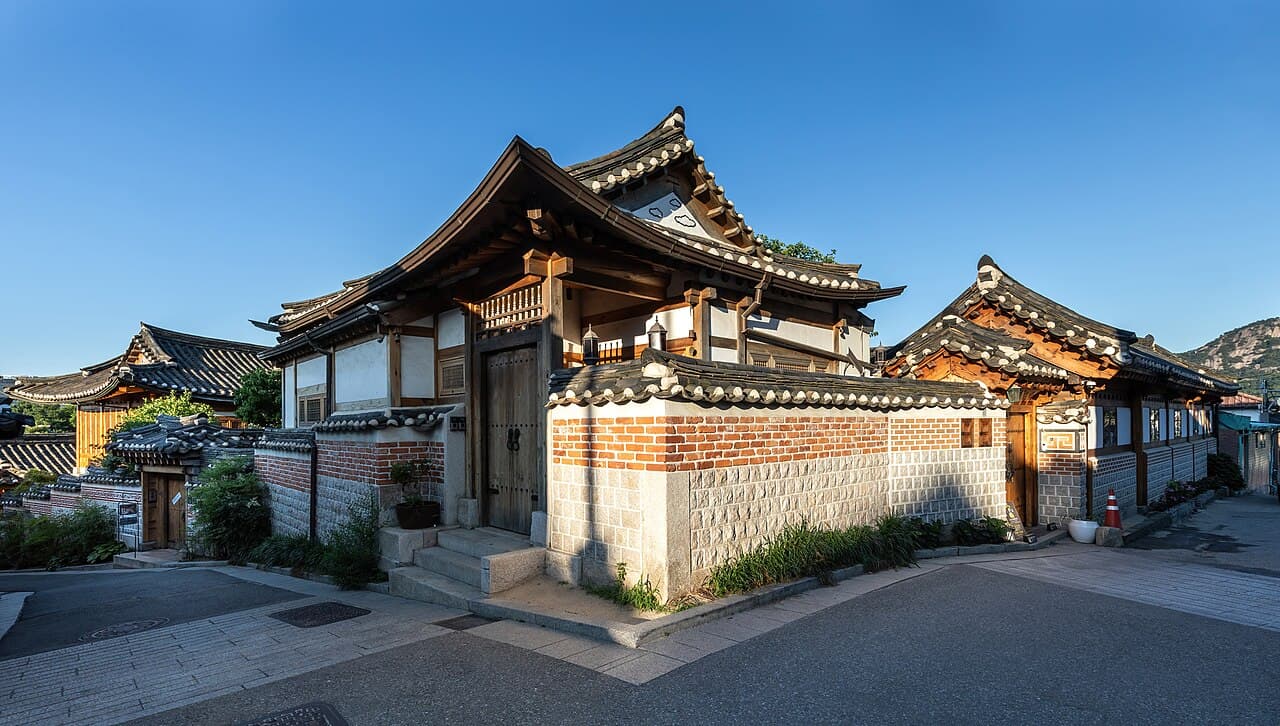
The rooftops do not mean every house has survived unchanged from the Joseon period. Seoul's official hanok portal also explains how urban hanok developed here through changes around the 1930s. Houses fitted to narrow lanes and small plots reveal a domestic scale quite different from the palace. Keeping that contrast in mind as you head down toward Insadong gives the hanok more meaning than a backdrop for photographs. See the official account of Bukchon's terrain and urban hanok.
On Sundays, we recommend leaving sightseeing in the residential alleys out of the route, respecting Seoul's alley rest-day guidance. Do not take this to mean that every shop and public facility in Bukchon closes. The daytime visit recommended here is also distinct from the red zone's legal restriction on tourist visiting hours. See Seoul's Bukchon visitor guidance.
Insadong: protect time for lunch and a cup of tea
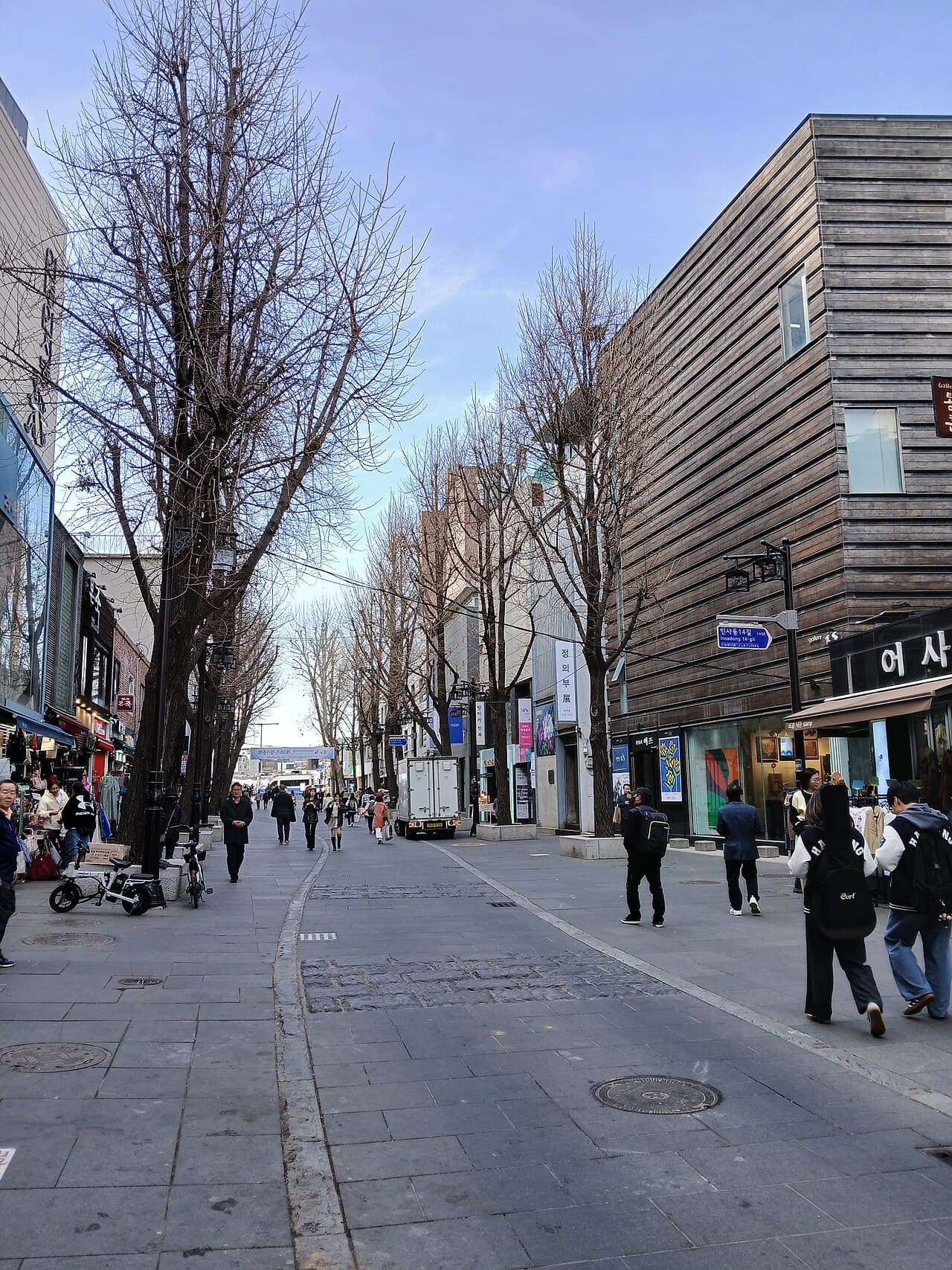
At Insadong, make lunch and a break the priority before looking for more hanok lanes. The area's craft shops, galleries and traditional teahouses let you combine a sit-down rest with browsing for small items. When choosing a restaurant, look beyond menu photographs: check for chair seating, the queue and your companions' dietary needs. If you have a fixed late-afternoon tour at Jongmyo, a longer meal queue usually means less time for shopping.
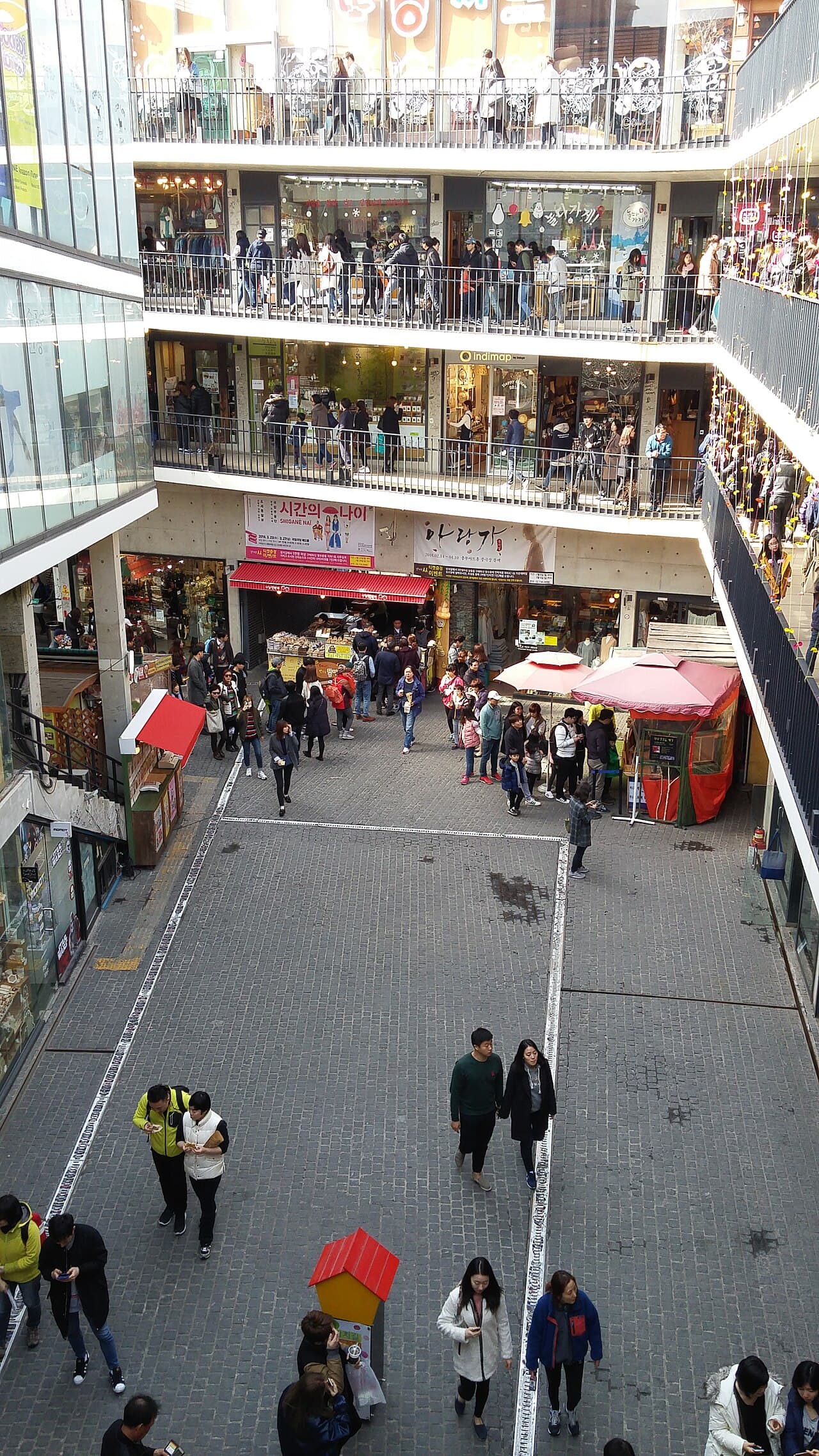
Ssamzigil brings together craft and design shops along a path that connects its floors around a central courtyard. Step in from the street to see how the route continues to the upper levels. The shops and their operation can change with your visiting date. During holidays, recheck whether the building and individual shops are open; if they are closed, keep the stop short and choose another open shop on Insadong-gil. Its open courtyard also means it is not an entirely indoor mall that shelters you from rain throughout.
For companions unfamiliar with the tea menu, start with the ingredients: yujacha is made with yuja, a citrus fruit, while omijacha uses omija berries. Ask about the ingredients, sweetness, and whether the drink is served hot or cold before ordering. If one teahouse has a long queue, choosing a nearby seat and a rest may suit the day better. Put the time to leave after tea into your itinerary so a wait for food or drinks does not cost you the final visit. See the Seoul Tourism Organization's Insadong guide.
Jongmyo: understand a ritual space after seeing a palace
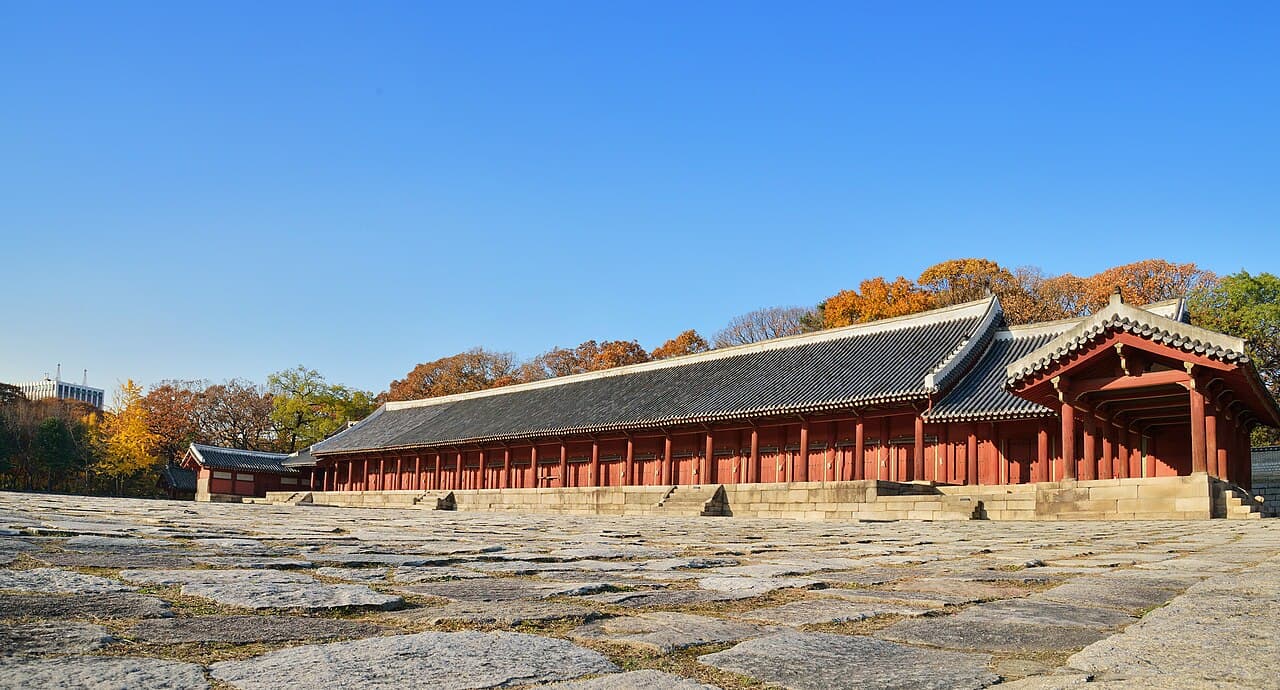
Jongmyo houses the spirit tablets of the Joseon royal family and remains a place of ancestral rites. At Jeongjeon Hall, take in the repeating pillars, the long roof and the broad open space in front as one composition. Geunjeongjeon, seen earlier in the day, served the king's official ceremonies; here, you are looking at a setting for honoring royal ancestors. Plan to view the arrangement from the permitted visitor paths, rather than expecting to open the building doors and explore the interiors freely. See the official introduction to Jongmyo.
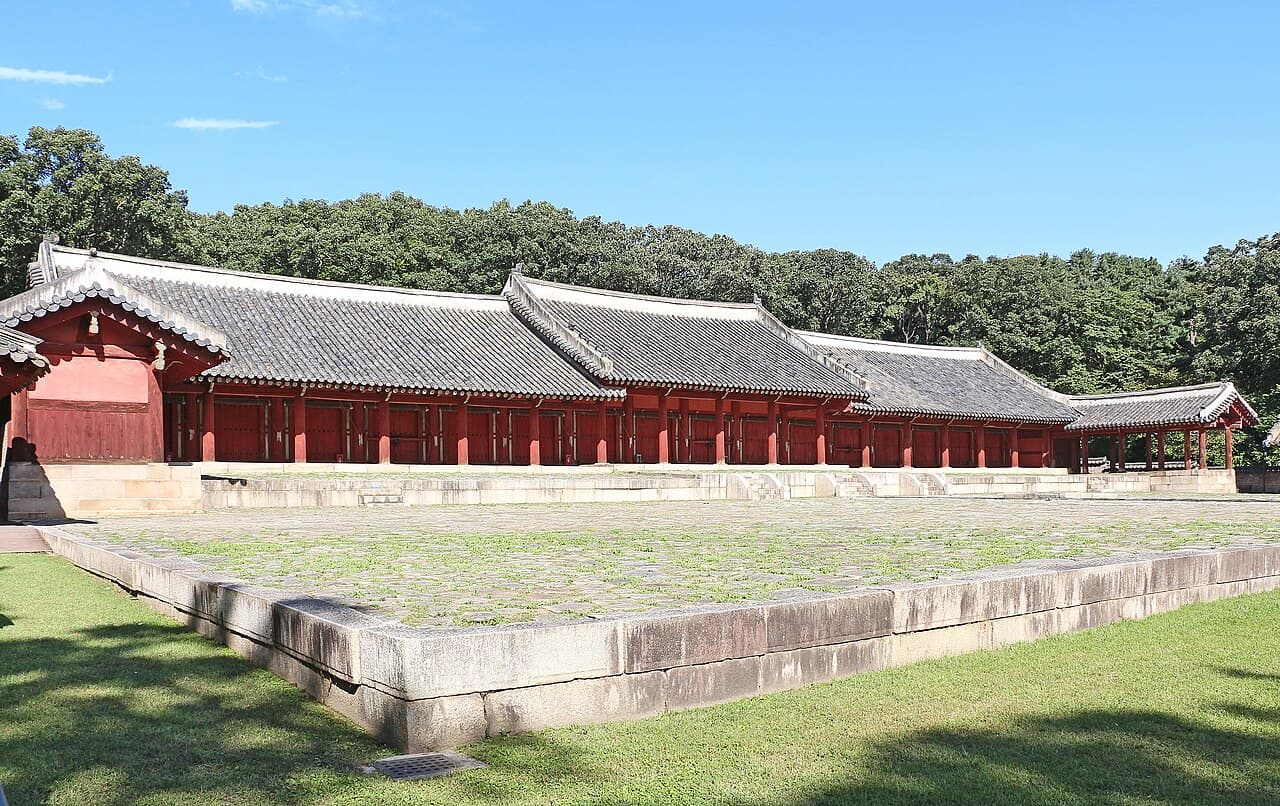
Yeongnyeongjeon is a shrine hall built separately from Jeongjeon. Compare its higher central roof with Jeongjeon's long, continuous form. Recognizing them as two different spaces, rather than remembering both under one name, also makes a guided explanation easier to follow. Follow the signs for ritual gates and paths, and stay within the designated visitor areas when taking photographs. See the official explanation of Yeongnyeongjeon.
Under the regular schedule, Jongmyo's English tours run on Monday, Wednesday, Thursday, Friday and Sunday at 10:00, 12:00, 14:00 and 16:00, taking about 50 minutes. The standard rule provides Korean-language tours only on Saturdays and public holidays, so do not assume that the whole weekend has English tours. Korean visitors may join a foreign-language tour when accompanied by a foreign visitor. Individual parties of fewer than 10 can buy tickets on site without advance reservations, but capacity limits mean a place is not guaranteed. Groups of 10 or more need a reservation. See the Jongmyo tour information and current reservation guidance.
If you choose an English tour on Monday, Thursday or Friday, we recommend treating 16:00 as the day's fixed commitment and aiming to reach the main-entrance ticket office around 15:40. Those 20 minutes are a preparation buffer, not an official guarantee of admission. If you are running late, shorten the Insadong shopping stop. Do not expect to enter independently after missing your scheduled tour. On self-guided days you can explore at your own pace, but you still need to observe the last-entry and closing times.
Recheck admission fees and opening hours
| Place | Standard individual daytime admission | Regular September–October hours |
|---|---|---|
| Gyeongbokgung Palace | Adult: KRW 3,000 | 09:00–18:00; last entry 17:00 |
| Jongmyo Shrine | Adult: KRW 1,000 | Self-guided days: 09:00–18:00, last entry 17:00; timed-visit days: entry by the scheduled language tour |
For these prices, an adult means a foreign national aged 19–64 or a Korean national aged 25–64. Visitors eligible for free admission (including foreign nationals aged 18 or under or 65 and over, and Korean nationals aged 24 or under or 65 and over) should bring documents that establish their eligibility and age. Free admission for visitors wearing hanbok also has clothing requirements, so read the official criteria before renting an outfit. See the admission fees and exemptions and hanbok free-admission criteria.
The expansion of Culture Day free admission starts on different dates at different sites. Free admission every Wednesday at Jongmyo begins on 7 October 2026; do not extend that rule to Gyeongbokgung. Even on free-admission days, check guided-tour arrangements and visitor restrictions separately. Closing times also change for trips from November onward, so compare the seasonal visiting hours with the notice on expanded free admission.
If there is heavy rain or uphill walking would be difficult, skip Bukchon's residential alleys and shorten the route to Gyeongbokgung → a meal and indoor break in Insadong → Jongmyo. This still involves outdoor walking and sightseeing, so it is not a reason to push ahead in severe weather. For a companion who finds walking difficult, first consider keeping just one palace visit and a meal. You do not need to add two more palaces or continue to Namsan to make the day complete.
Share the entry time and meeting point in Tripop first
Before filling an itinerary with five place names, enter the exit where you will meet, your Jongmyo entry session, and the time to leave after lunch. For English-speaking family members, include both the Korean and English place names, then add the map link and precise meeting point to the notes. If you may skip the alleys, label the stop “Bukchon (optional)” so it is easy to distinguish from a fixed entry time.
The person creating a Tripop view link needs to sign in and sync the trip. Family members receiving it can read the itinerary on the web with the link and entry code, without installing the app. After changing the plan, check that the app has synced, tell your companions which arrangement has changed, and ask them to reopen the link. Continue with the screen-by-screen guide to creating a trip and sharing it with family.
If you want to book an English-language tour or a hanbok experience, use the Seoul booking options below to compare the language, meeting point, whether palace admission is included, return time, and cancellation terms. If you only want self-guided visits, there is no need to add an experience booking. Copy the times you actually book into your Tripop itinerary to make the day you share with your companions clear.
What we verified
On 25 September 2026, the Tripop editorial team checked guidance from the Royal Palaces and Tombs Center, Korea Heritage Agency, Seoul Metropolitan Government and Jongno-gu. Before setting out, recheck closing days, special operations and Bukchon visiting restrictions using the official links in this guide. If you find information that differs from the guidance on site, let us know so we can check and correct it.
The photographs are credited below in article order. Each credit includes the year and creator. The images have been resized with their original proportions preserved.
- Gwanghwamun (2024) · *Youngjin / CC BY-SA 4.0
- Gwanghwamun haechi statue (2024) · *Youngjin / CC BY-SA 4.0
- Geunjeongjeon Hall, Gyeongbokgung (2024) · Basile Morin / CC BY-SA 4.0
- Gyeonghoeru Pavilion, Gyeongbokgung (2018) · © Frank Schulenburg / CC BY-SA 4.0
- Bukchon Hanok Village (2024) · Basile Morin / CC BY-SA 4.0
- Bukchon Hanok Village (2024) · Basile Morin / CC BY-SA 4.0
- Insadong-gil (2025) · Epicgenius / CC BY-SA 4.0
- Ssamzigil, Insadong (2016) · Christian Bolz (크리스티안 볼츠) / CC BY-SA 4.0
- Jeongjeon Hall, Jongmyo (2012) · Cultural Heritage Administration / KOGL Type 1 / Cultural Heritage Administration original source
- Yeongnyeongjeon Hall, Jongmyo (2022) · Bgag / CC0


_at_Gyeongbokgung_Palace,_Seoul.jpg)


.jpg)
