
Seoul Travel Guide (2026)
Capital of the 600-year Joseon dynasty and the heart of Korea. Royal palaces like Gyeongbokgung and Changdeokgung and the Bukchon Hanok Village survive among the skyscrapers, while the Han River, Namsan and endless alley cafés and eateries make this the city where tradition and modernity blend most intensely.
- Recommended stay
- 4–5 days recommended
💰 As of 2026, a 4-night Seoul trip for two costs about US$1,015–US$2,265 in total, US$510–US$1,130 per person, flights excluded. 4-star hotel · 2 adults · 1 room. See full cost breakdown →
Food & dining
The range runs from refined hanjeongsik (Korean table d'hôte) to street snacks. Bindaetteok and mayak gimbap at Gwangjang Market, grilled pork in Mapo, old-school taverns in Euljiro, and fried chicken and tteokbokki everywhere. The neighborhood café culture, each district with its own mood, is just as essential.
Getting around
Incheon (ICN) and Gimpo (GMP) airports connect to the center by the AREX airport train and limousine buses. In town, a dense subway and bus network makes getting around easy, one transit card (T-money) covers seamless transfers.
Highlights
Gyeongbokgung Palace, Changdeokgung and its Secret Garden, Bukchon Hanok Village, N Seoul Tower (Namsan), Gwangjang Market, Myeongdong.
Places to visit
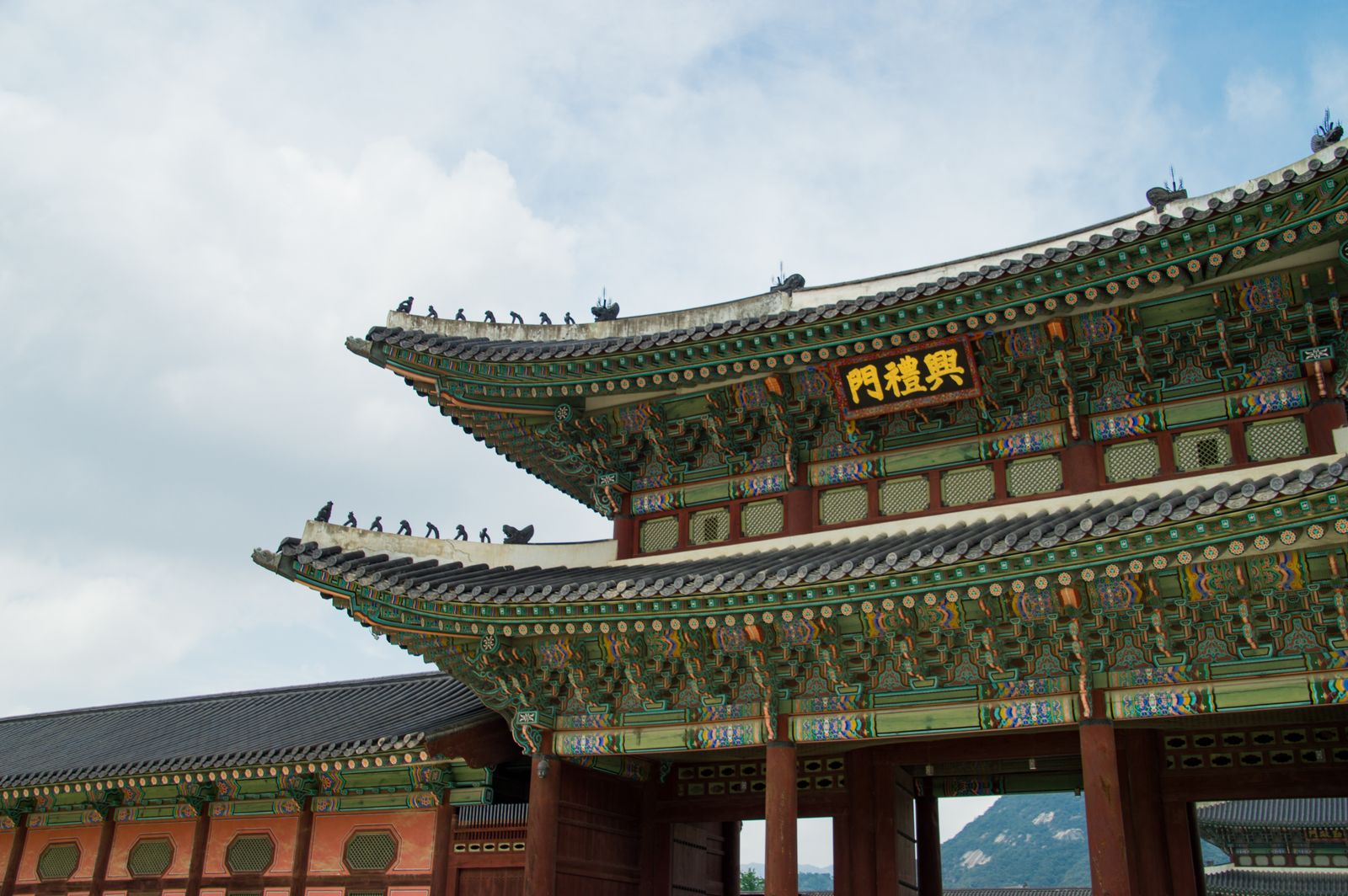
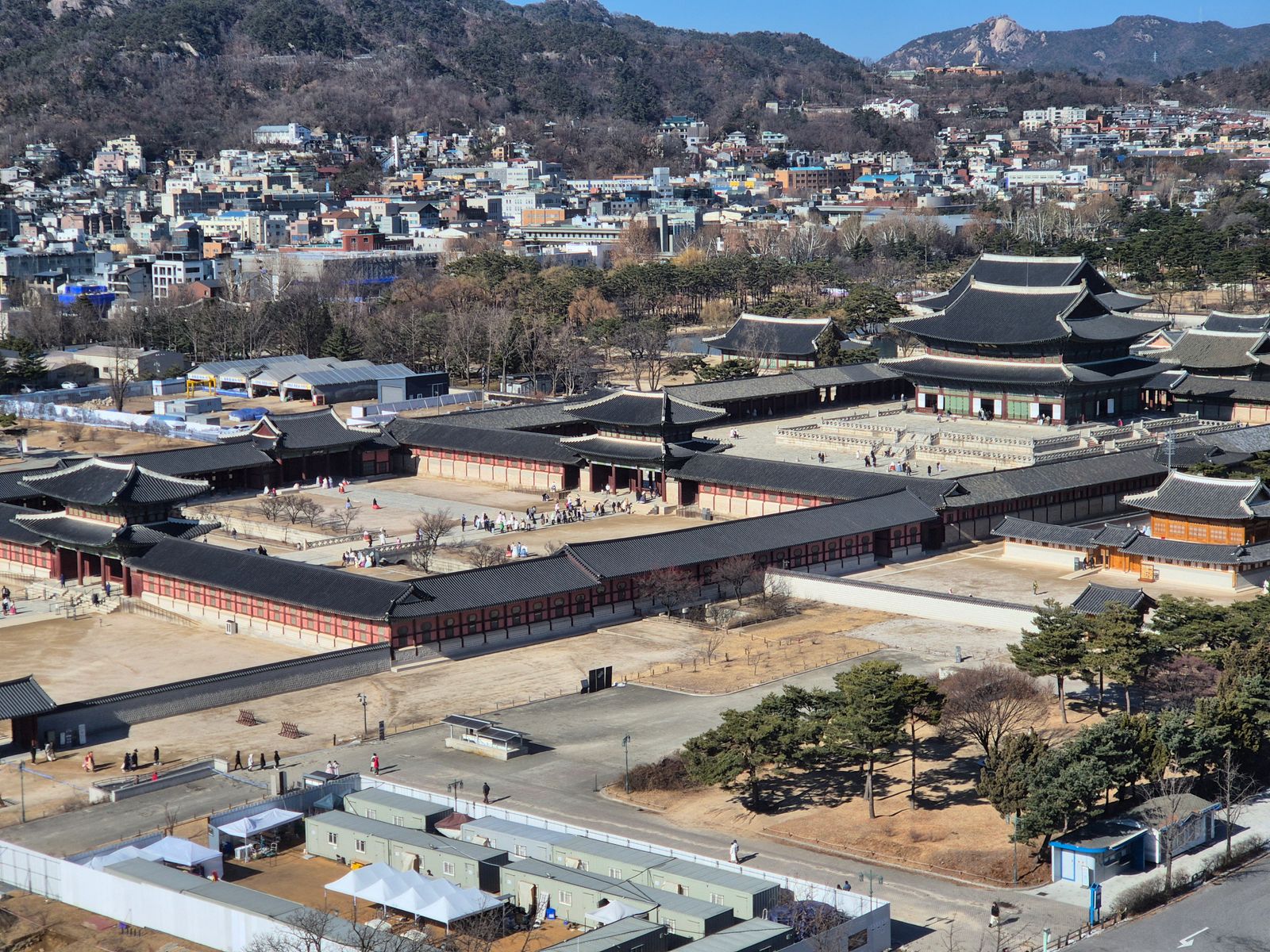
Gyeongbokgung: Joseon's grandest palace
The Joseon dynasty's main palace and the natural starting point for Seoul. From Gwanghwamun gate the grand axis runs to the Geunjeongjeon throne hall and the Gyeonghoeru pavilion, with Bugaksan mountain rising like a folding screen behind. Wear a hanbok and entry is free, it's a favourite spot for portrait photos against the palace.
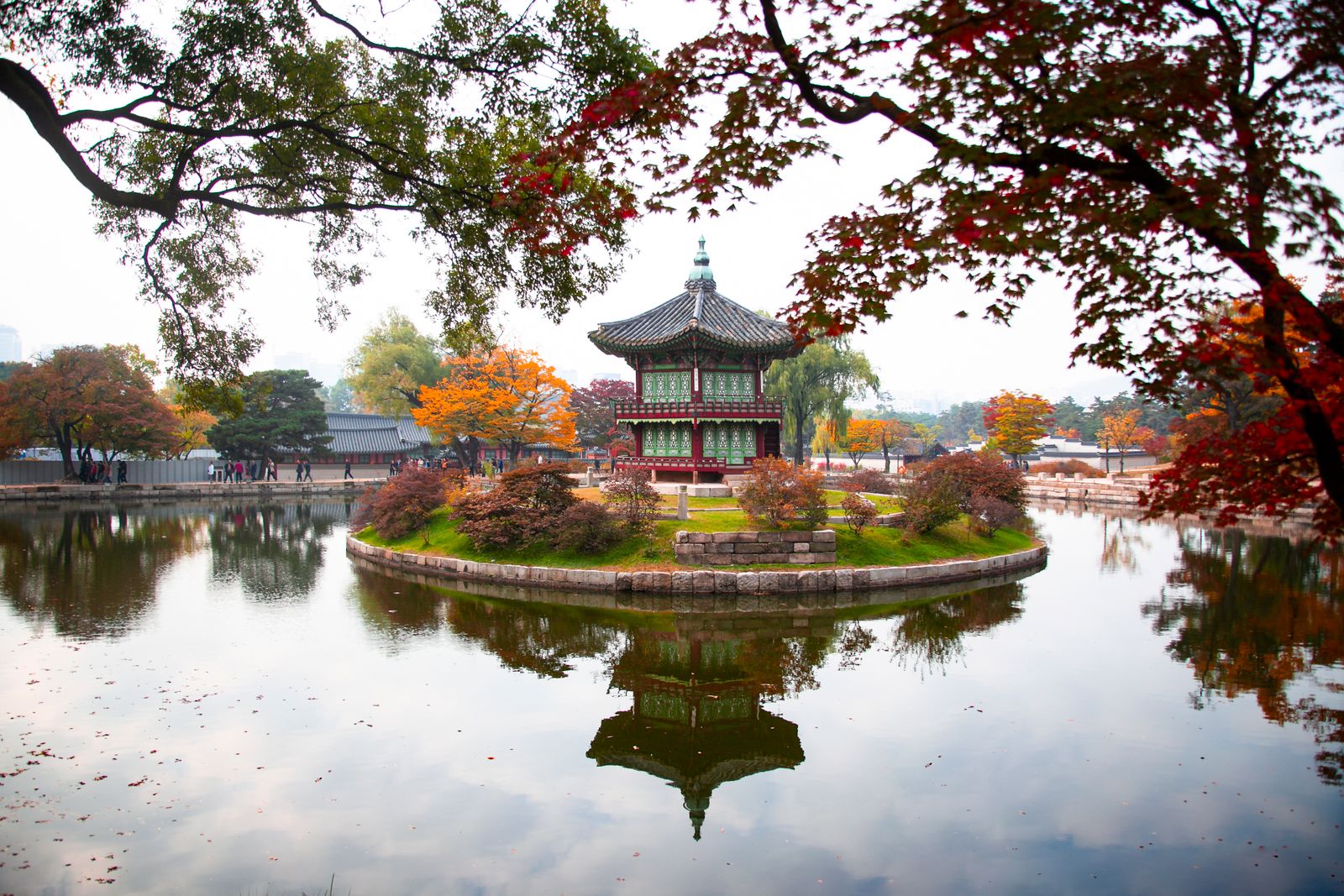
Changdeokgung & its Secret Garden: UNESCO site
A palace that bends to the land rather than the other way round. The Joseon kings' favourite residence, its rear "Secret Garden" (Huwon), ponds and pavilions woven into the woods, is the finest example of Korean garden design. Inscribed as a UNESCO World Heritage Site in 1997.
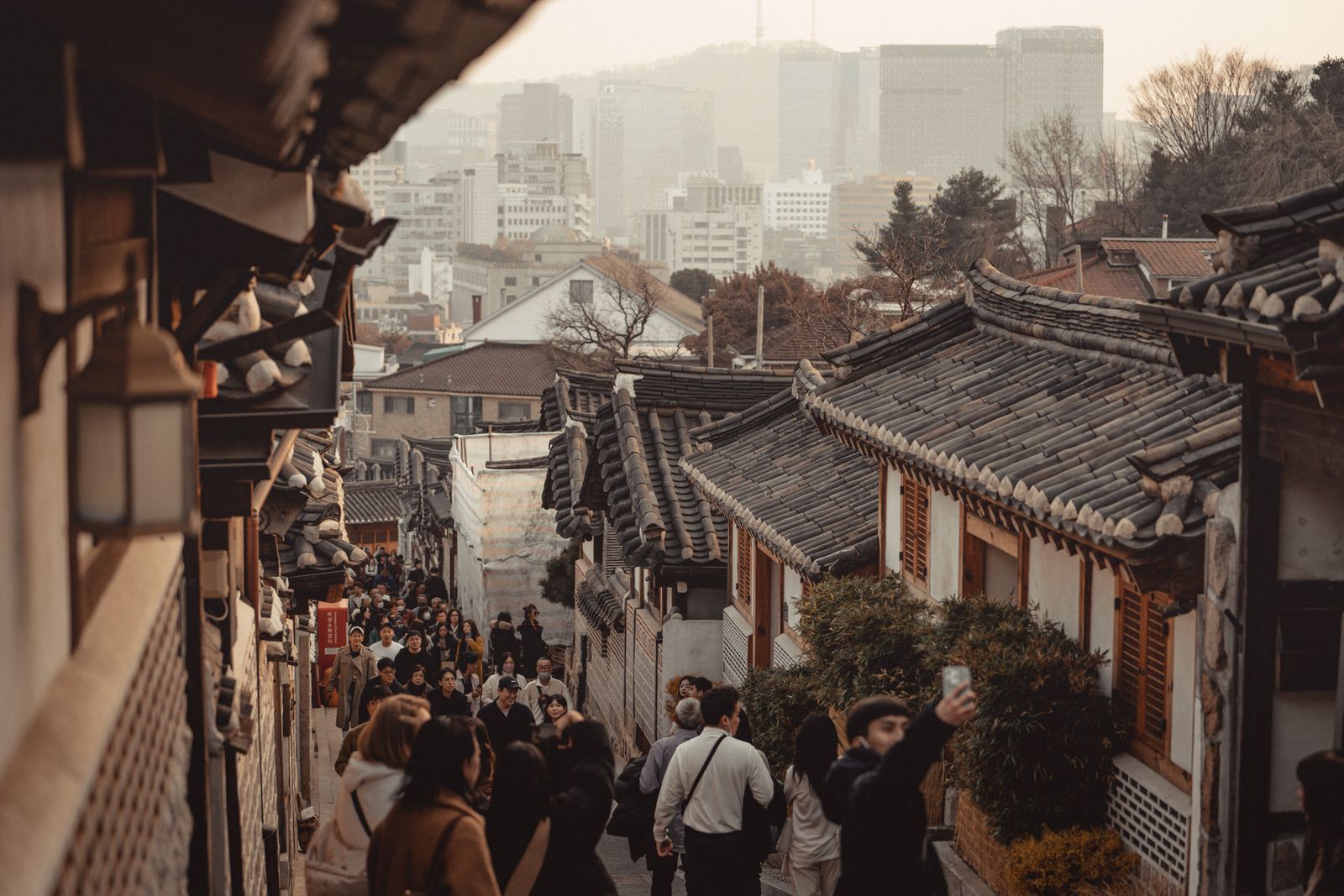
Bukchon Hanok Village: rooftops over the city
A traditional hanok neighbourhood on the hill between Gyeongbokgung and Changdeokgung. Climb the lanes and Seoul's downtown unfolds beyond layer upon layer of tiled roofs, one of the most quintessentially Korean views in the city. People actually live here, so explore quietly.
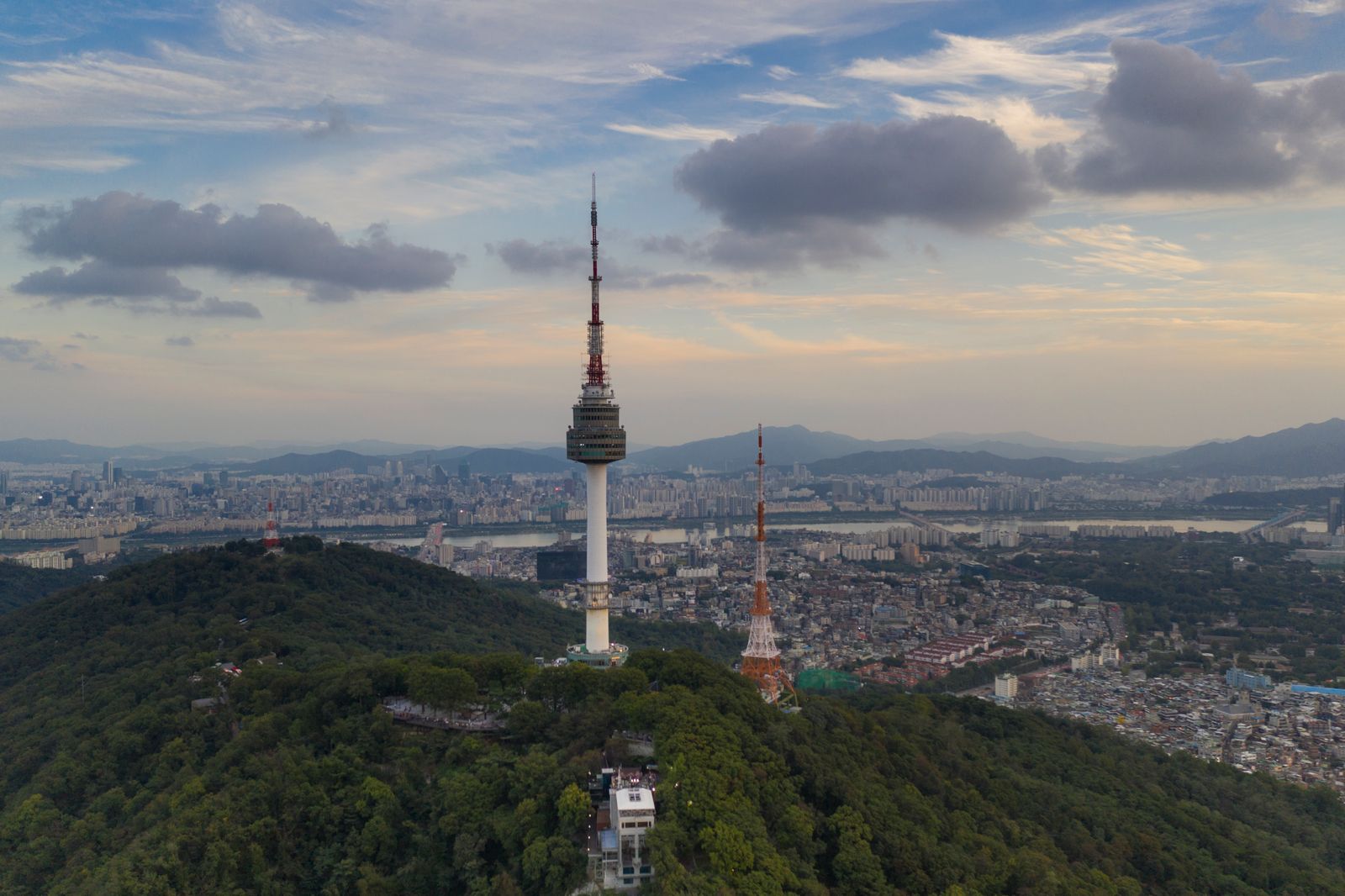
N Seoul Tower: 360° Seoul from Namsan
Seoul's landmark observation tower atop Namsan mountain. Ride the cable car up and the city spreads out in every direction from the deck; at dusk the whole of Seoul lights up. The ‘love locks’ on the terrace are part of the ritual.
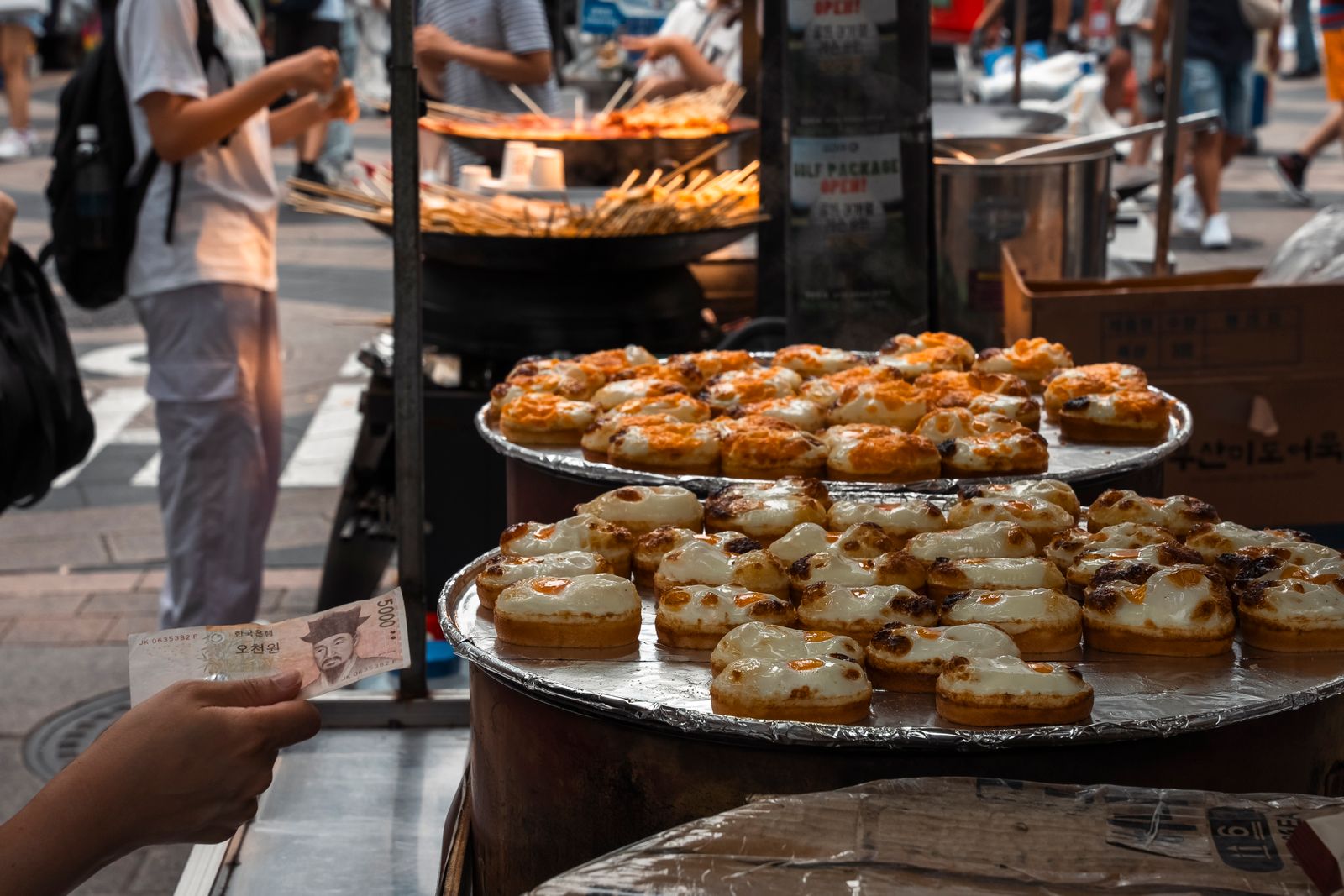
Gwangjang Market: bindaetteok & mayak gimbap
Korea's first permanent market, open since 1905, and the mecca of Seoul street food. Golden mung-bean pancakes (bindaetteok), addictive ‘mayak’ gimbap, and sesame-rich yukhoe (beef tartare), a meal perched on a stool in the food alley is a trip highlight in itself.
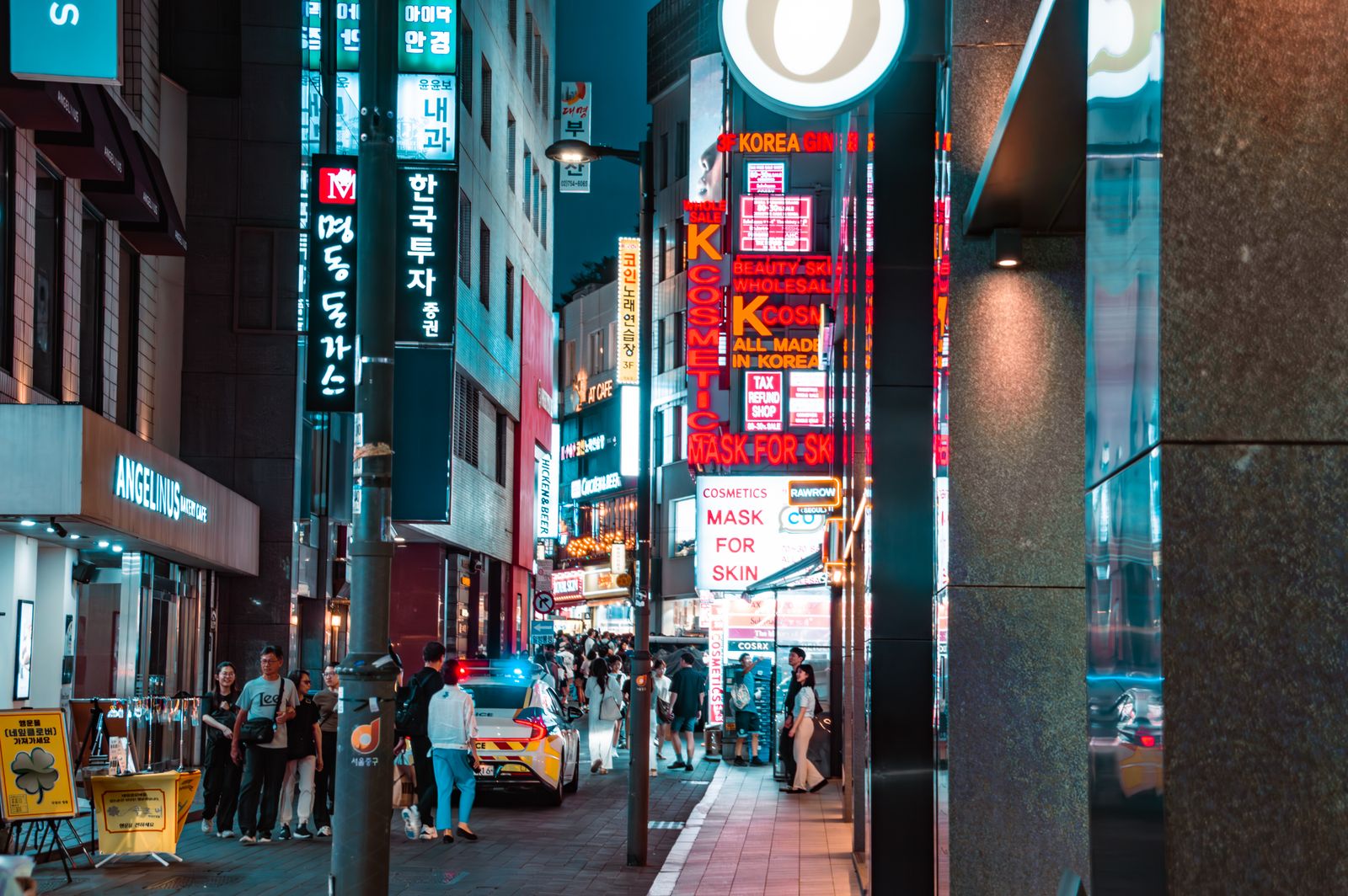
Myeongdong: K-beauty & street snacks
Seoul's number-one shopping district. Olive Young flagships and cosmetics shops line every lane, and as dusk falls the streets fill with food carts. It's the one place to do your beauty shopping and graze on tteokbokki, hotteok and tornado potatoes all at once.
Olive Young Myeongdong Flagship: One-Stop K-Beauty
The benchmark K-beauty stop that 80% of inbound visitors hit. Top-tier scale and traveler know-how.
Daiso Myeongdong: Souvenir Warehouse Under 5,000 Won
A flat-price haul spot where over half the shoppers are foreign visitors stocking up on masks and serums.
Dongdaemun Jonghap Market: Pen-Decorating Mecca
Ground zero of the bolkku pen-decorating craze, packed even on weekdays.
Hongdae Photo Booth Alley: Four-Cut Central
The heart of Korea’s four-cut booth culture, with foreign usage up 65% in a year.
Itineraries
Seongsu-dong Seoul: The Pop-Up Store District 5 Million Tourists Visited (One-Day Course)
Seongsu-dong, once a factory district, has turned into a hybrid commercial zone where pop-up stores meet K-fashion and K-beauty, and foreign visitor...
Ganjang Gejang: Korea's No.2 Most-Booked Food by Foreign Travelers (Where to Eat It in Seoul)
According to Creatrip's 2025 Inbound Travel Trend report, ganjang gejang, soy sauce marinated raw crab, accounts for 24% of food-category reservations...
Dongdaemun Bolkku Guide: Make Your Own Pen at Seoul's Craft Parts Market, the City's Trendiest Hands-On Hobby
Bolkku is short for the Korean words for 'pen decorating': you hand-pick beads and charms and thread them onto a pen barrel to build a one-of-a-kind...
Seoul Photo Booth Guide: Life4Cuts and the Four-Cut Photo Craze, Foreign Visitor Usage Up 65%
Yes, very. Korean self photo booths, best known through the Life4Cuts brand, are unstaffed: you step inside, follow the on-screen prompts, pay a few...
Personal Color Analysis in Seoul: The K-Beauty Experience Drawing 1,000 Foreign Visitors a Month to One Hongdae Studio
A personal color analysis is a session where a consultant holds cloths of different colors up to your face to find the shades that truly suit you (your...
Seoul Daiso Shopping Guide: Half of Myeongdong's Shoppers Are Tourists, and 5,000 Won Fills Your Souvenir Bag
Daiso has become a fixture of Korea trip shopping, to the point that more than half the customers at the Myeongdong branch are foreign visitors.
Seoul Olive Young Shopping Guide: What to Buy at the K-Beauty Mecca 80% of Visitors Stop By
Olive Young has become a fixture of the Korea trip; by one count 80% of inbound visitors stop by.
Seoul 5-Day Itinerary: Gyeongbokgung, Bukchon, N Seoul Tower, Lotte World Tower Complete Guide (AI-Generated Plan)
Seoul's royal palaces, hanok villages, K-pop, K-beauty, and skyline views in one tight 5-day route. Gyeongbokgung hanbok experience, Bukchon Hanok Village, Gwangjang Market, N Seoul Tower, Lotte World Tower, all without wasted travel time. Built with Tripop AI, verified with 2026 prices, hours, and practical logistics for international travelers.
Trip cost
2 adults · 1 room
Good to know before you go
When is the best time to visit Seoul?
Seoul is at its best in spring, late March to mid-April for cherry blossoms, and autumn, late October to early November for fall foliage, with comfortable temperatures of 10-20C (50-68F). Avoid late June through July, Seoul's monsoon season, and August's humid heat above 33C (91F). For 2026, book spring and autumn hotels a month or two ahead, as those weekends sell out first.
How do I get from Incheon Airport to central Seoul?
The AREX Express train runs nonstop from Incheon Terminal 1 to Seoul Station in 43 minutes for 13,000 KRW (about $9) in 2026, with online discounts around 11,500 KRW. The cheaper All-Stop train costs 4,450 KRW with a transit card and takes about an hour. Airport limousine buses to major Seoul hotel districts cost roughly 17,000-20,000 KRW and skip transfers if you have heavy luggage.
Can foreigners use T-money or the Climate Card in Seoul?
Yes, and T-money is essential, because Seoul subway gates do not accept foreign contactless credit cards as of 2026; buy one at any convenience store and expect a base subway fare of 1,550 KRW. Tourists can also buy Climate Card short-term passes, 5,000 KRW for 1 day up to 20,000 KRW for 7 days, for unlimited subway and bus rides within Seoul, sold at places like the Myeongdong Tourist Information Center. Top up T-money with cash, though hundreds of station kiosks now also accept foreign cards in 2026.
What's the best SIM or eSIM for Seoul?
Carrier counters at Incheon Airport sell tourist SIMs and eSIMs with unlimited data for 15,000-30,000 KRW (about $11-22) covering 7 to 30 days as of 2026. Budget eSIM apps like Airalo start around $4 for lighter data needs, and Seoul's free public Wi-Fi on subways, buses, and plazas fills the gaps. Install an eSIM before landing so maps and translation apps work right from the arrivals hall.
Do US citizens need a visa or K-ETA for Seoul in 2026?
No visa is needed, US passport holders can stay in South Korea visa-free for up to 90 days, and Korea has temporarily waived the K-ETA requirement for the US and many other countries through December 31, 2026. That means most visitors flying into Seoul in 2026 board with just a valid passport, though you may still apply for K-ETA voluntarily to skip the paper arrival card.
Do foreign credit cards work in Seoul?
Foreign Visa and Mastercard are accepted at virtually every Seoul restaurant, shop, cafe, and convenience store, Korea is one of the most card-friendly countries in the world. The big exception is public transit: subway and bus readers don't take foreign contactless cards in 2026, so load a T-money card instead. Keep a modest 50,000-100,000 KRW in cash for traditional markets and street food stalls.
More city guides
Plan this trip in Tripop
One sentence and AI builds your itinerary, checklist, and budget