
China travel guide (2026)
One country holding desert and subtropical coast, two-thousand-year-old ruins and skylines of glass. High speed rail links the major cities within half a day, and since November 2024 Korean passports enter visa-free, which lowered the barrier considerably. Payment and internet work very differently from home, though, and arriving unprepared costs you the first day.
Last checked September 2026
- Suggested length
- 4-6 nights recommended
- Budget guide
- About KRW 600,000-1,100,000 per person (excluding flights, 3-star hotel and local meals)
When to go
Spring (April-May) and autumn (September-October) work best nationwide. July and August are hot and humid across most of the country, with typhoons on the eastern and southern coasts. Winter splits the country: the north drops below -10C while the south stays mild, so check by city rather than nationally. During the May Day and National Day holidays, domestic travel surges and tickets and hotels get difficult at the same time.
Getting between cities
High speed rail is effectively the domestic air network. Beijing to Shanghai covers 1,318 km in about 4 hours 30 minutes on the fastest G trains, from CNY 553 in second class. Book through the 12306 English app with a passport and a foreign card, or buy the same seats at the same face value on Trip.com or Klook. Seats open around 15 days ahead. There is no paper ticket — you scan your passport at the gate — and 30 minutes before departure is the norm, or 45 at large stations like Beijing West and Shanghai Hongqiao.
What each region is for
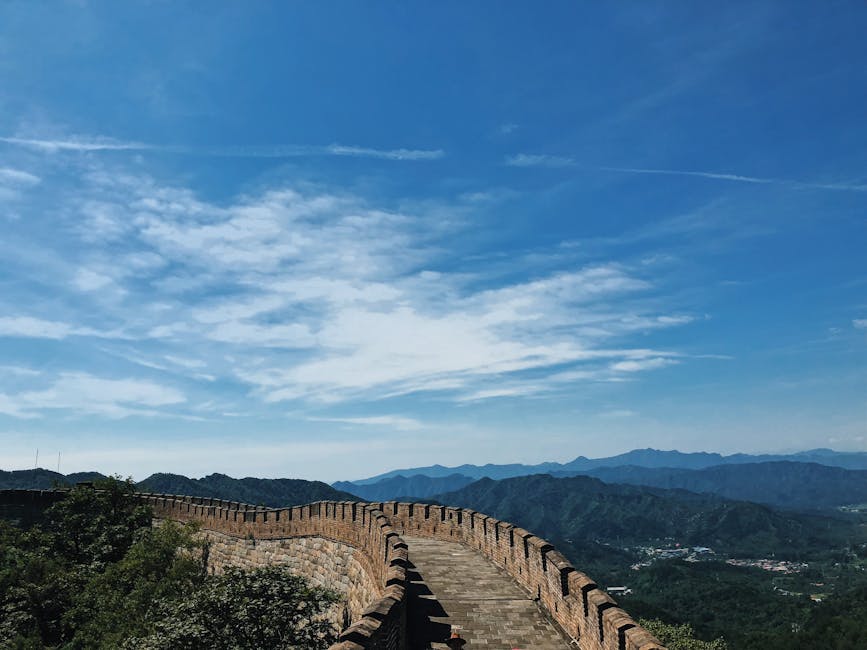
Beijing in the north holds the dynastic sites, the Forbidden City and the Great Wall; Shanghai on the east coast pairs concession-era architecture with the skyline; Chengdu in the southwest means the panda base and Sichuan cooking. Hong Kong and Macau are the same country but a separate immigration and currency regime — see the question below.
Food and eating culture
The regions differ as much as separate countries. Beijing runs to roast duck and wheat noodles, Shanghai to sweeter red-braised dishes and xiaolongbao, Chengdu to the numbing heat of Sichuan, and Guangdong to the restraint of dim sum. Breakfast is eaten out, so shops selling dumplings, congee and youtiao open early.
Before you go
Do I need a visa for China?
Korean passport holders can enter visa-free for up to 30 days through 31 December 2026, counted from the day after arrival, for tourism, business, family visits or transit. The scheme covers a specific list of nationalities that has been revised repeatedly, so check whether yours is on it and for how long. Employment and study are not covered and still require a visa. Immigration may ask for a passport valid six months or more, an onward or return ticket, and a hotel booking, so have those ready to show.
Does a China visa cover Hong Kong and Macau?
No. Hong Kong and Macau are special administrative regions with their own immigration and their own currencies. A Korean passport enters Hong Kong visa-free for 90 days, and the paper arrival card there was abolished in October 2024; the Hong Kong dollar is not interchangeable with the yuan. Crossing between the mainland and Hong Kong is an immigration crossing rather than a domestic move — even by high speed rail into Hong Kong West Kowloon you clear immigration, so allow 60 minutes at the station. Returning to the mainland afterwards counts as a fresh entry, so recount your permitted days.
How do I pay in China? Do foreign cards work?
Alipay and WeChat Pay are the practical standard, ahead of both cash and cards. Both now accept international Visa, Mastercard and Amex through their visitor flows, and setup takes 10-15 minutes inside the app. As of early 2026 the single-transaction limit for a verified foreign user is around USD 5,000. Install them and link a card before you leave — people do get stuck locally when a verification SMS will not arrive. Upscale hotels and tourist restaurants often take foreign cards directly, but street stalls and small shops are frequently QR-only.
How does the internet work in China?
Many foreign services, Google, YouTube, Instagram and various messaging apps among them, are blocked on networks inside China. Baidu Maps or Amap replace Google Maps in practice, and Baidu handles search. VPN use by individual visitors sits in a grey area that is generally tolerated but cannot be called legal, and downloading the apps once you are there is often blocked too — so install anything you need before departure. Roaming on a home carrier sometimes routes around the block, which can make roaming the simplest option for a short trip.
How do I book high speed rail tickets?
Register your passport in the 12306 English app and pay with a foreign card, or buy the same seats at face value with no booking fee through Trip.com or Klook, which skips the account setup. Seats open about 15 days before departure and sell out quickly around holidays, so book as soon as your dates are fixed. No paper ticket is issued — scan your passport at the gate. Arrive 30 minutes before departure, or 45 at big stations like Beijing West and Shanghai Hongqiao.
How much cash do I need, and where do I change money?
Mobile payment is dominant enough that cash rarely comes up, but carry CNY 500-1,000 per person against the case where app verification fails. City bank branches change money against a passport and ATMs work. Small shops sometimes cannot break a CNY 100 note, so keeping smaller denominations helps. And remember that Hong Kong and Macau use different currencies — yuan will not spend there.
Cities in China
Pick a city and its sights, transit and costs sit on one page.
Capital of the Ming and Qing dynasties. China's political and cultural heart, home to World Heritage sites like the Forbidden City and the Great Wall, where 600 years of imperial weight coexist with a modern metropolis.
Beijing trip costThe heart of Sichuan. A city of pandas and spicy food, and the home of Sichuan cuisine, a UNESCO City of Gastronomy for over a decade.
Chengdu trip costA dense city built around a harbour. The airport is 24 minutes from downtown, and the island and Kowloon are stitched together by metro and ferry, so a short trip still fills up. Cantonese cooking, cha chaan teng cafes, the skyline at night and shopping all overlap in one place.
Hong Kong trip costChina's largest city and the port that met the West first. Two hours from Seoul, close enough for a weekend, with the concession-era facades of one riverbank facing the skyline of the other across the Huangpu. Suzhou and Hangzhou are 30 to 60 minutes away by high-speed rail, which makes day trips easy to attach.
Shanghai trip costItineraries covering China
- Hong Kong Cha Chaan Teng Guide: Milk Tea, Egg Tarts, and How Hong Kong Does Breakfast
- Shanghai 4-Day Itinerary and Budget: Do You Give Disney a Whole Day?
- Hong Kong 3-Night 4-Day Itinerary: Victoria Peak, Symphony of Lights, Star Ferry & Dim Sum Complete Guide (AI-Generated Plan)
- Chengdu 4-Day Itinerary: Giant Pandas, Kuanzhai Alley, Jinli Street & Leshan Giant Buddha Complete Guide (AI-Generated Plan)
- Beijing 5-Day Itinerary: Forbidden City, Mutianyu Great Wall, Temple of Heaven, Summer Palace & Hutongs (AI-Generated Plan)