
Pokémon cards keep turning up in Tokyo travel bags these days, and not by accident. Japanese-print cards enjoy a different level of respect: quality and scarcity make collectors around the world board planes just to buy them, and European and Australian collectors reportedly drop hundreds of thousands of yen in a single visit. Here is where to buy, what to buy, and the etiquette to follow, written for someone buying for the first time.
Why the Japanese print matters
You can buy Pokémon cards in any country, but in the collector market the Japanese print holds a different status. The print quality is excellent, there are Japan-exclusive sets, and above all there is the symbolism of the original: this is the market where it all began. It is common for the same card to trade higher in its Japanese version than in English.
Layer on the worldwide collecting boom since the pandemic. Millennials who grew up watching Pokémon have come back to the hobby as adults, and Tokyo has become a card shopping destination in its own right. Reports mention European and Australian tourists spending 350,000 to 400,000 yen per person, so the spectrum runs all the way from a light holiday hobby to serious investment.
The official route: Pokémon Center
If this is your first time, starting at a Pokémon Center is the textbook move. These are the official stores, so you can buy the latest booster packs and boxes plus store-exclusive goods at list price. Tokyo has multiple locations, and Pokémon Center Mega Tokyo in Ikebukuro is the flagship example by sheer scale. The store feels like a small Pokémon theme park, so it stays fun even with companions who could not care less about cards.
One thing to know before you go: when a hot set launches, purchase limits or lottery sales can apply. Check the store notices in advance to avoid a wasted trip.
Singles hunting: Akihabara's card shop alleys
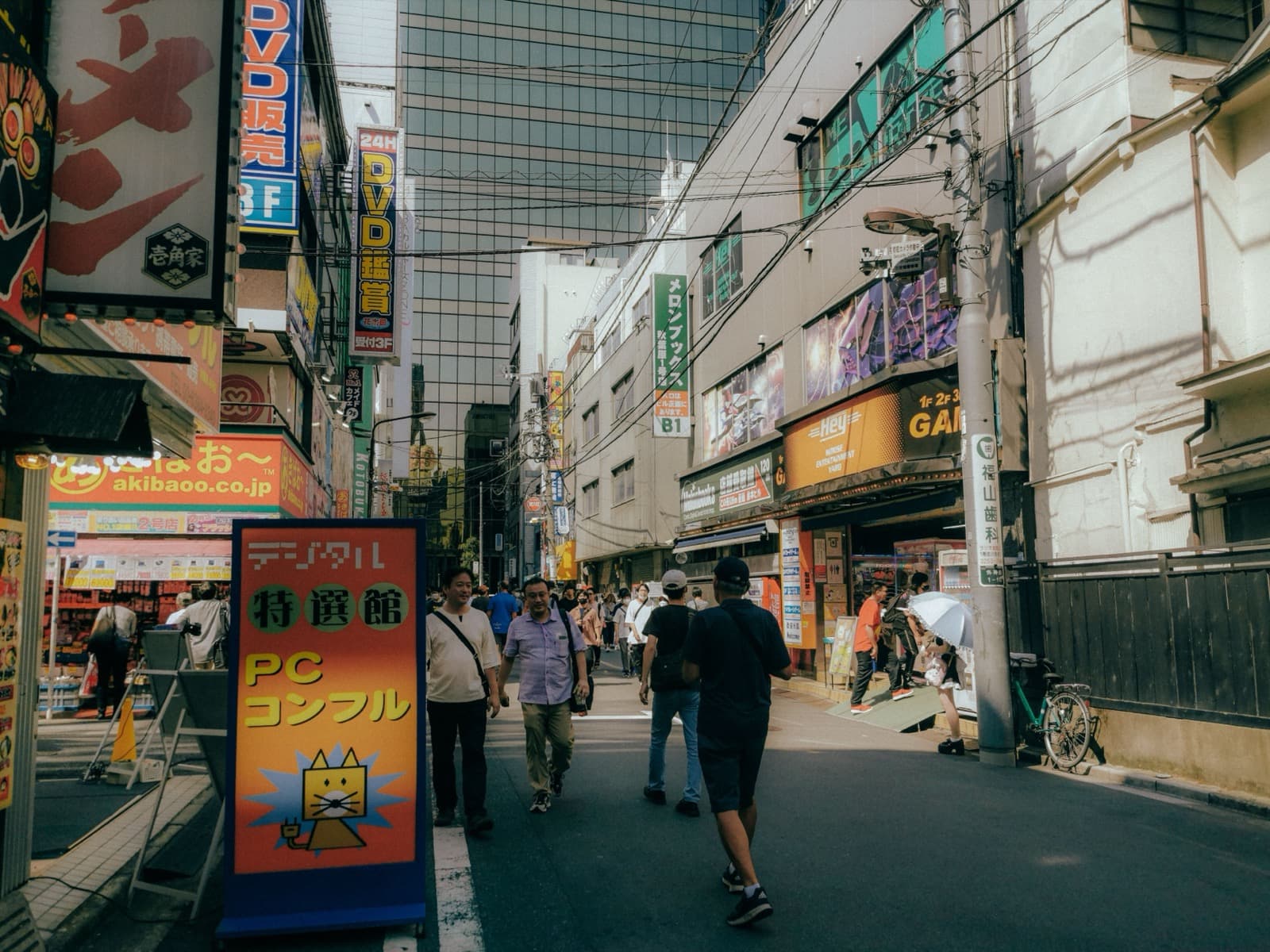
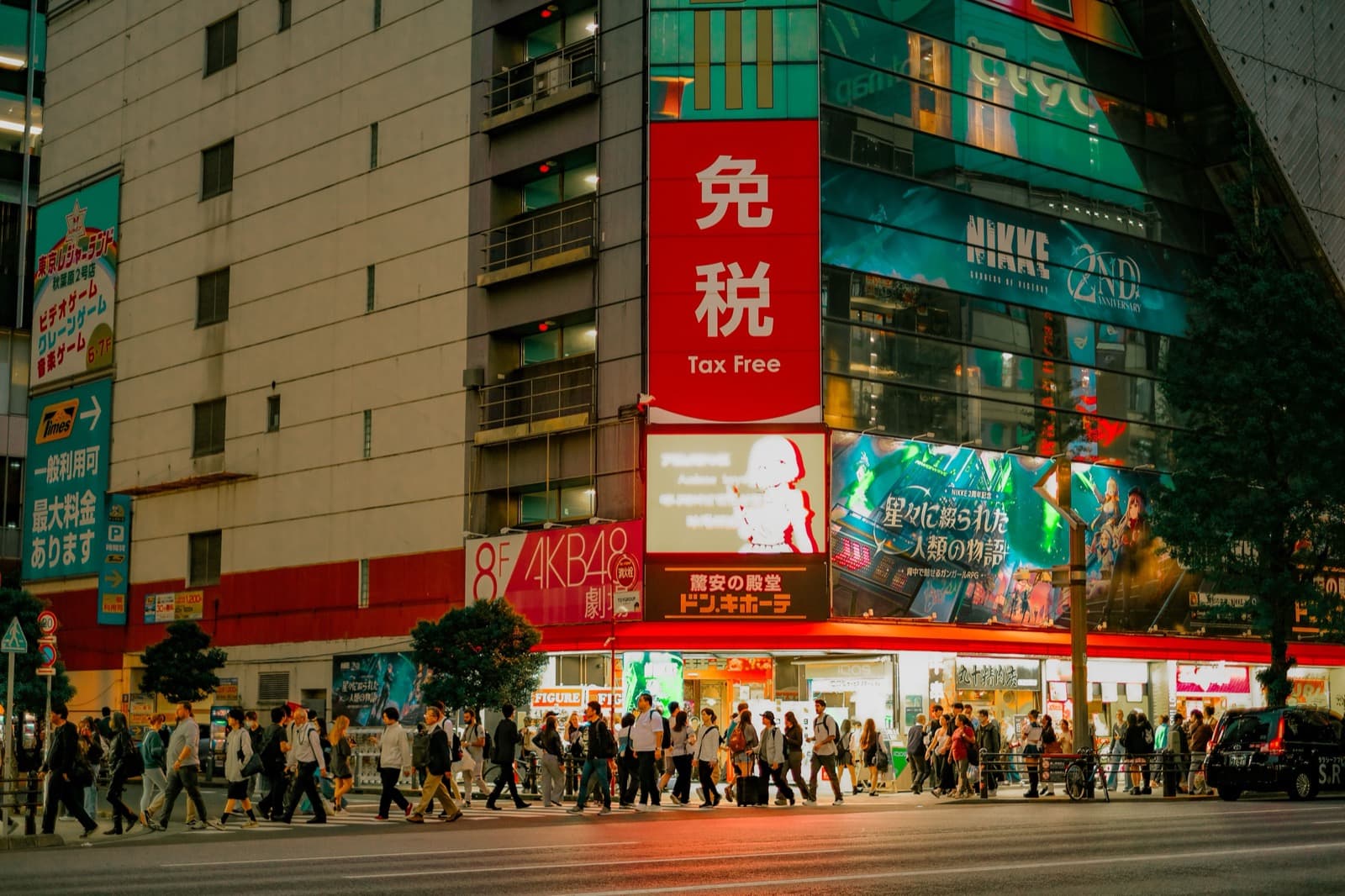
If you are after one specific card, Akihabara is the place. Trading card specialist shops cluster here, and every display case is packed with singles marked with condition grades and prices. Working through stores stacked floor upon floor, from the latest releases down to cards from decades ago, hunting for that one card, is the whole flavor of this neighborhood.
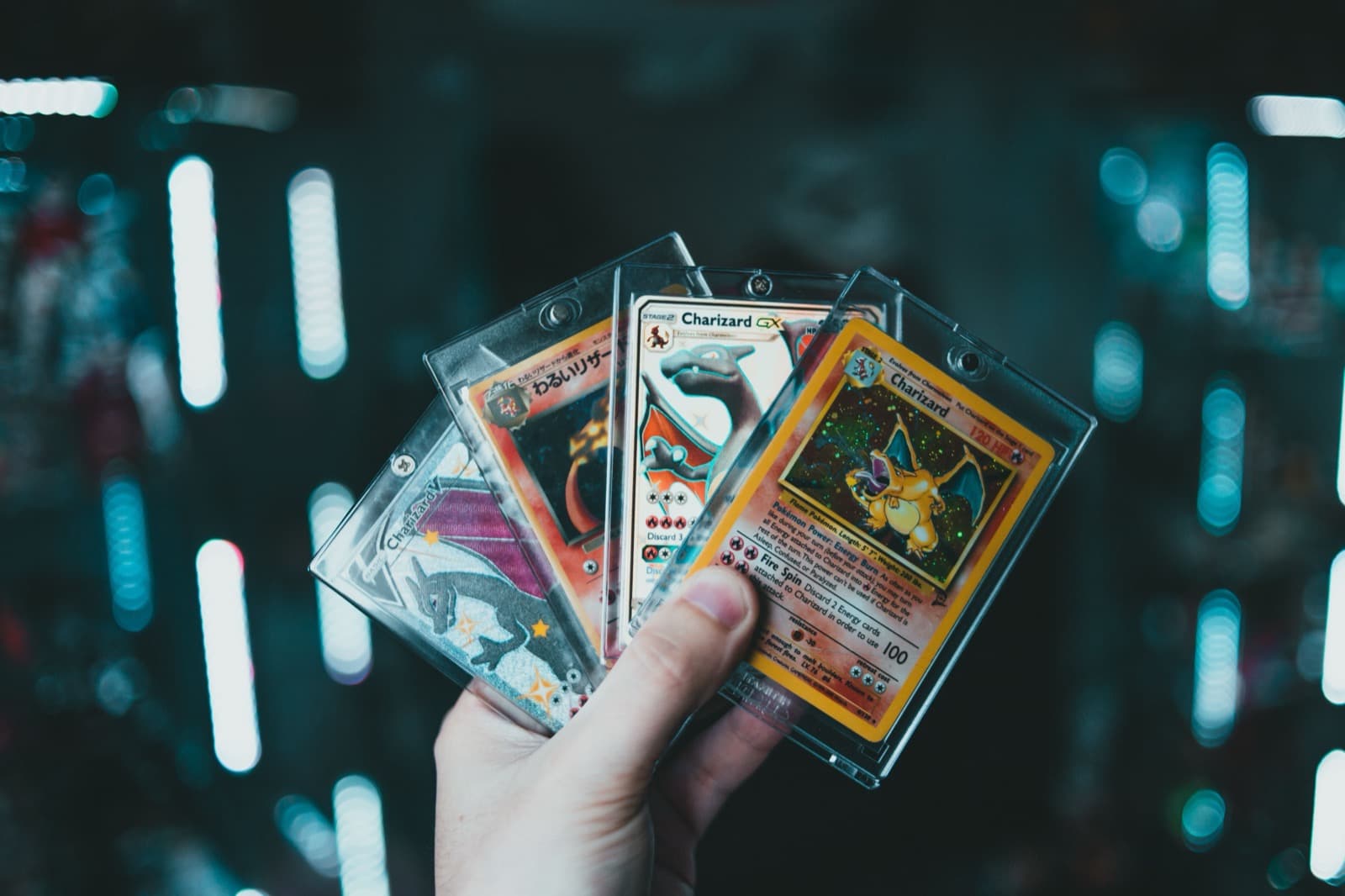
High-value cards are usually sold sealed in protective cases, and prices vary a little from shop to shop, so comparing a few stores is the smart play. Using official stores and specialist shops with a reputation to protect is the surest way to put authenticity worries to rest.
Where to go, area by area
The real fun of a Tokyo card trip lives outside the big flagship stores, in the individual shops tucked into the alleys. Each area has its own character, so pick by what you are hunting.
If you are in Ikebukuro, Pokémon Center Mega Tokyo is your anchor point. Handle the latest packs and limited goods here at list price, and pair it with a wander through Sunshine City to fill half a day.
If you are in Akihabara, walk the card shop alleys around the station. Card Shop DON DON, a 3-minute walk from Akihabara Station, is a multi-TCG store covering everything from Pokémon to One Piece cards, and Fuku Fuku Toreca has made its name as a Pokémon specialist. Shops like these hide on the upper floors of buildings all over the district, so walking with your eyes on the signboards is a treasure hunt in itself. For current singles, no market in Tokyo moves faster than this one.
If vintage is the goal, head to Nakano Broadway. It is the arcade complex in front of Nakano Station on the Chuo line, and among collectors it counts as the mecca for old cards. On the second floor sits Mandarake, running since 1987 and the byword for secondhand subculture, handling everything from vintage cards to PSA-graded ones and grown into an empire of roughly 30 shops inside the building. On the first floor, magipoke specializes in cards like Pokémon and Yu-Gi-Oh!, and Suruga-ya, the secondhand chain, carries trading cards as well. Current cards in Akihabara, cards with history in Nakano: remember it that way and your route plans itself.
The official flagship for new packs and store exclusives at list price, inside Ikebukuro's Sunshine City. Check release-day notices for purchase limits or lotteries.
Read moreSingles hunting central, where shops like DON DON and Fuku Fuku Toreca stack up the building floors. Comparing prices across two or three shops is the local sport.
Read moreThe vintage mecca housing Mandarake and magipoke. For old cards and PSA-graded gems, skip Akihabara and come here, straight off Nakano Station's north exit.
Read moreEtiquette and tips before you buy
Japan has openly debated a real problem: bulk buying by foreign collectors leaving local children unable to buy cards. Respect the rules on quantity-limited products and buy only what you need. That is the traveler's side of the bargain.
A few practical tips as well. Cards are fragile against humidity and bending, so buy hard cases or sleeves at the same time and pack everything into your luggage safely. For bigger purchases, check the tax-free conditions in advance and carry your passport, and it is worth running the exchange rate once before you pay.
Bundle it into a half-day course
Card shopping slots perfectly into a Tokyo itinerary as a half day. Browse the new product and goods at the Ikebukuro Pokémon Center in the morning, then move over to Akihabara in the afternoon for the card shop alleys, capsule-toy floors, and anime goods stores, and you have a complete day for a hobby traveler.
The budget spectrum: casual or serious
The great thing about Pokémon card shopping is how wide the budget range runs. Keeping it light, a few booster packs deliver the simple joy of ripping open the wrapper, and picking up one Japan-exclusive set as a souvenir is a fine choice too. At the other end, serious collectors walk straight to the high-end singles in the Akihabara display cases, a world where six-figure yen price tags surprise nobody. Decide in advance which kind of buyer you are and set a spending ceiling, and you protect yourself from losing your head in front of a display case.
A first-timer's buying order
If this is your first run, follow this order. Step one, get a feel for the scene at a Pokémon Center with the latest packs and goods. Everything is list price, so there is no fear of being overcharged. Step two, walk two or three specialist shops in Akihabara and compare prices on the same card. Rates differ from store to store, and the comparison itself is an education. Step three, when a card catches your heart, check the condition grade on the label and whether it is sold in a sealed case. Step four, the moment you buy, slip it into a sleeve or hard case on the spot. In the card world, one dinged corner inside a suitcase can wipe out a chunk of the value.
Before you fly home: storage and customs
Cards are weak against humidity and pressure. They are safer in your carry-on than in checked luggage, stored flat in a hard case. If you made a big purchase, look up your home country's duty-free allowance before you land. Items over the threshold can require declaration, and cards are no exception. Keep your receipts and everything stays clean. If you bought tax-free, it is also worth checking Japan's rules on tax-free goods when you depart.
Timing strategy: mornings win
The hotter the store, the more the answer is right after opening. At the Pokémon Center, weekend middays start with a line just to get in, and by afternoon the display cases in Akihabara's specialist shops draw crowds of their own. Do the Pokémon Center in the morning and the card shops in the early afternoon and your waiting time drops sharply. On new release days the congestion multiplies, so unless a specific set is your target, they are easier to avoid.
Traveling with someone who is not into cards
Not everyone in your group will be a card fan, and thankfully this course is easy on them. The Pokémon Center entertains on goods and photo spots alone, and in Akihabara your companions can browse capsule-toy floors and anime goods shops while you work the card shops. Agree on a meeting time and scatter, each to their own taste. That is the trick to enjoying this neighborhood.
Slot it into your Tokyo itinerary
Type "plan a 4-night 5-day Tokyo trip with a half day for the Pokémon Center and Akihabara" into Tripop and the AI arranges the Ikebukuro and Akihabara legs for you. Card spending climbs fast on a trip like this, so logging purchases in the foreign-currency expense tracker keeps the math clean with exchange rates applied, and a saved itinerary opens offline even when the signal gets shaky in the subway or inside a store. For a full Tokyo route, see the Tokyo 4-night 5-day itinerary.
Don't skip the goods, either
Half of any Pokémon Center is a world of goods. Plush toys, stationery, and household items rotate constantly as store exclusives, and because each location keeps its own limited items, collectors even make pilgrimages from store to store. That also means a separate goods budget tends to appear alongside the card budget without asking permission. For gifts, goods fail far less often than cards, so a clean split works best: cards for yourself, goods for the people back home.
At a glance
- Official route: Pokémon Center (Mega Tokyo in Ikebukuro as the flagship), latest packs and goods at list price
- Singles hunting: Akihabara's specialist shop alleys, compare condition grades and prices; vintage: Nakano Broadway
- Timing: right after opening is quietest; brace for crowds on release days
- Etiquette: respect purchase limits, buy only what you need
- Storage: sleeve and hard-case cards the moment you buy, flat in your carry-on
- Flying home: check your home country's duty-free allowance on big purchases, keep the receipts
Images: Pexels (Tyler Mascola: card display; Erik Mclean: sought-after card; Caleb Oquendo: card pack; Eky Rima Nurya Ganda and Vinny Anugraha: Akihabara), Pexels License.